Subscribe now

Letters archive

Join the conversation in New Scientist's Letters section, where readers can share their thoughts and opinions on articles and see responses from experts and enthusiasts across a range of science topics. To submit a letter, please see our terms and email letters@newscientist.com


13 November 2013

Complexity benefit

From Malcolm Hunter

Like oceanographer Toby Tyrrell, I am not impressed by James Lovelock's Gaia hypothesis in the form that he presented it: that is, that life engineers more favourable conditions on Earth (26 October, p 30) . However, it is worth noting that life does introduce a new layer of complexity to the planetary system. This creates …
13 November 2013

Safety worries

From Gregory Sams

When I read about the new safety features in the proposed nuclear reactors at Hinkley Point in the UK (19 October, p 6) , I became increasingly concerned about the absence of these in our existing reactors. The Hinkley plan makes one realise that as yet none of its ancestors has had a proper burial. …

13 November 2013

Population gamble?

From Martin Savage

Mairi Macleod writes about the reasons for low birth rates in wealthy countries (26 October, p 46) , but she misses one possibility. Darwinian selection works over long timescales, not just from one generation to the next. When the next planet-wide crisis occurs – be it a third world war, a pandemic, supervolcano or climate …

13 November 2013

Population gamble?

From Anthony Edwards

Macleod and those whose work she reports seem unaware of the solution to the population paradox as described by British biologist Ronald Fisher in his 1930 book The Genetical Theory of Natural Selection . He wrote: "The various theories which have sought to discover in wealth a cause of infertility, have missed the point that …

13 November 2013

Utopian future

From Jon Arch

Biologist Steven Rose is right that the relative contributions of genes and environment to IQ variation depend on the population that is studied (26 October, p 28) . The more the environment varies, the lower the contribution, proportionately, from genetic programming. I also share his scepticism that genome-wide association studies will identify genetic differences that …

13 November 2013

Real trauma

From Mano

Your recent article on multiple personality disorder (28 September, p 46) doesn't reflect the current scientific and clinical knowledge concerning dissociative identity disorders (DID), nor does it accurately describe the outcome for treatment. The case that was presented can never reflect the complexity of DID and dissociative disorders. There is considerable research showing that this …

13 November 2013

Too certain

From Stephen Blank

In Steve Fuller's review of Serving the Reich: The struggle for the soul of physics under Hitler by Philip Ball, Werner Heisenberg's failure to develop an atomic bomb for Germany is attributed to the world's scientific community shutting its doors to the Nazis (12 October, p 48) . I propose an alternative explanation: Heisenberg's arrogance …

13 November 2013

Strange as fiction

From Kamesh Aiyer

Lisa Grossman describes a bouncing universe model that has been kicked around for some time with no theoretical support (26 October, p 10) . However, it is reminiscent of the bouncing universe envisaged in James Blish's collection of science fiction stories Cities in Flight , in which humans manage to survive the collapse and re-expansion …

13 November 2013

Offending cycles

From Robert Dancer

In his review of Big Gods: How religion transformed cooperation and conflict by Ara Norenzayan (28 September, p 52) , Michael Bond remarks that the author says people don't steal bicycles in Denmark, even when they are free to use. Unfortunately, bicycle theft is rampant there. Perhaps Norenzayan was referring to the "town bicycles" available …

13 November 2013

Lime is not green

From Paul Jefferson

Michael Marshall's look at geoengineering to keep global temperature rises below 2 °C (12 October, p 10) suggested ocean liming to form carbonates as one option. He probably means quicklime (calcium oxide) which reacts well, if slowly, with carbon dioxide to form calcium carbonate. However, it is made by heating limestone to drive off the …

13 November 2013

Oil crisis

From Bill Summers

Jeremy Leggett speaks clearly enough about fossil fuel depletion, but understates its impact (2 November, p 28) . The uncontrollable civil strife that will follow will bring the biggest discontinuity in human history. Sturminster Newton, Dorset, UK

13 November 2013

Sleep aid

From Tom Heydeman

You note that vasoactive intestinal polypeptide is shown to be connected with the mammalian circadian clock and might help banish jet lag (2 November, p 10) . However, much quicker, simpler and capable of oral administration is melatonin. My experience is that within a day it can counter the impact of time shifts of up …

13 November 2013

Sharing caring

From Mike Childs

The growth of digital communication certainly helps travellers find local people willing to cook them a meal (26 October, p 24) . But it has the potential to do so much more. In a recent report for Friends of the Earth, Julian Agyeman from Tufts University in Medford, Massachusetts, suggested that the growth of a …

13 November 2013

Economic heat

From Tim Stevenson

Noel Hodson proposes the release of $32 trillion retained by "money capture and storage" in tax havens, to avoid social violence (26 October, p 32) . Might this not, by analogy with the release of carbon dioxide reserves created by carbon capture and storage, cause overheating? Great Missenden, Buckinghamshire, UK

13 November 2013

Slow rot

From Juliet Bullimore

In addition to the "fertiliser effect" on vegetation of rising carbon dioxide levels (12 October, p 40) , the work of the humble soil microbe should not be ignored. Plant material grown in higher levels of CO 2 is likely to have a higher carbon:nitrogen ratio, which could slow decomposition by soil microorganisms – more …

13 November 2013

For the record

• We got our dates muddled in our report on Europe's health divide (2 November, p 6) . We should have said that half of new HIV infections in Greece between 2009 and 2011 are estimated to have been self-inflicted to secure monthly benefits of €700.

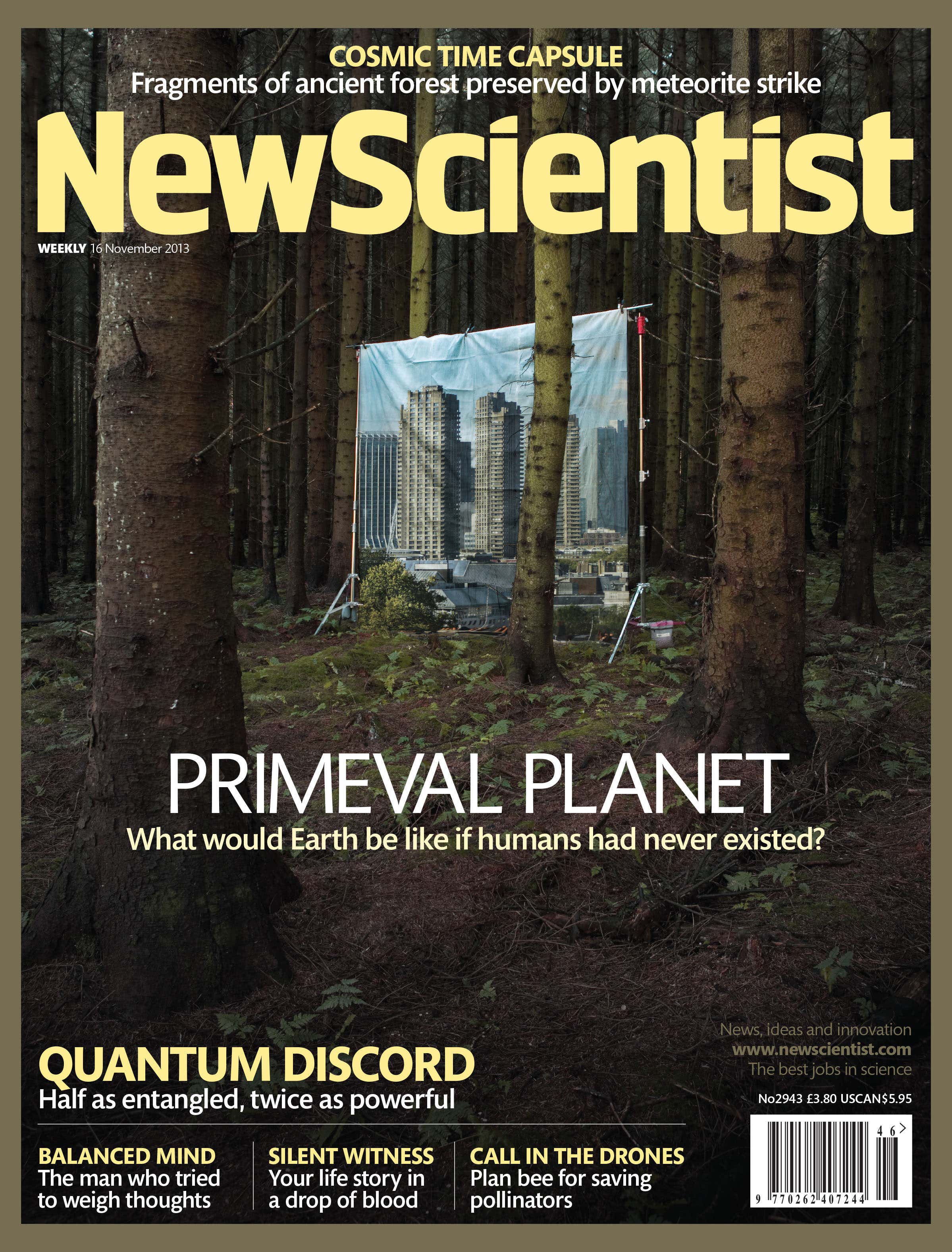
Issue no. 2943 published 16 November 2013

Sign up to our weekly newsletter

Receive a weekly dose of discovery in your inbox. We'll also keep you up to date with New Scientist events and special offers.

Sign up
Piano Exit Overlay Banner Mobile Piano Exit Overlay Banner Desktop