Subscribe now

Letters archive

Join the conversation in New Scientist's Letters section, where readers can share their thoughts and opinions on articles and see responses from experts and enthusiasts across a range of science topics. To submit a letter, please see our terms and email letters@newscientist.com


4 December 2013

What Fred said

From Mike Stratton

I would like to reinforce your view that DNA sequencing pioneer Fred Sanger should be remembered as an inspiration to many – for his brilliant work, quiet determination and modesty (newscientist.com/article/dn24618) . Sanger was an outstanding investigator, with a dogged determination to solve questions that have transformed how we perceive our world. He combined this …
4 December 2013

Next stop, the core

From Julien Glazer

Amanda Mascarelli's article describes Fergus Gibb's idea to package the hottest nuclear waste into tungsten capsules and let them melt their way down through the Earth's crust (2 November, p 42) . This could possibly be used for low-level waste, too, if it was sandwiched between these hot capsules. Maybe we could send a low-speed …

4 December 2013

Wax weirdness

From Dawn Morin

Researcher Giovanni Caputo is right that the ghouls and ghosts described in your look at the "Bloody Mary" mirror illusion don't just appear when staring at your own face, but also when looking at other faces in dim light (2 November, p 39) . As a young teenager, I slipped away from friends on a …

4 December 2013

Gaia's unwell

From Ken Steele

It seems to me that Toby Tyrell's view that the Gaia hypothesis is outdated (26 October, p 30) arises from a misunderstanding of the nature of life. The defining feature of life is the ability of a complex organism based on DNA to use an external source of energy, not just for the energy itself …

4 December 2013

Rock the boat

From Tim Wilton

BP environmental specialist Michelle Horsfield was surprised that the underwater detonation of an old naval mine could knock people off their feet on a boat 2 kilometres away (9 November, p 50, UK edition, and newscientist.com/article/mg22029421.200) . However, water, unlike air or rock, is an incompressible medium. Hence, the shock waves, even at 2 kilometres, …

4 December 2013

Sacrificial spending

From Keith Hudson

Mark van Vugt embraces the application of the evolutionary theory of multilevel selection in economics (23 November, p 30) . Just as the theory was spurned in biology for most of the past century, so has the multilevel influence of a "keeping up with the Joneses" mindset in economics. It might be individually motivated, but …

4 December 2013

Fluid thinking

From Michael Buck

Though not attempting to "weigh thoughts" as did Angelo Mosso (16 November, p 39) , I too demonstrated mass redistribution of fluids around the body with a group of students. We used an arrangement like his balance table, but with the subject face up and with moveable counterweights to measure changes ( Journal of Biological …

4 December 2013

Cave women

From Lucia Nixon

Alison George's excellent article on prehistoric art and the origins of intelligence uses evidence from Africa, Asia and Europe analysed by female and male archaeologists, to suggest that human creativity developed earlier than once thought (23 November, p 36) . So why do the two images, one of which also appears on your cover, show …

4 December 2013

Dark revolt

From Kurt Koltko

Lisa Grossman reports on the search for dark matter (2 November, p 11) , but there are other theories to explain the excessively fast rotation of galaxies compared with the amount of observable matter in them. One of these is known as "gauge CPT". It considers known matter as producing an as-yet-unknown long-range force that …

4 December 2013

Breathe easier

From Laura Slater

Jenny Jones, a Green Party politician in London, UK, raises valid points about how to tackle worsening air pollution by cutting traffic and encouraging electric vehicle use (16 November, p 4) . Other initiatives could help, too. A project run by Sustrans , a UK charity that encourages walking, cycling and public transport use, has …

4 December 2013

Temple to art

From Howard Barnes

I have always been dismayed by archaeologists' lack of imagination – if an ancient building's purpose isn't obvious then it is religious, as is suggested for Göbekli Tepe in David Robson's article (5 October, p 32) . There was talk of "a series of gullies" possibly for carrying "sacrificial blood". But could the gullies have …

4 December 2013

Gold leaf

From Giles Peatfield

You report that gold can be detected in eucalyptus trees growing above deposits of the metal (26 October, p 19) . The earliest reference I am aware of to plants as potential gold detectors is from 1824. Some of the first work in the modern era was by Harry V. Warren at the University of …

4 December 2013

Helping the enemy?

From Eric Kvaalen

For whom does New Scientist write articles about how to hide from the spooks (23 November, p 24) ? Have you concluded that our spy agencies are up to no good and that all means for thwarting them should be developed and reported to the world? What will happen if criminals start using these new …

4 December 2013

For the record

• Our look at the divide between rich and poor amid the financial crisis in Europe (2 November, p 6) drew on a World Health Organization report that stated in Greece "about half of new HIV infections being self-inflicted to enable people to receive benefits of €700 per month and faster admission on to drug …

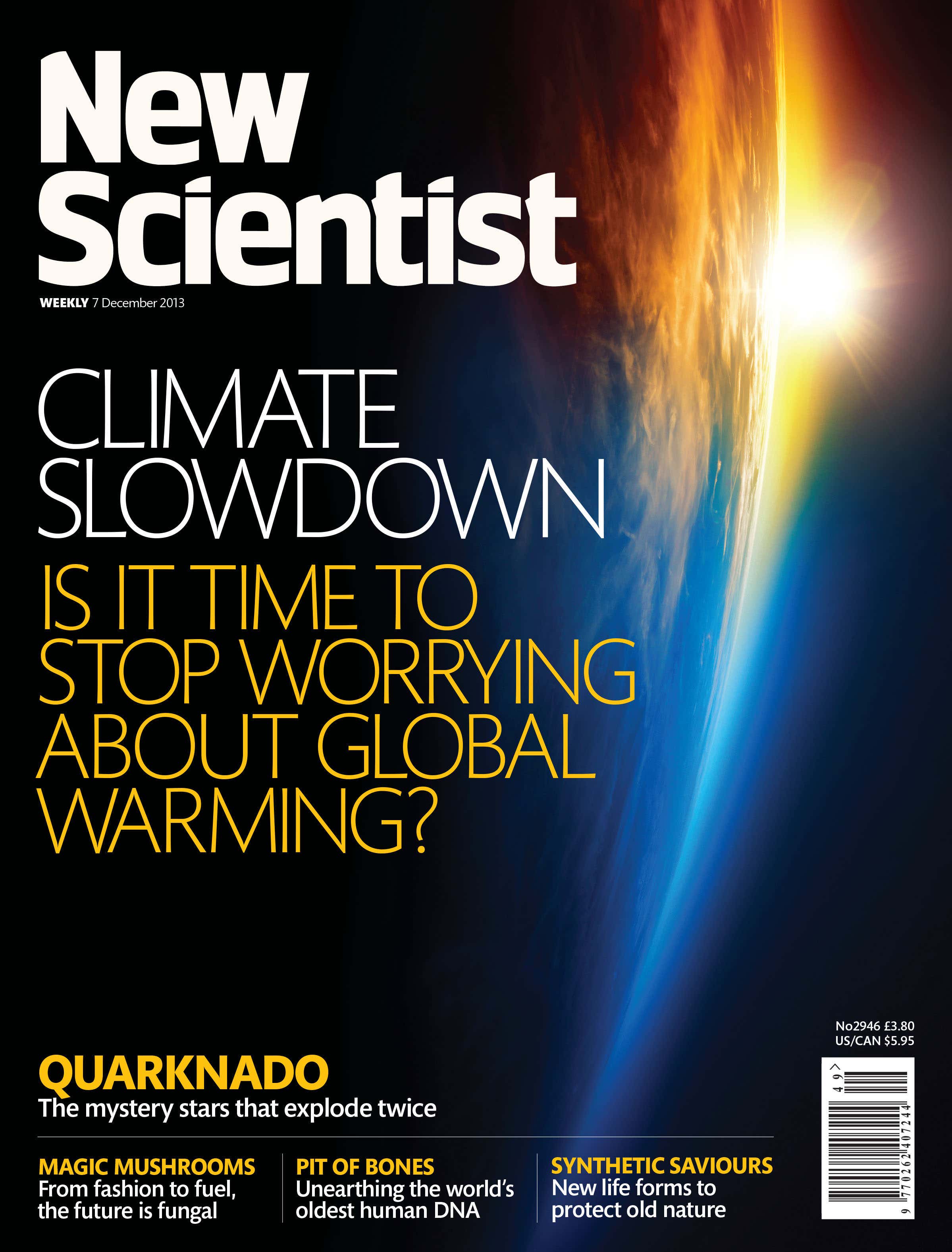
Issue no. 2946 published 7 December 2013

Sign up to our weekly newsletter

Receive a weekly dose of discovery in your inbox. We'll also keep you up to date with New Scientist events and special offers.

Sign up
Piano Exit Overlay Banner Mobile Piano Exit Overlay Banner Desktop