Subscribe now

Letters archive

Join the conversation in New Scientist's Letters section, where readers can share their thoughts and opinions on articles and see responses from experts and enthusiasts across a range of science topics. To submit a letter, please see our terms and email letters@newscientist.com


17 December 2013

Build for the future

From Priyan Mendis

Most of the thousands of deaths reported when typhoon Haiyan struck the Philippines (16 November, p 6) were caused by building collapse and drowning. Between 70 and 80 per cent of buildings and homes in the storm's path were destroyed. However, we already have the technology and expertise to build typhoon-proof buildings, with some cheap …
17 December 2013

Eternal optimists

From Robert Davis

Bent Flyvbjerg makes a valid criticism of the political mindset behind many megaprojects, with favourable bias applying to both costs and benefits (30 November, p 28) . This applies not just to megaprojects, however, but to any project, large or small. There seems to be an ingrained unwillingness to look at issues rationally and make …

17 December 2013

Right to retract

From Alan Boobis

You reported the decision by the journal Food and Chemical Toxicology to withdraw a paper that linked GM maize to cancer in rats (7 December, p 7) . Retraction of a scientific article should always be a last resort. Even when inconclusive, an article can contribute to scientific discourse on a topic. However, there are …

17 December 2013

Divine inspiration

From Nury Vittachi

It is no surprise that several people have sniped at David Robson's gripping piece on how religious gatherings likely played a key role in the founding of human society (5 October, p 32) . But there's no need to bridle at the suggestion. For virtually the entire history of society, the default state of advanced …

17 December 2013

Safe reactors

From Trefor Roscoe

Reader Vernon Barber uses outdated arguments against nuclear power in the UK (23 November, p 34) . The only civil nuclear accident that resulted in a large area being abandoned was at Chernobyl. It involved a type of reactor never built in the west, and which will never be built again. Furthermore, there has never …

17 December 2013

Brains are us

From Iain Petrie

Neurophilosopher Patricia Churchland argues that it can be difficult to accept that "you're just your brain" (30 November, p 30) . So it would seem. When she says, "I've made my peace with my brain," it rather suggests that she regards herself as an entity distinct from her brain. Even saying "my brain has made …

17 December 2013

You, to a tea

From Ken Green

I read your story on identifying people using "soft" biometrics, such as ear shape (30 November, p 22) . I have long regarded gait as a surefire identifier. Many people found my identical twin sisters hard to distinguish. The only time I had difficulty was when they were at a distance, but it only required …

17 December 2013

You, to a tea

From Kit Devine

If biometrics, soft or otherwise, become the standard way to unlock access to computers, what happens to people who lose the hand with the recorded fingerprint, or the eye with the correct retina pattern, or have a stroke which alters their typing? I assume there would have to be a way to reset access. If …

17 December 2013

Light fantastic

From Terence Hollingworth

Valerie Jamieson is to be praised in advocating that we minimise lighting in our towns for the sake of astronomy (30 November, p 46) . I fully agree with her. When I see photos taken from space of Earth lit up like a Christmas tree at night, even in areas normally considered remote and unspoilt, …

17 December 2013

Art of war

From David Werdegar

The photo of abstract cave symbols – divided rectangles and dots – in Alison George's article on the origins of intelligence may indicate that the mind and culture of early Homo sapiens were more advanced than we realise (23 November, p 36) . Anthropologists trying to interpret these images should seek help from strategists at …

17 December 2013

Art of war

From Ted Rockley

One aspect of the rectangular cave art designs featured in George's story seems to have been missed. You refer to these as "abstract" or "geometric", and there are various examples of zigzags and dots adorning other caves, but the thing that sets these apart from images of bison and antelope, or shapes of hands, is …

17 December 2013

Methane storm

From Eric Kvaalen

You report that "a stormier Arctic could fast-track methane gas into the atmosphere, potentially accelerating global warming" (30 November, p 18) . But what is important is how much methane goes into the atmosphere over a period of years, not just after a storm. This is determined by the rate at which the methane is …

17 December 2013

Switch off

From Bryn Glover

Laura Slater's idea that delivery-van drivers should be asked to switch off their engines while making deliveries is interesting (7 December, p 33) . During a brief stay in Switzerland about 20 years ago, we were sternly informed that we needed to switch off our engines every time the car was stationary, for example at …

17 December 2013

Science vs economics

From Bruce Dinham

Mark van Vugt's article looked at Darwinian economics (23 November, p 30) . Science, which aims to describe the real world, is based on the laws of physics and chemistry with defined units of measure. Economics, in the artificial world of money, is based on questionable and unreliable assumptions about human behaviour, and uses undefined …

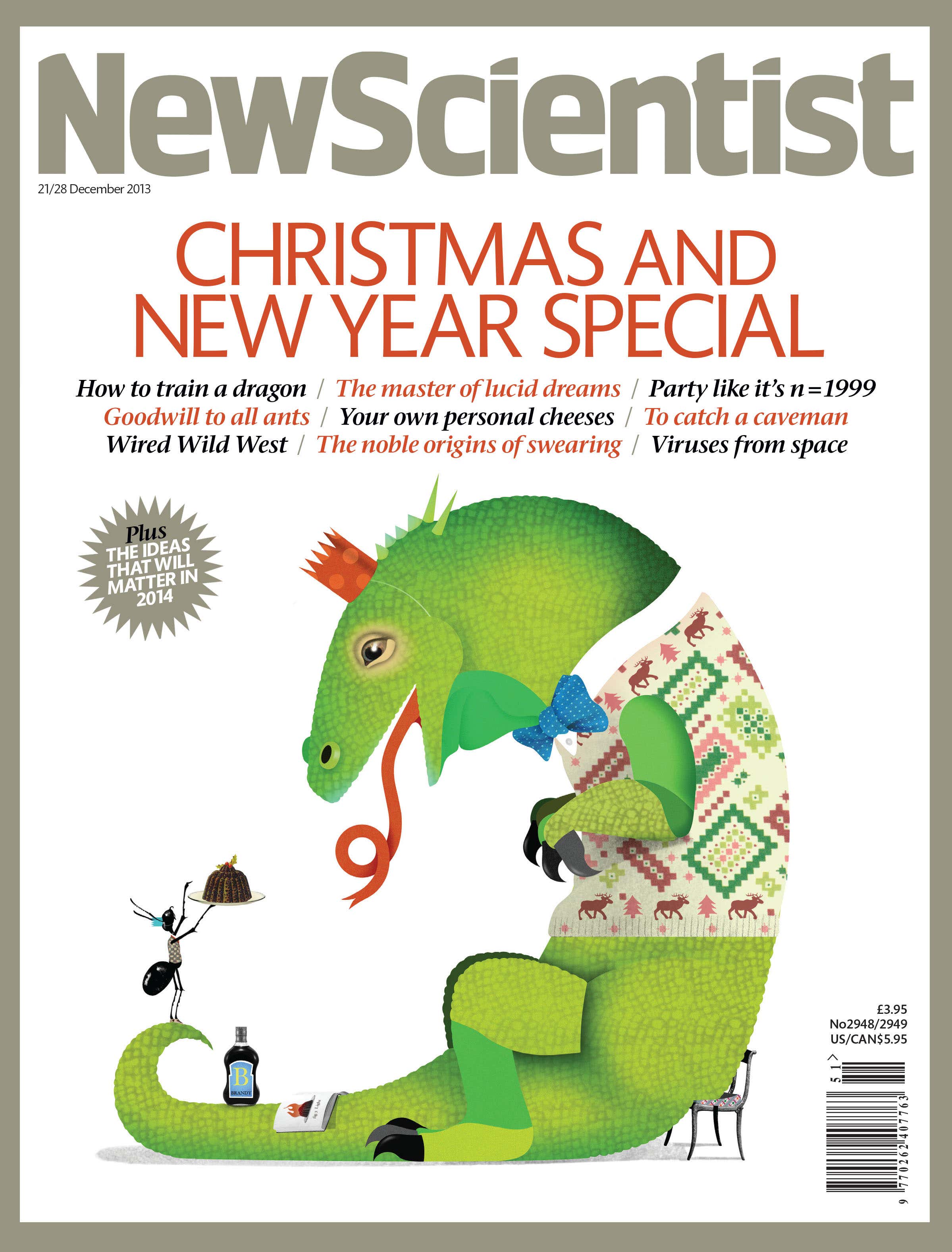
Issue no. 2948 published 21 December 2013

Sign up to our weekly newsletter

Receive a weekly dose of discovery in your inbox. We'll also keep you up to date with New Scientist events and special offers.

Sign up
Piano Exit Overlay Banner Mobile Piano Exit Overlay Banner Desktop