Subscribe now

Letters archive

Join the conversation in New Scientist's Letters section, where readers can share their thoughts and opinions on articles and see responses from experts and enthusiasts across a range of science topics. To submit a letter, please see our terms and email letters@newscientist.com


8 January 2014

Clear the air

From Graham Jones

Frank Swain's look at the sidelined antibiotic role of fresh air and sunlight in controlling infection (14 December 2013, p 34) raises questions about hospital design. I was a medical student in the 1980s, in hospitals built in the Victorian era – huge airy spaces flooded with natural light. They almost seemed to be half …
8 January 2014

Clear the air

From Barry Cash

Energy efficiency seems to be a reason behind keeping the windows closed in hospitals. Surely the way to get the antibacterial benefits of fresh air without losing heat is to pass incoming fresh air through a heat exchanger with the outgoing hot air on the other side. I believe this has been done in Scandinavia …

8 January 2014

Clear the air

From Ted Lovesey

Swain's article accurately describes good hospital practice of 50 years ago. However, there were downsides. After a successful operation, I was one of the bedridden patients wheeled outside to benefit from the autumn air. Unfortunately, we were left unattended under horse chestnut trees, which shed their hard conkers onto our heads. We were powerless to …

8 January 2014

Clear the air

From Dave Kimber

When will hospitals and schools revert to using brass instead of stainless steel for door furniture? I understand that some germs like iron, but most hate copper. In an epidemic, even a small reduction in transmission is worthwhile. St Neots, Cambridgeshire, UK

8 January 2014

Clear the air

From Martin Savage

Another overlooked traditional weapon against infection is salt. Used on wounds it kills bacteria and dries the wound. The pain resulting from the salt might cue a stronger immune response. Jomtien, Thailand

8 January 2014

Life less

From Tony Mannion

Reader Ed Prior reduces the estimate of stars in our galaxy that have a habitable planet from the 40 billion stated in Lisa Grossman's article (9 November 2013, p 12) to 1 million at any one time (14 December 2013, p 33) . But that figure can be cut further. Many stars are in the …

8 January 2014

Wind of change

From Guy Menendez

Bob Holmes reports that keeping E. coli in constant lab conditions over many generations does not result in a strain reaching a static peak of evolutionary perfection (23 November 2013, p 12) . This should come as no surprise to evolutionary biologists who are familiar with the dynamic nature of ecosystems. That the conditions causing …

8 January 2014

Pervasive spread

From Donald Windsor

I disagree with Luís Bettencourt's comparison of cities to stars (14 December 2013, p 30) . A city is more like a colony of bacteria in a biofilm than it is like a star. Norwich, New York, US

8 January 2014

Angling for the truth

From Terence Collins

Richard Webb's excellent article on fungi mentioned the use of amadou, a felt-like substance derived from a bracket fungus, by anglers (7 December 2013, p 39) . However, it is used for drying flies, rather than as bait – although desperate anglers have been known to try anything. You might also be interested to know …

8 January 2014

Slaves to time

From David Child

Michael Slezak poses the question: "Do past, present and future exist only in our heads?" (2 November 2013, p 34) . If time indeed does not exist as a separate dimension and is an illusion, could it be that we are creatures who have evolved to perceive the expansion of space as "time"? Wrexham, Clwyd, …

8 January 2014

Independent states

From Bryn Glover

It was heartening to see you highlight US president Barack Obama's "war on inequality" (14 December 2013, p 5) . It is, however, crucial to recognise a significant difference between US attitudes to poverty and those in, for example, the UK. The US was founded by individualists, often in reaction to controls and interference from …

8 January 2014

Moral dilemma

From Osma Suominen

In your interview with Joshua Greene, he invokes philosopher Peter Singer's comparison between ruining the $1000 suit you are wearing to save a drowning child and donating a similar sum to save starving children on the other side of the world (7 December 2013, p 30) . Greene says we don't hesitate in the first …

8 January 2014

Moral dilemma

From Georgina Skipper

The attraction of saving an identifiable child immediately could be equally great even if they were at a distance. All you need is a connection of the sort Facebook and Twitter enable. Committing to supporting many strangers for many years with no certain outcome is less attractive, and Greene did not convince me that it …

8 January 2014

Moral dilemma

From Mike Wigmore

Obviously distance is a factor, but more important is the fact that it is down to you, and you alone, to save the drowning child. When responsibility for the starving children is shared with millions of others, your decision will be different. If there are other onlookers who may act when they see the child …

8 January 2014

Booming costs

From Ilpo Salonen

Bent Flyvbjerg's article on the biases that afflict megaprojects (30 November 2013, p 28) was very fitting from the Finnish point of view. The cost of a reactor for the Olkiluoto nuclear power plant in western Finland was estimated at the end of 2012 to have risen to at least £7 billion, three times the …

8 January 2014

Nanny state

From Tim Metcalf

Despite being a breastfeeding zealot, I was frustrated by Mary Renfrew's scheme to encourage breastfeeding by giving shopping vouchers to mothers who do it (30 November 2013, p 29) . Breastfeeding behaviour is changing because of the economic structure of society, the reduction in grandparenting as people become more mobile, and the different priorities of …

8 January 2014

Mind and body

From Mary Midgley

Patricia Churchland thinks expectations of an afterlife are one reason why people are apprehensive about accepting that they are just a bundle of neurons. This leads them to separate the concepts of mind and brain, she says (30 November 2013, p 30) . However, our lives centre on our direct experience. No separate entities are …

8 January 2014

Seeing is believing

From Ken Green

You reported on attempts to simulate the vision of animal eyes (14 December 2013, p 23) . Reproducing the image from an animal's eyes is but the first step in a mysterious process. All that remains is to transfer the 2D image to the input sensors of the 3D brain, imitate the processes of that …

8 January 2014

Stake your claim

From Peter Household

What's missing from Jacob Aron's article on mining asteroids (7 December 2013, p 14) is any consideration of the legal and ethical dimensions of doing this. Does the common heritage of humanity principle, by which we preserve things for the benefit of all, permit asteroid mining? If it doesn't, should it? Should the common heritage …

8 January 2014

The editor writes:

• It's a question without a clear answer. We wrote about it in 2012 (2 June 2012, p 28) .

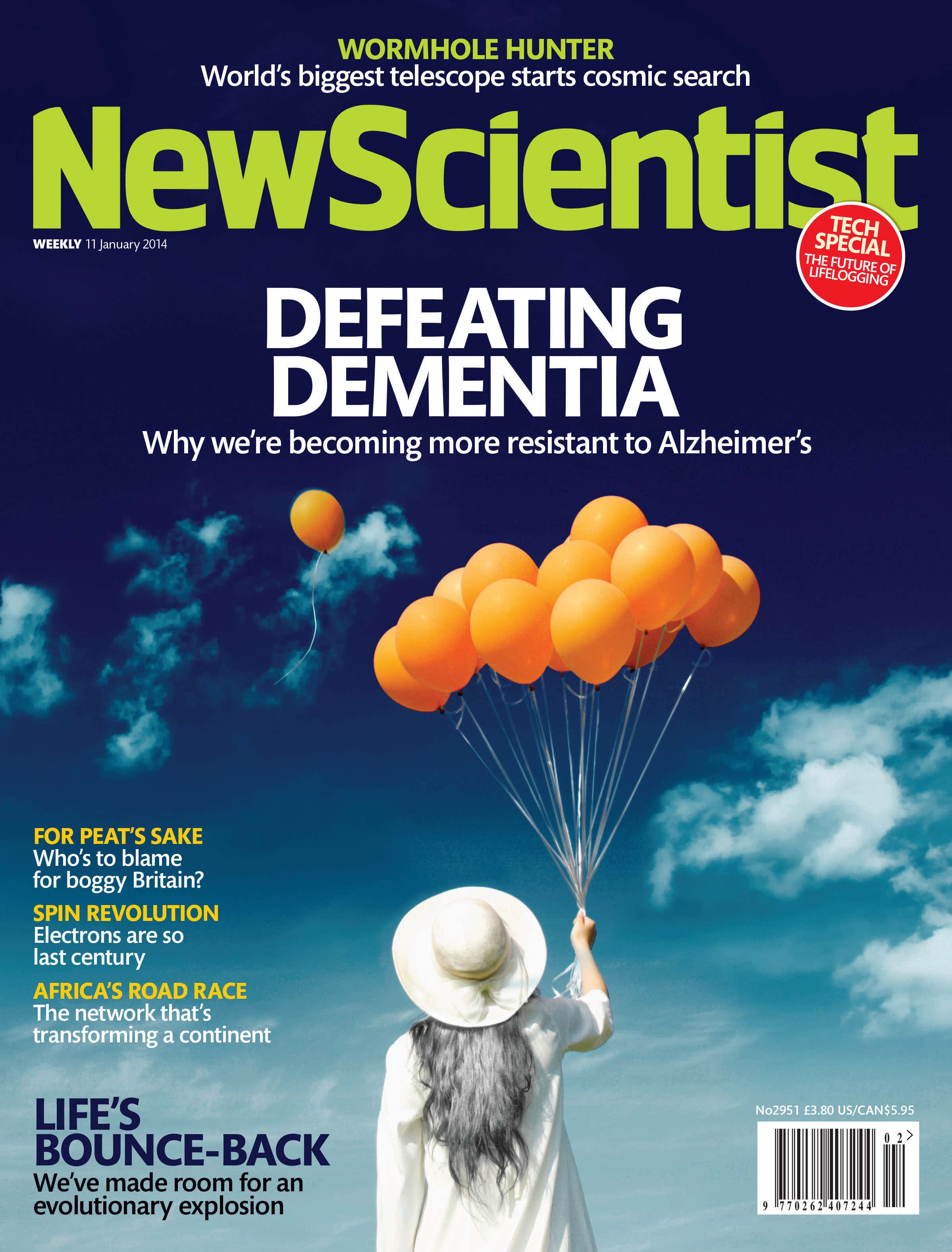
Issue no. 2951 published 11 January 2014

Sign up to our weekly newsletter

Receive a weekly dose of discovery in your inbox. We'll also keep you up to date with New Scientist events and special offers.

Sign up
Piano Exit Overlay Banner Mobile Piano Exit Overlay Banner Desktop