Subscribe now

Letters archive

Join the conversation in New Scientist's Letters section, where readers can share their thoughts and opinions on articles and see responses from experts and enthusiasts across a range of science topics. To submit a letter, please see our terms and email letters@newscientist.com


29 January 2014

Hard to swallow

From Matthew Kirkcaldie

Andy Coghlan's two-page report on giving up alcohol for a month was disappointing (4 January, p 6) . The article starts by pointing out that there is no scientific evidence of health benefits of doing this, so it sounds worth reading. It then goes on to outline an anecdotal, uncontrolled set of observations on a …
29 January 2014

Hard to swallow

From Roger Kistruck

Congratulations to the New Scientist staff who gave up booze for a month. It is encouraging that so many health parameters improved. Changes in liver fat, cholesterol, glucose and weight can be clearly seen, but I am less sure about the changes in sleep, wakefulness, concentration and work performance, which were self-assessed. Is it possible …

29 January 2014

The editor writes:

• New Scientist is a magazine, not a journal. As the editorial accompanying our news story explained, we were surprised to learn that there had been little investigation of the effects of a period of abstinence, despite the increasing popularity of "dry January", and so we carried out one of our own, working with specialists …

29 January 2014

Insane reality

From Andrew Scott

Having just read the review of Max Tegmark's latest book (18 January, p 46) I have to ask: do physicists who believe in the many-worlds interpretation of quantum mechanics really think that in a version of reality everyone in my street has just run outside naked screaming "Yumple is a Bumbler"? And in another version …

29 January 2014

Japanese lessons

From William Grant, Sunlight, Nutrition and Health Research Center While you highlight decreasing dementia rates in England and Wales (11 January, p 32) , in China, Japan and the developing world the rates are increasing. For example, in Japan, Alzheimer's disease rates for those over the age of 65 increased from 1 per cent in …

29 January 2014

Free ways

From Perry Bebbington

The discovery that removing roads from a road network can improve, not worsen, traffic flow is not news to me (18 January, p 30) . In 1988 my job required me to drive about 1000 miles a week in the East and West Midlands in the UK. On 8 January 1989, the Kegworth air crash …

29 January 2014

Think on

From Derek Williams

Michael Brooks is on the right track in saying that we need agile thinkers rather than just ever more science, technology, engineering and maths graduates (21/28 December 2013, p 38) . From the late 1960s onwards, Edward de Bono advocated the teaching of "thinking" in schools. Venezuela adopted his recommendation, and it would be interesting …

29 January 2014

Strangely absent

From Paul Thomas

Adrian Bowyer remarks that if strange-quark matter were ejected by the "shock wave of a collapsing neutron star", then lumps of it should have landed on Earth (4 January, p 29) . Supposing such an ejection were possible, there is a reason why strange-quark matter would not be found on or near the surface of …

29 January 2014

Sweet thoughts

From Richard Reeves

The campaign group Action on Sugar aims to convince manufacturers to reduce the sugar content of food so slowly that UK consumers won't notice (18 January, p 4) . Your report states that it isn't known whether our palates adjust to eating food that is less sweet. Forty-five years ago, the concern was that sugar …

29 January 2014

Sweet thoughts

From Penelope Stanford

There is a small cohort of people who will have adjusted their sugar consumption in the past who could be studied, at least for recall of experience – it is those people who lived through the second world war. Longfield, Kent, UK

29 January 2014

Dark ages

From Rick Bradford

After reading about the hunt for the cause of the year of darkness in AD 536 (18 January, p 34) I turned to my copy of the Anglo-Saxon Chronicle , a record of ancient England. Between 534 and 544, there are just two entries, in the years 538 and 540. The first reads: "Here on …

29 January 2014

Our loss

From Neil Dale

Chris Thomas was not reassuring about the way that biodiversity will regenerate after the "anthropocene extinction" (11 January, p 28) . The one question that I waited in vain for was: "How long will this regeneration take?" Speaking as one of the humans in north-eastern America, I still mourn the loss of the elm and …

29 January 2014

Our loss

From Wiebina Heesterman

While Thomas promises opportunities for new life forms to those worried about mass extinctions, might it not be a glut of insect forms rather than cuddly koala-type creatures? And what about new pathogens? Birmingham, UK

29 January 2014

Keep it deep

From Anna Tambour

Thank you to reviewer Jonathon Keats for illuminating the "dark underside" of Who's Bigger? Where historical figures really rank (21/28 December 2013, p 84) . By proposing that celebrity should be the rule whereby children are taught history, the trivial but salacious trumps anything of depth, let alone repercussiveness. Nowra, New South Wales, Australia

29 January 2014

I fear not

From Mark Cowan

In his letter commenting on inherited fear responses in mice, Stephen Durnford says that DNA must be the mechanism of conscious and unconscious memory (4 January, p 28) . But he overlooks the capacity of neural machinery to hold and store information and meaning, and also that of culture, an external database which far exceeds …

29 January 2014

Missing you already

From Clive Stott

I feel I must add my voice to the (doubtless) many others expressing their sadness and regret at the passing of Enigma (21/28 December 2013, p 5) – a most stimulating adornment to New Scientist . My weekly practice was to turn first to Feedback and Enigma before any other pages. Bedford, UK

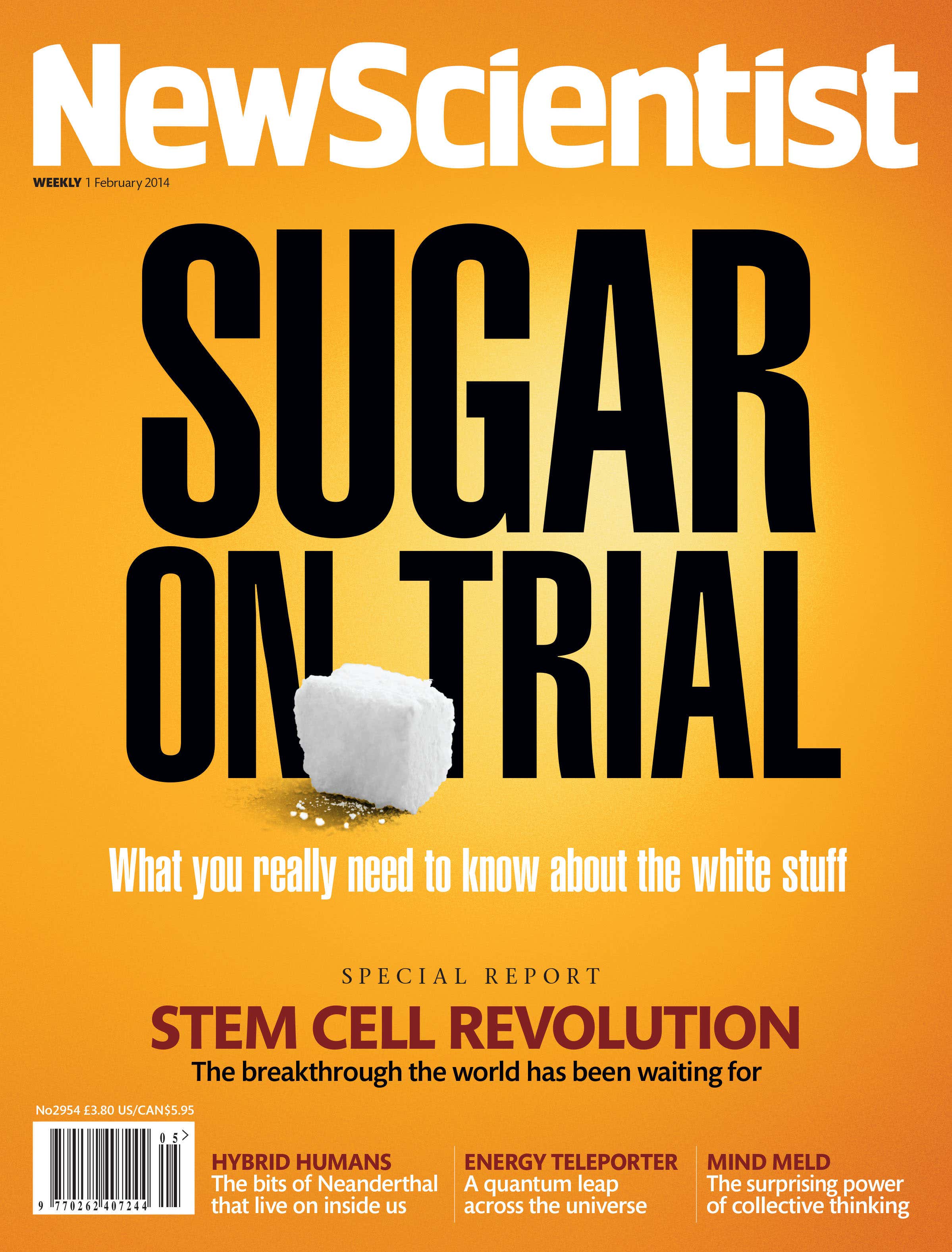
Issue no. 2954 published 1 February 2014

Sign up to our weekly newsletter

Receive a weekly dose of discovery in your inbox. We'll also keep you up to date with New Scientist events and special offers.

Sign up
Piano Exit Overlay Banner Mobile Piano Exit Overlay Banner Desktop