Subscribe now

Letters archive

Join the conversation in New Scientist's Letters section, where readers can share their thoughts and opinions on articles and see responses from experts and enthusiasts across a range of science topics. To submit a letter, please see our terms and email letters@newscientist.com


5 February 2014

No nonsense

From Ian Gallon

Isn't it time we steered clear of mysticism in mathematics and physics? In his article, Matthew Chalmers says the square root of -1, also known as the imaginary unit i , is a nonsensical concept. This continues the Greek tradition of mixing irrational philosophy with logical developments (25 January, p 32) . The imaginary unit …
5 February 2014

Eye of beholder

From Patrick Shannon

Alison George's article on the significance and implications of prehistoric cave art to the rise of human intelligence was thought-provoking (23 November 2013, p 36) . Also worth mentioning in this context is the work of David Lewis-Williams, who led the Rock Art Research Institute at South Africa's Witwatersrand University for 20 years. According to …

5 February 2014

Size is an issue

From Frank Hung

Why is it only "arguably fairer" to take population size into account when determining a country's contribution to global warming (18 January, p 12) ? Surely it is much more equitable than just taking the absolute figures and relating them to a country's area regardless of population. In my street, I produce less waste than …

5 February 2014

Tune in my head

From Layne Aviss

Your look at musical hallucinations gave no idea of the perceived volume of the music Sylvia was hearing in her head all day (18 January, p 8) . My head has played me music continuously, ever since I heard my first song as a child over 60 years ago. I did find simple repetitive melodies, …

5 February 2014

Road to destruction

From Brian King

I fear that building more roads in Africa to improve economic prospects will disrupt more than just game reserves (11 January, p 8) . Greater access to rural areas allows in illegal hunters, who will extinguish all game near roads. I have seen this happen within a few years in Zambia, where tracks created in …

5 February 2014

Let's talk about sex

From Elizabeth Pollitzer

The concern over iatrogenic deaths (25 January, p 5) , that is those caused by adverse drug reactions and hospital-acquired infections, for example, needs to be linked to the differences in the safety and effectiveness of medical treatments for women and men. Sex differentiation begins in the embryo and changes affecting exposure, susceptibility, risk and …

5 February 2014

All the rage

From Dave Hulme

It seems to me that technology can only accentuate our tendency to dehumanise others as described by Laura Spinney (18 January, p 39) . Take driving. It is hardly surprising that road rage happens when we have at our disposal only the most primitive forms of communication – blaring horns, flashing headlights and shaking fists. …

5 February 2014

Innate behaviour

From Martin Greenwood

In his letter, John O'Hara seems surprised that wild turkeys can behave in certain ways without having had contact with adult turkeys (18 January, p 29) . We should expect that the vast majority of animal behaviour is genetically inherited. Relatively little behaviour is learned, except in more intelligent species with longer childhoods. Consider the …

5 February 2014

The point of religion

From Matthew Stevens

Letter writer Dan Hochberg and his co-religionists "find Richard Dawkins so irritating" (25 January, p 31) . So do we non-religionists. For all his brilliance in explaining evolution, Dawkins seems to miss the point of religion. Religion, as a human behaviour, has evolved by natural selection because of the benefits it confers on its practitioners. …

5 February 2014

Tough call

From Patricia Shannon

In your article on using scanning methods to communicate with people in vegetative states (24 August 2013, p 14) , Lorena Naci says caution would be required when giving patients a say in their care: "If they are depressed or not emotionally healthy, we wouldn't necessarily act on their wishes," she says, as an impaired …

5 February 2014

Chocolate balls

From Julian Eley

Being a bit of a foodie I decided to try your recipe for low-fat chocolate (21/28 December 2013, p 53) . I also make various alcoholic concoctions such as bullaces (plum-like fruits) infused with rum, and Seville orange wine. I followed the recipe, replacing the water with the wine. I used white chocolate and added …

5 February 2014

Degrees of certainty

From Nicholas Taylor

Surely Philip Colfox does science a disservice in his letter in defence of economics by saying "nothing is certain" even in science (18 January, p 29) . What counts is how certain. Science is in a better position than economics to isolate evidence and perform repeatable experiments. Little Sandhurst, Berkshire, UK

5 February 2014

Switched off

From John Cantellow

In his look at the cases of two people being kept on life support despite brainstem death diagnoses, Richard Huxtable said that US researchers could not find a single example of a person recovering after such a diagnosis (25 January, p 26) . Unsurprising, since life support is normally withdrawn at this point. Derby, UK

5 February 2014

Waste galore

From Clive Semmens

In his letter (25 January, p 31) , Phillip Graham writes: "Local aboriginal tribes should be the only ones who decide whether to allow and profit from a nuclear waste repository. The site of the first nuclear test on the Australian mainland in South Australia would be a good place for consultations and geological studies." …

5 February 2014

It's a cover-up

From Andrew Carothers

Anil Ananthaswamy's review of Thomas Suddendorf's book considers a variety of ways in which humans might be considered unique in the animal world, each of which is found to be wanting in some respect (25 January, p 48) . There is, however, one further characteristic of humans that distinguishes us. We are, so far as …

5 February 2014

For the record

• In our look at wireless charging of electric vehicles (25 January, p 20) , we should have said that the bus in Milton Keynes received a 120 kilowatts charge while parked over embedded power coils, not 20 kilowatts.

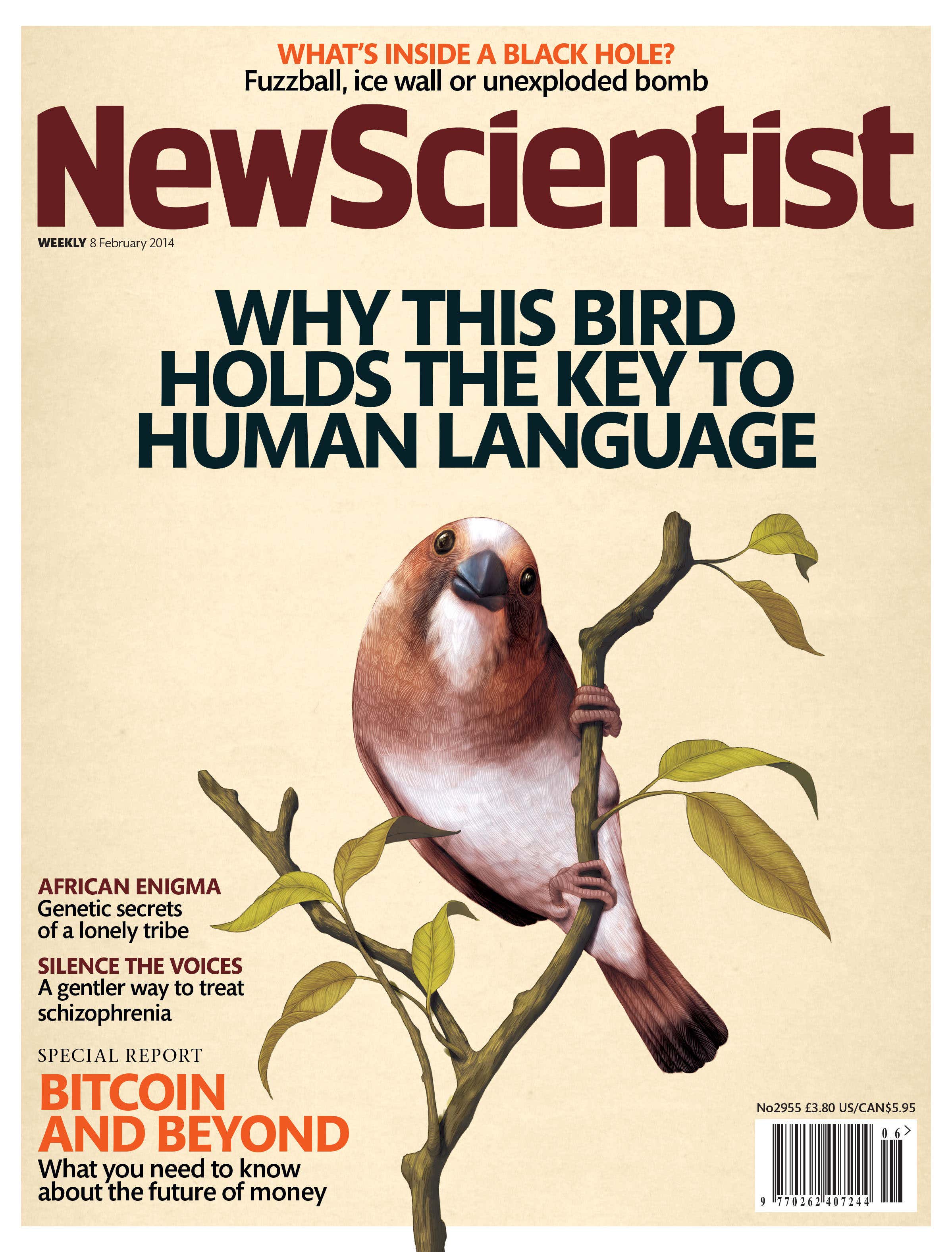
Issue no. 2955 published 8 February 2014

Sign up to our weekly newsletter

Receive a weekly dose of discovery in your inbox. We'll also keep you up to date with New Scientist events and special offers.

Sign up
Piano Exit Overlay Banner Mobile Piano Exit Overlay Banner Desktop