Subscribe now

Letters archive

Join the conversation in New Scientist's Letters section, where readers can share their thoughts and opinions on articles and see responses from experts and enthusiasts across a range of science topics. To submit a letter, please see our terms and email letters@newscientist.com


30 April 2014

Coming clean

From Joe Brown

Fred Pearce describes a key caveat to announcements in 2010 that the Millennium Development Goal target for access to safe drinking water had been met (12 April, p 12) . In his article, I am quoted as saying that the World Health Organization has been silent on this issue. To clarify, I was referring to …
30 April 2014

Synthetic state

From Mike Childs

Synthetic biology could, as Colin Barras suggests, be useful in addressing many of the world's challenges, such as how to easily and cheaply produce medicines (12 April, p 34) . But the technology could also face a backlash if the public's genuine environmental and social concerns aren't recognised and acted on. Environmentalist Jonathon Porritt recently …

30 April 2014

Insecurity services

From John Baker

While I applaud efforts described by Merijn Terheggen to improve software integrity (19 April, p 21) , the reality is that such measures are too little too late. We have a situation in which well-funded commercial and government organisations have incentives to keep security weak. Security services should focus on defensive measures rather than all-out-assault, …

30 April 2014

Hard to swallow

From Seth Patrick

I was disappointed to see the recent study on fruit and vegetable intake given such an easy ride in Clare Wilson's article (5 April, p 12) . The study's results were a mixed bag. When just including overweight people (about 60 per cent of the participants) the extra benefit of seven or more portions a …

30 April 2014

Conscious state

From Keith Atkin

I see that the emperor is still wearing his new clothes. I refer to the implausible garments paraded by theoretical physicist Max Tegmark in his examination of a physical description of consciousness (12 April, p 28) . The idea that the complexity of a system explains consciousness is very old hat and fundamentally illogical and …

30 April 2014

Conscious state

From Tony Kline

I was disappointed that Tegmark ended his excellent article by referring to "calculation" of how conscious observers "perceive" their world. A more fruitful emphasis would be on how conscious observers "create" their world. One of the essential features of consciousness is that it interprets perception, deduces meaning and imposes that unified meaning on the world, …

30 April 2014

Natural GMOs

From Peter Ashby

Michael Bailey is wrong that genetic modification is novel or unnatural (12 April, p 33) . Lateral gene transfer is the natural process of organisms getting genes from unrelated species. The poster child for this phenomenon is the sea squirt, an animal that makes cellulose, a fibre normally only found in plants. It has pinched …

30 April 2014

Stinging advice

From Andrew Beattie

Unfortunately there is a problem with promoting beekeeping if advocacy is for the honeybee alone (12 April, p 21) . Many honeybee species raised commercially for pollination are kept throughout the world, well beyond their native range. Where successful, this apiculture can negatively affect native bees and other animals dependent on nectar and pollen. Further, …

30 April 2014

Potty mouth

From Trevor Snell

Your article on whether our brain is encoded from birth to make infants pop everything into their mouths was thought-provoking (5 April, p 19) . There must be an evolutionary benefit that overrides the risk of choking on the small parts. Perhaps the choking hazard itself isn't important, but the grubby hands of the sibling …

30 April 2014

Much ado about 0

From John Meachen

Your article on the influence of radical cosmology on Shakespeare (19 April, p 41) reminded me of "nothing" in particular. Shakespeare introduces zero as a number in King Lear . In the first act, the Fool says to Lear, "now thou art an O without a figure. I am better than thou art now; I …

30 April 2014

End of intolerance

From Rev

I am surprised to find letters in New Scientist every other week presenting contrasting views concerning religious belief and atheism (5 April, p 33) . I read your magazine to keep abreast of scientific developments, and although I would love to wade in with my own opinions, I don't believe they would add anything to …

30 April 2014

Russian gas

From Richard Durrant

The Russian annexation of Crimea has highlighted the dependency of Germany and eastern Europe on Russian supplies of natural gas (8 March, p 6) . We are told that generating power using natural gas rather than coal reduces our emissions of carbon dioxide. But this is a dishonest claim, because the CO 2 produced when …

30 April 2014

All talk

From Jomar de Vrind

Bob Holmes's article on the human capacity for language (5 April, p 11) features the work of researchers Jennifer Culbertson and David Adger. All they have shown in their research on preferred language constructions is that people consult an internal semantic hierarchy when confronted with an artificial language, and not that language is innate. It …

30 April 2014

Sound mirrors

From Gemmell Millar

The ongoing search for the wreckage of Malaysian flight MH370 (12 April, p 6) prompts me to wonder if it would be possible to increase the reflectivity of aircraft flight recorders by shaping the casings to incorporate a number of corner cube reflecting surfaces, rather than leaving them smooth. Small surface craft such as yachts …

30 April 2014

Out of the sun

From Brian Ball

In the argument over whether Voyager 1 has left the solar system, many different definitions of where that boundary lies were discussed (5 April, p 39) . But to me, the most obvious suggestion was the one disregarded early on, the Oort cloud. Shouldn't the end of the solar system be where the sun's tangible …

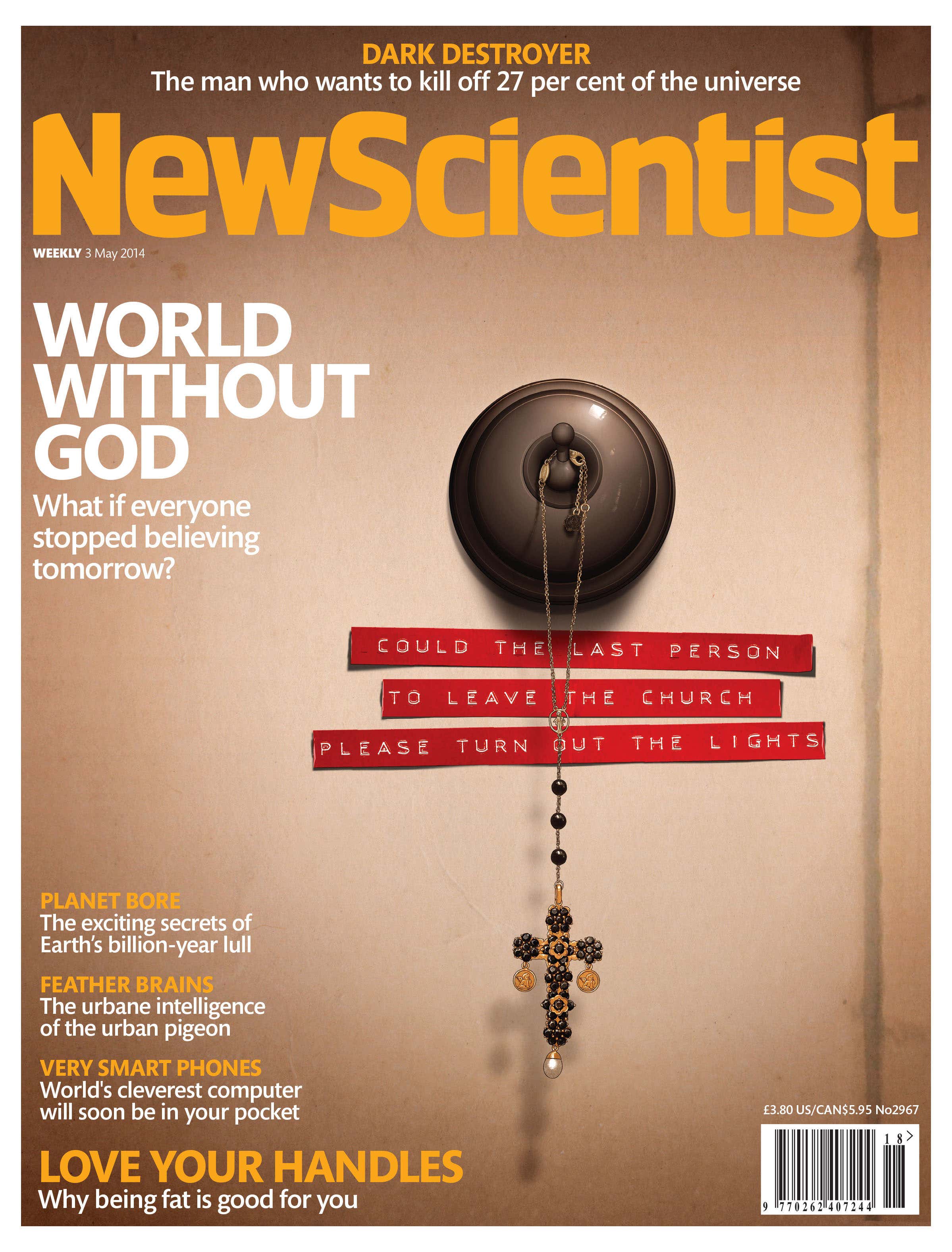
Issue no. 2967 published 3 May 2014

Sign up to our weekly newsletter

Receive a weekly dose of discovery in your inbox. We'll also keep you up to date with New Scientist events and special offers.

Sign up
Piano Exit Overlay Banner Mobile Piano Exit Overlay Banner Desktop