Subscribe now

Letters archive

Join the conversation in New Scientist's Letters section, where readers can share their thoughts and opinions on articles and see responses from experts and enthusiasts across a range of science topics. To submit a letter, please see our terms and email letters@newscientist.com


2 July 2014

Balance of power

From Bryony Worthington

Reducing demand for energy is of course a good thing, but that doesn't address the question of how to provide for energy we cannot or do not wish to do without (21 June, p 32) . In future, rather than selecting off-the-shelf technologies, countries will increasingly tailor their energy supply to fit their circumstances. In …
2 July 2014

Balance of power

Indeed, efficiency savings are no substitute for investment in robust, sustainable energy generation. But as our article points out, market-based mechanisms to smooth peaks in demand can help to reduce the cost of that investment – to everyone's benefit.

2 July 2014

Balance of power

From Roy Harrison

It's a pity that the UK government doesn't take energy reduction more seriously. We already have an efficiency-testing scheme for domestic appliances. Why don't sales taxes depend on these, as they do with cars? An A-rated tumble dryer could attract a 5 per cent sales tax, a B-rated one 20 per cent and so on. …

2 July 2014

TB or not TB?

From John R

Adrian Williams and Robin Dunbar make a persuasive case for the probiotic effect of the tuberculosis pathogen in our evolutionary transition from a vegetarian to an omnivorous diet, and the increase in brain volume that accompanied it (21 June, p 28) . They propose that the pathogen served us by sustaining levels of a nutrient …

2 July 2014

And baby makes four

From Anna Dyer

You discuss the ethical and legal issues arising from the creation of "three-parent" embryos by assisted reproduction (14 June, p 28) . A stated problem with this method is that changes made to mitochondrial DNA (mtDNA) can be passed down through the generations. But there is a simple solution. As mtDNA is transmitted exclusively from …

2 July 2014

And baby makes four

From Les Hearn

It is disappointing to see opposition to mitochondrial transfer based on such flimsy grounds. The safety concerns raised are dwarfed by those faced by parents who go ahead and have a baby carrying faulty mitochondria. As far as the safety risks of pregnancy in affected women are concerned, they will also face these if they …

2 July 2014

Doctor on call

From David Watson

I read with interest your leader on telemedicine (14 June, p 5) . In 1905 in the Netherlands, Willem Einthoven used his string galvanometer to transmit a patient's electrocardiogram to a lab a mile away using a telephone line. Eighty years later, the Queensland government leased a transponder on the AUSSAT 1 telecoms satellite and …

2 July 2014

Mechanised meals

From David Cole

I enjoyed your special report on the future of eating, but the article raised a number of issues (7 June, p 10) . The environmental and health benefits of substituting plant protein for animal protein seem incontestable. The downside is that this will further ratchet up the importance of high-tech manufactured food, further distancing the …

2 July 2014

Rational distrust

From Matt Black

John Wallace makes the point that disease-resistant American chestnut trees might have been a more persuasive ambassador for genetic modification than Monsanto's Roundup Ready soybeans (21 June, p 30) . This touches on something at the heart of anti-GM sentiment. Many people, including those with a science background like me, are not opposed to GM …

2 July 2014

Ethical code

From Colin Parrish

Forgive me if I fail to share your joy in response to "whistle-blower" Edward Snowden's exposure of the US National Security Agency's surveillance techniques (21 June, p 5) . Of course we should be alert to the problem of overly intrusive governments, but by far the more serious threat right now is that posed by …

2 July 2014

Robotic personality

From Peter Wright

Derek Scherer's interview on making robots loveable reminded me irresistibly of the Sirius Cybernetics Corporation (SCC) in The Hitchhiker's Guide to the Galaxy by Douglas Adams (14 June, p 29) . Specifically, their attempt to give robots "Genuine People Personalities", which resulted in Marvin the paranoid android. I can only concur with protagonist Arthur Dent …

2 July 2014

Hard water area

From Nick Rankin

Ascension Island wasn't the only outpost of the British Empire to worry about its fresh water supply (7 June, p 24) . Gibraltar was parched too. Between 1898 and 1928, six reservoirs were excavated on the Rock of Gibraltar, and on the east side of the peninsula a water catchment area covered 5.6 hectares. Timber …

2 July 2014

A lot of hot air

From David Moulton

I was surprised to read UK Independence Party (UKIP) candidate Howard Koch's claims that his is a science-friendly movement (14 June, p 32) . The UKIP website reveals only one science-related policy: a pledge to scrap wind-power subsidies and other green taxes . I might be forgiven for thinking that UKIP's science policy is as …

2 July 2014

For the record

• Our leader on the human microbiome suffered a terminological failure. The idea that TB might have helped us evolve large brains is only a hypothesis (21 June, p 5) . • Ali Maalin was the last person to catch smallpox naturally (14 June, p 38) , however the final cases occurred in a lab …

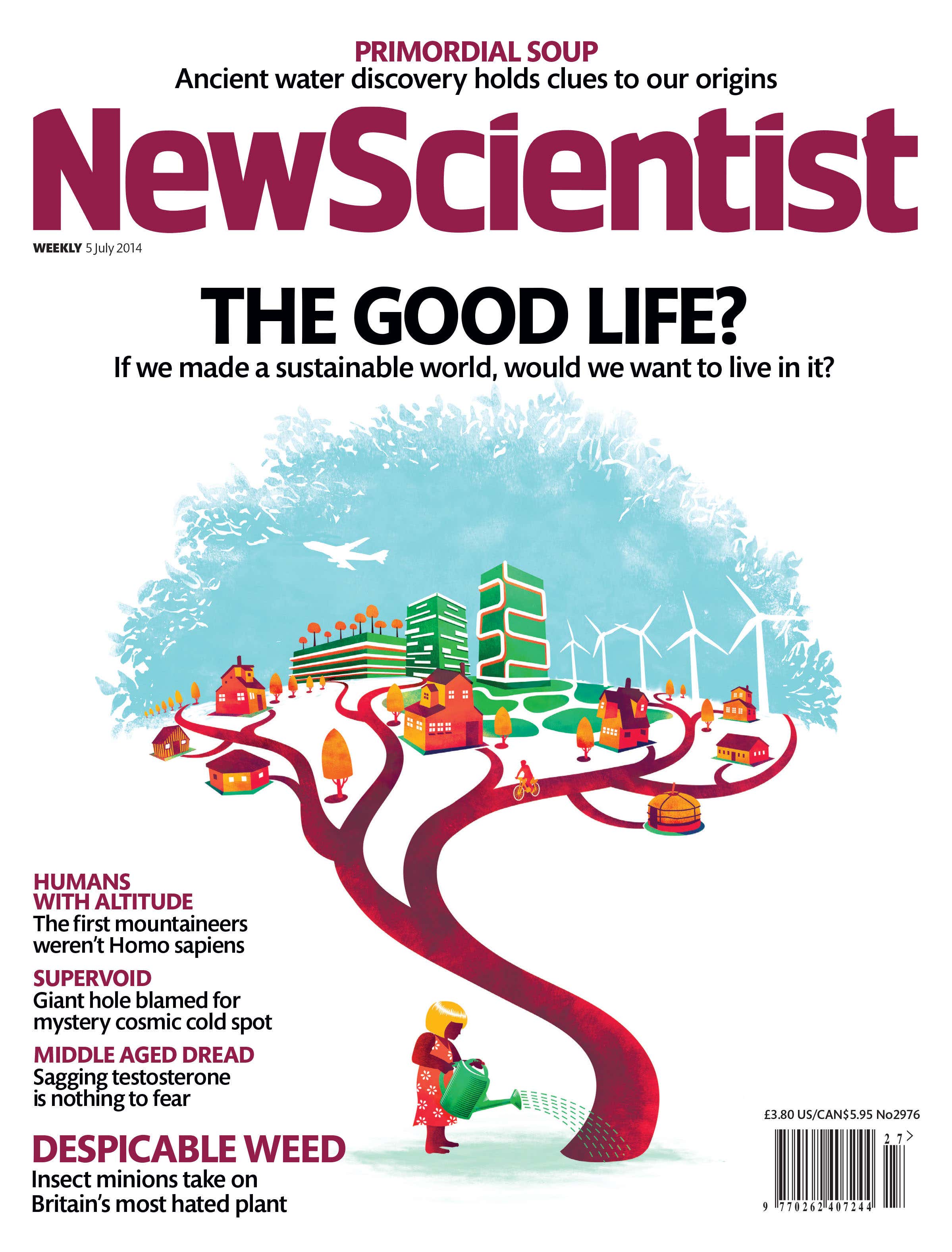
Issue no. 2976 published 5 July 2014

Sign up to our weekly newsletter

Receive a weekly dose of discovery in your inbox. We'll also keep you up to date with New Scientist events and special offers.

Sign up
Piano Exit Overlay Banner Mobile Piano Exit Overlay Banner Desktop