Subscribe now

Letters archive

Join the conversation in New Scientist's Letters section, where readers can share their thoughts and opinions on articles and see responses from experts and enthusiasts across a range of science topics. To submit a letter, please see our terms and email letters@newscientist.com


3 September 2014

Irrational decisions

From Ross Whiteford

The loss aversion that dogs our ability to deal with climate change as George Marshall describes (16 August, p 24) is documented by Dan Ariely in the book Predictably Irrational . Ariely shows that students who are given free rein over when to submit work generally do worse than those given deadlines spaced throughout the …
3 September 2014

Irrational decisions

From Jill Mills

Daniel Kahneman's research into people's aversion to the facts on climate change, quoted in Marshall's article, sets the tone for much of the debate that occurs around this topic. Marshall distils it to "sacrifice now for benefit later". This indicates a type of bias that affects much research in sociology and medicine, where we only …

3 September 2014

Uncommon ancestor

From Henry Webber

Michael Le Page tells how all life on Earth derives from LUCA, the last universal common ancestor (16 August, p 30) . It seems odd that life originated only once. Why has a different biochemistry not begun to evolve in parallel during all these billions of years? Was the emergence of prokaryotic and then eukaryotic …

3 September 2014

Uncommon ancestor

From The editor replies

• There has been a lot of speculation about this. LUCA is widely thought to have been the amalgamation of various proto-biochemistries, and most researchers are open to the idea of a "second genesis" – multiple independent origins of life that were outcompeted by life as we know it. And many researchers think other biochemistries …

3 September 2014

Young blood

From Thor Simpson

Helen Thomson writes that transfusions of young blood may help treat age-related conditions such as Alzheimer's and heart disease (23 August, p 8) . Given that there are about 2 million blood transfusions in the UK every year, and that the blood services and hospitals keep detailed records, could the research benefit by analysis of …

3 September 2014

Young blood

From The editor replies

• There is a lot of blood swapping going on, but the benefits of young blood are likely to be transient, making any effect difficult to measure retrospectively. In addition, uncovering the age of existing donors may be difficult.

3 September 2014

Dangerous water

From Bruce Denness

Stephen Ornes's article about rogue waves suggested that up to half of these waves result from "crossing seas" in which wave trains from different directions interact (26 July, p 42) . In the early 1980s, my research student Chris Machen conducted experiments in a wave tank at Newcastle University capable of generating crossing waves. The …

3 September 2014

Dangerous water

From Charles Hauser

In your article on rogue waves, I was astonished there was no mention that negative peaks exist as well as positive ones. Such rare, huge troughs might be more dangerous than waves of similar magnitude and would be more difficult to spot from the deck of a vessel. This might explain the lack of observation …

3 September 2014

Staying power

From Robert Muirhead

George Wadsworth makes very valid points about the need to use all alternatives to generate electricity for the world's poorest people (23 August, p 28) . These alternatives need to be maintainable by those communities or they will eventually fall into disrepair and discredit future efforts. Remote villages may have no skilled technicians able to …

3 September 2014

Put the diet on ice

From Jon Arch

As well as tackling autoimmune disorders such as type 1 diabetes (23 August, p 26) , consciously raising the activity of your sympathetic nervous system could be used to combat obesity. Since 2009, there has been renewed interest in the possibility of stimulating brown adipose tissue to burn fat. Repeated exposure to cold – used …

3 September 2014

Heart in your mouth

From Nigel Olliver

Congratulations to Jon White for an excellent article examining the mixed health benefits of saturated fat (2 August, p 32) . However he seems to have missed a further meta-analysis. It was noted that Japanese people on a low-fat diet experienced a low incidence of heart disease, as did the French who enjoyed a high-fat …

3 September 2014

Dying with dignity

From A

You report on the growing number of people from the UK, especially those with neurological diseases, going to clinics in Switzerland to end their lives (23 August, p 7) . One reason might be that many people worry they will have a painful, undignified death. Some relatives remain traumatised after seeing their dying husband or …

3 September 2014

Pythagoras uncut

From Sam Warburton

I am not sure whether I am more surprised by Guy Cox's revelation that you needed to submit to the distinctly un-Greek custom of circumcision to be admitted to the library of Alexandria, founded around 280 BC, than I am to read that it applied to Pythagoras, who passed away some 200 years earlier (9 …

3 September 2014

Cosmic tangles

From Llewelyn Storey

Anil Ananthaswamy describes a thought experiment in which three electrons behave as if they were linked in some way, without their having been entangled artificially (2 August, p 8) . This experiment has not yet been performed, but remote correlations between non-entangled photons were demonstrated in 1956 by Robert Hanbury Brown and Richard Twiss. They …

3 September 2014

On deaf ears

From James Shepherd

Your article on health concerns surrounding eating wheat misses an important point (12 July, p 28) . Fad dieting is problematic not because of scientific controversy over whether non-coeliac gluten sensitivity is over-diagnosed, but because people don't heed science at all. In particular, they don't bother to consult a doctor about their symptoms before removing …

3 September 2014

A pilot's best friend

From Iain Cromarty

For passengers to feel safe, it seems we need a human presence in the cockpit (9 August, p 30) . This brings to mind the back pages of Flight magazine at least 20 years ago, when arguments began about whether two pilots or one were necessary. "In future, the cockpit will contain just one pilot …

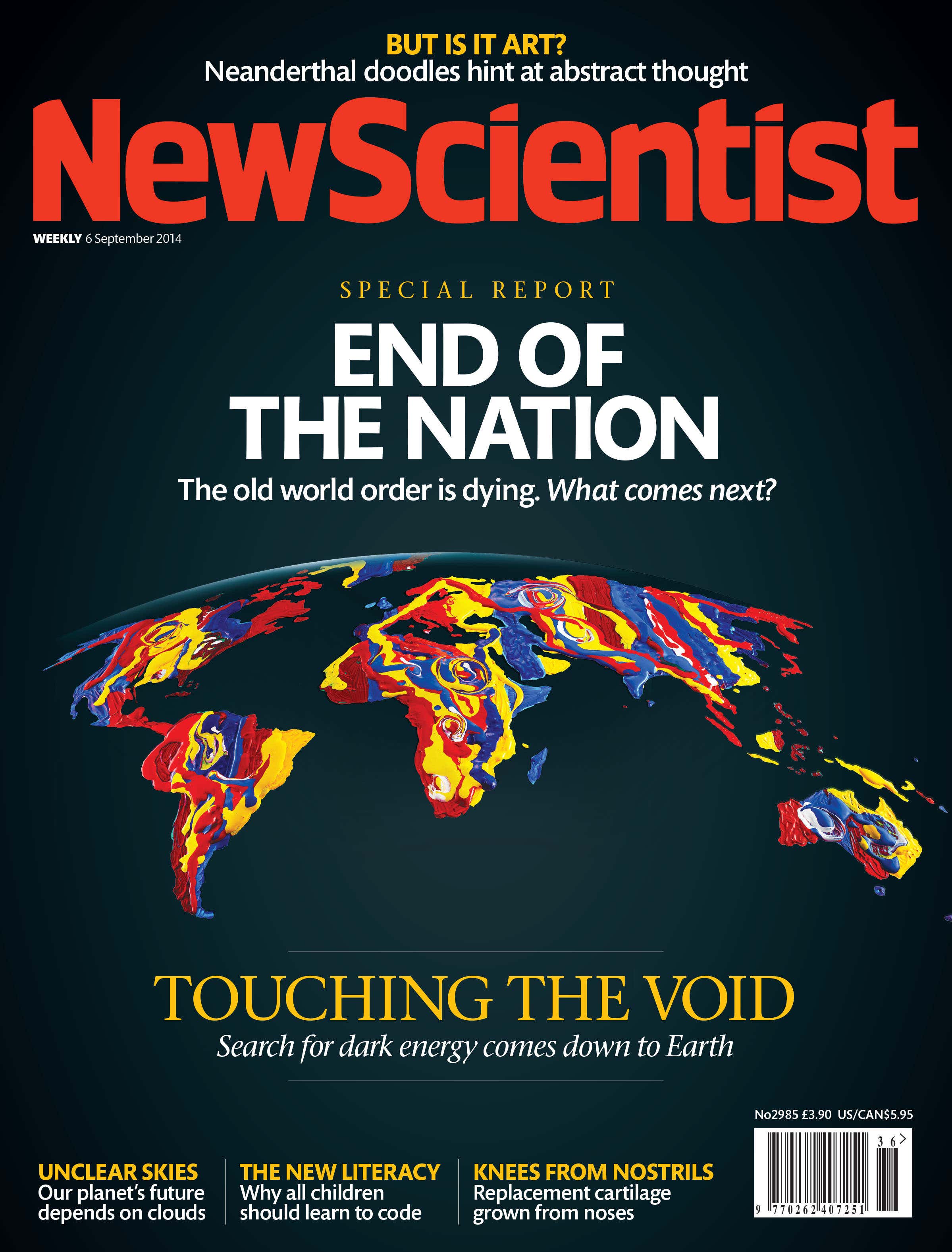
Issue no. 2985 published 6 September 2014

Sign up to our weekly newsletter

Receive a weekly dose of discovery in your inbox. We'll also keep you up to date with New Scientist events and special offers.

Sign up
Piano Exit Overlay Banner Mobile Piano Exit Overlay Banner Desktop