Subscribe now

Letters archive

Join the conversation in New Scientist's Letters section, where readers can share their thoughts and opinions on articles and see responses from experts and enthusiasts across a range of science topics. To submit a letter, please see our terms and email letters@newscientist.com


17 September 2014

Power to the farmers

From Chris Walker

Your article on the Alliance for a Green Revolution in Africa (AGRA) assesses the success of the scheme on its own terms: fertiliser sold, "improved" seed varieties grown and farmers accessing credit (6 September, p 12) . Yet AGRA is failing to prove its direct impact on poverty and nutrition. What's more, the scheme makes …
17 September 2014

Anti-afterlife dogma

From Brian Josephson

Can psychics contact the dead? David Silverman gives this as an example of a TV programme that cannot be serious (6 September, p 26) . Yet in 1992, the BBC broadcast a series, In Search of the Dead , the second episode of which was devoted to this very question. Did the BBC slip up …

17 September 2014

Anti-afterlife dogma

From Eric Kvaalen

I know nothing about the TV programmes that David Silverman attacks in his advertisement for AtheistTV, but I find his attitude unscientific. His recommended response to questions such as whether ghosts exist or miracles occur is to chuckle and say "Wait. You're not serious?" Whatever happened to the idea of examining evidence? Les Essarts-le-Roi, France

17 September 2014

Fleavolution

From Bob Butler

Rob Dunn's report on wildlife in the great indoors (23 August, p 34) discussed insects evolving resistance to pesticides and I believe I have another example. Some groups of dog and cat fleas seem to have evolved resistance to particular antiparasitic drugs that I prescribed before I retired as a veterinary surgeon. When I had …

17 September 2014

Dial M for mystery

Amanda Gefter says every book and article she consulted gave the same answer to the question "What does the M in M-theory mean?": "nobody knows" (19 April, p 47) . She finally tracks down Edward Witten, who reveals: "the M stood for magic, mystery or membrane, according to taste" – as he did in my …

17 September 2014

At the pointy end

From Chris Walter

Discussing the possibility of pilotless planes, you offer a graph showing that "the majority of fatal accidents are down to humans" (9 August, p 30) . You do not mention how many of those pilot-induced accidents involved failed technology as a factor. For example, the 2009 crash of flight AF447 into the Atlantic was precipitated …

17 September 2014

Cholesterol carriage

From Kathryn Stewart

Clare Wilson reports research on the relationship between genes for proteins that "carry bad cholesterol" and longevity (6 September, p 10) . Could it be that the answer to long life lies in how cholesterol is transported in our bodies, rather than which type is carried? My family has a long history of living into …

17 September 2014

Sleep and sun cycle

From Toby Pereira

You report calls for US schools to delay their opening times to 8.30 am or later (30 August, p 6) . These are based on teenagers' body clocks shifting and causing them to go to bed and wake up 2 hours later than they did previously. Because the effect is linked to body clocks, it …

17 September 2014

Bee is for balsam

From Granville Tunnicliffe Wilson

Beekeepers will have mixed feelings about a rust fungus that could be the downfall of the Himalayan balsam plant (6 September, p 4) . At this time of year, when little else is available, the plant provides a valuable source of nectar and pollen for bees. The garden plant busy Lizzie ( Impatiens walleriana ) …

17 September 2014

Finding their lunch

From Gerald Legg

John Harvey mentions tomato seeds on the seabed off Liverpool (30 August, p 30) . This reminds me of scuba diving on Boxing Day off the coast of Sussex, UK, some years ago. It was quite normal to find patches of sweetcorn derived from all those Christmas dinners that were not chewed or digested, but …

17 September 2014

Modernist munching

From Margaret Scott

I have to take issue with the "modernist" attitude of your guide to diet supplements (30 August, p 32) . I accept that the information and advice works for 21st-century diets in the US and Europe, but for most of the last 10,000 years people have not had access to broccoli, bananas and Brazil nuts. …

17 September 2014

Random serve

From Harvey Smith

Achieving random tennis serves to take advantage of opponents' prejudice for order need not involve drawing segments on your watch face (6 September, p 47) . A tennis coach once told me to hold the racquet handle loosely when serving. If you don't know where the ball's going, your opponent certainly won't. Purley, Surrey, UK

17 September 2014

Fractal precedence

From Ali Rhayem

Your article "Sunny surprise for fusion reactors" refers to a finding of an "unexpected" fractal pattern in the turbulent solar wind (3 May, p 12) . It cites a paper by Sandra Chapman that says this is the first such observation. By chance, I came across a book by C. J. Schrijver and C. Zwaan …

17 September 2014

Facts for the birds

From Jonathan Elphick

I was delighted to read Adrian Barnett's positive and well-written review of my book The World of Birds (23 August, p 45) . However, I have a couple of points to raise. The largest known flying bird ever was not the seabird Odontopteryx but, as I described in my text, Argentavis , another Miocene bird …

17 September 2014

For the record

• We quoted researcher Fabian Suchanek: "You and I are stored in the Knowledge Vault in the same way as Elvis Presley" (23 August, p 18) . Google has now responded that "The Knowledge Vault does not deal with personal information."

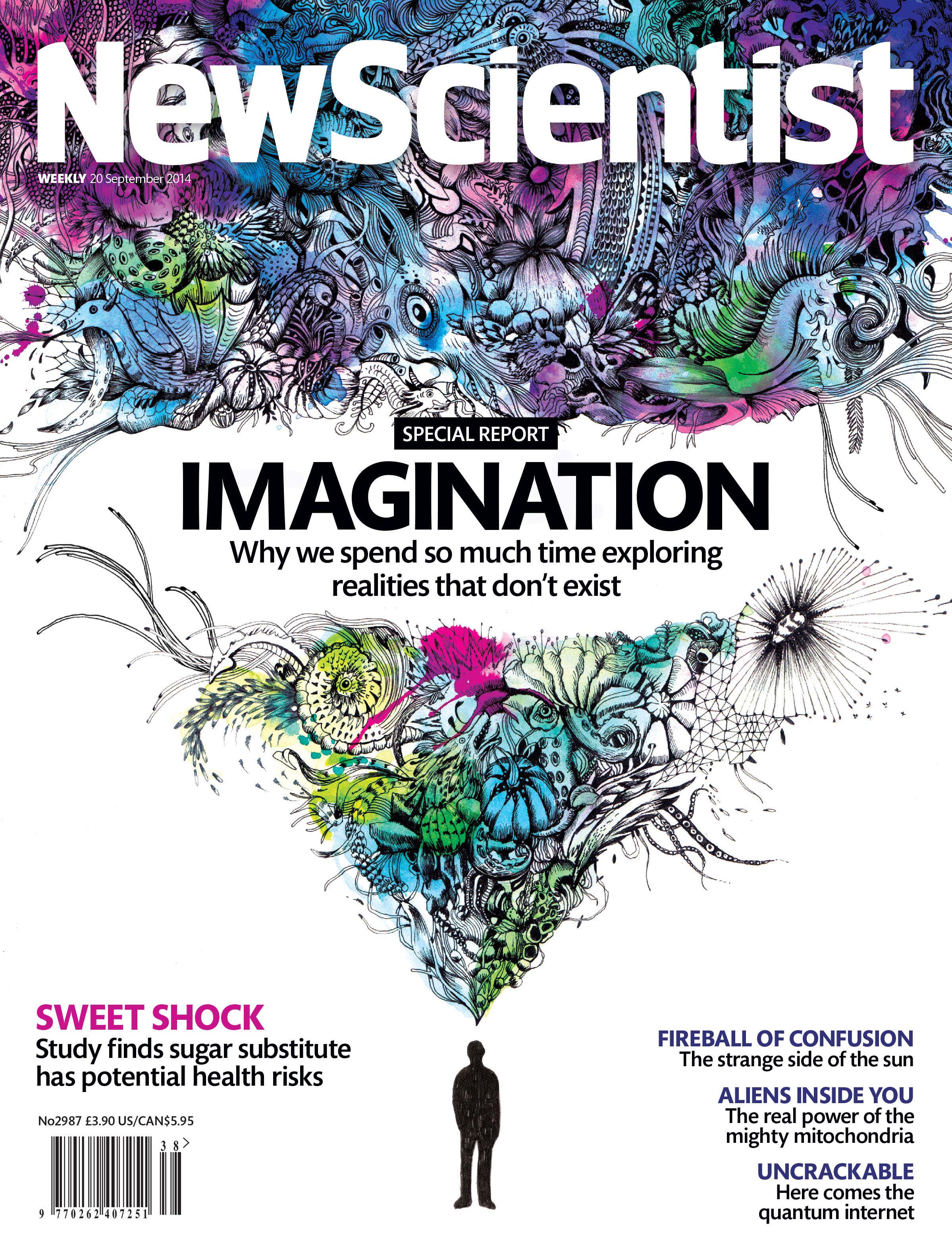
Issue no. 2987 published 20 September 2014

Sign up to our weekly newsletter

Receive a weekly dose of discovery in your inbox. We'll also keep you up to date with New Scientist events and special offers.

Sign up
Piano Exit Overlay Banner Mobile Piano Exit Overlay Banner Desktop