Subscribe now

Letters archive

Join the conversation in New Scientist's Letters section, where readers can share their thoughts and opinions on articles and see responses from experts and enthusiasts across a range of science topics. To submit a letter, please see our terms and email letters@newscientist.com


24 September 2014

Enhancement rights

From Steve Fuller and Veronika Lipinska

In his review of our book, The Proactionary Imperative (6 September, p 46) , Carl Elliott capitalises on outdated stereotypes of the Nuremberg Code and disabled people. We regard the Nuremberg Code, which continues to underwrite institutional review board constraints on research using human subjects, as an instance of US jurist Oliver Wendell Holmes Jnr's …
24 September 2014

Pressing charges

From Martin Edwardes

Richard Smith says he wants to see research misconduct criminalised (13 September, p 27) . But research is a civil contract between the organisation initiating the research and those carrying it out. Any failures in the process can and should be dealt with by the civil courts. The real-world harm that Smith describes begins at …

24 September 2014

National distress

From Harold Caplan

Debora MacKenzie's magisterial account of the evolution of nation states asks whether we can "manage a transition to whatever we need next" (6 September, p 30) . I believe it is already happening – but only thanks to the continuation of nation states. One of the most successful examples is the control and improvement of …

24 September 2014

National distress

From John Bodley

Rather than the end of nations that Debora MacKenzie refers to, a global system based on small nations would be a better way to "run a planet". My research suggests that the problem is not the state or nationality as such, but how to prevent too much power from piling up in too few hands …

24 September 2014

Coding renaissance

From Tim Stevenson

I rejoice at Niall Firth's paean to the idea of teaching coding to kids (6 September, p 38) . I recall that Arthur C. Clarke wrote: "Any sufficiently advanced technology is indistinguishable from magic." In this age when magical thinking is still far too abundant, anything that demythologises the wonderful gadgets technology provides us with …

24 September 2014

Coding renaissance

From Ted Webber

A push for children to learn coding early is commendable, but I resent your article's use of the word "narrow" to describe engineers' "view of how things should look or behave". What these classes represent is the need for an earlier and more widespread appreciation of what it truly is to be an engineer. As …

24 September 2014

Games of death

From Adrian Ellis

In re-evaluating Stanley Milgram's infamous experiments, Alexander Haslam and Stephen Reicher argue against the popular view that most people will willingly shock someone to death if an authority figure asks them to (13 September, p 28) . These psychologists might change their mind if they watch the 2010 French/Swiss television documentary Le Jeu de la …

24 September 2014

Soul survivor

From Michael Berkson

Pythagoras's enrolment as a reader at the library of Alexandria some 200 years after his death (6 September, p 29) is entirely consistent with Pythagorean philosophy. A significant tenet was the doctrine of transmigration of the soul after death into another body. Great Shelford, Cambridge, UK

24 September 2014

Shear volume

From Keith Bremner

According to your feature "Roar power", an electric racing car travelling at 100 kilometres per hour will emit about 80 decibels (30 August, p 42) . Yet my electric lawnmower emits 96 dB, according to the manufacturer's warning label. Forest Lake, Queensland, Australia   The editor replies: • We should have mentioned that noise exposure …

24 September 2014

For the record

• We should have described Richard Twitchett as a co-author of the study of scavengers on ichthyosaur remains (13 September, p 12) . He worked with colleagues from Plymouth University.

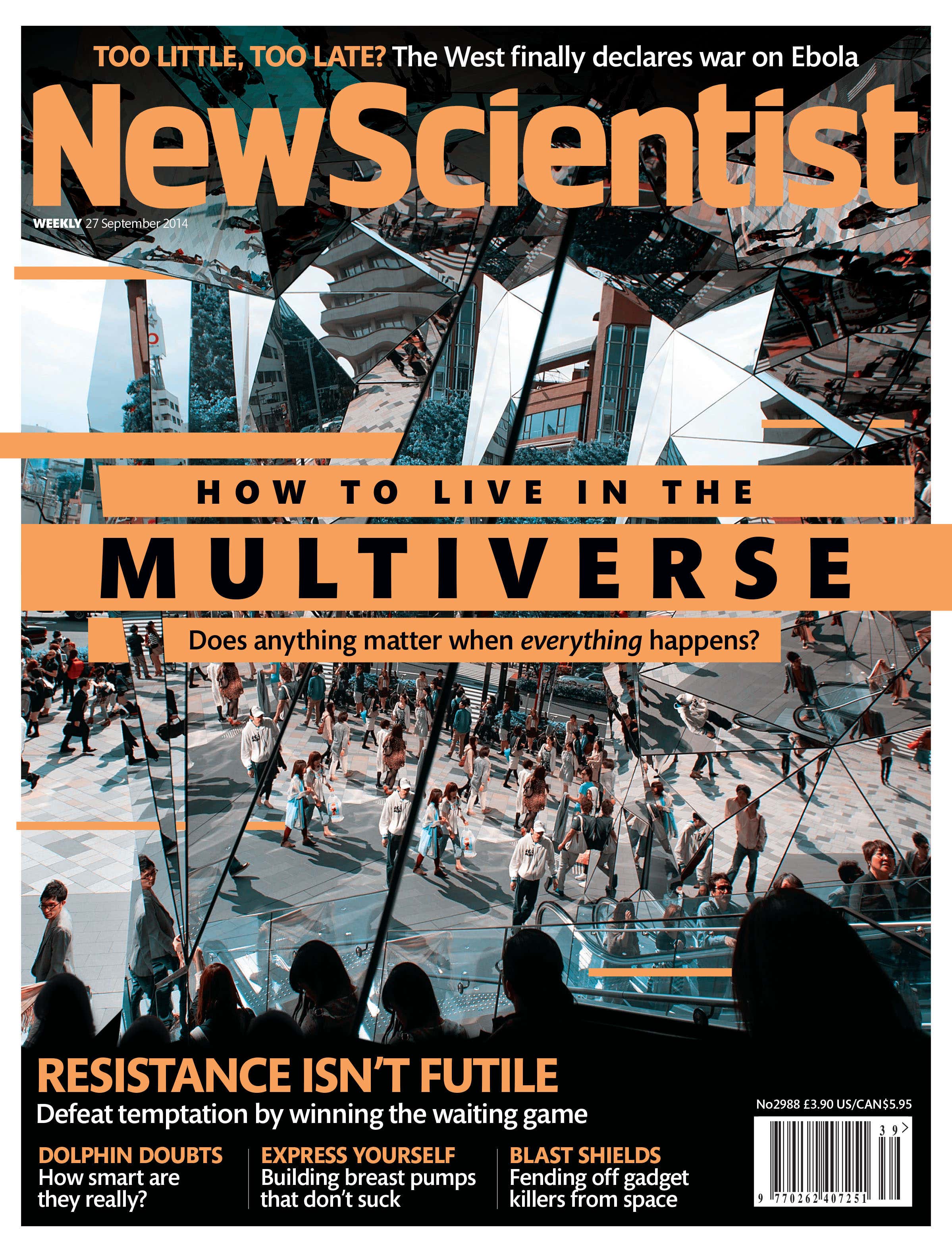
Issue no. 2988 published 27 September 2014

Sign up to our weekly newsletter

Receive a weekly dose of discovery in your inbox. We'll also keep you up to date with New Scientist events and special offers.

Sign up
Piano Exit Overlay Banner Mobile Piano Exit Overlay Banner Desktop