Subscribe now

Letters archive

Join the conversation in New Scientist's Letters section, where readers can share their thoughts and opinions on articles and see responses from experts and enthusiasts across a range of science topics. To submit a letter, please see our terms and email letters@newscientist.com


26 November 2014

Tin soldiers

From Tim Stevenson

The complex issues of robot war that Chris Baraniuk discusses (15 November, p 38) can be boiled down to three questions. First, do we accept the utilitarian principle that we should choose the option that maximises good and minimises harm, rather than being driven by absolute principles? Second, do we agree that violence is the …
26 November 2014

Tin soldiers

From Ted Lovesey

Chris Baraniuk discusses whether robot weapons should be banned. There is a long history of bans on new weapons technology, but most have met with little success. As early as 1139, Pope Innocent II, agreed to ban the use of the crossbow against Christians. Richard I failed to differentiate between Christians in France and Muslims …

26 November 2014

Tin soldiers

From Bryn Glover

The implicit assumption in your article is that robotic weapons would be deployed against human combatants. This ignores the facts about arms acquisition in the modern world. In many conflicts, the same manufacturer may ultimately have provided the weapons used by both sides. This was the case in the 1980 war between Iran and Iraq, …

26 November 2014

Picture this

From Pamela Protheroe

Tiffany O'Callaghan explores fears that reading on screens will have detrimental effects on the development of literacy skills (1 November, p 40) . It's unfortunate how many people hold strong positions on this, given that we have "such a shallow knowledge base", as researcher Anne Mangan notes. This is opposite to my own concerns, about …

26 November 2014

Without a trace

From Jonathan Oates

As a recent biographer of John George Haigh, the "acid bath murderer", I was interested to read Erwin Vermeij's article on the science of dissolving bodies (8 November, p 44) . I would take issue with two points, however. First, Haigh was only convicted of killing one person, Henrietta Helen Olivia Robarts Durand-Deacon, although he …

26 November 2014

Fuelling change

From Nigel Williams

Why does anyone suggest, as Paul Younger does, that divesting from the fossil fuel industry would cause more fuel poverty (15 November, p 26) ? Fossil fuel exploration subsidies in the UK total £750 million a year on average, largely as a result of tax exemptions for oil and gas activities in certain types of …

26 November 2014

Fuelling change

From Perry Bebbington

In justifying his stance against divestment, Paul Younger mentions that our plastics rely on fossil fuels. Surely when oil is made into plastic, the oil should not be referred to as a fuel – fossil or otherwise. It is more akin to "plastic ore" in the same way that iron ore is used for making …

26 November 2014

Trading places

From Chris London

I was very pleased to read your articles exploring the Transatlantic Trade and Investment Partnership (TTIP) ( 1 November, p 32 ). I live in New Zealand, where a similar trade deal, the Trans-Pacific Partnership (TPP) agreement, is being negotiated for the region, likewise undertaken in near-total secrecy. No useful information is coming from the …

26 November 2014

The birdie song

From Guy Cox

Whatever one may think of the hermit thrush, nobody who has listened to Australian butcherbirds can doubt that birds make music (8 November, p 12) . Their varied songs can all be transcribed – both pitch and rhythm – into Western notation. Many Australian composers have used their songs, and Brett Dean even incorporated an …

26 November 2014

Age of polyethylene

From Rob Ellis

Jan Zalasiewicz ponders whether human action has pushed Earth into a new geological age (8 November, p 26) . Discussing anthropogenic changes like new minerals (concrete being an example), one other unique long-lasting material was omitted – plastic. This material is possibly more widespread than any. With that in mind, we could call the new …

26 November 2014

Climate control

From Liam O

I was deeply shocked to read that the Intergovernmental Panel on Climate Change (IPCC) calculated emissions must be "capped at 2.9 trillion tonnes to give a 66 per cent chance of avoiding global warming of more than 2 °C", widely held to be the threshold for dangerous climate change (8 November, p 8) . By …

26 November 2014

Air power

From Andrew Gigiel

Steve Orchard illustrates the inefficiencies of storing excess wind power as compressed air (15 November, p 31) . Compressed air isn't the best option for storing energy unless one has a proper use for the huge quantities of very cold air that will be available when the bottled air is released. Combining wind-powered air compression …

26 November 2014

Sleep furiously

From William Bains

Looking at the difference between skinny and larger people, Linda Geddes comments that inactive skinny people move about more during the day, but may also burn more calories at night (15 November, p 32) . Perhaps this is also due to moving about more? Individuals' movement during sleep varies enormously. In our house, the skinnier …

26 November 2014

Reef relief

From Martin Savage

Michael Slezak refers to the widespread coral bleaching seen during the last spike in ocean temperatures as evidence of the harm these changes have caused (15 November, p 8) . However, coral bleaching – the expulsion of symbiotic algae by the coral – is an adaptive response, akin to sweating in humans. In most cases, …

26 November 2014

Quantum countdown

From Brian Smith

The illustration accompanying your piece on the first run of historic quantum software (1 November, p 10) was captioned with the phrase "Testing, 1, 2, 3". But surely it should have been "0, 1, both"? Berlin, Germany

26 November 2014

For the record

• Flight of fancy: we referred to Lynn Rothschild as creator of a biodegradable drone; in fact she led the team that created it (15 November, p 21).

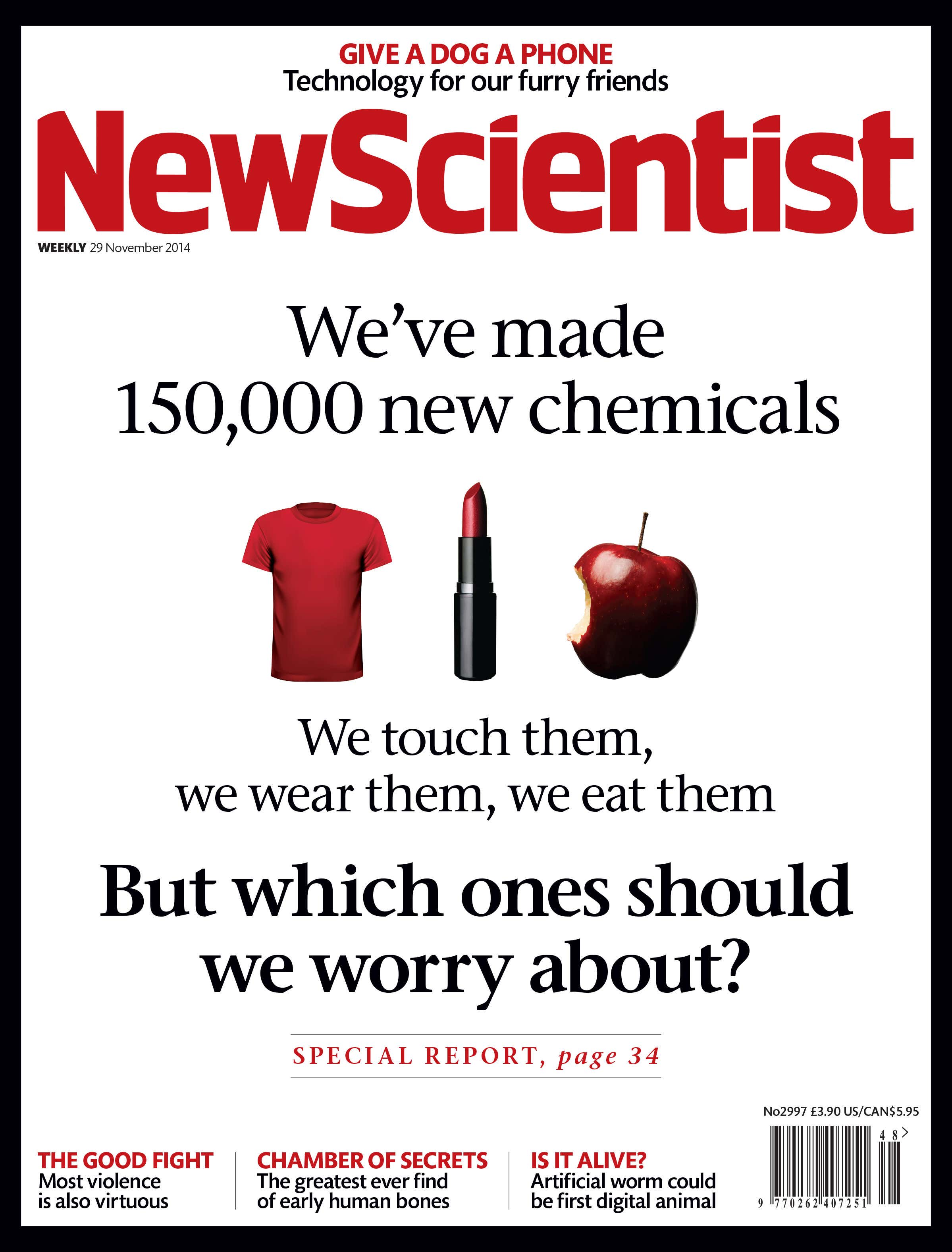
Issue no. 2997 published 29 November 2014

Sign up to our weekly newsletter

Receive a weekly dose of discovery in your inbox. We'll also keep you up to date with New Scientist events and special offers.

Sign up
Piano Exit Overlay Banner Mobile Piano Exit Overlay Banner Desktop