Subscribe now

Letters archive

Join the conversation in New Scientist's Letters section, where readers can share their thoughts and opinions on articles and see responses from experts and enthusiasts across a range of science topics. To submit a letter, please see our terms and email letters@newscientist.com


29 April 2015

Editor's pick: Science involves belief but not faith

From Kate Szell

I was intrigued by your claim that science is not a belief system (4 April, p 5) . Surely what it is not is a faith system. Science is belief based on evidence: faith, on the other hand, is belief irrespective of evidence. Science gives rise to beliefs that fit the existing evidence, allowing for …
29 April 2015

Voting for empathy or for negativity

From Darach Conneely

The article "We are what we vote" may have missed a disturbing aspect of populist politics (4 April, p 24) . Brain scans appear to show very clear differences between psychopaths and people who feel empathy. But when normal people were led to believe that they were observing a person suffering and that this person …

29 April 2015

Voting for empathy or for negativity

From Peter Mendenhall

The negativity bias associated with voting may also explain why two-party politics in the UK has declined over several decades. The Politician's Dilemma, as I call it, is that negative campaigning is effective in the short term but counterproductive in the long term. When party A attacks party B, B has to retaliate to reduce …

29 April 2015

Weekly social

"If there's one thing I look for in champagne it's the taste of wet hair!" Toby Hawkins on Facebook on a tasting of bubbly preserved undersea for 170 years (25 April, p 20)

29 April 2015

Butterflies, causes and hurricanes

From Ian Stewart

Stuart Leslie's letter makes several correct statements about the butterfly effect (4 April) . But it is more informative to understand the sense in which this metaphor is true, instead of demolishing one interpretation in which it is false. It is not true that events of the magnitude of a butterfly flapping its wings do …

29 April 2015

Butterflies, causes and hurricanes

From Tim Morrison

Leslie's letter on the butterfly effect also implies a question on the efficacy of those butterflies. If one assumes a billion butterflies (that's just 50,000 per species) flapping their little wings three times a second for a couple of hours a day during a hurricane season of 100 days, and all we see is 100 …

29 April 2015

We believe these are not delusions

From Jon Arch

New Scientist has often presented arguments that free will is an illusion. So why is the belief that "your thoughts are not fully under your control" listed as a delusion (4 April, p 28) ? Perhaps the deluded ones are the 66.4 per cent who believe that they have full control. Paradoxically, my writing of …

29 April 2015

We believe these are not delusions

From Gail Smith

I have delusion-like beliefs. If I were to be asked if I was in control of all of my actions, or all of my thoughts, I would answer "no". My argument would be that I am clearly not in control of my actions – for example, when I respond to pain. I am not in …

29 April 2015

We believe these are not delusions

From David Waltner-Toews

If your belief system is, even in part, the outcome of evolutionary forces, then it is not a delusion to believe that you are not fully in control of your thoughts. Kitchener, Ontario, Canada

29 April 2015

The Big One still hangs over us

From Ron Gibson

As a very old geologist, I could not agree more with Bill McGuire's warning of the inevitability of catastrophic volcanic eruptions (28 March, p 26) . We in California face a similar catastrophic natural event – a great quake along the San Andreas fault. In 1964, before the plate tectonics revolution led to understanding of …

29 April 2015

The Big One still hangs over us

From Martha Adams

McGuire both makes a point about the impact of disasters such as volcanic eruptions and misses the size of the question about human preparedness. In The Collapse of Western Civilization , historians of science Naomi Oreskes and Erik Conway, imagine "The Great Collapse of 2093", caused by disintegration of the West Antarctic ice sheet. They …

29 April 2015

Survival starting from when?

From Sylvie Yannello

A bar graph with your article on growing cancers compares five-year survival rates for a variety of cancers from the 1970s against those of the 2000s (28 March, p 42) . But since "five-year survival" starts from the date of diagnosis rather than the cancer's inception, it reflects timing of detection as much as patient …

29 April 2015

Scepticism sours sexting statistic

From Ella Taylor-Smith

Douglas Heaven asserts that "sexting is as common among teens as texting a decade ago" (28 March, p 46) . Really? I suspect that most teens are too sensible. Edinburgh, UK

29 April 2015

For the record

• We meant to write that the 103 gigawatts of electricity generating capacity added by renewables worldwide equals the capacity provided by nuclear power plant reactors in the US (4 April, p 7) . • We failed to react to an invasive meme. Macrophages are immune cells, not molecules (18 April, p 32) .

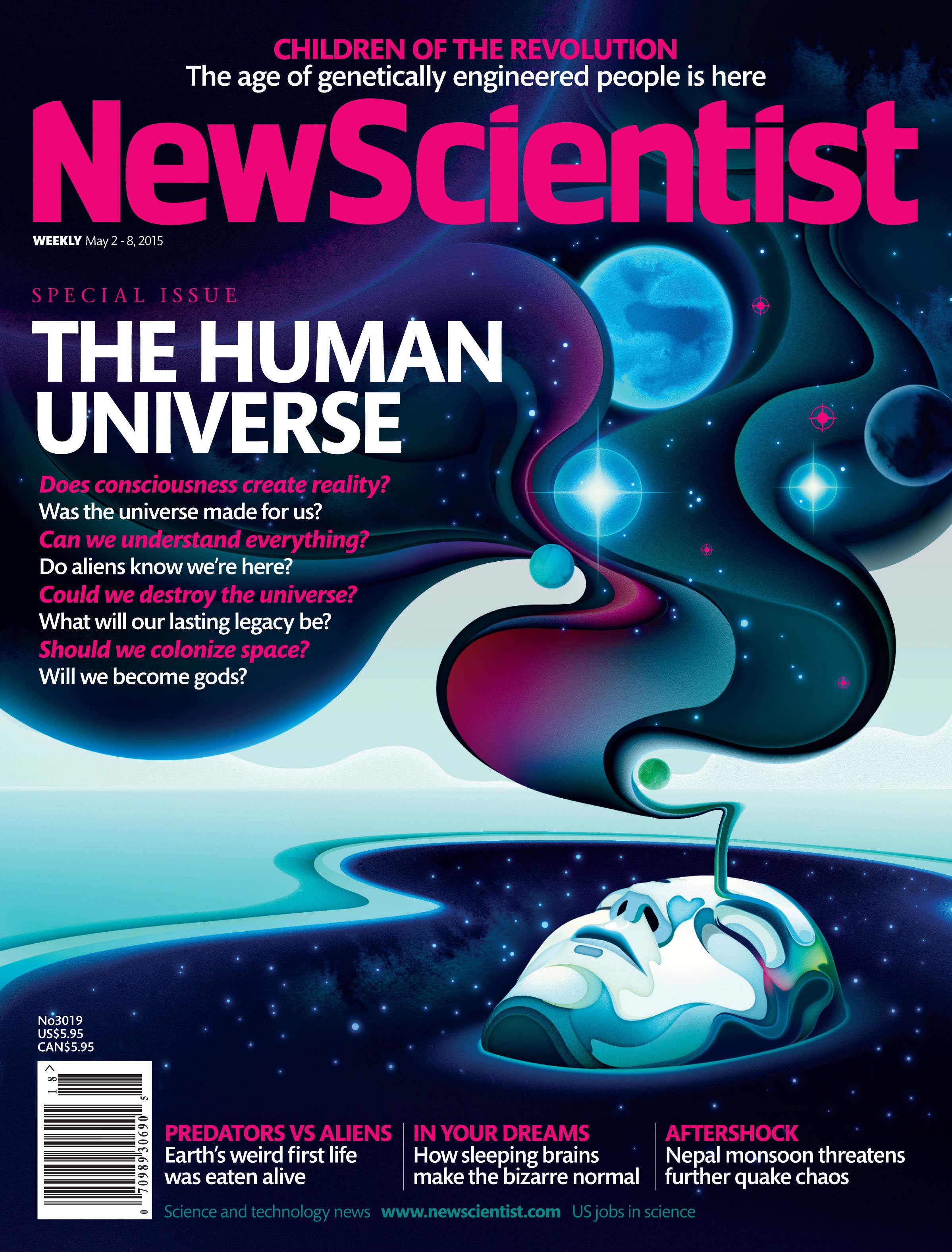
Issue no. 3019 published 2 May 2015

Sign up to our weekly newsletter

Receive a weekly dose of discovery in your inbox. We'll also keep you up to date with New Scientist events and special offers.

Sign up
Piano Exit Overlay Banner Mobile Piano Exit Overlay Banner Desktop