Subscribe now

Letters archive

Join the conversation in New Scientist's Letters section, where readers can share their thoughts and opinions on articles and see responses from experts and enthusiasts across a range of science topics. To submit a letter, please see our terms and email letters@newscientist.com


24 June 2015

Editor's pick: When microbes fight back

From Ben Haller

Engineering gut microbes to do our bidding is a fascinating and important research area (6 June, p 40) . But bacteria have short generation times and large population sizes, and can therefore evolve quite rapidly if selection pressure is strong – as it is in the highly competitive environment of the human gut. If we …
24 June 2015

Iron in the blood and the brain

From Joanna Collingwood

I was interested to read Clare Wilson's report on iron levels in the brain predicting when people will get Alzheimer's disease (23 May, p 17) . A fundamental question about iron status in the cerebrospinal fluid has not yet been addressed, however, because this study measured the amount of ferritin protein, not the amount of …

24 June 2015

Nature's way with energy storage

From Desmond Mottram

The Global Apollo Programme to persuade governments to spend a sum equivalent to the Apollo space programme on solving our energy needs is to be applauded (6 June, p 6) . I do hope the programme remembers that solar energy need not be converted to electricity before it can be stored. Nature has already cracked …

24 June 2015

What is value in a cashless society?

From Paul Tavener

Jem Bendell discusses four threats looming for any cashless society (6 June, p 24) . It seems that a cashless economy is already proposed in Israel, in the name of preventing money laundering and tax evasion. I fear Bendell may have missed the biggest threat of all. If we live in a cashless society there …

24 June 2015

The price of paying for carbon offsets

From Sam Edge

Michael Le Page mentions carbon offsets for flying (30 May, p 37) , but does not follow the logic through. In order to have money for the offsetting – and indeed the flights – one must normally earn it. Being employed is a carbon-generating process for most. Those of us with the disposable income to …

24 June 2015

A selfishness tax on all consumption

From Brian Tagg

Gail Haslam Loose suggests taxing "selfish" indulgences that harm our environment to fund mending it (Letters, 30 May) . But I think she picks a strange target. The effects of a handful of space tourists' joyrides are dwarfed by the steady accumulation of carbon dioxide from the everyday affairs of the ordinary millions, herself included. …

24 June 2015

There are more fish in some waters

From Robin Welcomme

The "hydra effect", in which a higher death rate in a particular species ultimately increases the size of its population, is of great interest to those of us studying trends in the inland fisheries community (30 May, p 28) . Catches have been growing steadily since records began in the 1950s, despite increasing pressure on …

24 June 2015

There are more fish in some waters

From Derek Bolton

Peter Abrams lists a number of negative feedbacks that put the brakes on population decline: fewer predators, less disease, more resources. But taken at face value these are ordinary negative feedbacks – they will reduce the decline caused by, say, culling, but provide no apparent reason for a paradoxical increase in numbers. If the hydra …

24 June 2015

Dogs, wolves and splitting species

From Ann Williams

Michael Slezak writes that "the dates when dogs started to be domesticated and became a different species from wolves are a matter of some controversy" (30 May, p 12) . Near a wolf and dog study centre in Battle Ground, Indiana, there is a small rescue centre for dog/wolf crosses. These are popular pets in …

24 June 2015

Dogs, wolves and splitting species

From Michael Slezak writes

• The concept of "a species" is still a matter of considerable debate. Views on dogs and wolf speciation vary, depending on which aspects researchers prioritise. Canid specialists do not expect an agreed answer any time soon.

24 June 2015

Did I train my colour vision?

From Barry Cash

The article on improving vision ( 23 May, p 33 ) reminded me of spending two years in my early 20s matching colours in a laboratory. At the medical before my next job, to doctors' surprise I could read both the numbers I should be able to see in the Ishihara colour vision test and …

24 June 2015

Alright on the night without the fright?

From John Reynolds

So machines are in training to be concert virtuosos (30 May, p 21) . As an amateur violinist who once worked for a software company that published a music sequencer program, I hope someone writes performance anxiety and the urge to impress into the algorithm. These emotions, I find, can always give performances an extra …

24 June 2015

Vintage vinegar sought in vain

From Eric Kvaalen

You say that the grape juice in the 170-year-old champagne found in the Baltic Sea had not turned to acetic acid probably because of the cool temperatures and dark environment (25 April, p 20) . The reason the champagne had not turned to vinegar was that there was not enough oxygen. Every gram of acetic …

24 June 2015

For the record

• We aimed for a star, but missed: the variable star photographed by the Hubble telescope is V838 Monocerotis (25 April, p 26) . • We were away with the fairy circles in the deserts of Namibia, which in fact receive 50 to 100 millimetres of rain per year (13 June, p 38) .

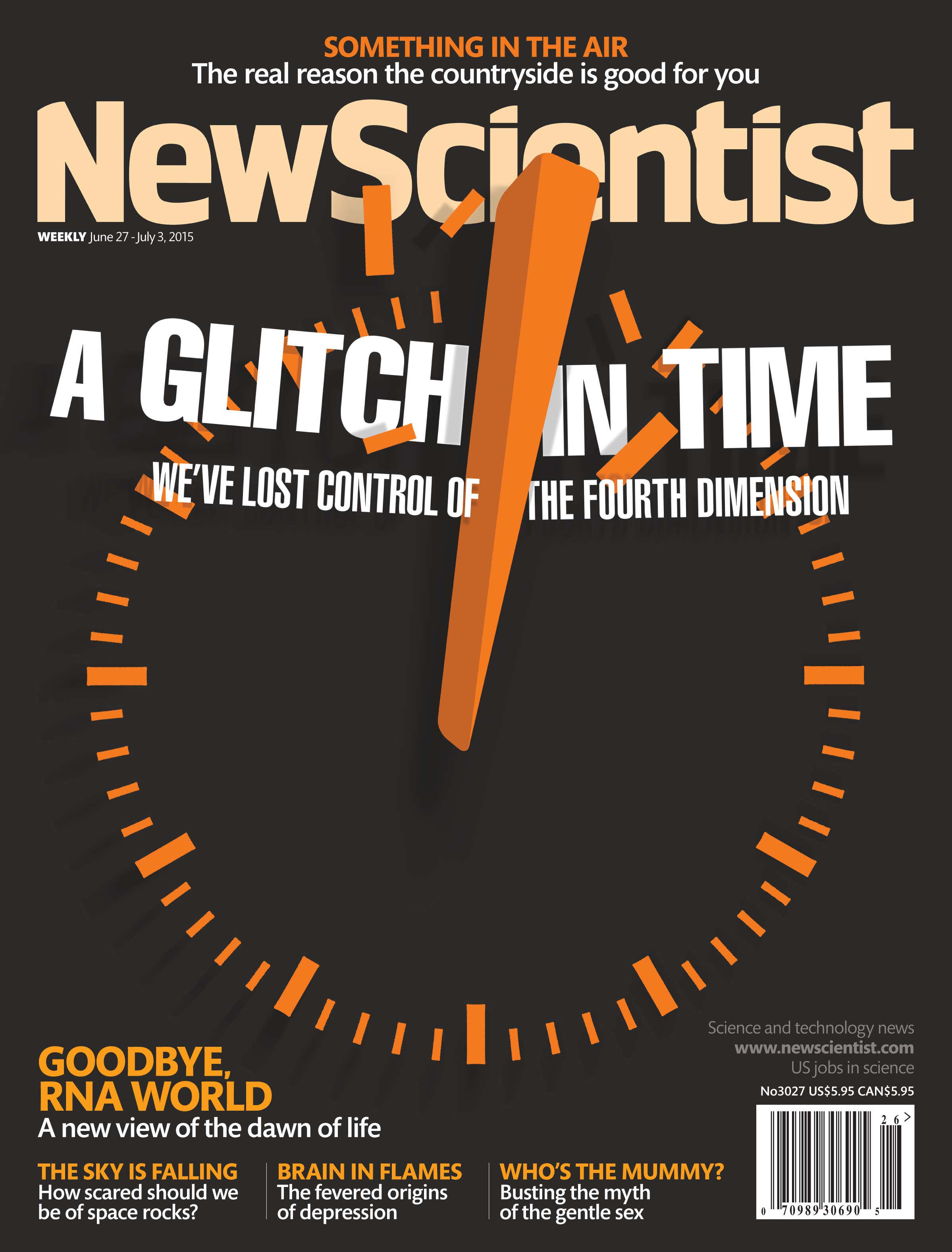
Issue no. 3027 published 27 June 2015

Sign up to our weekly newsletter

Receive a weekly dose of discovery in your inbox. We'll also keep you up to date with New Scientist events and special offers.

Sign up
Piano Exit Overlay Banner Mobile Piano Exit Overlay Banner Desktop