Subscribe now

Letters archive

Join the conversation in New Scientist's Letters section, where readers can share their thoughts and opinions on articles and see responses from experts and enthusiasts across a range of science topics. To submit a letter, please see our terms and email letters@newscientist.com


21 October 2015

Editor's pick: More backing for a citizen's income

From Richard Scrase

There is yet more evidence that paying all citizens an unconditional basic income benefits the country as a whole ( 3 October, p 28 ). A two-year pilot project in Namibia paid 1000 residents of two villages about £7 a month. Interim results showed that only 3 to 4 per cent of the total cost …
21 October 2015

We're just as adaptable as ever

From Guy Cox

I was impressed with Michael Slezak's discussion of climate change's role in human evolution, but baffled by its conclusion, that humans are no longer able to adapt to a changing climate ( 19 September, p 8 ). This seems to contradict the rest of the article. Homo sapiens occupies every environmental niche, from the frozen …

21 October 2015

First class post

I lost a hero when this came out, but I would rather lose a hero than have this kind of stuff carry on. David Ward responds to the finding that exoplanet hunter Geoff Marcy violated his institution's sexual harassment policy ( 17 October, p 6 )

21 October 2015

What is your city's life expectancy?

From Roy Harrison

John Hunwick notes scientists' statements on climate change often understate the situation, and calls for them to speak out clearly (Letters, 12 September ). I would add that they must speak in terms most people can relate to. Saying that there will be a 2 °C or a 4 °C rise in temperature will not …

21 October 2015

Standing on their own four feet

From Charles Nightingale

Sam Wong asks whether dogs' keenness to seek help with problems demonstrates their dependence, or social intelligence ( 19 September, p 14 ). There is a more balanced view: that dogs and people have a symbiotic relationship. Sometimes we are dependent on dogs – crossing roads, searching for drugs, getting them to bark at intruders, …

21 October 2015

Standing on their own four feet

From Linda Dawe

Did Monique Udell's research into the problem-solving capabilities of dogs and wolves include hounds? Working dogs (such as bearded collies) have been selectively bred for intelligence and obedience; companion dogs for cuteness and affection. Hounds in contrast are bred for intelligence and independence as a hunting breed. Any basset hound will figure out how to …

21 October 2015

Standing on their own four feet

From Jackie Duckworth

Udell's dogs did not try to open the box until encouraged to do so. Much of the time, initiative is not considered a desirable behaviour in dogs, particularly when it concerns stealing food, and owners are likely to try to suppress it. With encouragement and simple challenges to start with, most dogs can be taught …

21 October 2015

A fourth good reason for death

From Alec Cawley

Jessica Hamzelou gave three reasons for ageing and death being inevitable ( 19 September, p 32 ). There is a fourth: the regular alternation of good times and bad times. When bad times come, it is better if all the population are not at the same level of fitness, since they will starve at the …

21 October 2015

Weighing up recovery strategies

From Nick Baker

I was interested to read the proposition that those recovering from injury may adopt a gait that causes them to use less energy ( 19 September, p 17 ). Having witnessed my wife recovering from two hip replacements and now coping with a knee problem, I think in her case she modified her gait in …

21 October 2015

Emotions must come before words

From Jeremy Marchant

Tiffany Watt Smith tackles the interesting subject of whether language helps shape emotions ( 19 September, p 41 ). But many writers distinguish between emotions and feelings. Smith seems to use the two words interchangeably. And presumably English speakers were able to feel Schadenfreude before one of them had the bright idea of borrowing the …

21 October 2015

What the imitation game really tests

From Phil Maguire

According to Jacob Aron, Alan Turing "argued that if a computer could fool a person into believing it was a human, it could think" ( 26 September, p 20 ). But Turing never sought to define a criterion for what might count as successful fooling. Instead, his view was that there is an inexhaustible supply …

21 October 2015

Confidentiality is vital in medicine

From John Hughes

When I receive medical treatment I expect all my sensitive clinical data to be kept confidential. Yet Thomas Heldt proposes that data from bedside monitoring devices be stored and made available to researchers ( 26 September, p 27 ). If he wants such data, he must obtain informed written consent from every patient. London, UK

21 October 2015

Editor's reply to "Confidentiality is vital in medicine"

• Thomas Heldt reminds us that in the US this kind of research falls under the Health Insurance Portability and Accountability Act of 1996, which regulates use and disclosure of "protected health information". His work on hospital-archived data proceeds only after all protected information has been removed, so that researchers cannot identify patients from the …

21 October 2015

What really did for Australian beasts?

From Alan Watterson

You report Tim Flannery claiming that in Australia, unlike elsewhere, humans rather than climate were responsible for megafauna extinctions ( 1 August, p 12 ). There is, however, evidence to the contrary. The fossil record indicates that at most 8 species (13 per cent of the Pleistocene megafauna) were still surviving when humans arrived and …

21 October 2015

For the record

• As of 2012, the UK Medical Practitioners Tribunal Service hears cases filed by the UK General Medical Council concerning doctors' fitness to practise ( 10 October, p 4 ). • We missed the measure of the NPL, which stands for the National Physical Laboratory. And caesium-133 is the only isotope of this element that …

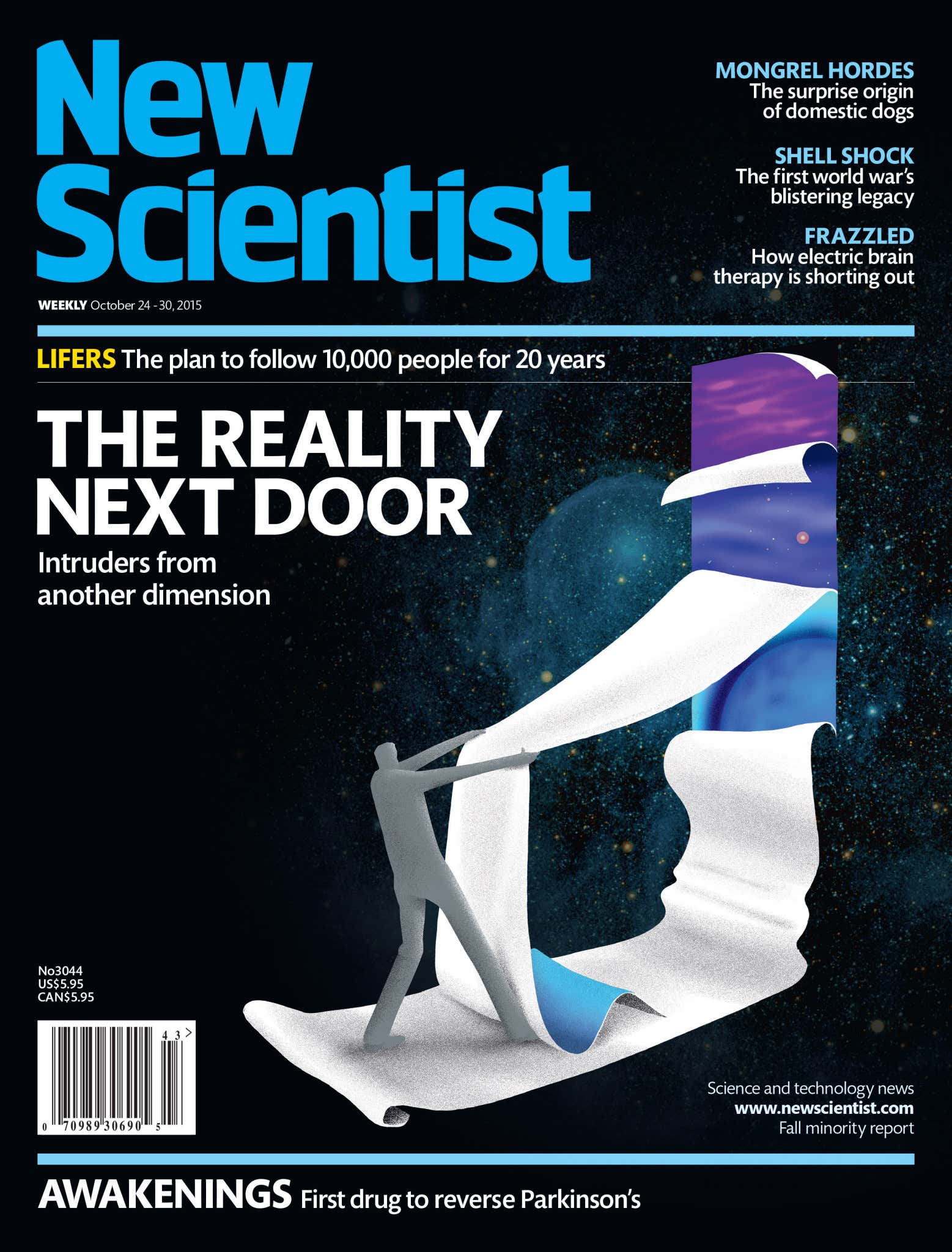
Issue no. 3044 published 24 October 2015

Sign up to our weekly newsletter

Receive a weekly dose of discovery in your inbox. We'll also keep you up to date with New Scientist events and special offers.

Sign up
Piano Exit Overlay Banner Mobile Piano Exit Overlay Banner Desktop