Subscribe now

Letters archive

Join the conversation in New Scientist's Letters section, where readers can share their thoughts and opinions on articles and see responses from experts and enthusiasts across a range of science topics. To submit a letter, please see our terms and email letters@newscientist.com


25 November 2015

Editor's pick: Many histories of a water molecule

From Robert Worden

You tell the life story of a water molecule from a comet to the present day far too simply ( 14 November, p 31 ). There is in fact no such thing as the history of a single water molecule. We know from quantum mechanics that every time two water molecules collide in the ocean …
25 November 2015

Farmers' care for healthy soil

From Anna Butcher

Soils are under threat ( 10 October, p 43 ), but most farmers recognise that they are their most valuable asset and in Western Australia we take steps to keep our soils in balance. These measures include " knife point " technology to place seeds with minimal soil disturbance, retaining unused parts of harvested crops …

25 November 2015

First class post

Great! I would feel safer if I was diagnosed by a pigeon... not a specialist... Sylvie Tapp is not entirely reassured at pigeons being taught to diagnose breast cancer on X-rays ( 21 November, p 12 ) .

25 November 2015

Quantum snake oil and security flaws

From Lawrence D

There has been a lot of hype about quantum computing over the years, including claims that quantum cryptography will offer better security ( 17 October, p 10 ). This comes from a fundamental misunderstanding of how cryptography works. Our current cryptographic algorithms are already strong enough. The main weaknesses in computer system security come from …

25 November 2015

They don't like to be beside the sea

From William Kirby

Given the potential for a catastrophic rise in sea levels in the next 20 years if the West Antarctic ice sheet collapses ( 17 October, p 8 ), surely the UK government should be seeking to decommission coastal nuclear power stations rather than building more? Horsham, West Sussex, UK

25 November 2015

Design is the root of progress

From Bill Summers

Your Leader articles make the case for not reducing national science budgets ( 14 November, p 5 ). But it is a poor case if considered as a stand-alone issue. Science is about taking things apart to understand them; and design is about putting them back together to make a useful object. Science serves no …

25 November 2015

Making the best of appalling events

From Meredith Lloyd-Evans

I was inspired by your interview with face transplant recipient Carmen Blandin Tarleton ( 31 October, p 28 ). It offers a real example of determination to make the best of appalling events. Well done on printing this challenging article. I have tremendous admiration for Blandin Tarleton. Cambridge, UK

25 November 2015

Brain stimulation and dopamine

From Bijal Shah

I note that side effects of deep brain stimulation therapy to treat Parkinson's include impulse control disorders such as excessive gambling and hypersexuality ( 24 October, p 38 ). These symptoms are similar to side effects reported for the main dopamine analogue drugs. Is it possible that this therapy causes the brain to release dopamine, …

25 November 2015

A bigger issue than messing up Mars

From Leopold Faltin

I fully understand Jeff Hecht's call for caution over crewed space missions that might contaminate Mars with terrestrial microbes ( 7 November, p 26 ). However, although a robotic sample-return mission would help to avoid this particular problem, won't it just create another? Wouldn't it still run the risk of contaminating Earth with microbes from …

25 November 2015

Ancient caving in the dark

From Anthony Donaldson

Donald McCoy interprets the Homo naledi finds deep inside a cave system as implying early mastery of fire, to light the way (Letters, 31 October ). A simpler explanation might come from a few people, blind from early in life, learning to navigate by echolocation. A Wikipedia entry reports one person demonstrating his skill in …

25 November 2015

There is also a darker future...

From John Thomas

A basic income for all seems to be a widely assumed scenario for the future, according to Laura Smith ( 3 October, p 28 ), and Anil Ananthaswamy in his review of The Master Algorithm ( 31 October, p 44 ). I don't see much about darker futures which seem at least as likely. In …

25 November 2015

The internet in an older box than that

From Simon Mallett

Your recent article about the ability to take a snapshot of part of the web and access it as a "web in a box" away from any internet connections ( 26 September, p 22 ) took me back to 1997 in Pakistan. The British Council's plans to celebrate the 50th anniversary of independence were well …

25 November 2015

An Ig Nobel with a practical point

From Andrew Brooker

Bill Corner suggests that discovering the typical duration of mammalian urination may not just be worthy of an Ig Nobel prize but actually a useful diagnostic tool for men with prostate problems (Letters, 31 October ). This sounds eminently simple and sensible, so I'm planning a smartphone app and associated gadget (on the lines of …

25 November 2015

For the record

• That stings: the water corals inhabit is more acidic than it was, but is still alkaline ( 14 November, p 17 ).

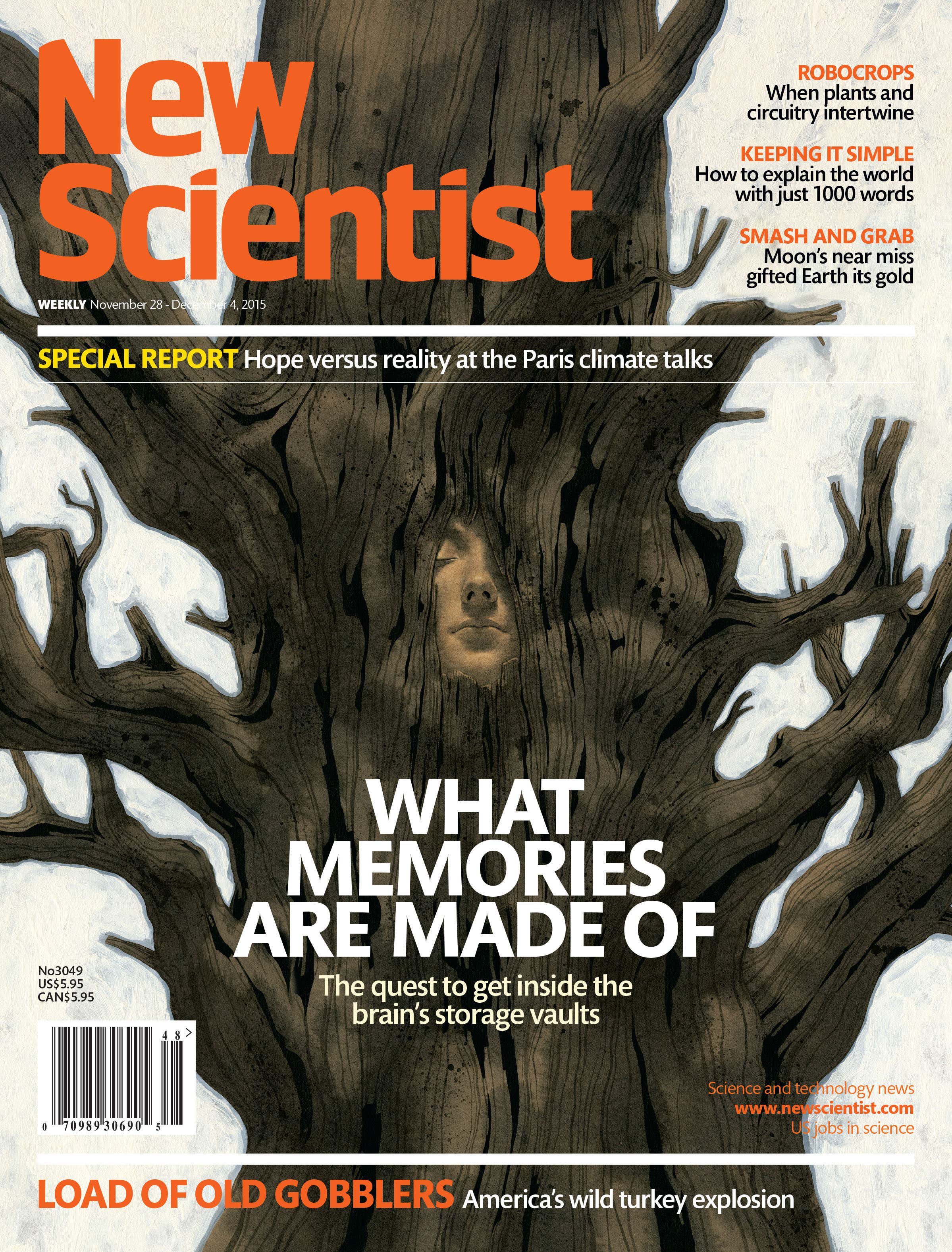
Issue no. 3049 published 28 November 2015

Sign up to our weekly newsletter

Receive a weekly dose of discovery in your inbox. We'll also keep you up to date with New Scientist events and special offers.

Sign up
Piano Exit Overlay Banner Mobile Piano Exit Overlay Banner Desktop