Subscribe now

Letters archive

Join the conversation in New Scientist's Letters section, where readers can share their thoughts and opinions on articles and see responses from experts and enthusiasts across a range of science topics. To submit a letter, please see our terms and email letters@newscientist.com


2 December 2015

Editor's pick: Open minds and quantum boxes

From Richard Marsden

A wide range of possible interpretations of quantum mechanics were considered at the Vienna symposium on Emergent Quantum Mechanics, as Michael Brooks reported ( 14 November, p 14 ). Howard Wiseman and Jan Walleczek both spoke of the importance of keeping all possible interpretations in mind. It seems to me that these quantum theories are …
2 December 2015

Editor's pick: Open minds and quantum boxes

From Bob Bath

It occurs to me that one option for obtaining the most useful explanation for the weirdness of quantum theory might be to put all the researchers into a box and take the lid off every now and then. The one that appeared at the top most often would get my vote. Northcote, Victoria, Australia

2 December 2015

So how do you bribe an algorithm?

From Steve Dalton

I found Anil Ananthaswamy's review of The Master Algorithm fascinating ( 31 October, p 44 ). I couldn't help wondering whether the algorithm, along with all its threats of replacing people's livelihoods, might also have detected FIFA's obvious corruption, doping in major sporting events and the hand of vested interest in political policy, among many …

2 December 2015

First class post

So are you saying that weekend mortality correlates with lower staff numbers? Dobra Sekaninova wants to get down to basics over mortality among infants born in UK hospitals at the weekend ( 28 November, p 8 ) .

2 December 2015

A dangerous climate myth

From Ruth Jarman

I was surprised by your article stating that "analysts say that pledges put the world on a path to halt global warming at 2.7 ° C" ( 31 October, p 6 ). As we increase global temperatures, natural processes, such as melting of sun-reflecting icecaps and burning up of tropical forests, take over. Temperatures escalate …

2 December 2015

Animals more than meat expectations

From Jan Horton

Meat might, perhaps, be replaced by the vat-grown products you describe ( 31 October, p 10 ). But it is not the only useful "product" of livestock. In Australia, animals are reared on crop residue. Without the animals, these residues would have to be disposed of by other means before another crop can be grown …

2 December 2015

Agriculture is not a higher state

From Kate Fletcher and Corwen Broch

In your article on the multiple inventions of farming, we were disappointed to see agriculture equated with civilisation ( 31 October, p 31 ). This myth has been used for hundreds, perhaps thousands, of years to justify the seizing of land from non-agriculturists, as well as their forced "resettlement" and even genocide against them. People …

2 December 2015

Agriculture is not a higher state

From Beth Gott

Bob Holmes put forward the idea of "proto-farming" – hunter-gathering peoples acquiring detailed knowledge of desirable vegetable and animal foodstuffs. It was not until the invasion by Europeans that agriculture was brought to Australia, with its varied landscape ranging from the tropical north to the temperate plains and the dry sclerophyll forests and semi-deserts of …

2 December 2015

Spinach's spoof story spreads

From Will Christian

Thanks to Chloe Lambert for an excellent article on the effects of modern farming techniques on the nutritional content of food ( 17 October, p 32 ). Unfortunately, though, she perpetuates the urban myth that spinach was once thought to have 10 times its actual iron content. Mike Sutton debunked this in 2010 and traced …

2 December 2015

Where should you file this letter?

From Mark Harvey

I am sure I am not the only person to find themselves in a dilemma after reading your interview with Sharon MacDonald about what our culture should keep ( 24 October, p 28 ). I enjoyed it enormously: so much so that I now think I should save the article. But should I keep the …

2 December 2015

Zombie professor seeks teaching job

From Eric Kvaalen

I am sure that John Hastings was conscious when he prepared his lectures (Letters, 17 October ). But his contention that he had to be is not convincing. We already have computer programs that teach, and programs that learn. Some day we may have programs capable of giving lectures as he did, but without being …

2 December 2015

The search for roots of stories

From Jill Charles

I enjoyed your articles on the fantastic voyages followed by various atoms and molecules ( 14 November, p 30 ). It would have been good, though, when tracing these histories, to acknowledge a debt to Primo Levi's book The Periodic Table – in particular the short story Carbon . London, UK

2 December 2015

Do not overrate that old Fraud

From Gary Myers

As an associate fellow of the British Psychological Society I was surprised to read as part of Sumit Paul-Choudhury's discussion of the shortlist for the Samuel Johnson Prize for Non- Fiction that "other threads of science ran through the books – the influence of Freud for example" ( 31 October, p 45 ). Assuming that …

2 December 2015

For the record

• It stings: Eva Gross leads the team using chilli gas to deter elephants ( 21 November, p 22 ). • The researcher exploring the quirks of friendship was Hans Alves (Feedback, 21 November ). • Dam! The Scottish Natural Heritage report on beavers author was Martin Gaywood ( 21 November, p 10 ). • …

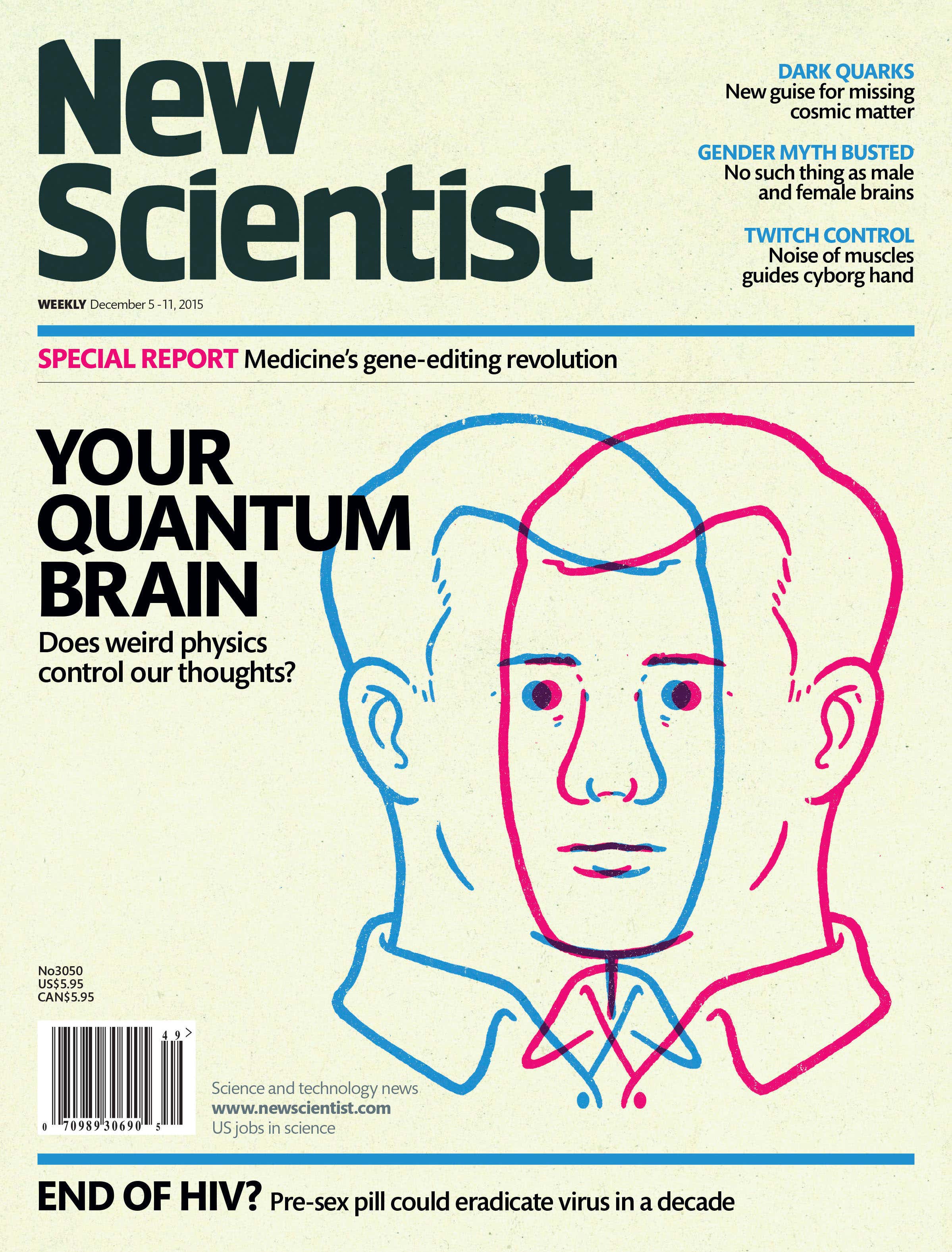
Issue no. 3050 published 5 December 2015

Sign up to our weekly newsletter

Receive a weekly dose of discovery in your inbox. We'll also keep you up to date with New Scientist events and special offers.

Sign up
Piano Exit Overlay Banner Mobile Piano Exit Overlay Banner Desktop