Subscribe now

Letters archive

Join the conversation in New Scientist's Letters section, where readers can share their thoughts and opinions on articles and see responses from experts and enthusiasts across a range of science topics. To submit a letter, please see our terms and email letters@newscientist.com


6 January 2016

Editor's pick: Accounting for empathy

From Jan Karpinski

Pat Kane writes that empathy "is one of the few aspects of professional roles that... might survive incremental transformation by information technology" ( 21 November 2015, p 42 ). Perhaps the premise is that empathy is an insignificant aspect of what professionals do, hence the prediction that the work of lawyers, doctors, teachers, accountants, architects, …
6 January 2016

What scientists can say without doubt

From Chris Ford

Do scientists need training in talking to the media? As a scientist I understand why experts who are asked, "Was Storm Desmond caused by climate change?" answer: "It's impossible to say whether a particular flood event is or isn't caused by climate change" ( 12 December 2015, p 6 ). But it really doesn't help. …

6 January 2016

First class post

Maybe it's already happened and they're just allowing us to discover it for ourselves now Terry Braine suggests that the idea of implanting memories may be disquieting ( 19 December 2015, p 28 )

6 January 2016

Making labels with simple words

From Brian King

You interviewed Randall Munroe about his effort to describe things in simple language ( 28 November 2015, p 32 ). Languages with smaller vocabularies have long described items that their speakers have not encountered before with constructions such as "iron bird" for aeroplane. Larger languages also use this method: consider the French chemin de fer …

6 January 2016

What do you call a modified salmon?

From Michael A. Crawford

The US Food and Drug Administration has ruled that a fast-growing genetically modified Atlantic salmon is safe to eat ( 28 November 2015, p 9 ). That may be so. But if it grows so quickly, will it provide the health benefits of Atlantic salmon to those who consume it? Will it have the same …

6 January 2016

On prostitution and the law

From Helen Gough

I was disappointed that your article "Safer sex work" ( 12 December 2015, p 26 ) did not consider the harm prostitution causes. History shows that people will do anything if they need the money: in the past, parents sent their children to work down coal mines or risked life and limb working long hours …

6 January 2016

Concorde wasn't quite the cash sink

From Brian Clegg

As the person who wrote the costing model used by British Airways in the days of Concorde, could I point out that Joshua Howgego got the wrong end of the stick in calling Concorde the classic example of the sunk-cost fallacy ( 12 December 2015, p 31 )? While it is true that the governments …

6 January 2016

Just a Neolithic street plan, surely

From Bryn Glover

Your news item on Late Stone Age rock etchings ( 5 December 2015, p 17 ) called to mind the "cup-and-ring" stone markings which are common here in the north of England and elsewhere. These are typically a circular groove 60 to 100 millimetres in diameter, with a small break where the groove has not …

6 January 2016

We've seen that Moho before

From David Rubin

I cheer the crew of the JOIDES Resolution and hope their drill makes it through the Earth's mantle ( 5 December 2015, p 7 ). They are not, however, the first geologists to try to drill through the Mohorovicic boundary. From 1958 to 1966 the American Miscellaneous Society ran the Moho project to achieve this. …

6 January 2016

Editor's reply to "We've seen that Moho before"

• There was no space in that small column to allude to our previous coverage of Moho – for example, ( 27 February 1964, p 534 ) – and of the Kola project ( 5 October 1991, p 15 ).

6 January 2016

Around the world in longer than that

From Simon Humphrey

The headline "Around the world in 80 microseconds", which appeared in your story on internet architecture, was somewhat optimistic – to say the least ( 12 December 2015, p 38 ). Take Earth's circumference to be 40,000 kilometres: covering it in 80 microseconds would require travelling at approximately 1700 times the speed of light in …

6 January 2016

Dragnet invention: just the facts

From James Watt

David Hambling's discussion of less-lethal weapons was interesting and enjoyable ( 28 November 2015, p 30 ). It inspired me to make a tongue-in-cheeky "safe-ish" suggestion: why not a net-firing gun? A net projectile attached to pull cords would cover the culprit when fired. The cords would tighten the net in such a way as …

6 January 2016

Who or what makes that luck?

From Brian Tagg

Steve Tunn discusses computer algorithms selecting job applicants (Letters, 12 December 2015 ). This reminds me of the human resources person who would randomly consign half the CVs they received to the wastebasket, with the explanation "who would want to employ anyone that unlucky?" Maybe the same applies in the algorithmic era too? Taunton, Somerset, …

6 January 2016

For the record

• The Autism Sisters Project wants to contact families, initially in New Jersey, New York and Connecticut, that have a son or daughter with autism and an unaffected sister ( 12 December 2015, p 27 ).

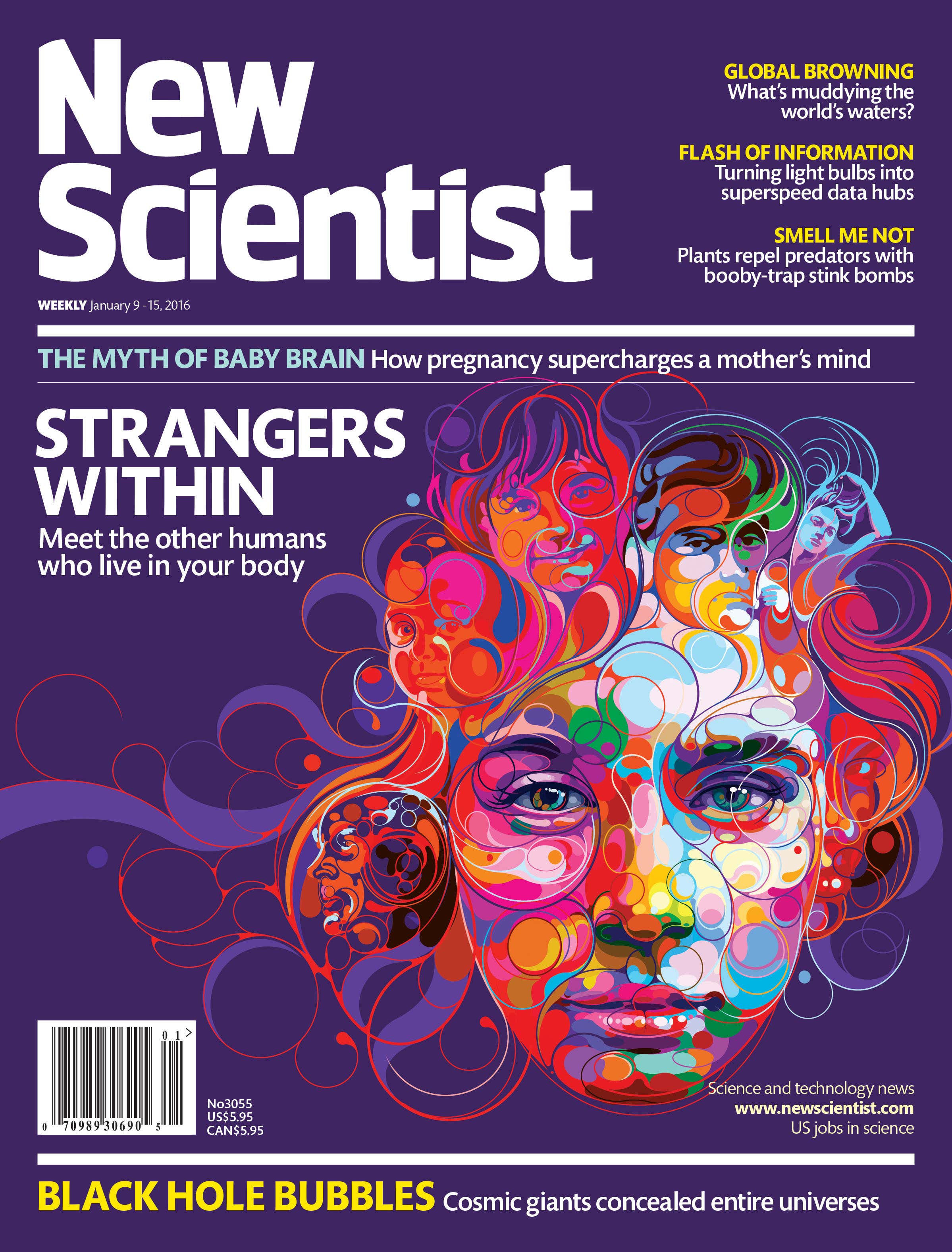
Issue no. 3055 published 9 January 2016

Sign up to our weekly newsletter

Receive a weekly dose of discovery in your inbox. We'll also keep you up to date with New Scientist events and special offers.

Sign up
Piano Exit Overlay Banner Mobile Piano Exit Overlay Banner Desktop