Subscribe now
What the huge young galaxies seen by JWST tell us about the universe

What the huge young galaxies seen by JWST tell us about the universe

13 June 2023

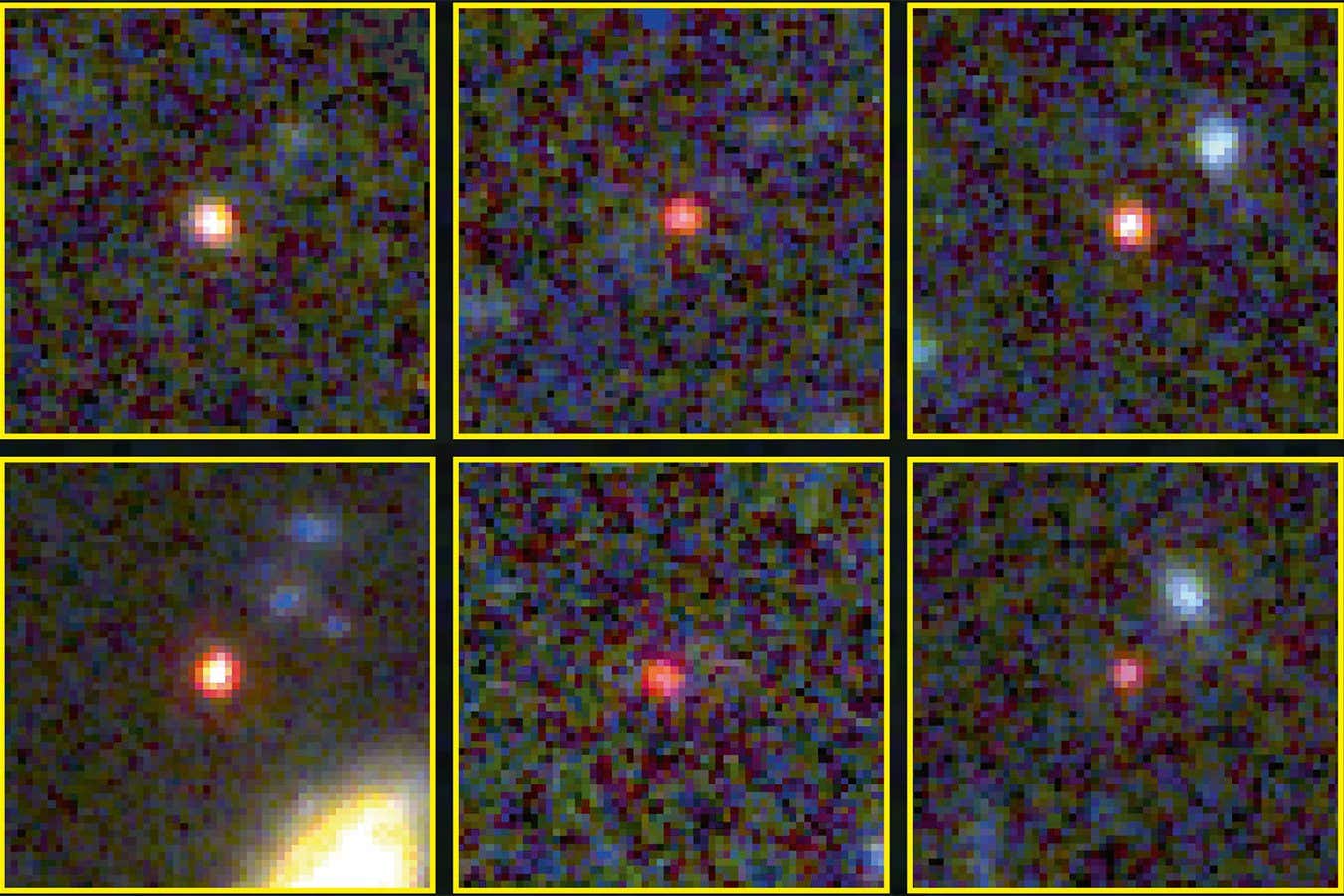
A few months ago, the James Webb Space Telescope spotted six early galaxies that were so large they threatened to break our best theory of how the cosmos evolved. Did they?

How JWST could find signs of alien life in exoplanet atmospheres

How JWST could find signs of alien life in exoplanet atmospheres

9 November 2022

The James Webb Space Telescope can peer into alien skies like never before. With six potentially habitable planets within its sights, astronomers are entering a new era in the search for biology beyond our solar system


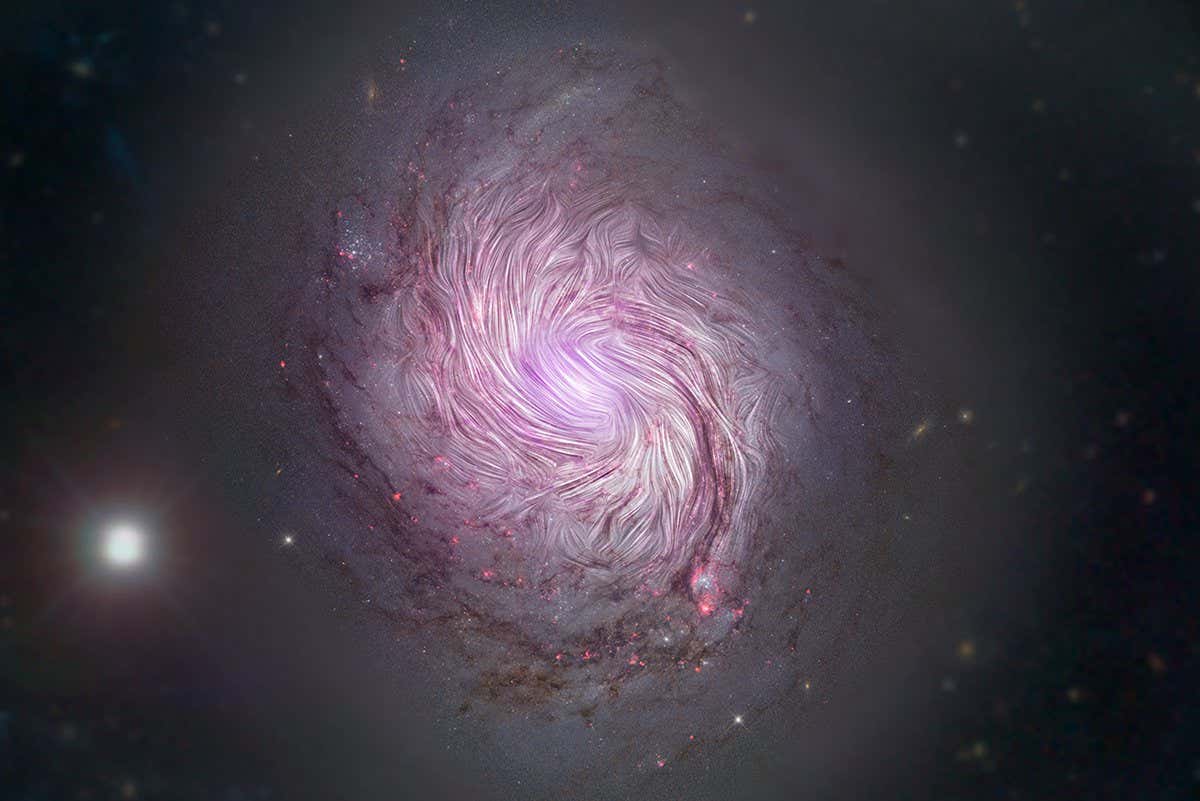
Magnetic fields in NGC 1068, or M77, are shown as streamlines over a visible light and X-ray composite image of the galaxy from the Hubble Space Telescope, the Nuclear Spectroscopic Array, and the Sloan Digital Sky Survey. The magnetic fields align along the entire length of the massive spiral arms ? 24,000 light years across (0.8 kiloparsecs) ? implying that the gravitational forces that created the galaxy?s shape are also compressing its magnetic field. This supports the leading theory of how the spiral arms are forced into their iconic shape known as ?density wave theory.? SOFIA studied the galaxy using far-infrared light (89 microns) to reveal facets of its magnetic fields that previous observations using visible and radio telescopes could not detect. Credits: NASA/SOFIA; NASA/JPL-Caltech/Roma Tre Univ. https://www.nasa.gov/feature/how-to-shape-a-spiral-galaxy

Did magnetism shape the universe? An epic experiment suggests it did

5 October 2022

The idea that magnetism helped shape the universe has been dismissed by scientists for decades, but now new experiments involving plasma that is hotter than the sun are prompting a rethink


The time-lapse telescope that will transform our view of the universe

The time-lapse telescope that will transform our view of the universe

24 August 2022

The Vera C. Rubin Observatory will scan the whole southern sky every three nights. From short-lived supernovae to alien megastructures, here are some of the fleeting cosmic phenomena it could capture


Sun Solar Flare Particles coronal mass ejections for background computer desktop screen display; Shutterstock ID 752393257; purchase_order: -; job: -; client: -; other: -

Why the next big solar storm might hit Earth without warning

18 May 2022

A big solar storm could fry the internet, but at least space weather forecasts would give us a day or two to prepare. Or maybe not, because physicists have just discovered a new kind of solar storm that strikes without notice


How a new kind of gravitational wave will reveal the early universe

How a new kind of gravitational wave will reveal the early universe

16 March 2022

With 90 detections now under our belt, gravitational waves are solving riddles about the evolution of galaxies and missing black holes – and they could soon give us a glimpse of dark matter


Is our solar system a cosmic oddity? Evidence from exoplanets says yes

Is our solar system a cosmic oddity? Evidence from exoplanets says yes

1 December 2021

When we started finding planetary systems around other stars we thought many of them would be like ours. We’ve now found hundreds – and it’s so far, so wrong


Is there an ancient black hole at the edge of the solar system?

Is there an ancient black hole at the edge of the solar system?

31 March 2021

Hints of a hefty source of gravity beyond Pluto sparked the search for a possible “Planet Nine”. Now, some astronomers think it could instead be a black hole from the big bang, offering a rare glimpse into the early universe


Everything we know about the universe – and a few things we don't

Everything we know about the universe – and a few things we don't

30 December 2020

How big is the universe? What shape is it? How fast is it expanding? And when will it end? We answer these questions and more in our essential guide to the current state of cosmological knowledge


The universe is expanding too fast, and that could rewrite cosmology

The universe is expanding too fast, and that could rewrite cosmology

25 November 2020

Different measurements of the Hubble constant, the rate of space-time expansion, refuse to agree – meaning we may have to look beyond Einstein’s theories to explain the universe


Sign up to our weekly newsletter

Receive a weekly dose of discovery in your inbox. We'll also keep you up to date with New Scientist events and special offers.

Sign up
Piano Exit Overlay Banner Mobile Piano Exit Overlay Banner Desktop