
Subscribe now
How a radical redefinition of life could help us find aliens

How a radical redefinition of life could help us find aliens

19 June 2023

Sara Imari Walker, who developed Assembly Theory with chemist Lee Cronin, explains how the theory's definition of life might help us find it on other planets


Neil Turok mirror universe

Neil Turok on the case for a parallel universe going backwards in time

25 January 2023

To explain the cosmos without invoking cosmic inflation, physicist Neil Turok has proposed the existence of a mirror-image universe going backwards in time from the big bang. He tells us why the idea is so compelling


How can we understand quantum reality if it is impossible to measure?

How can we understand quantum reality if it is impossible to measure?

10 January 2023

If we can’t measure something, we can’t know its true nature. This fundamental limitation hampers our understanding of the quantum world – but it doesn't preclude scientific thinking


Will artificial intelligence ever discover new laws of physics?

Will artificial intelligence ever discover new laws of physics?

21 November 2022

Algorithms can pore over astrophysical data to identify underlying equations. Now, physicists are trying to figure out how to imbue these “machine theorists” with the ability to find deeper laws of nature
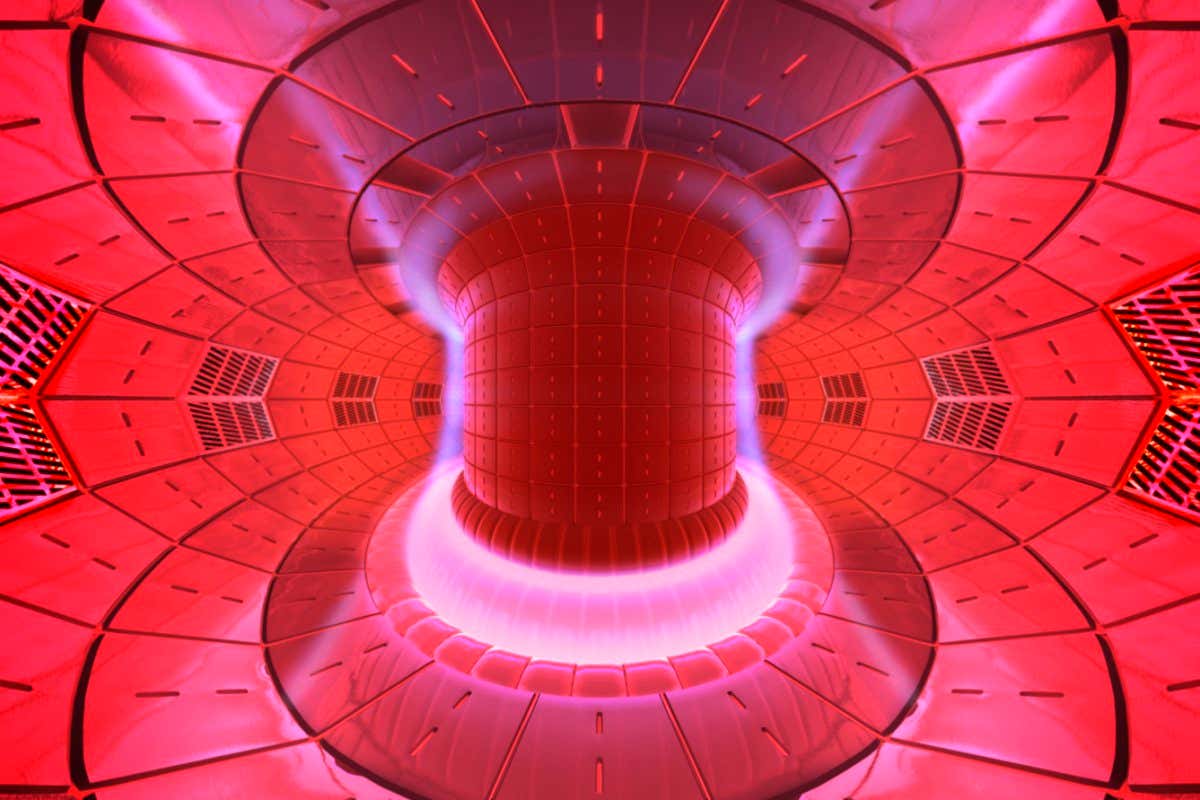

Artists concept view of the interior of the ITER reaction vessel. Nuclear fusion involves creating a plasma of superheated gas to temperatures of more than 200 million degrees C, conditions hot enough to force deuterium and tritium atoms to fuse together and release energy. Fusion takes place inside a 'Tokamak' torus within a giant magnetic field, the only way to contain the heat generated. The ITER reactor is designed to produce 500 MW, 10 times more energy than it consumes. Nuclear fusion is the joining (fusing) of light elements to form heavier elements, which releases large amounts of energy. It is hoped that fusion will be a clean, renewable energy source for the future. Nuclear fusion is the joining (fusing) of light elements to form heavier elements, which releases large amounts of energy. It is hoped that fusion will be a clean, renewable energy source for the future.

Can a slew of nuclear fusion start-ups deliver unlimited clean energy?

19 October 2022

We have been trying to harness the reaction that powers the stars for decades, and now private firms are promising commercial fusion within a decade. Is there any reason to believe them this time?


Can you take the trip out of psychedelics and still treat depression?

Can you take the trip out of psychedelics and still treat depression?

1 June 2022

As psychedelic medicine edges toward the mainstream, some are trying to make drugs that offer therapeutic benefits without the mind-altering experience. But the experience might be key to how psychedelics transform people's lives
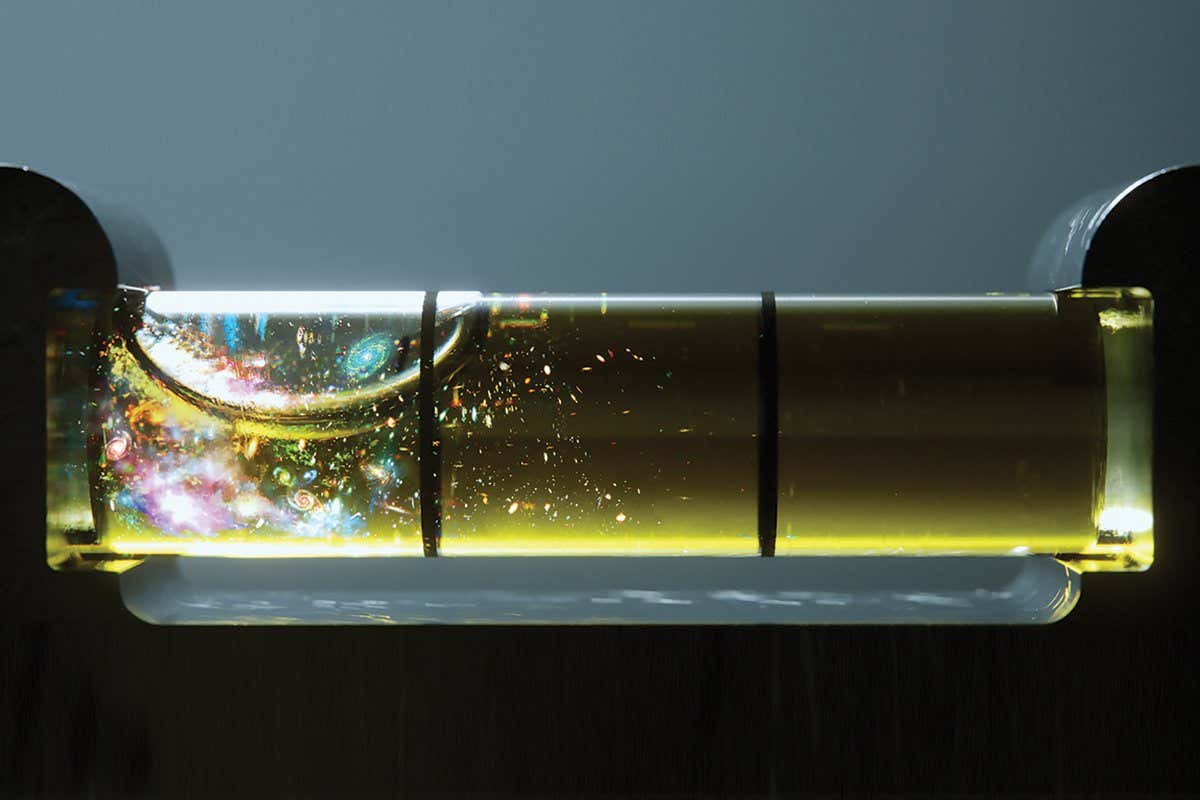

Controversial claim that the universe is skewed could upend cosmology

Controversial claim that the universe is skewed could upend cosmology

27 April 2022

Our understanding of the universe is underpinned by the cosmological principle: the assumption that, on the grandest scales, it looks more or less the same in all directions. What if that's wrong?


A new place for consciousness in our understanding of the universe

A new place for consciousness in our understanding of the universe

30 March 2022

To make sense of mysteries like quantum mechanics and the passage of time, theorists are trying to reformulate physics to include subjective experience as a physical constituent of the world

A new place for consciousness in our understanding of the universe

A new place for consciousness in our understanding of the universe

30 March 2022

To make sense of mysteries like quantum mechanics and the passage of time, theorists are trying to reformulate physics to include subjective experience as a physical constituent of the world


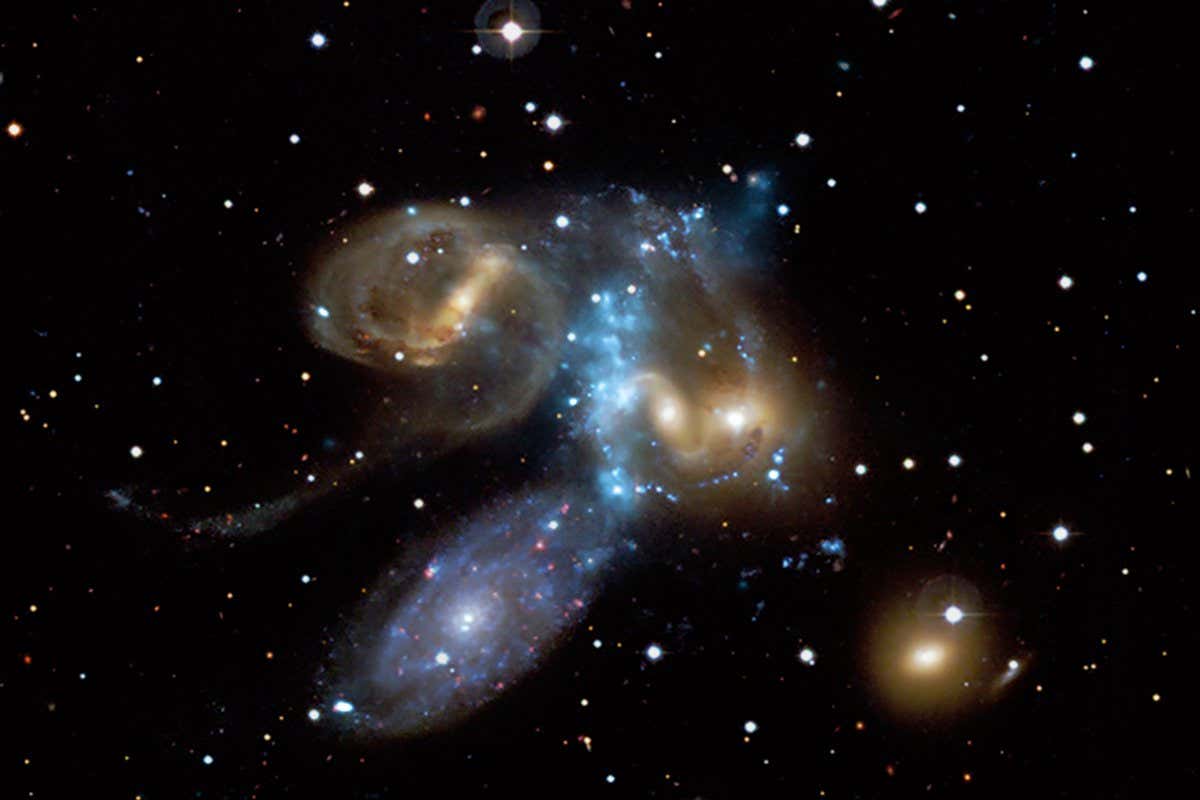
This composite image of X-rays from Chandra (colored light blue) and optical data from the Canada-France-Hawaii Telescope (yellow, red, white, and blue) shows a beautiful new look at the compact group of galaxies known as Stephan???s Quintet. One galaxy is thought to be passing through the others at almost two million miles per hour. This generates a shock wave that heats the gas and creates the ridge of X-ray emission detected by Chandra.

Milky Way shakes: The cosmic collisions that made our galaxy

15 December 2021

Intricate patterns in the movements of millions of stars are revealing the history of our home galaxy in rich detail – and could even pinpoint the events that gave birth to our sun


Sign up to our weekly newsletter

Receive a weekly dose of discovery in your inbox. We'll also keep you up to date with New Scientist events and special offers.

Sign up
Piano Exit Overlay Banner Mobile Piano Exit Overlay Banner Desktop