Subscribe now
Neil Turok mirror universe

Neil Turok on the case for a parallel universe going backwards in time

25 January 2023

To explain the cosmos without invoking cosmic inflation, physicist Neil Turok has proposed the existence of a mirror-image universe going backwards in time from the big bang. He tells us why the idea is so compelling
How can we understand quantum reality if it is impossible to measure?

How can we understand quantum reality if it is impossible to measure?

10 January 2023

If we can’t measure something, we can’t know its true nature. This fundamental limitation hampers our understanding of the quantum world – but it doesn't preclude scientific thinking


Will artificial intelligence ever discover new laws of physics?

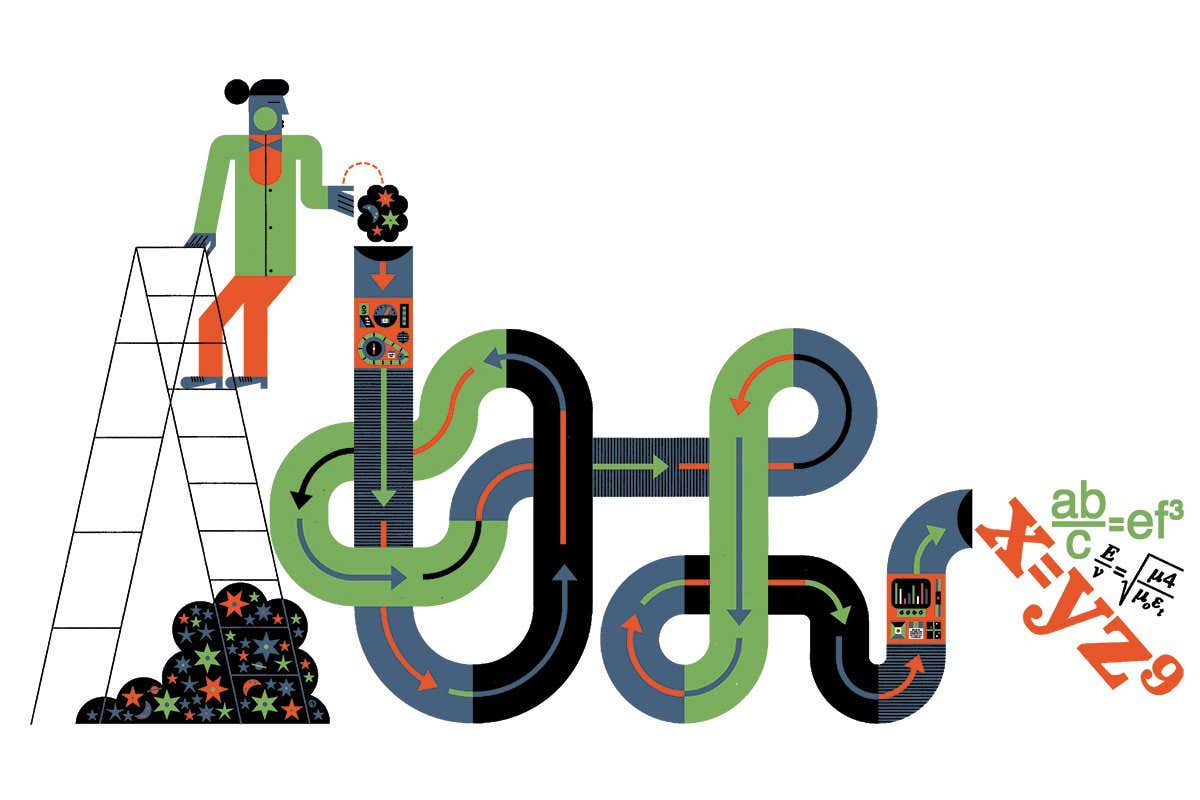
Will artificial intelligence ever discover new laws of physics?

21 November 2022

Algorithms can pore over astrophysical data to identify underlying equations. Now, physicists are trying to figure out how to imbue these “machine theorists” with the ability to find deeper laws of nature


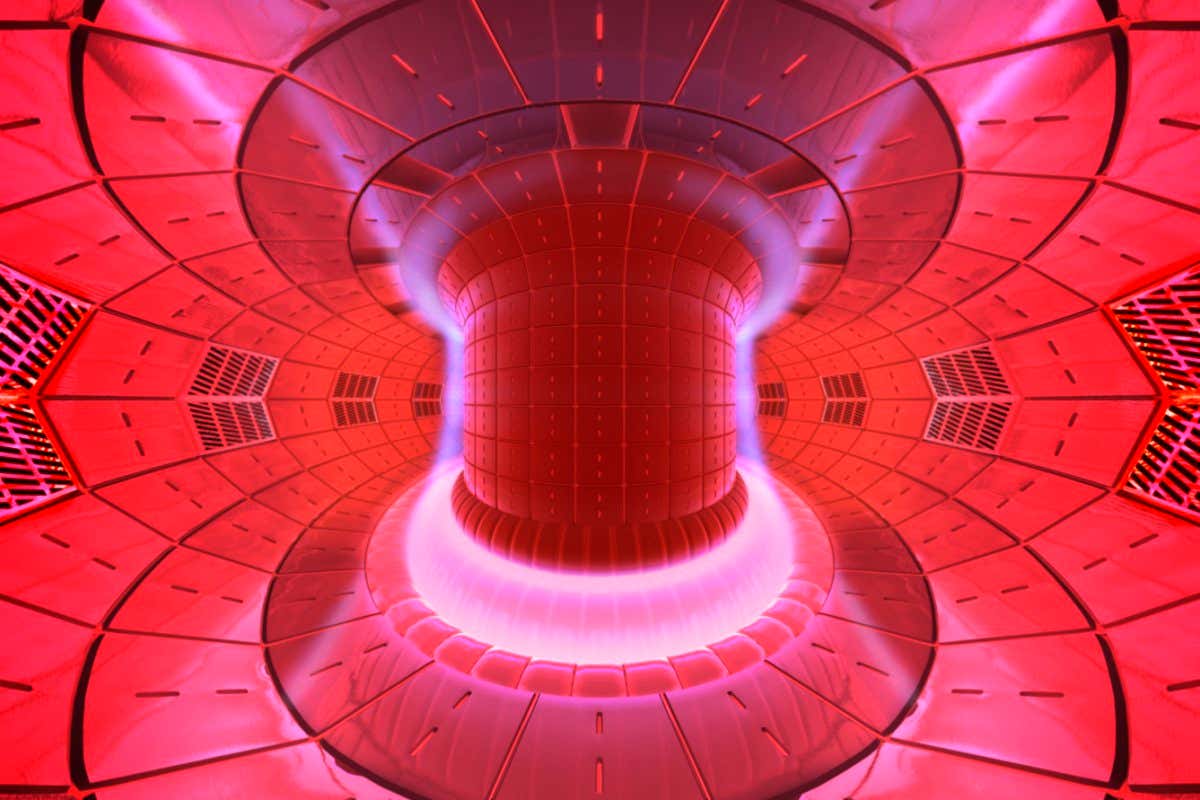
Artists concept view of the interior of the ITER reaction vessel. Nuclear fusion involves creating a plasma of superheated gas to temperatures of more than 200 million degrees C, conditions hot enough to force deuterium and tritium atoms to fuse together and release energy. Fusion takes place inside a 'Tokamak' torus within a giant magnetic field, the only way to contain the heat generated. The ITER reactor is designed to produce 500 MW, 10 times more energy than it consumes. Nuclear fusion is the joining (fusing) of light elements to form heavier elements, which releases large amounts of energy. It is hoped that fusion will be a clean, renewable energy source for the future. Nuclear fusion is the joining (fusing) of light elements to form heavier elements, which releases large amounts of energy. It is hoped that fusion will be a clean, renewable energy source for the future.

Can a slew of nuclear fusion start-ups deliver unlimited clean energy?

19 October 2022

We have been trying to harness the reaction that powers the stars for decades, and now private firms are promising commercial fusion within a decade. Is there any reason to believe them this time?


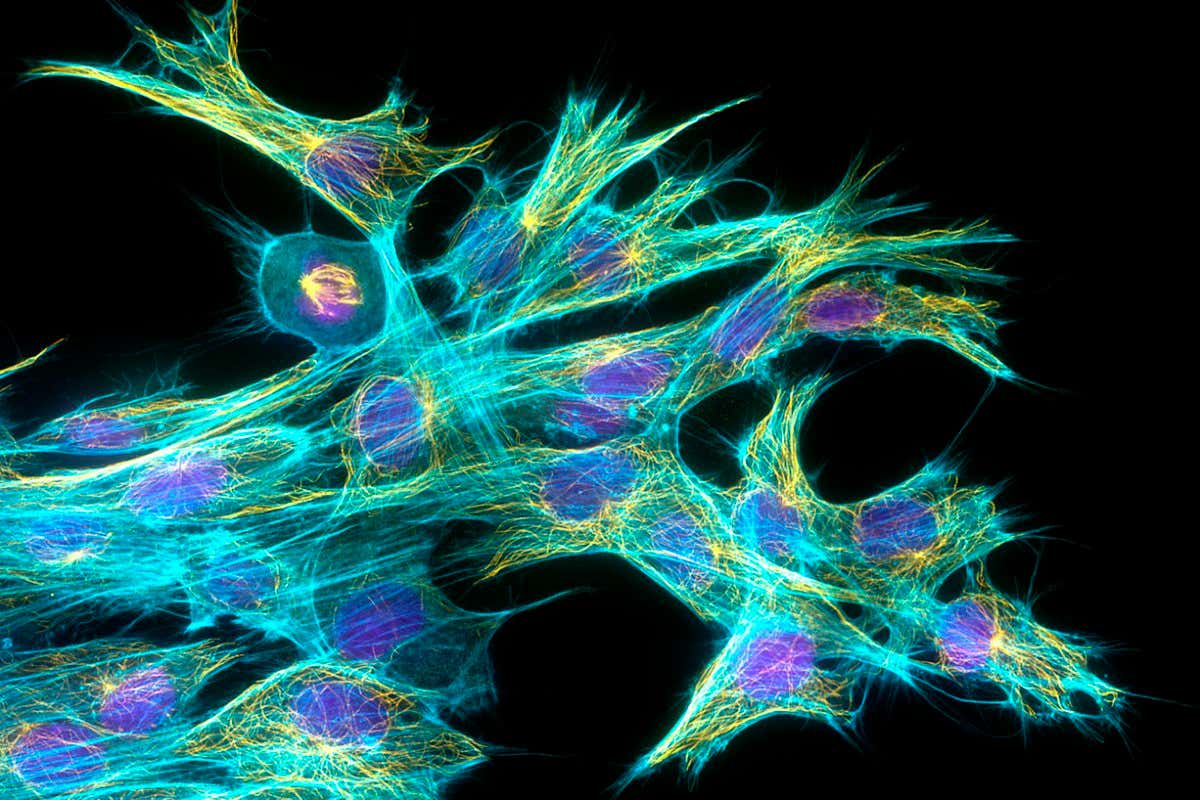
Fibroblast cells. Immunofluorescence light micrograph of fibroblast cells. The cell nuclei are purple, actin filaments are cyan and microtubules, protein filaments that make up part of the cytoskeleton, are yellow. Fibroblasts are cells that give rise to connective tissue such as collagen, the main structural protein in the body. They are important in wound healing. Magnification: x500 when printed at 10 centimetres wide.

Quantum experiments add weight to a fringe theory of consciousness

18 April 2022

Experiments on how anaesthetics alter the behaviour of tiny structures found in brain cells bolster the controversial idea that quantum effects in the brain might explain consciousness


A new place for consciousness in our understanding of the universe

A new place for consciousness in our understanding of the universe

30 March 2022

To make sense of mysteries like quantum mechanics and the passage of time, theorists are trying to reformulate physics to include subjective experience as a physical constituent of the world


A new place for consciousness in our understanding of the universe

A new place for consciousness in our understanding of the universe

30 March 2022

To make sense of mysteries like quantum mechanics and the passage of time, theorists are trying to reformulate physics to include subjective experience as a physical constituent of the world


The quantum experiment that could prove reality doesn't exist

The quantum experiment that could prove reality doesn't exist

3 November 2021

We like to think that things are there even when we aren't looking at them. But that belief might soon be overturned thanks to a new test designed to tell us if quantum weirdness persists in macroscopic objects


Stephon Alexander interview: Is the universe a self-learning AI?

Stephon Alexander interview: Is the universe a self-learning AI?

8 September 2021

To solve the big mysteries in physics, we need to embrace fresh perspectives, says cosmologist Stephon Alexander. Here he explains why intuition is so important – and outlines one of his own wild ideas


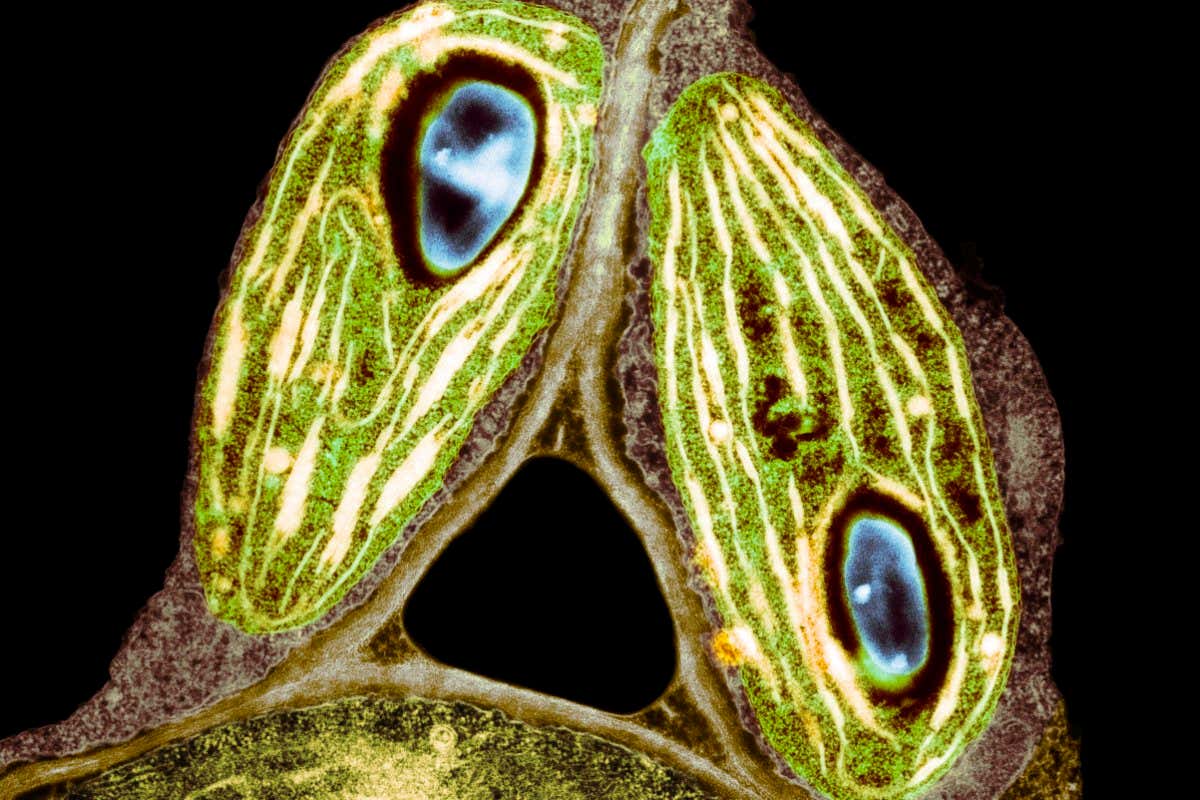
Coloured transmission electron micrograph (TEM) of chloroplasts from the yellow portion of a yellow/green variegated Coleus blumei plant. Chloroplasts are the sites of photosynthesis, the process that synthesises carbohydrates from carbon dioxide and water using sunlight. The structure of a variegated chloroplast is slightly different from that of a normal green chloroplast. The granal stacks, formed from parallel thylakoids (membranes, bright lines), that contain the chlorophyll pigments are less ordered in the variegated chloroplast. The pigments themselves are also slightly different. Magnification: x14,300 when printed at 10cm wide.

From photosynthesis to navigation, life may exploit quantum effects

25 August 2021

There is tantalising evidence to suggest that photosynthesis in some bacteria depends on quantum coherence and birds’ amazing feats of navigation rely on entanglement


Sign up to our weekly newsletter

Receive a weekly dose of discovery in your inbox. We'll also keep you up to date with New Scientist events and special offers.

Sign up
Piano Exit Overlay Banner Mobile Piano Exit Overlay Banner Desktop