Subscribe now
Logic underpins knowledge – but what if logic itself is flawed?

Logic underpins knowledge – but what if logic itself is flawed?

10 January 2023

We use logic to build facts into systems of thought, but paradoxes force us to question what we think we know. And it could be worse, because logic may not be sufficient to comprehend reality

February 11, 2014 - Shanghai, China: A young woman takes a 'selfie' while sitting on a chair inside Japanese artist Yayoi Kusama's 'Obliteration Room': an installation of a white room increasingly covered by museum attendees with colored dots. Yayoi Kusama's 'A Dream I Dreamed' is her first touring exhibition in Asia. The show's only Chinese appearance is at Shanghai's Museum of Contemporary Art. (Dave Tacon/Polaris) /// Credit: Dave Tacon / Polaris / eyevine Please agree fees before use. SPECIAL RATES MAY APPLY. For further information please contact eyevine tel: +44 (0) 20 8709 8709 e-mail: info@eyevine.com www.eyevine.com

Why some aspects of physical reality must be experienced to be known

10 January 2023

We will never fully know what pain, colour and love are really like for other people – never mind other animals. That means we may never know if we have created sentient AI


Why maths, our best tool to describe the universe, may be fallible

Why maths, our best tool to describe the universe, may be fallible

10 January 2023

Our laws of nature are written in the language of mathematics. But maths itself is only as dependable as the axioms it is built on, and we have to assume those axioms are true


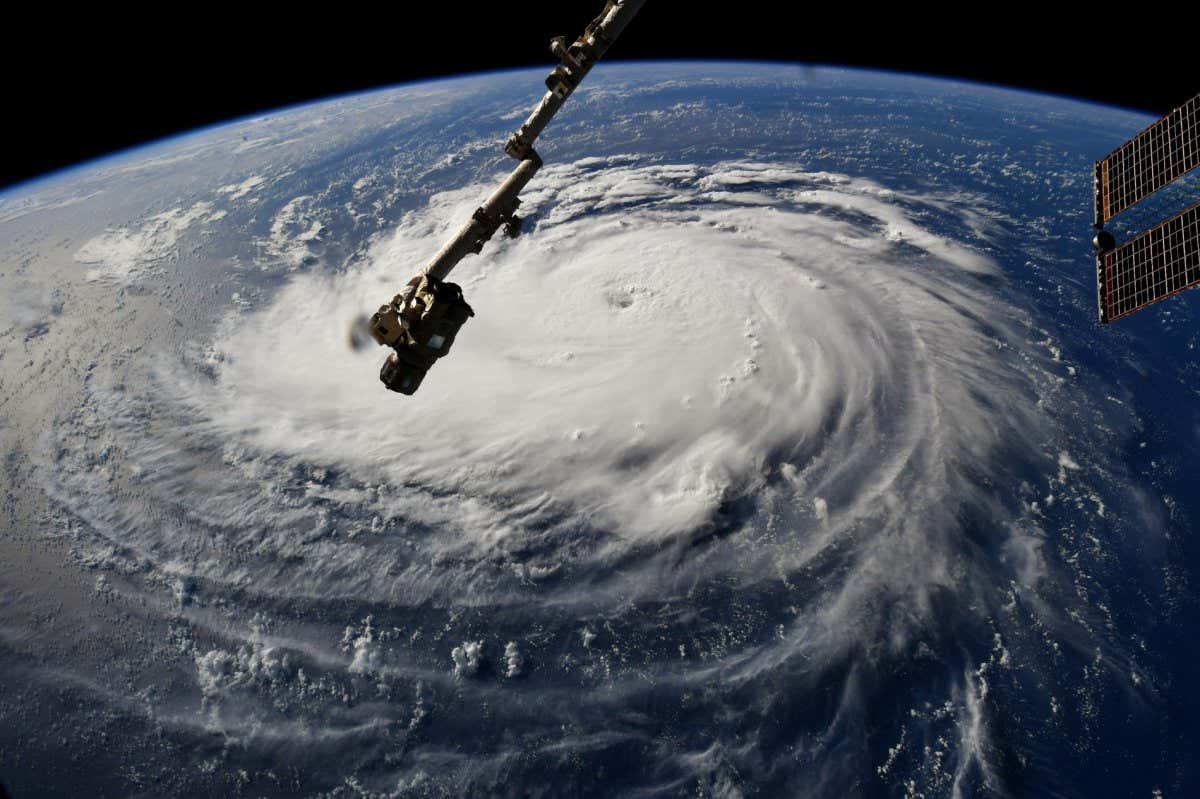
https://www.nasa.gov/image-feature/hurricane-florence-viewed-from-the-space-station Astronaut Ricky Arnold, from aboard the International Space Station, shared this image of Hurricane Florence on Sept. 10, taken as the orbiting laboratory flew over the massive storm

How AI is shifting the limits of knowledge imposed by complexity

10 January 2023

From weather to the structure of proteins, some things are predictable in theory, but too complex to figure out in practice. But the rise of artificial intelligence is changing that fast


How can we understand quantum reality if it is impossible to measure?

How can we understand quantum reality if it is impossible to measure?

10 January 2023

If we can’t measure something, we can’t know its true nature. This fundamental limitation hampers our understanding of the quantum world – but it doesn't preclude scientific thinking


How to be happy, according to the longest-running study of happiness

How to be happy, according to the longest-running study of happiness

9 January 2023

Harvard psychiatrist Robert Waldinger leads a study that has tracked hundreds of people over 80 years to see what makes a happy and meaningful life. Here's what he has learned


Sign up to our weekly newsletter

Receive a weekly dose of discovery in your inbox. We'll also keep you up to date with New Scientist events and special offers.

Sign up
Piano Exit Overlay Banner Mobile Piano Exit Overlay Banner Desktop