
Subscribe now
New Scientist Default Image

Quick crossword #135: Pain in the lower back and leg (8)

15 June 2023

Challenge your brain by solving New Scientist's weekly crosswords on your mobile, tablet or desktop
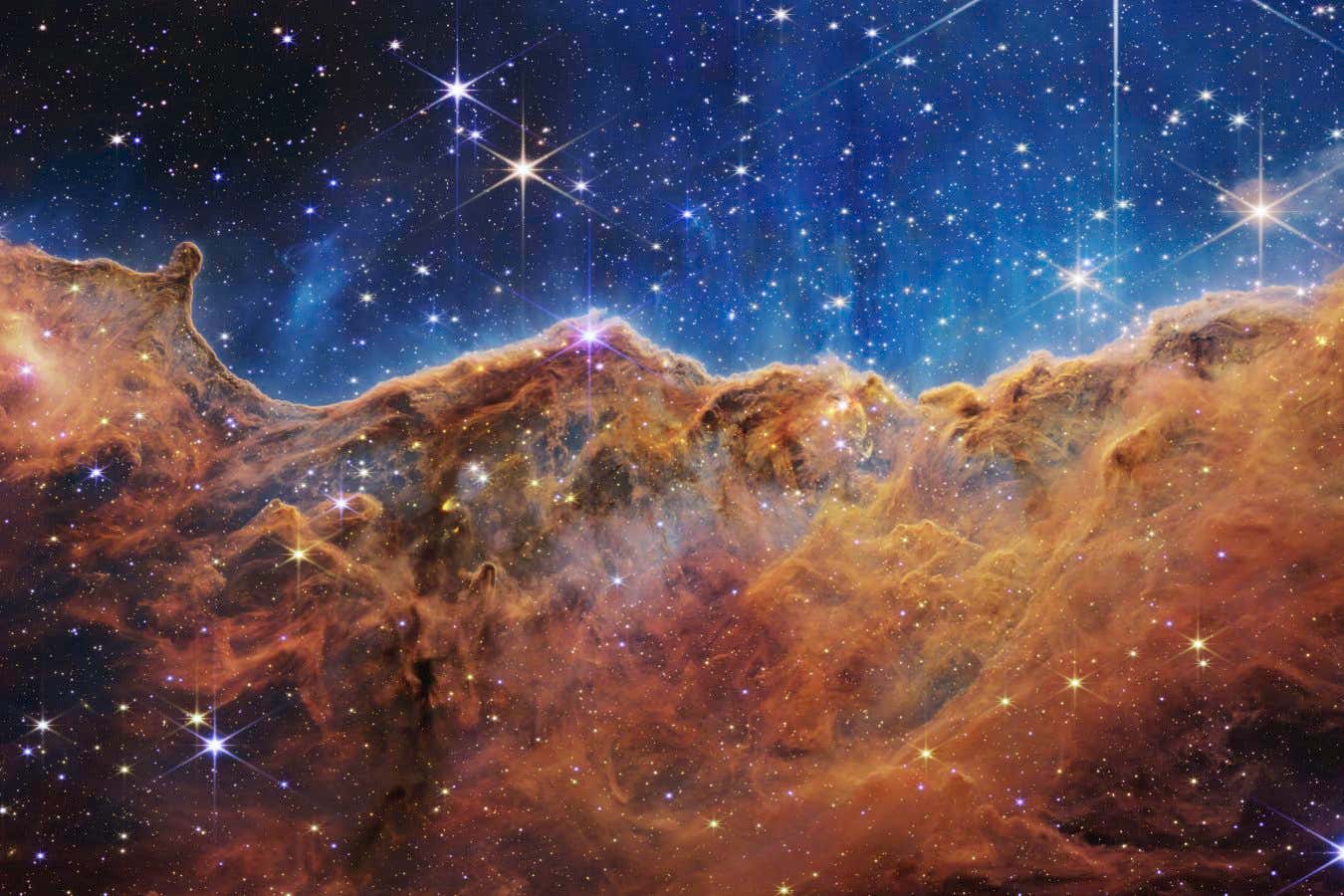

What looks much like craggy mountains on a moonlit evening is actually the edge of a nearby, young, star-forming region NGC 3324 in the Carina Nebula. Captured in infrared light by the Near-Infrared Camera (NIRCam) on NASA???s James Webb Space Telescope, this image reveals previously obscured areas of star birth. Called the Cosmic Cliffs, the region is actually the edge of a gigantic, gaseous cavity within NGC 3324, roughly 7,600 light-years away. The cavernous area has been carved from the nebula by the intense ultraviolet radiation and stellar winds from extremely massive, hot, young stars located in the center of the bubble, above the area shown in this image. The high-energy radiation from these stars is sculpting the nebula???s wall by slowly eroding it away. NIRCam ??? with its crisp resolution and unparalleled sensitivity ??? unveils hundreds of previously hidden stars, and even numerous background galaxies. Several prominent features in this image are described below. ??? The ???steam??? that appears to rise from the celestial ???mountains??? is actually hot, ionized gas and hot dust streaming away from the nebula due to intense, ultraviolet radiation. ??? Dramatic pillars rise above the glowing wall of gas, resisting the blistering ultraviolet radiation from the young stars. ??? Bubbles and cavities are being blown by the intense radiation and stellar winds of newborn stars. ??? Protostellar jets and outflows, which appear in gold, shoot from dust-enshrouded, nascent stars. ??? A ???blow-out??? erupts at the top-center of the ridge, spewing gas and dust into the interstellar medium. ??? An unusual ???arch??? appears, looking like a bent-over cylinder. This period of very early star formation is difficult to capture because, for an individual star, it lasts only about 50,000 to 100,000 years ??? but Webb???s extreme sensitivity and exquisite spatial resolution have chronicled this rare event. Located roughly 7,600 light-years away, NGC 3324 was first cat

The JWST is already delivering on its promise to transform cosmology

14 June 2023

Almost a year after its first images were released, the James Webb Space Telescope is living up to the hype, and its price tag, by revolutionising our understanding of the universe
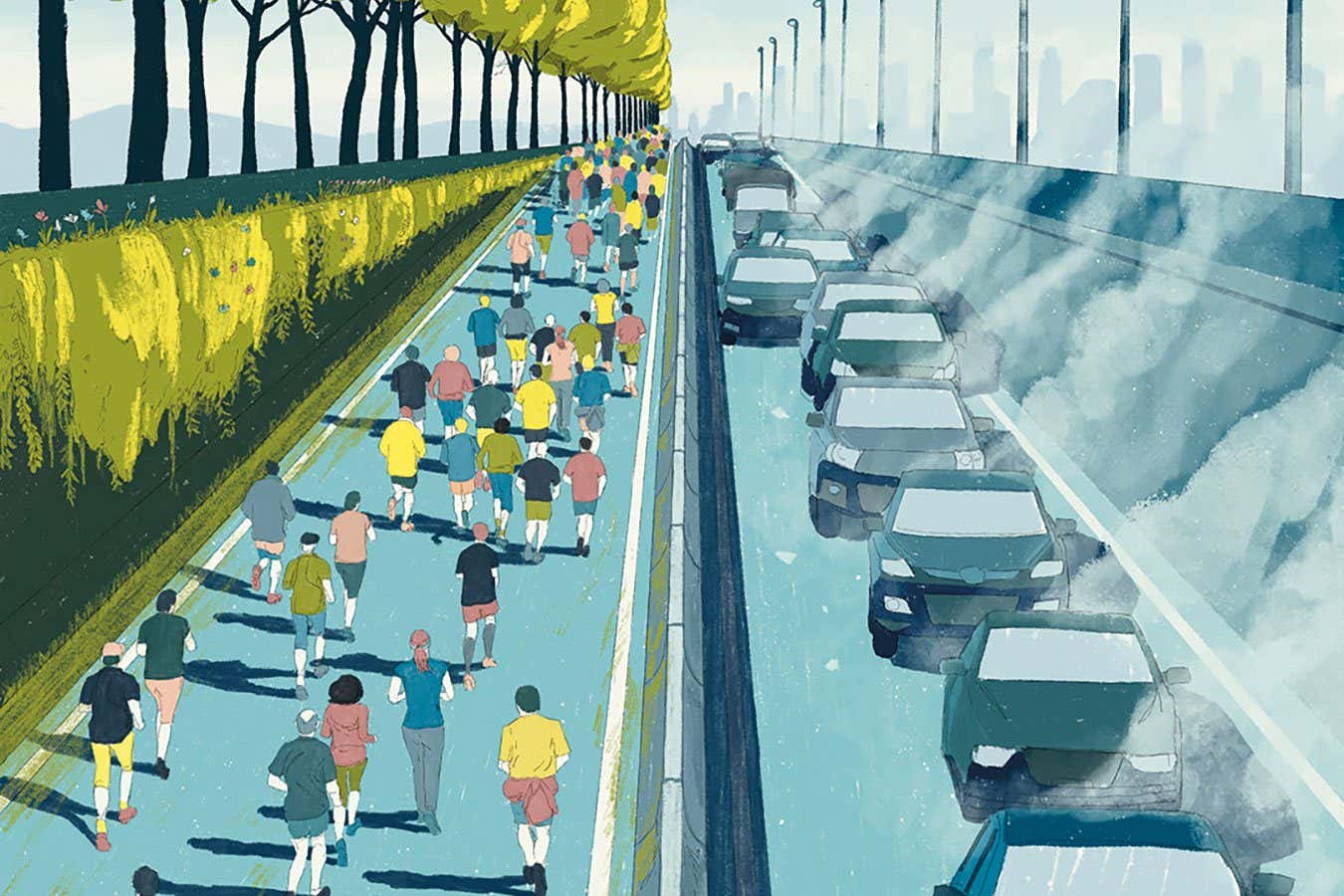

Concern about dirty air can galvanise the fight against climate change

Concern about dirty air can galvanise the fight against climate change

14 June 2023

Politicians think that climate policy is a vote loser because people see it as a "tomorrow" issue. But immediate worries about the air we breathe offer a way to shift the dial, says London's mayor Sadiq Khan
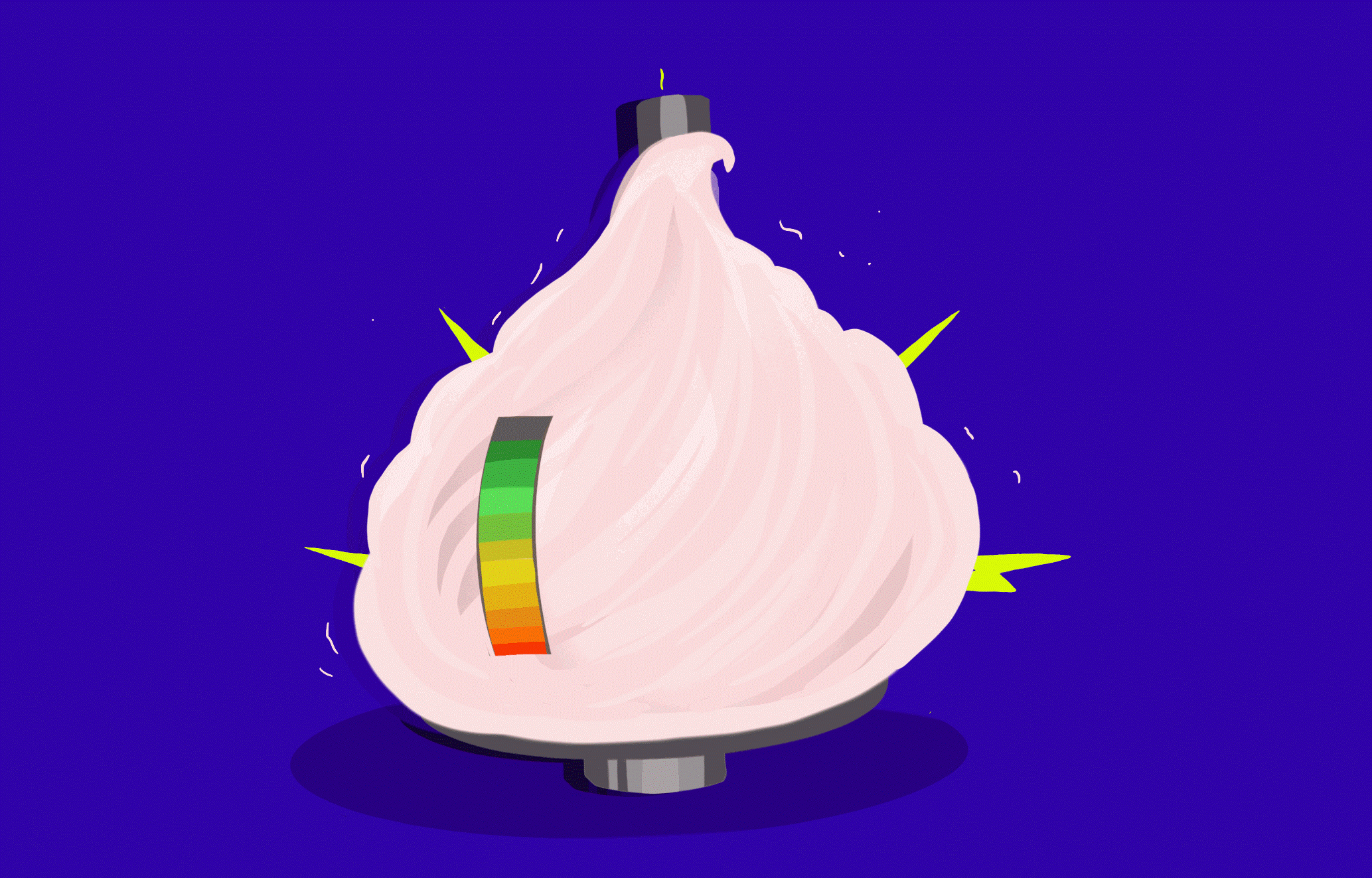

An intellectually delicious recipe for electric meringue

An intellectually delicious recipe for electric meringue

14 June 2023

Feedback explores a feat of dessert-based engineering cooked up by researchers in South Korea and the US, and ponders the true meaning of public relations

T4AEYJ Stellar explosion shining in deep space, cosmic star blast in Universe. High resolution galaxy background.

This week’s new questions

14 June 2023

If time started at the big bang, is it ever likely to come to a halt? And why do almost all vertebrates have tails, even when they don’t seem useful, but not apes or frogs?


Could land-dwelling octopuses develop technology? (Part 3)

Could land-dwelling octopuses develop technology? (Part 3)

14 June 2023

To develop technology, octopuses would need to evolve writing to pass information between generations, says one reader
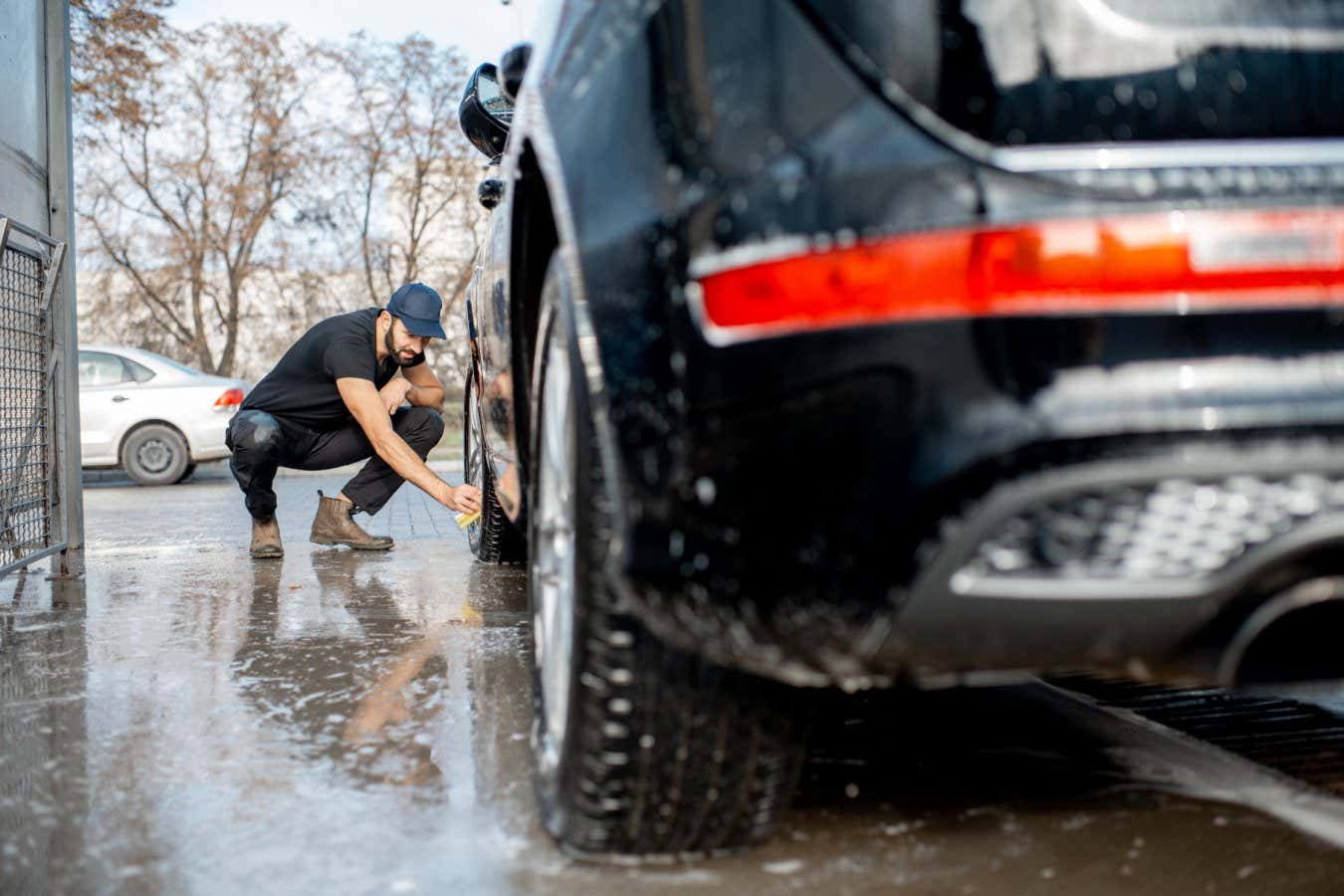

R2YAK1 Professional washer in black uniform and cap wiping with sponge car wheel of a luxury car during the washing process outdoors

Why are the front wheels of my car much dirtier than the rear ones?

14 June 2023

Front wheels are dirtier due to the load of braking or road dirt, but one reader suggests driving backwards to test this out
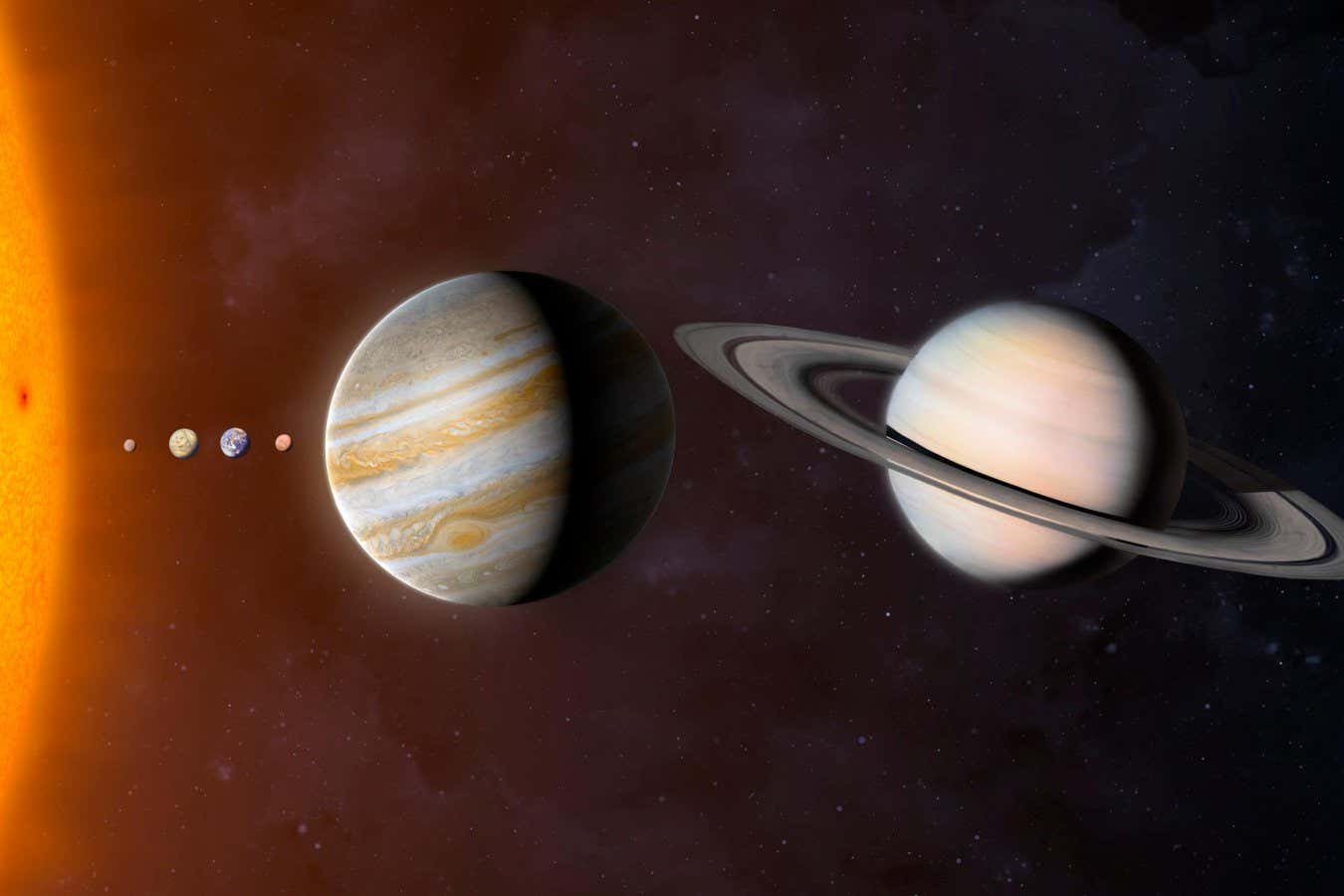

MNN37P Illustration comparing the planets of the Solar System and the Sun on the same scale. The planets are shown to scale relative to each other but their distances are not. From left to right the bodies are: the Sun, Mercury, Venus, Earth, Mars, Jupiter, Saturn, Uranus and Neptune.

Will there ever be a time when all our solar system’s planets align?

14 June 2023

It will take so long for an alignment of all the planets to occur that, by then, the sun might have expanded to swallow some of them, say our readers


Puzzle #226: Can you decipher the substitution cipher?

Puzzle #226: Can you decipher the substitution cipher?

14 June 2023

Can you solve this week’s logic puzzle, On reflection? Plus the answer to puzzle #225
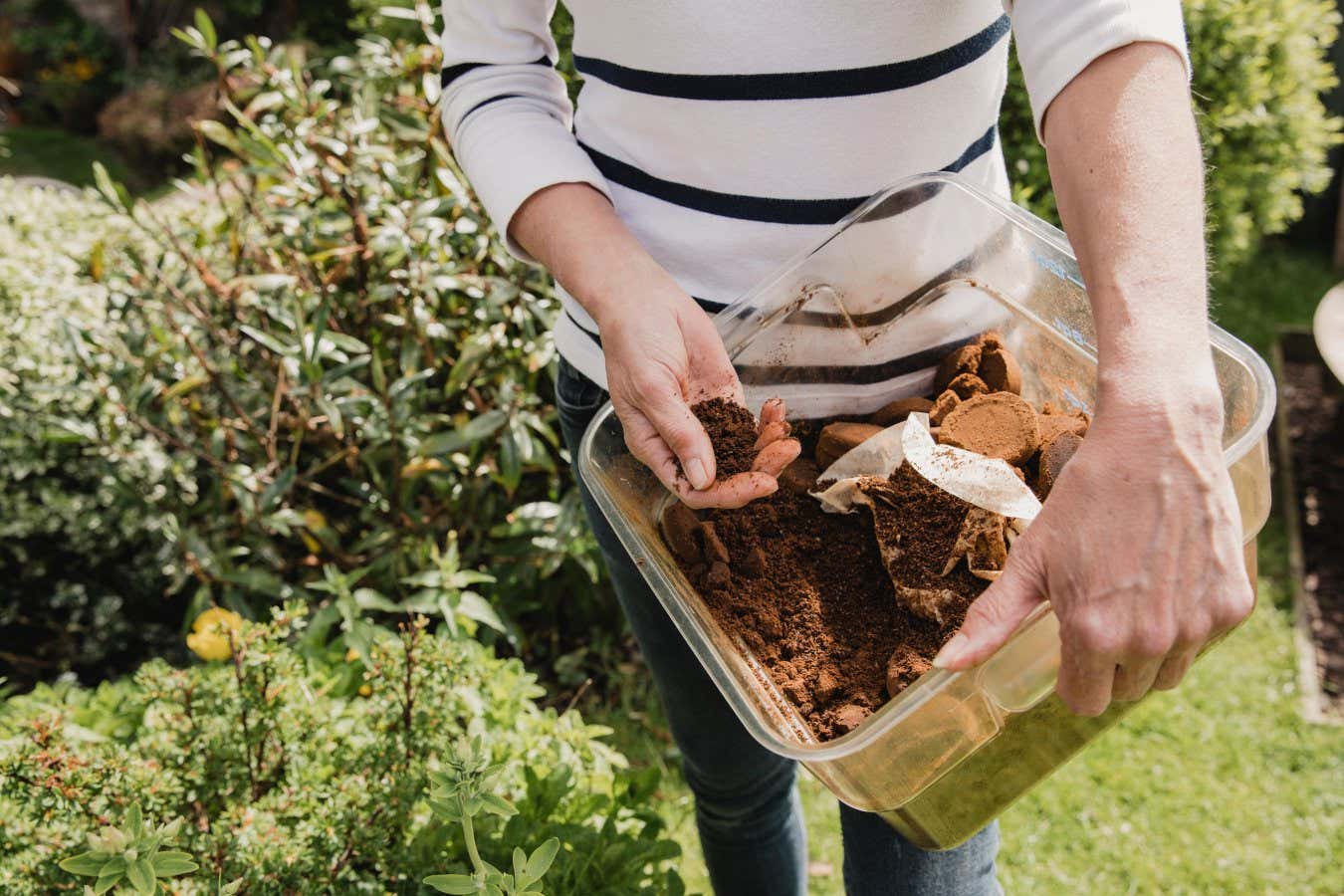

R126CH Unrecognisable woman in casual clothing holding a box of used coffee ground to use as compost in her garden.

Why used coffee grounds may be doing your plants more harm than good

14 June 2023

We are often told to add used coffee grounds to garden soil to perk up plants. But the science doesn’t support this, says James Wong


Sign up to our weekly newsletter

Receive a weekly dose of discovery in your inbox. We'll also keep you up to date with New Scientist events and special offers.

Sign up
Piano Exit Overlay Banner Mobile Piano Exit Overlay Banner Desktop