Subscribe now

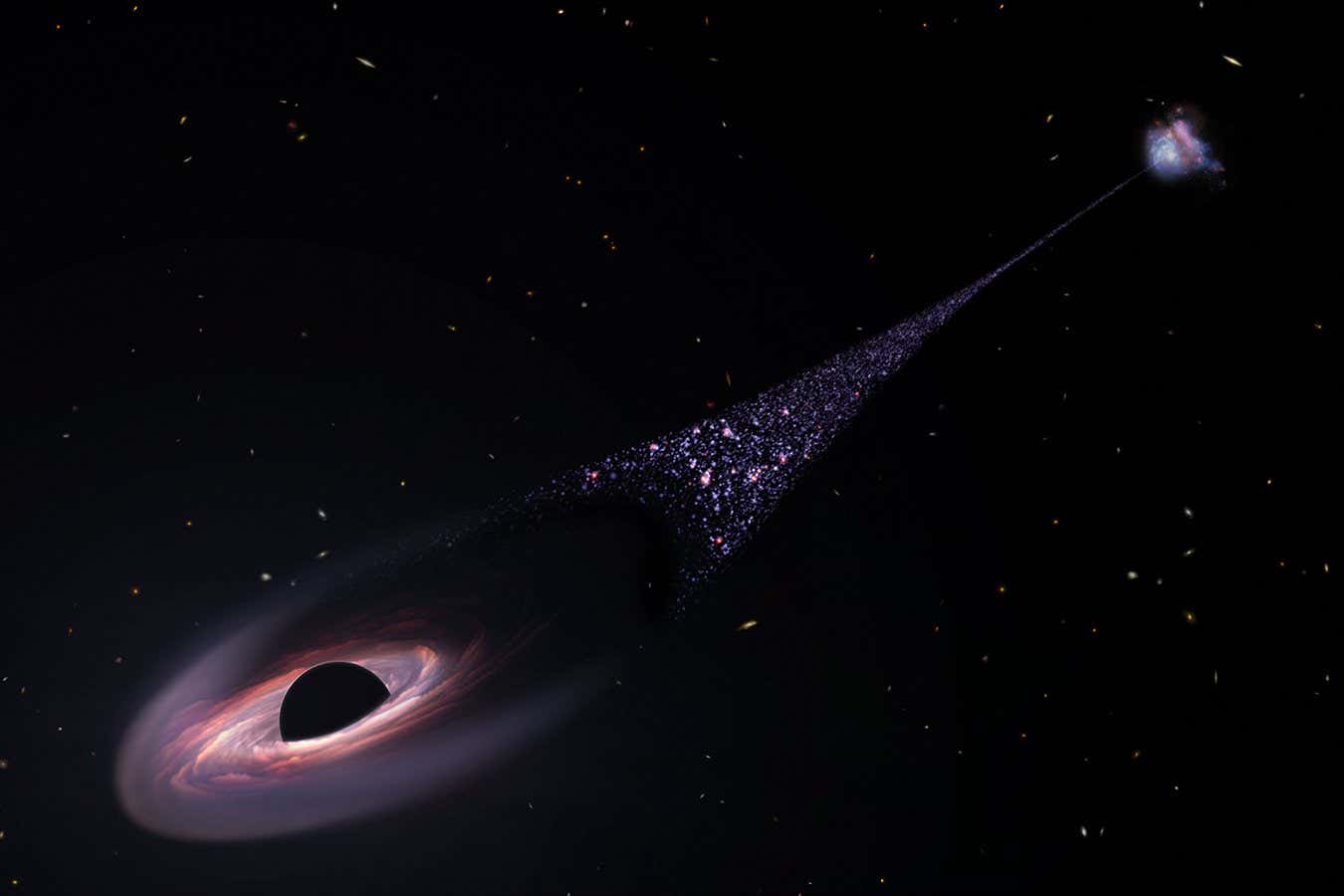
A supermassive black hole is hurtling away from its home galaxy

7 April 2023

For the first time, researchers have spotted what appears to be a supermassive black hole flying away from its home galaxy at incredible speeds, trailing bursts of star formation behind it
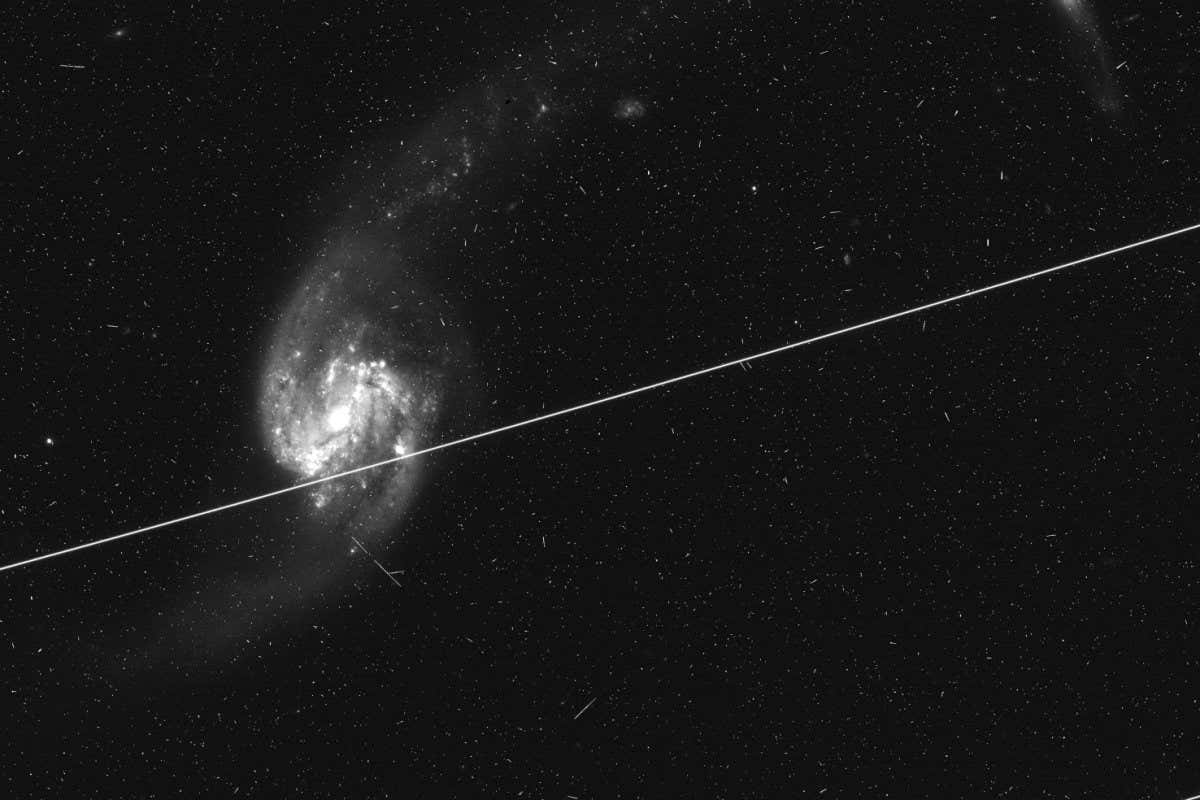
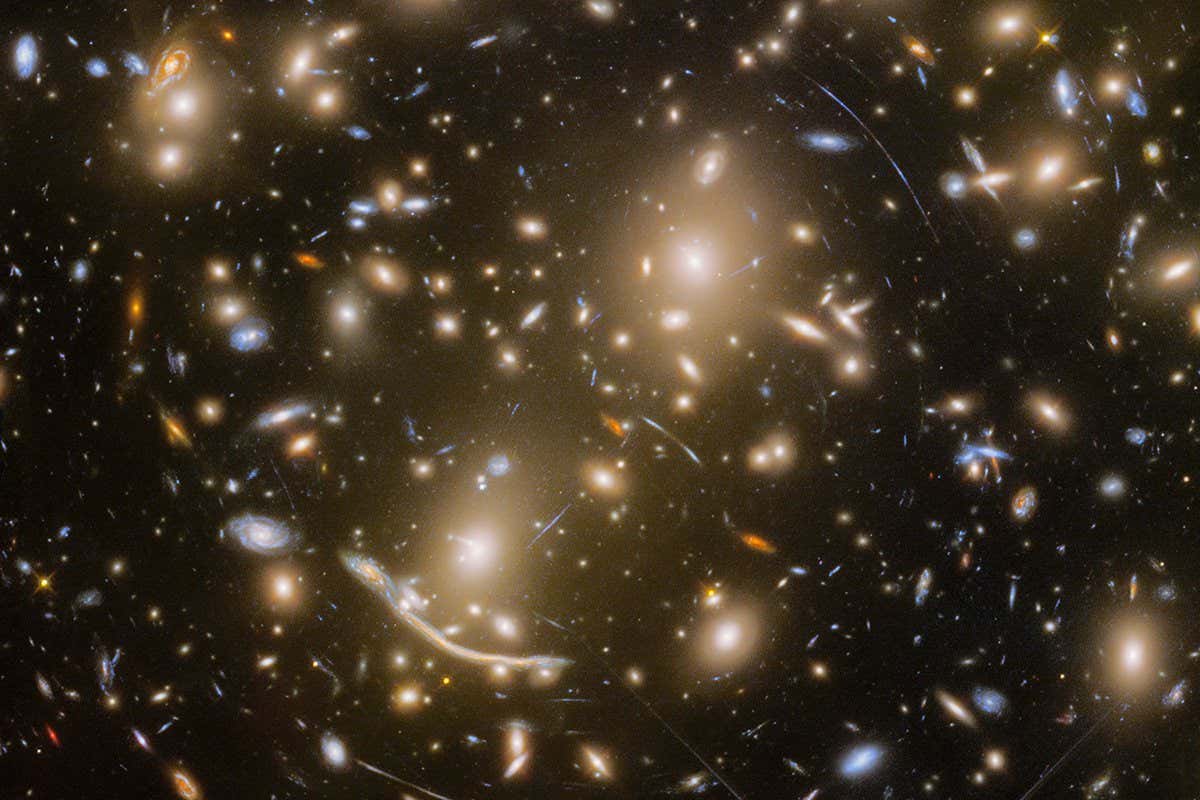
Satellite trails crossing an image of galaxy ARP248, captured by Hubble

Hubble Space Telescope images are being spoiled by satellite trails

2 March 2023

With so many satellites now in orbit, some are straying across Hubble’s field of view as it is taking photographs of distant celestial objects


Abell 370 picture

Astronomers saw a distant supernova less than 6 hours after it blew up

9 November 2022

The Hubble Space Telescope has captured a distant star exploding earlier than ever before, allowing astronomers to watch the first eight days of a star’s violent death


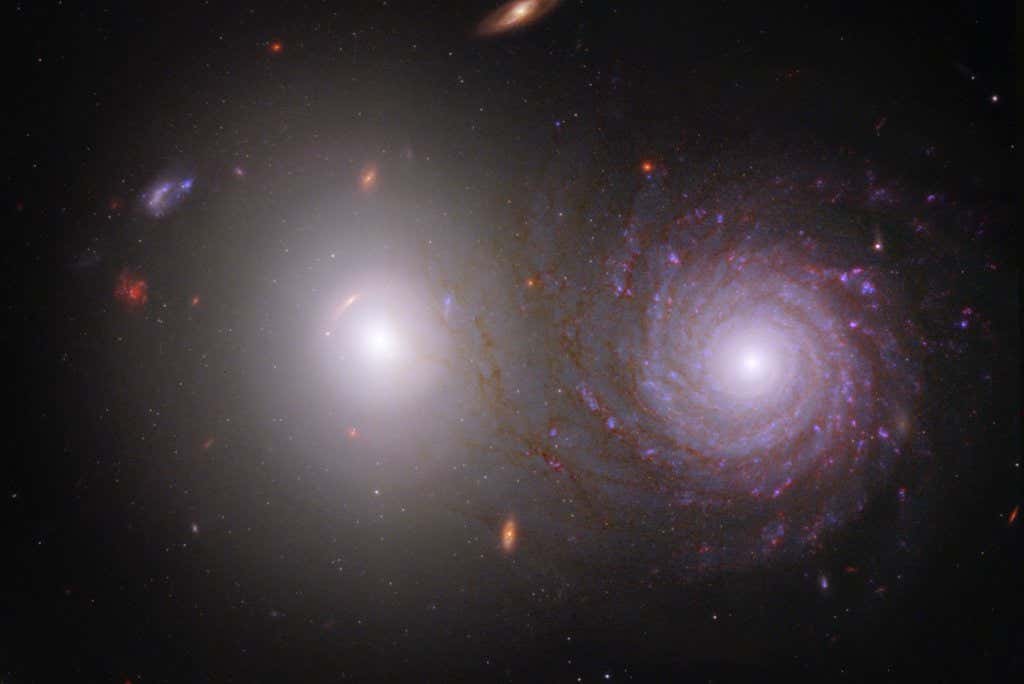
By combining data from NASA?s James Webb Space Telescope and NASA?s Hubble Space Telescope, researchers were able to trace light that was emitted by the large white elliptical galaxy at left through the spiral galaxy at right and identify the effects of interstellar dust in the spiral galaxy. This image of galaxy pair VV 191 includes near-infrared light from Webb, and ultraviolet and visible light from Hubble. Webb?s near-infrared data also show us the galaxy?s longer, extremely dusty spiral arms in far more detail, giving them an appearance of overlapping with the central bulge of the bright white elliptical galaxy on the left. Although the two foreground galaxies are relatively close astronomically speaking, they are not actively interacting. Don?t overlook the background scenery! Like many Webb images, this image of VV 191 shows many galaxies that lie great distances away. For example, two patchy spirals to the upper left of the elliptical galaxy have similar apparent sizes, but show up in very different colors. One is likely very dusty and the other very far away, but researchers need to obtain data known as spectra to determine which is which.

JWST and Hubble teamed up to take a stunning image of two galaxies

5 October 2022

The James Webb Space Telescope and the Hubble Space Telescope observe the universe in different wavelengths, and combining their data has given astronomers a detailed look at the interstellar dust in a pair of galaxies


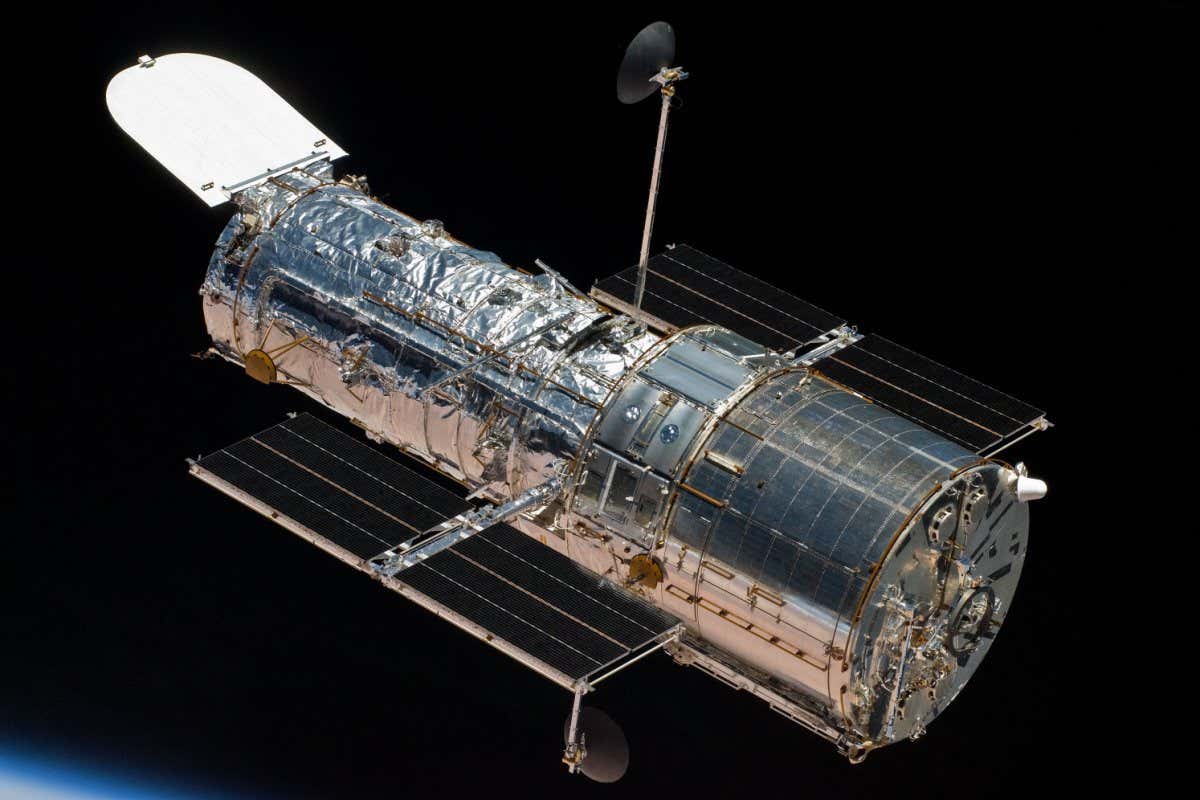
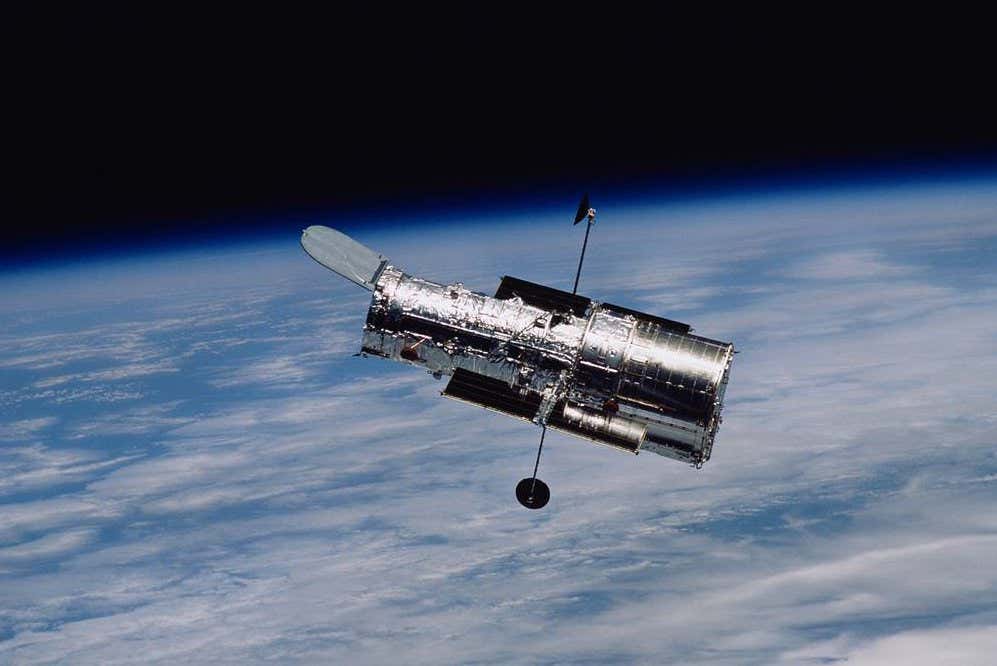
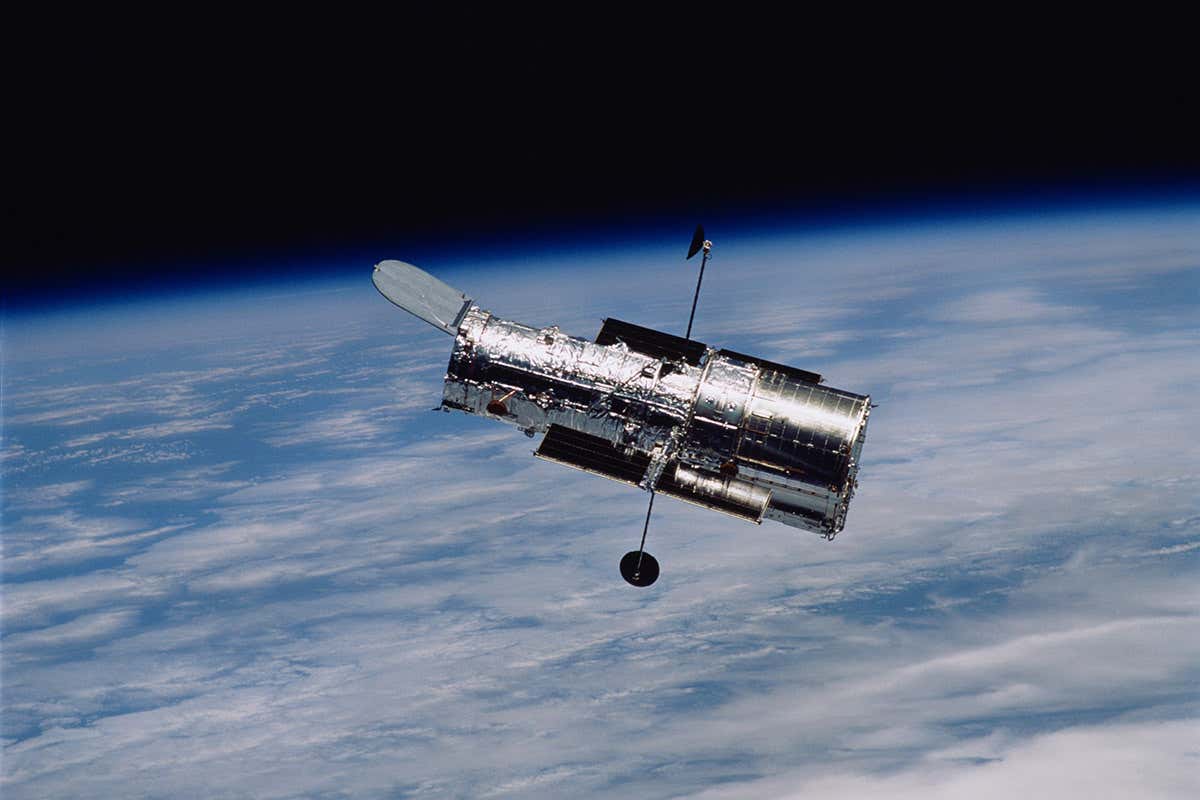
The Hubble Space Telescope

SpaceX may help the Hubble Space Telescope boost its lifespan

29 September 2022

NASA and SpaceX are studying whether it would be possible to use a Dragon spacecraft to boost the Hubble Space Telescope’s orbit, extending its lifetime by up to 20 years


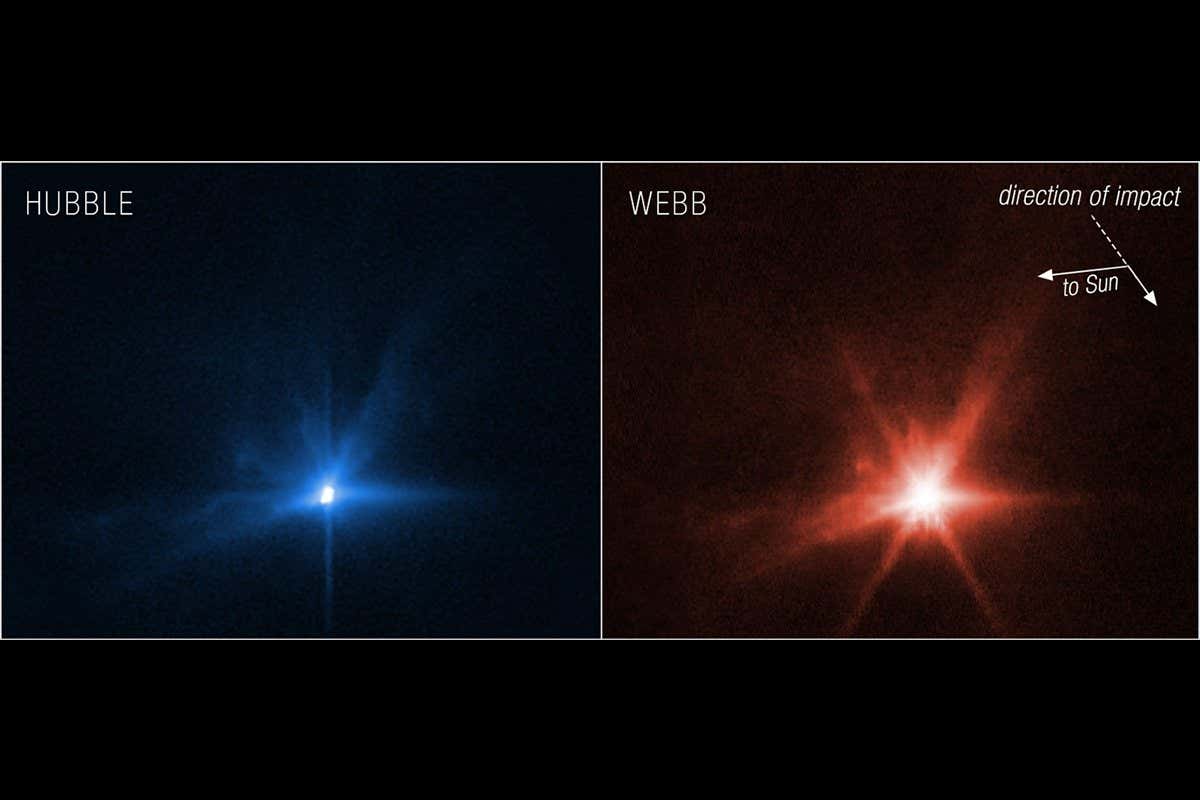
For the first time, NASA?s James Webb Space Telescope and Hubble Space Telescope have taken simultaneous observations of the same target. These images, Hubble on left and Webb on the right, show observations of the Didymos-Dimorphos system several hours after NASA?s Double Asteroid Redirection Test (DART) intentionally impacted the moonlet asteroid. It was the world?s first test of the kinetic impact technique using a spacecraft to deflect an asteroid by modifying its orbit. Both Webb and Hubble observed the asteroid before and after the collision took place. Scientists will use the combined observations from Hubble and Webb to gain knowledge about the nature of the surface of Dimorphos, how much material was ejected by the collision, how fast it was ejected, and the distribution of particle sizes in the expanding dust cloud. In the coming months, scientists will also use Webb?s Mid-Infrared Instrument (MIRI) and Near-Infrared Spectrograph (NIRSpec) to observe ejecta from Dimorphos further. Spectroscopic data will provide researchers with insight into the asteroid?s composition. Hubble will monitor Dimorphos ten more times over the next three weeks to monitor how the ejecta cloud expands and fades over time. Hubble observations were conducted in one filter, WFC3/UVIS F350LP (assigned the color blue), while Webb observed at F070W (0.7 microns, assigned the color red).

Hubble and JWST both saw the aftermath of NASA's DART asteroid mission

29 September 2022

After NASA’s DART mission slammed into the asteroid Dimorphos, the Hubble Space Telescope and the James Webb Space Telescope took simultaneous pictures of what was left behind


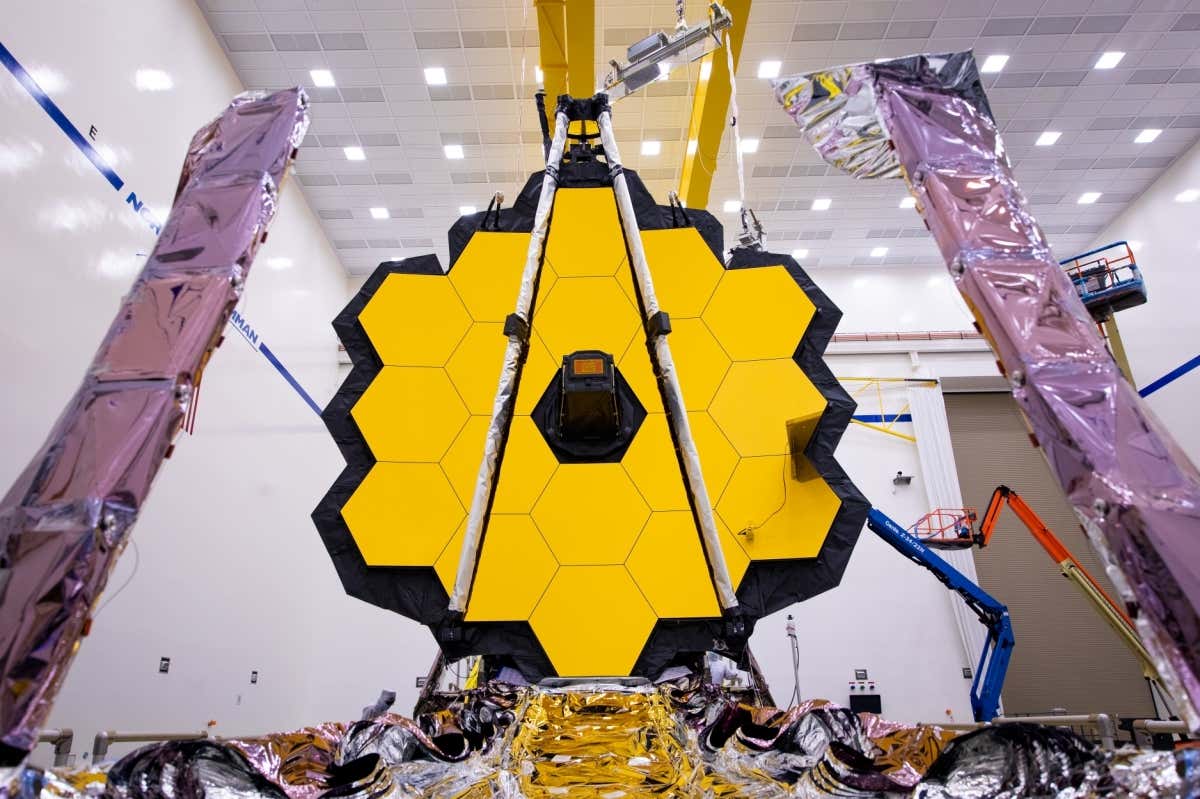
The James Webb Space Telescope (JWST)

The James Webb Space Telescope (JWST)

22 July 2022

NASA’s planned successor to the Hubble Space Telescope


How the Hubble Telescope opened a new window on the cosmos

How the Hubble Telescope opened a new window on the cosmos

13 October 2021

The Hubble Space Telescope's journey to the sky was a bumpy one, but it was well worth the effort, writes Chanda Prescod-Weinstein


hubble

NASA is trying a 'risky' fix for the ageing Hubble Space Telescope

7 July 2021

NASA will attempt what has been described as a “risky” fix for the Hubble Space Telescope after several weeks of troubleshooting following an unexpected shutdown


The atmosphere gets in the way of the universe’s most amazing objects

The atmosphere gets in the way of the universe’s most amazing objects

26 February 2020

Earth’s atmosphere thankfully provides air for us to breathe, but when trying to study interesting objects in space it causes all sorts of problems, writes Chanda Prescod-Weinstein


Sign up to our weekly newsletter

Receive a weekly dose of discovery in your inbox. We'll also keep you up to date with New Scientist events and special offers.

Sign up
Piano Exit Overlay Banner Mobile Piano Exit Overlay Banner Desktop