Subscribe now
Found 145 results for dwarf planet
Red dwarf star

Deadly stellar radiation blasts 'habitable' exoplanets every few days

26 September 2022

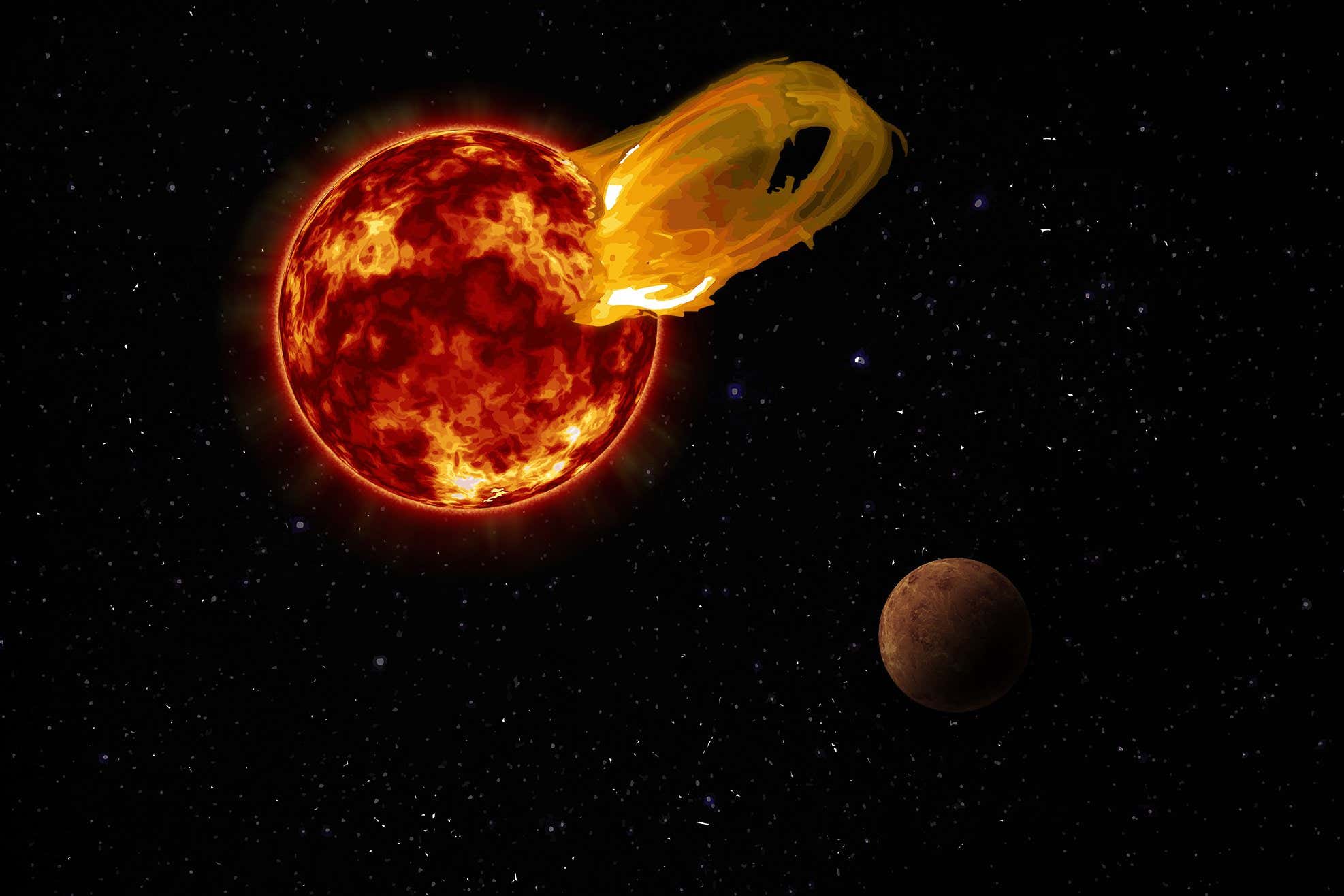
Planets orbiting M-class red dwarf stars have been suggested as some of the most promising places to look for alien life, but now it seems powerful outbursts from the stars could render them uninhabitable
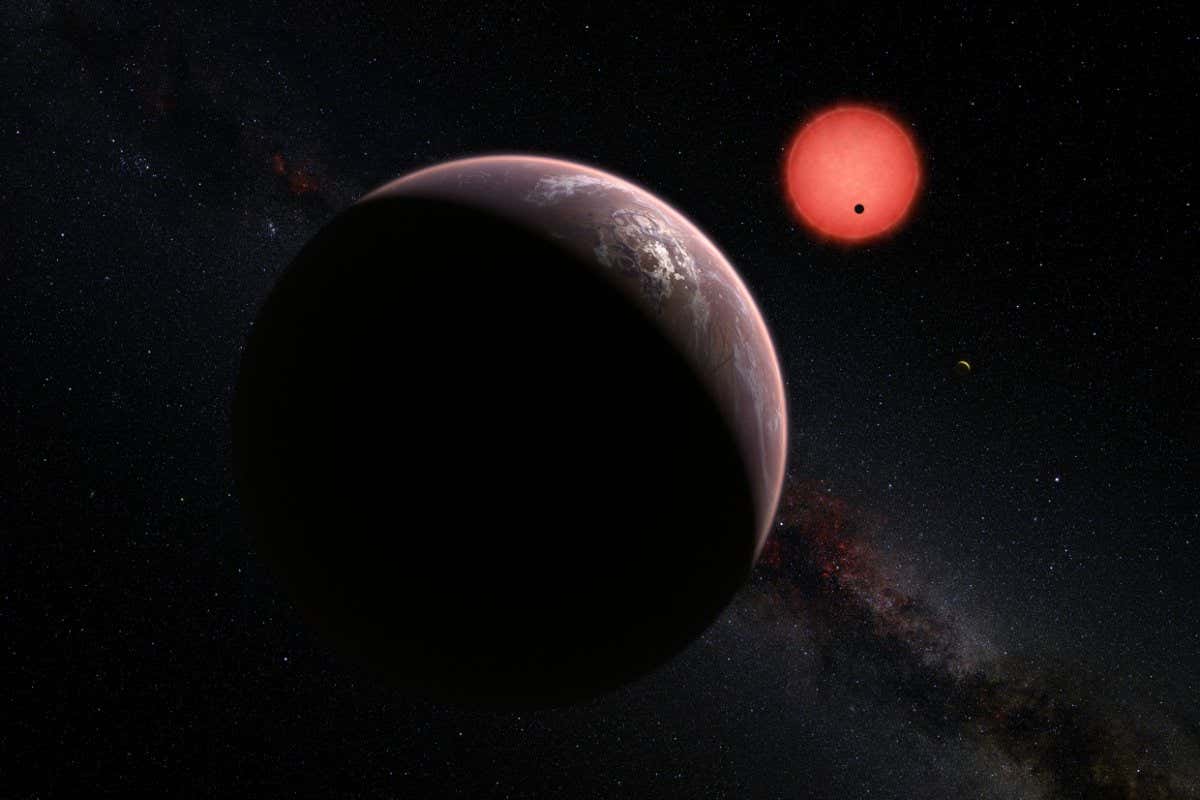
Artist's impression of three planets orbiting an ultracool dwarf star

Earth's algae and moss could survive under the light of another star

21 September 2022

Experiments on Earth mimicking the rays from a red dwarf star show that cyanobacteria, algae and moss can grow under these light conditions, backing the idea that some exoplanets could host life


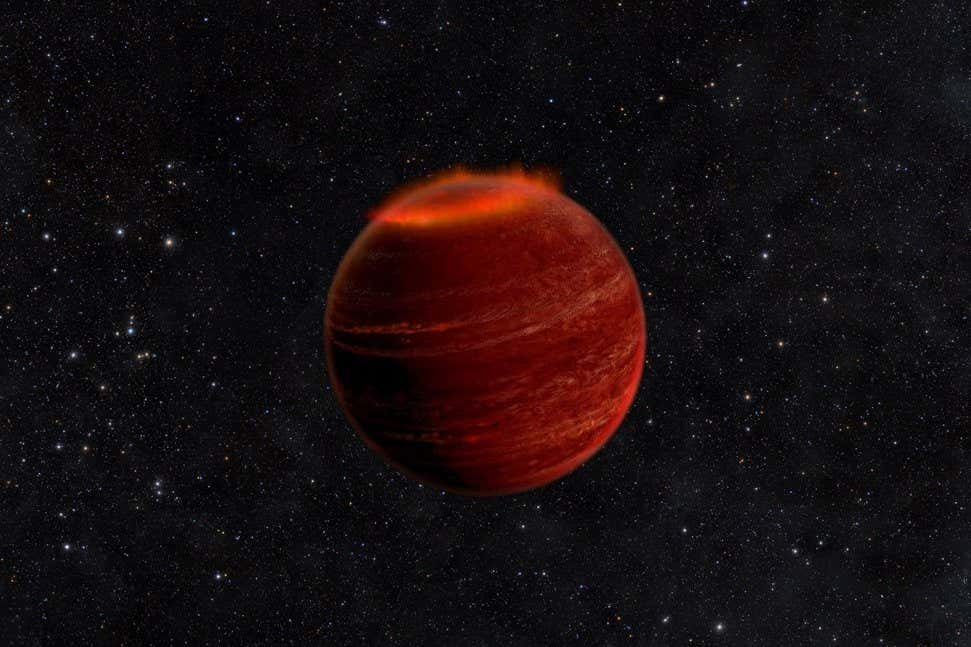
This artist's concept shows an auroral display on a brown dwarf. If you could see an aurora on a brown dwarf, it would be a million times brighter than an aurora on Earth.

Weird ‘failed star’ seen blasting off its outer layers for first time

13 September 2022

A brown dwarf – partway between a planet and a star – has been spotted engulfed in a cloud of gas, which it probably produced after a huge pulse of heat blasted through it


Electron microscope image of hexagonal diamond in a meteorite

Strange hexagonal diamonds found in meteorite from another planet

12 September 2022

Diamonds found in four meteorites in north-west Africa probably came from an ancient dwarf planet, and they are expected to be harder than Earth diamonds


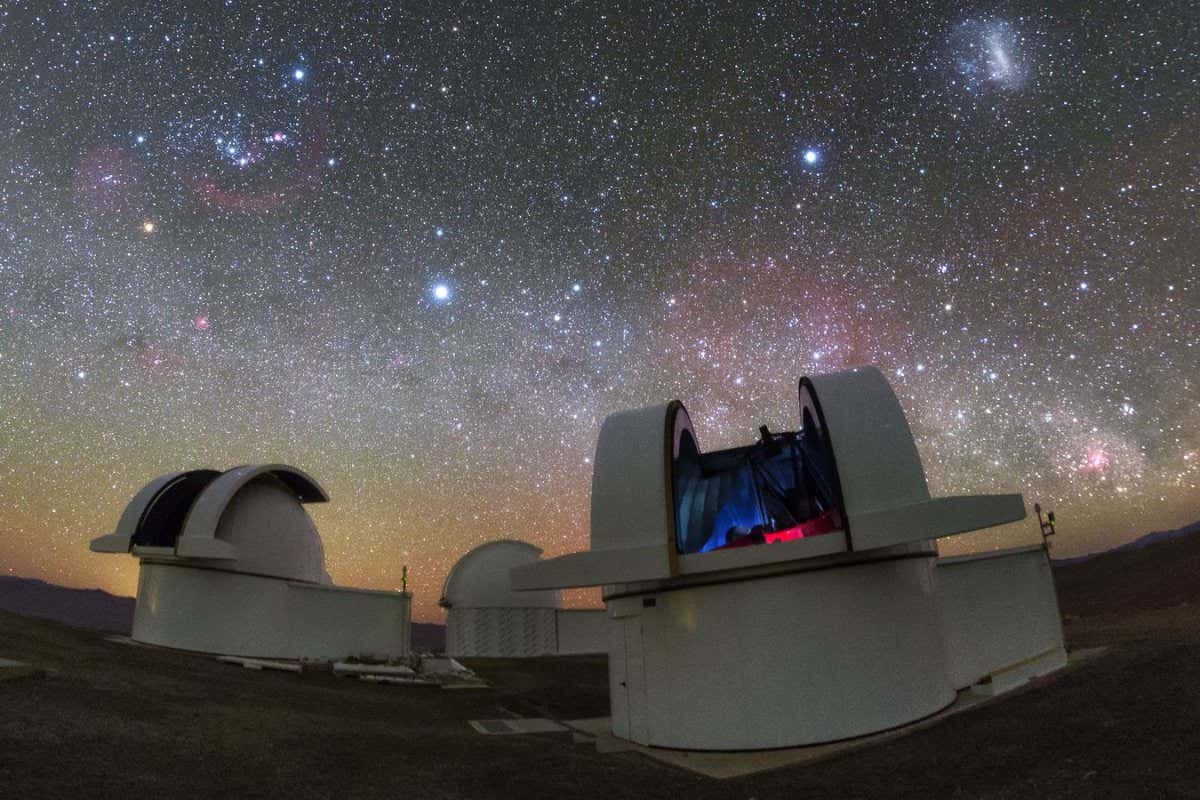
The telescopes of the SPECULOOS Southern Observatory gaze out into the stunning night sky over the Atacama desert in Chile

Two potentially habitable super-Earth planets have been discovered

7 September 2022

A pair of rocky planets orbiting the star LP 890-9, also known as SPECULOOS 2, seem likely to be in the habitable zone and one of them could be the second most habitable exoplanet discovered so far


New Scientist Default Image

Puzzle #182: Can you work out the length of the raffle ticket strips?

24 August 2022

set by Katie Steckles


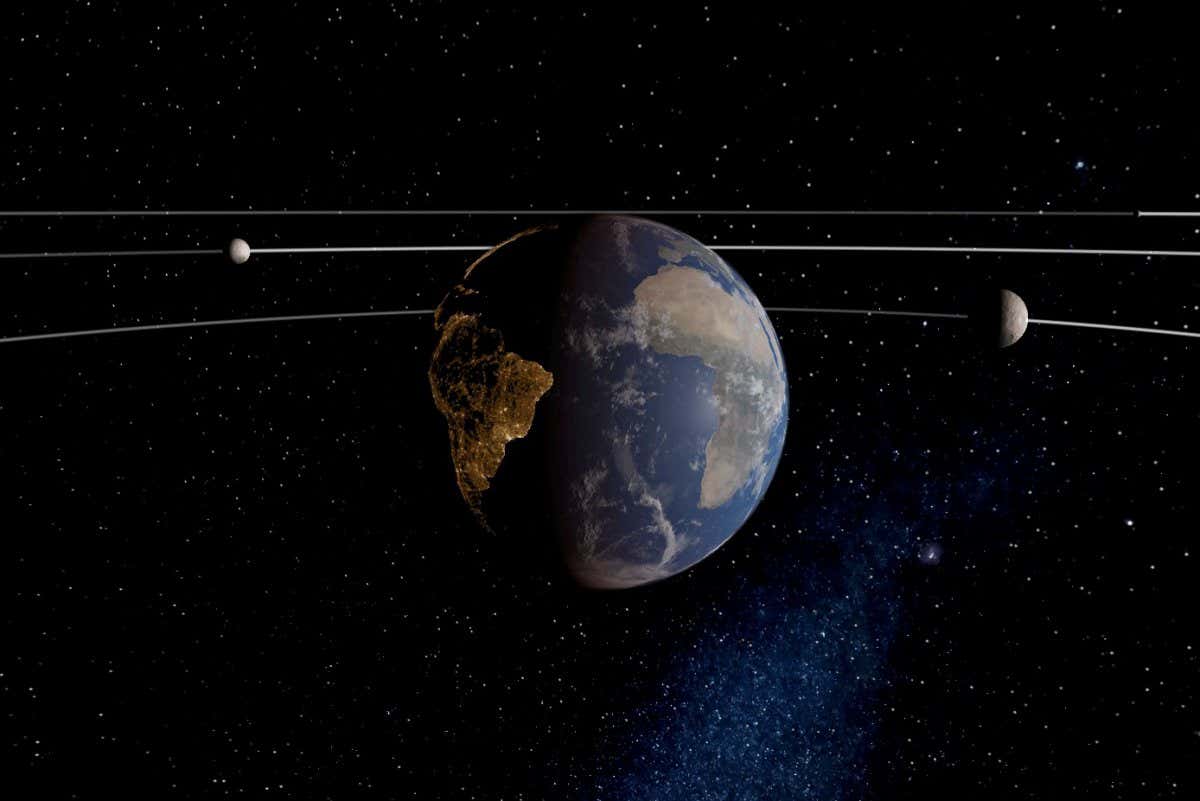
Earth could theoretically host two more moons the same size as the current moon. If the extra moons were smaller, it could have even more.

Physicists work out how many moons Earth could have

12 August 2022

Simulations suggest that Earth could theoretically host two more moons the size of the one we've got now, or several smaller moons


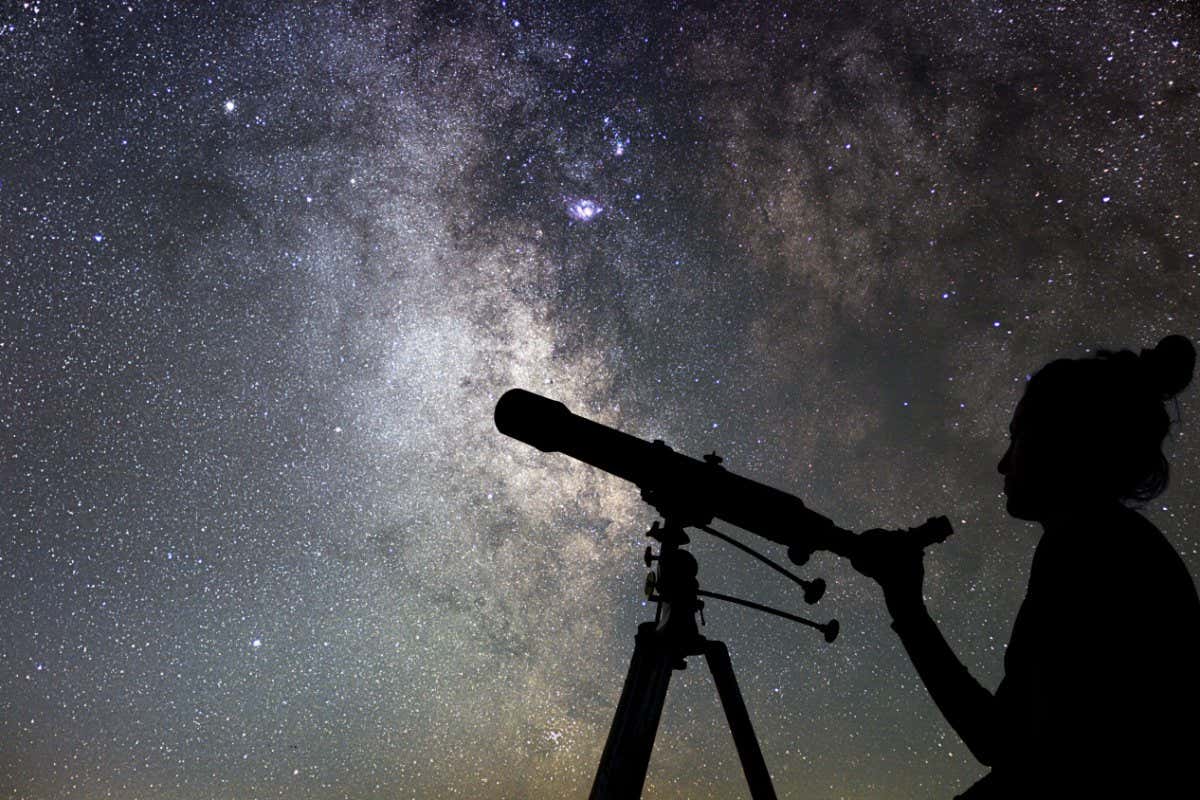
H3C989 Woman and night sky. Watching the stars Woman with telescope.

Now is the best time to see Pluto, our beloved dwarf planet

13 July 2022

Track down a telescope and pray for dark skies, as a chance to see Pluto is coming up, says Abigail Beall


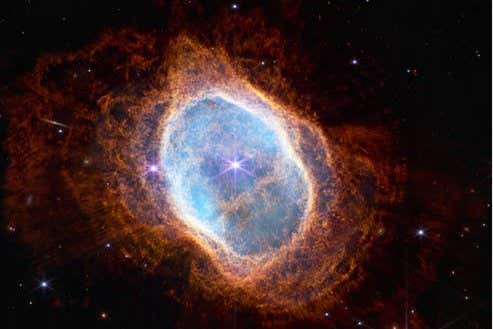
This side-by-side comparison shows observations of the Southern Ring Nebula in near-infrared light, at left, and mid-infrared light, at right, from NASA???s Webb Telescope. This scene was created by a white dwarf star ??? the remains of a star like our Sun after it shed its outer layers and stopped burning fuel though nuclear fusion. Those outer layers now form the ejected shells all along this view. In the Near-Infrared Camera (NIRCam) image, the white dwarf appears to the lower left of the bright, central star, partially hidden by a diffraction spike. The same star appears ??? but brighter, larger, and redder ??? in the Mid-Infrared Instrument (MIRI) image. This white dwarf star is cloaked in thick layers of dust, which make it appear larger. The brighter star in both images hasn???t yet shed its layers. It closely orbits the dimmer white dwarf, helping to distribute what it???s ejected. Over thousands of years and before it became a white dwarf, the star periodically ejected mass ??? the visible shells of material. As if on repeat, it contracted, heated up ??? and then, unable to push out more material, pulsated. Stellar material was sent in all directions ??? like a rotating sprinkler ??? and provided the ingredients for this asymmetrical landscape. Today, the white dwarf is heating up the gas in the inner regions ??? which appear blue at left and red at right. Both stars are lighting up the outer regions, shown in orange and blue, respectively. The images look very different because NIRCam and MIRI collect different wavelengths of light. NIRCam observes near-infrared light, which is closer to the visible wavelengths our eyes detect. MIRI goes farther into the infrared, picking up mid-infrared wavelengths. The second star more clearly appears in the MIRI image, because this instrument can see the gleaming dust around it, bringing it more clearly into view. The stars ??? and their layers of light ??? steal more attention in the NIRCam image, while dust pl

James Webb Space Telescope releases dazzling first science images

12 July 2022

Incredibly clear images of the Carina Nebula, the Eight-Burst Nebula, a galaxy cluster called Stephan’s Quintet and an exoplanet named WASP-96b make up the first set of science data from JWST


7 big questions the James Webb Space Telescope is about to answer

7 big questions the James Webb Space Telescope is about to answer

6 July 2022

NASA has just released the first full-colour image from the James Webb Space Telescope. Here’s what it is looking at first – and how it will address the biggest mysteries of the universe


Sign up to our weekly newsletter

Receive a weekly dose of discovery in your inbox. We'll also keep you up to date with New Scientist events and special offers.

Sign up
Piano Exit Overlay Banner Mobile Piano Exit Overlay Banner Desktop