Subscribe now
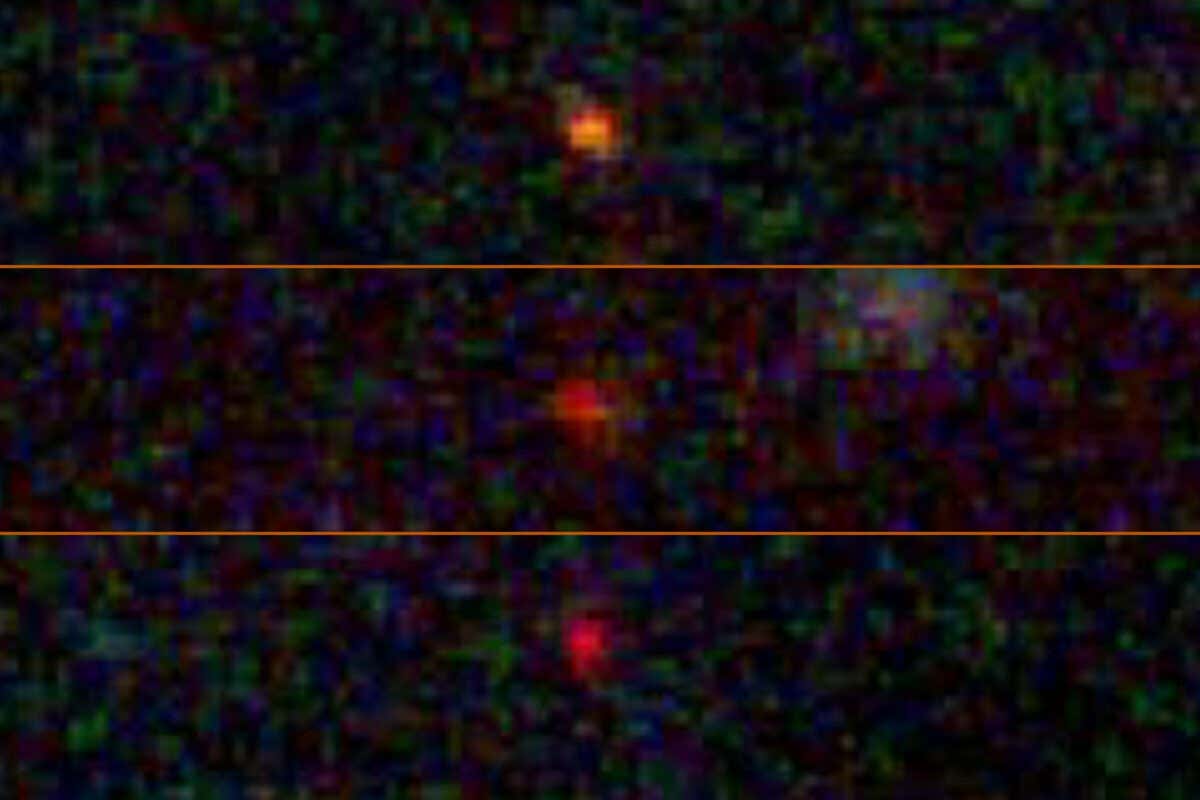
These three objects were originally identified as galaxies but they may actually be “dark stars”

JWST may have spotted enormous stars powered by dark matter

17 July 2023

The early universe could be home to huge stars powered by dark matter annihilation instead of fusion – and the James Webb Space Telescope may have already found some
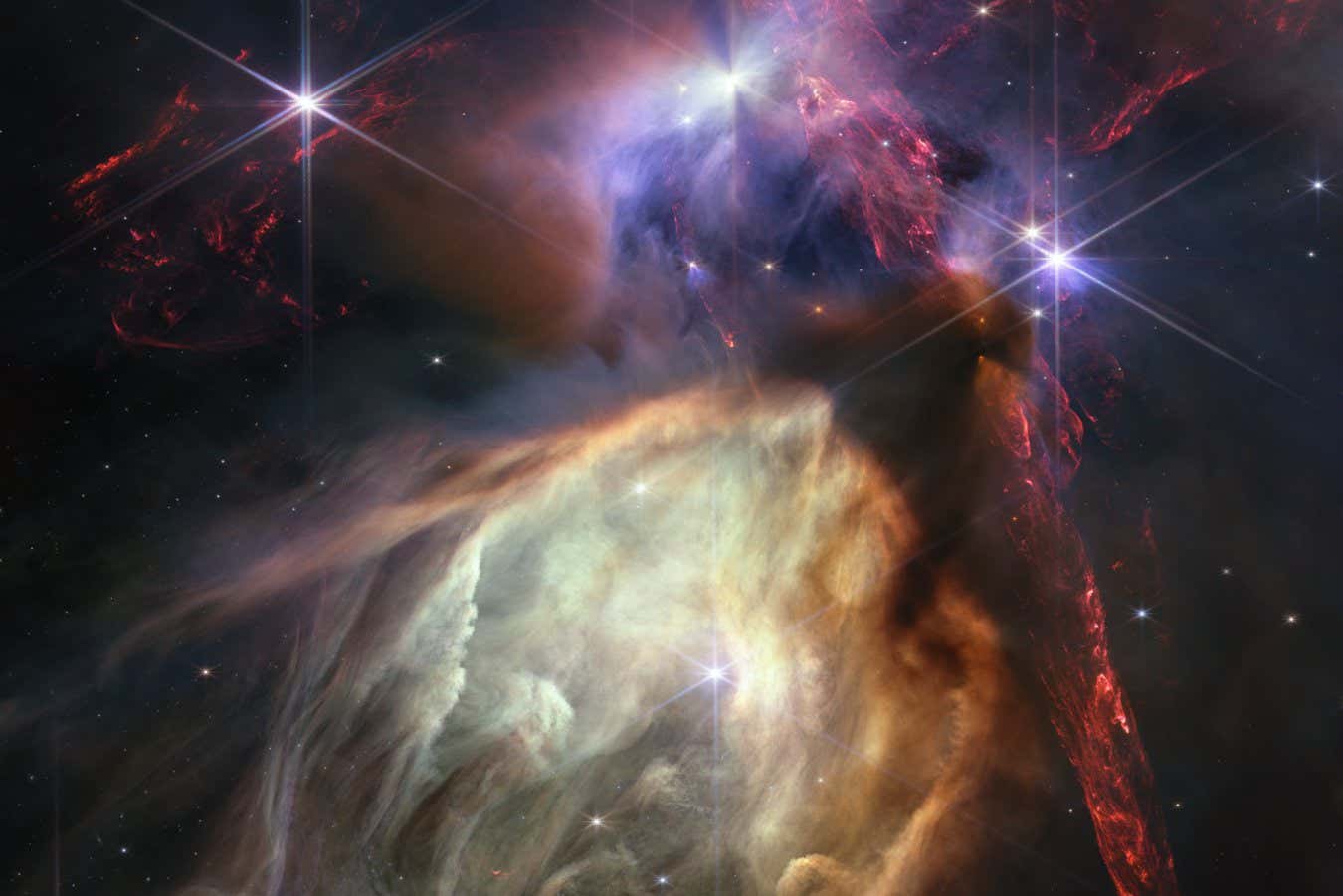

Caption The first anniversary image from NASA?s James Webb Space Telescope displays star birth like it?s never been seen before, full of detailed, impressionistic texture. The subject is the Rho Ophiuchi cloud complex, the closest star-forming region to Earth. It is a relatively small, quiet stellar nursery, but you?d never know it from Webb?s chaotic close-up. Jets bursting from young stars crisscross the image, impacting the surrounding interstellar gas and lighting up molecular hydrogen, shown in red. Some stars display the telltale shadow of a circumstellar disk, the makings of future planetary systems. The young stars at the center of many of these disks are similar in mass to the Sun, or smaller. The heftiest in this image is the star S1, which appears amid a glowing cave it is carving out with its stellar winds in the lower half of the image. The lighter-colored gas surrounding S1 consists of polycyclic aromatic hydrocarbons, a family of carbon-based molecules that are among the most common compounds found in space. For more detail on what is happening where in Webb?s image of Rho Ophiuchi, watch the video tour and read the press release. Credits Image NASA, ESA, CSA, STScI, Klaus Pontoppidan (STScI) Image Processing Alyssa Pagan (STScI)

JWST celebrates first year of science with awesome star-forming image

12 July 2023

After a year of producing incredible imagery, the James Webb Space Telescope team has released a picture of the Rho Ophiuchi cloud complex, Earth's closest star-forming region

James Webb Space Telescope images

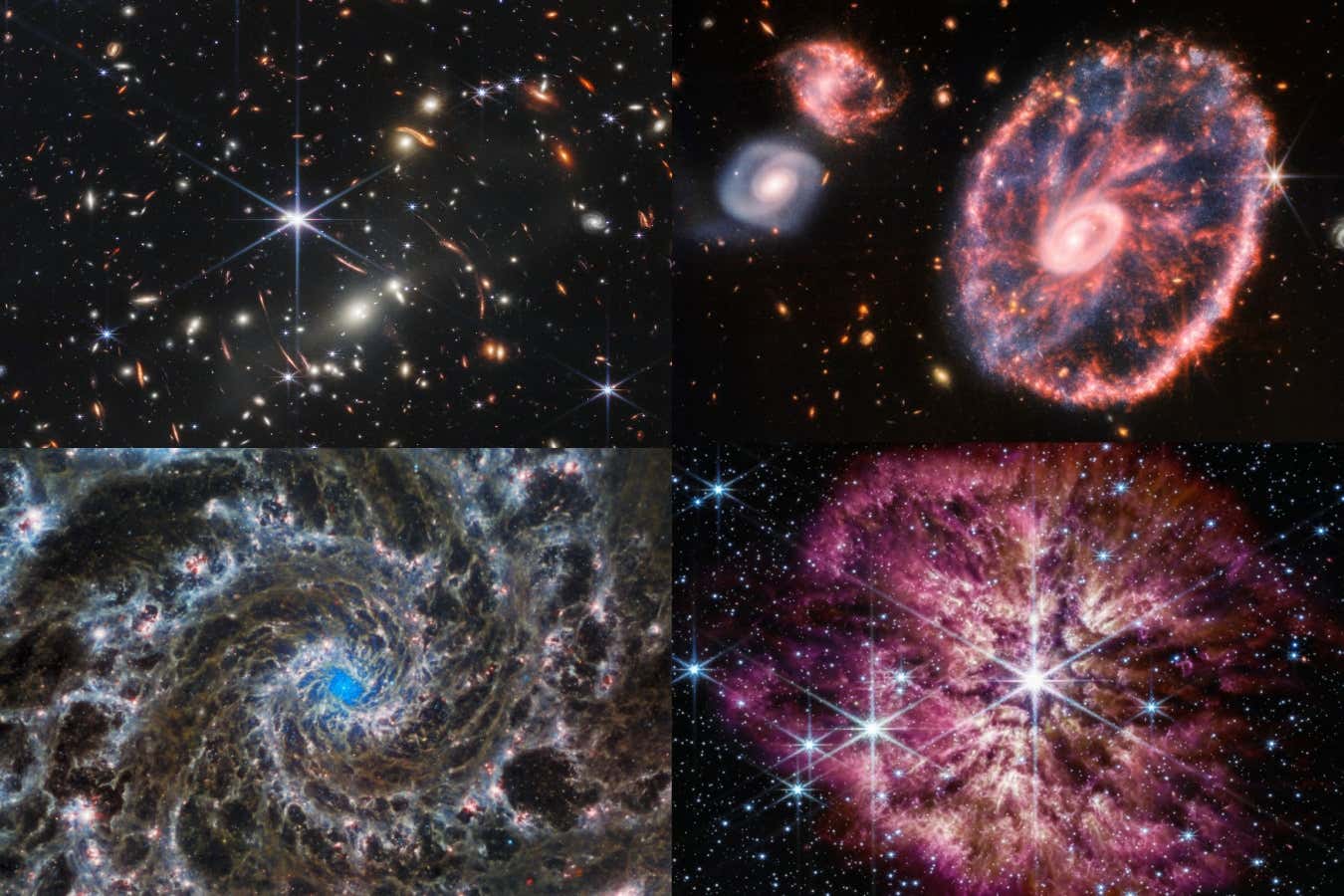
The 8 most dazzling images from JWST’s first year of science

12 July 2023

The James Webb Telescope revealed its first images of deep space on July 12 2022 – here’s a look back at one year of awe-inspiring images and confounding scientific discoveries

JWST image of Saturn

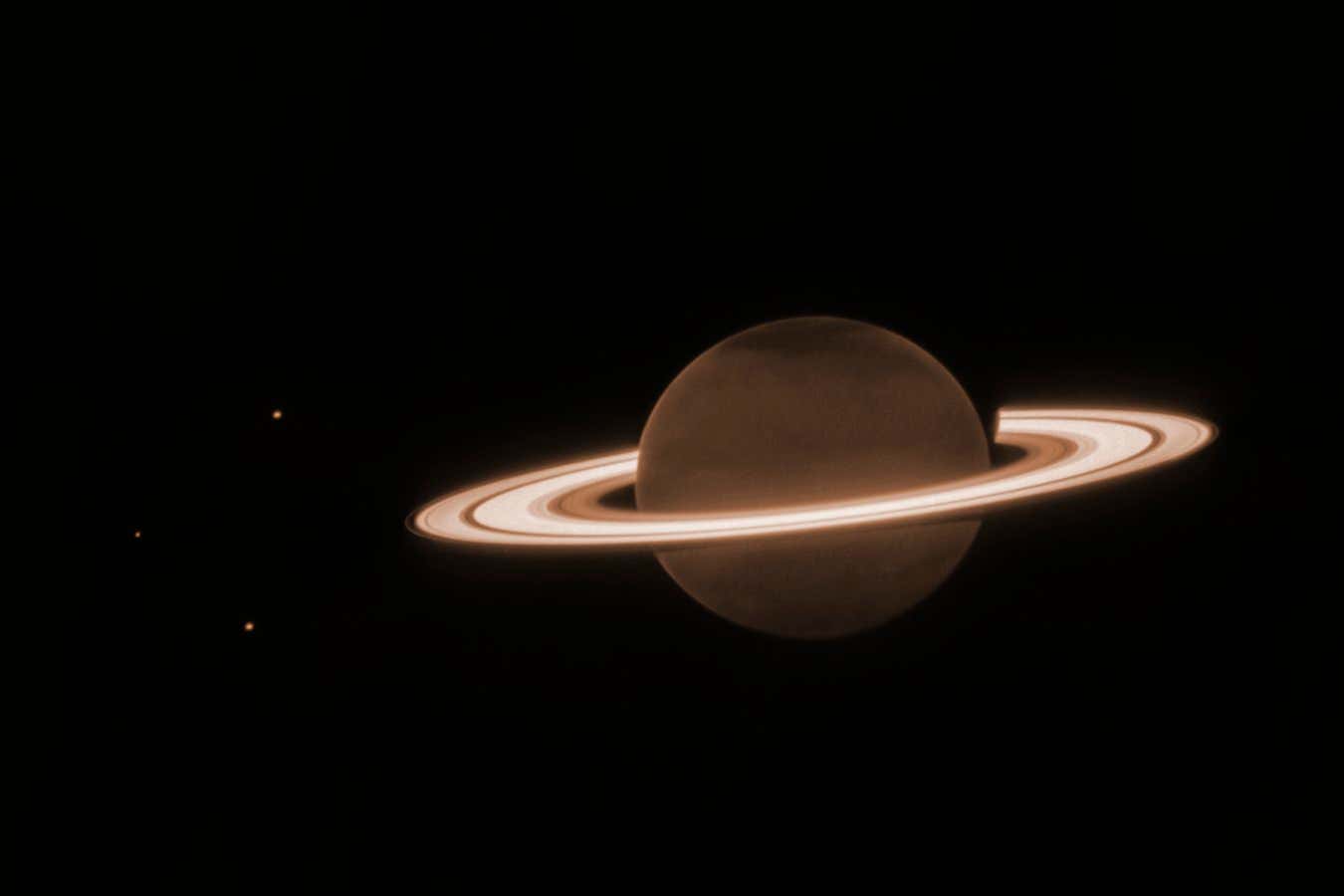
Stunning JWST image sees Saturn show off its glowing rings

30 June 2023

A strange and unfamiliar view of Saturn has been captured by the James Webb Space Telescope to help researchers identify its smaller objects and structures
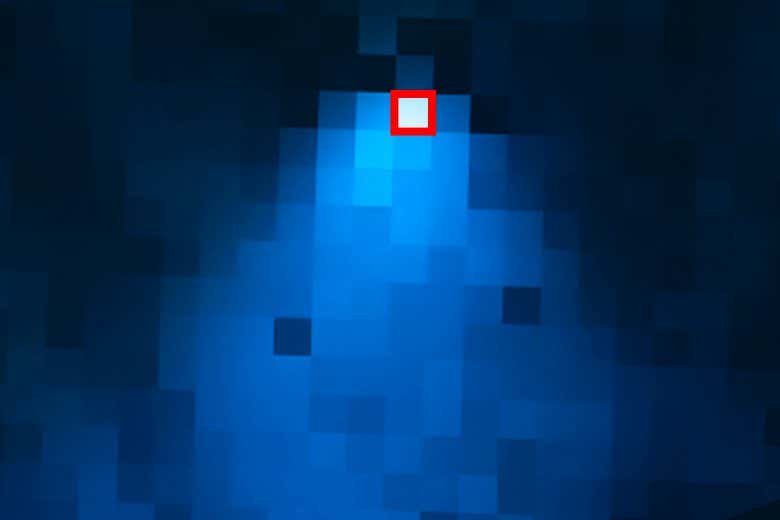

JWST has spotted a water vapor plume shooting out from the southern pole of Saturn’s moon Enceladus

JWST has spotted an enormous plume of water coming out of Enceladus

31 May 2023

Saturn’s moon Enceladus has a water ocean that makes it one of the most promising places to search for life, and water is spewing out of it in a jet bigger than any we have seen before
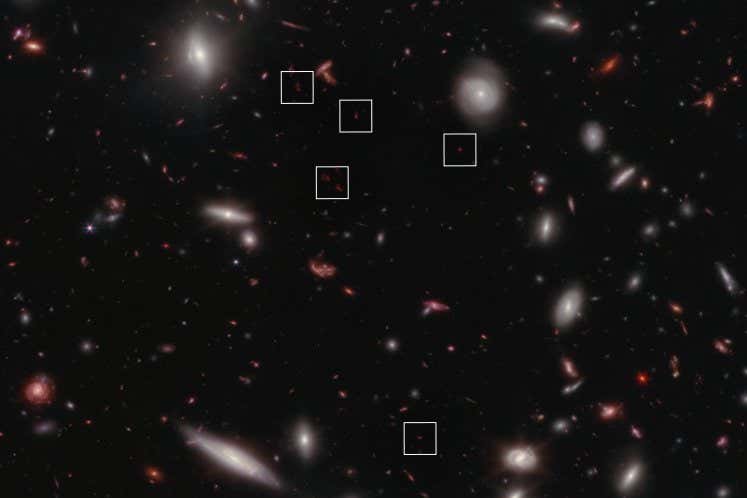

Seven galaxies highlighted here in five boxes are part of the most distant galaxy cluster ever found

JWST has spotted the most distant galaxy cluster ever seen

24 April 2023

The James Webb Space Telescope has found the most distant galaxy cluster ever seen, at 30 billion light years away. Researchers say it’s probably one of the biggest clusters in the universe by now
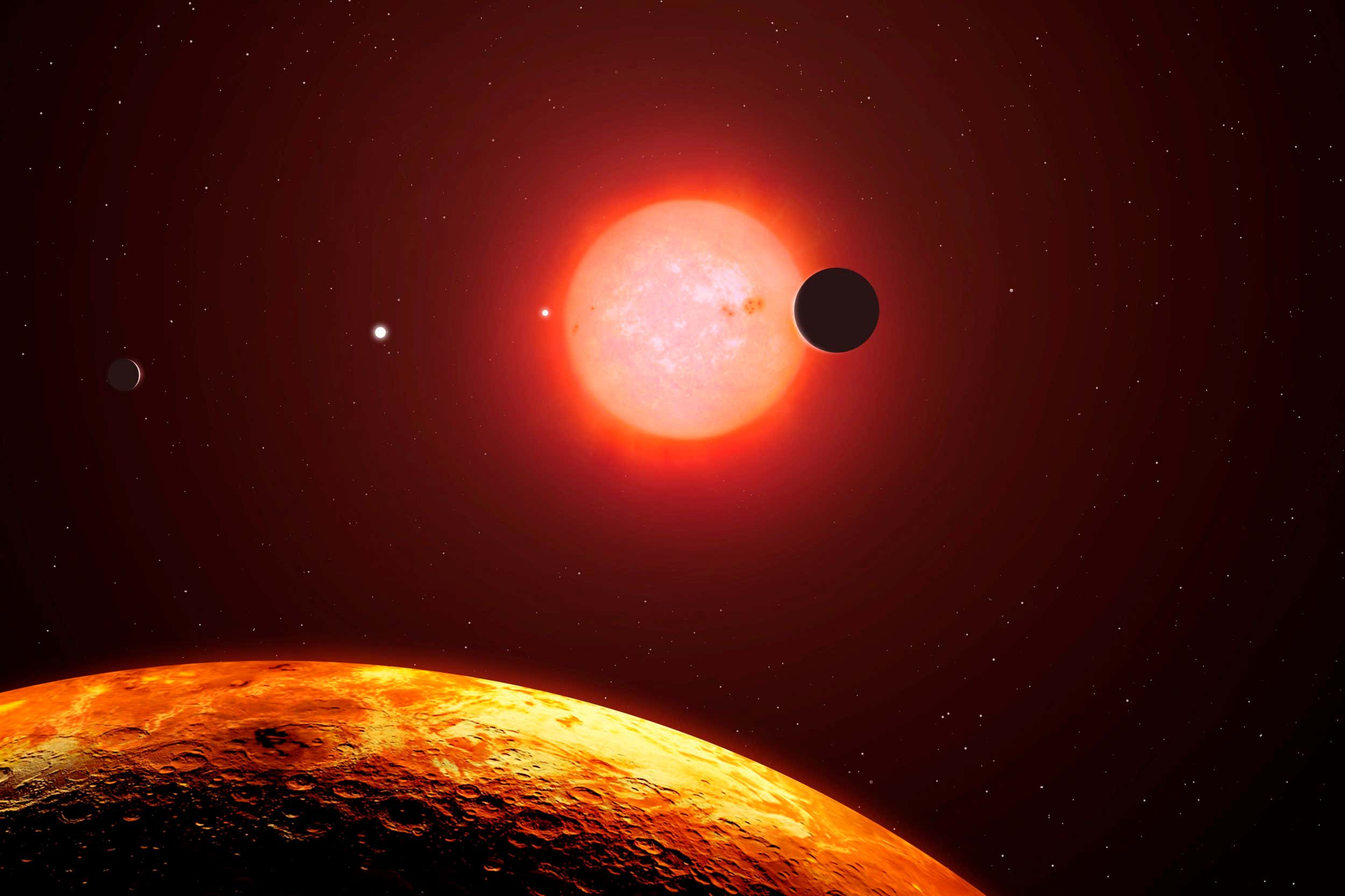

Trappist-1 is a red-dwarf star, the most common variety, located some 40 light-years away in Aquarius. In 2015, astronomers discovered that Trappist-1 was host to three earth-sized planets. Then it came under the spotlight again in 2017 when NASA scientists found an additional four planets, taking the total up to seven. This is the most terrestrial planets that have ever been found to orbit a single star, including our own Solar System. Trappist-1 is only fractionally larger than Jupiter in diameter. This image shows the star and six of the planets as they would appear from the vantage point of the fifth outermost planet, Trappist-1f. All of the planets and the Sun are to scale. One of the worlds is seen transiting in front of the star.

JWST finds the planet TRAPPIST-1b may not have an atmosphere

27 March 2023

Many researchers thought the worlds orbiting the star TRAPPIST-1 would have thick atmospheres, but new observations of one of them show that it doesn’t
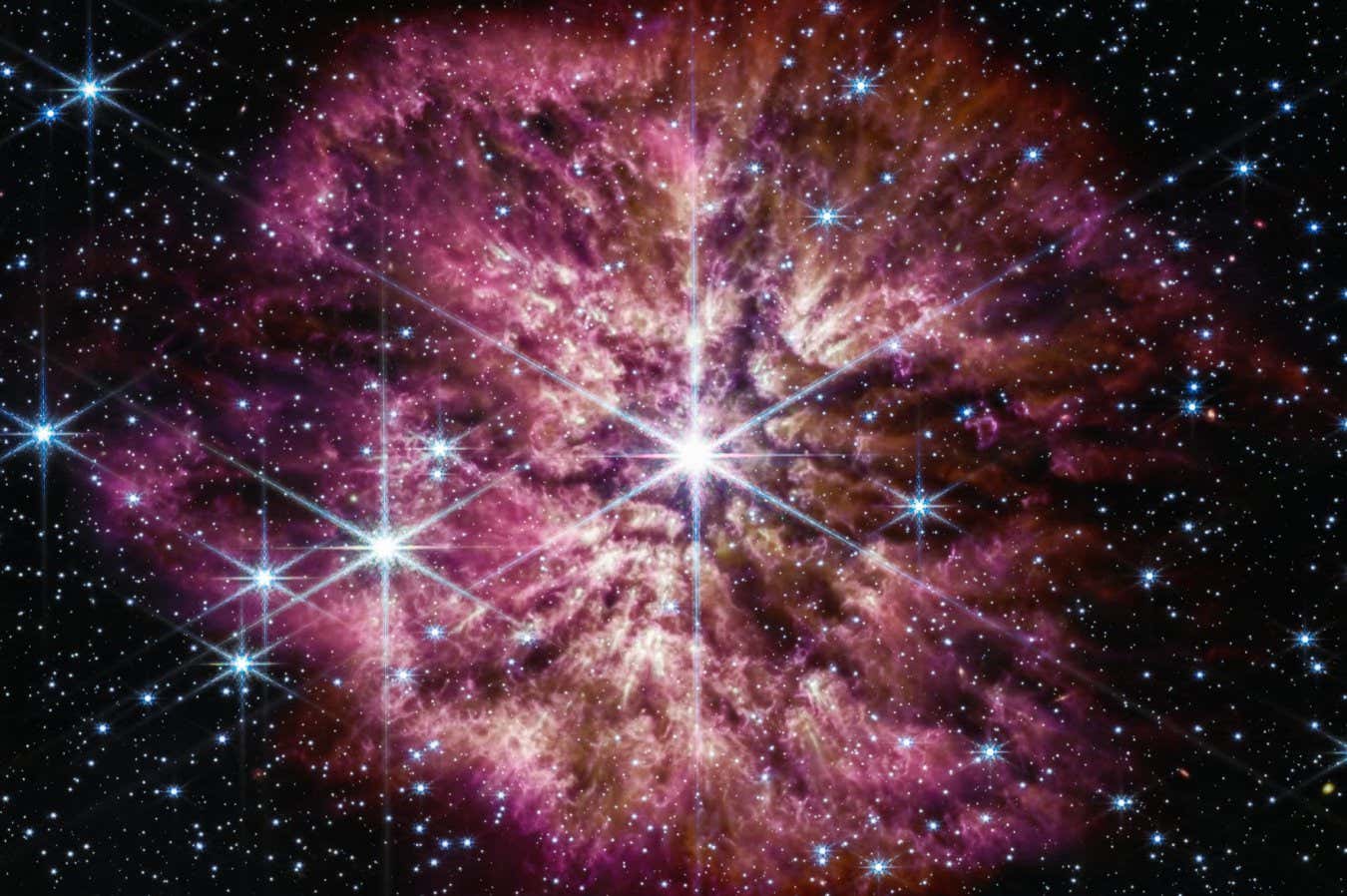

JWST took a stunning picture of a star that’s about to go supernova

JWST took a stunning picture of a star that’s about to go supernova

14 March 2023

The James Webb Space Telescope has taken an astonishingly detailed image of a Wolf-Rayet star as it blows off its outer layers in preparation to go supernova
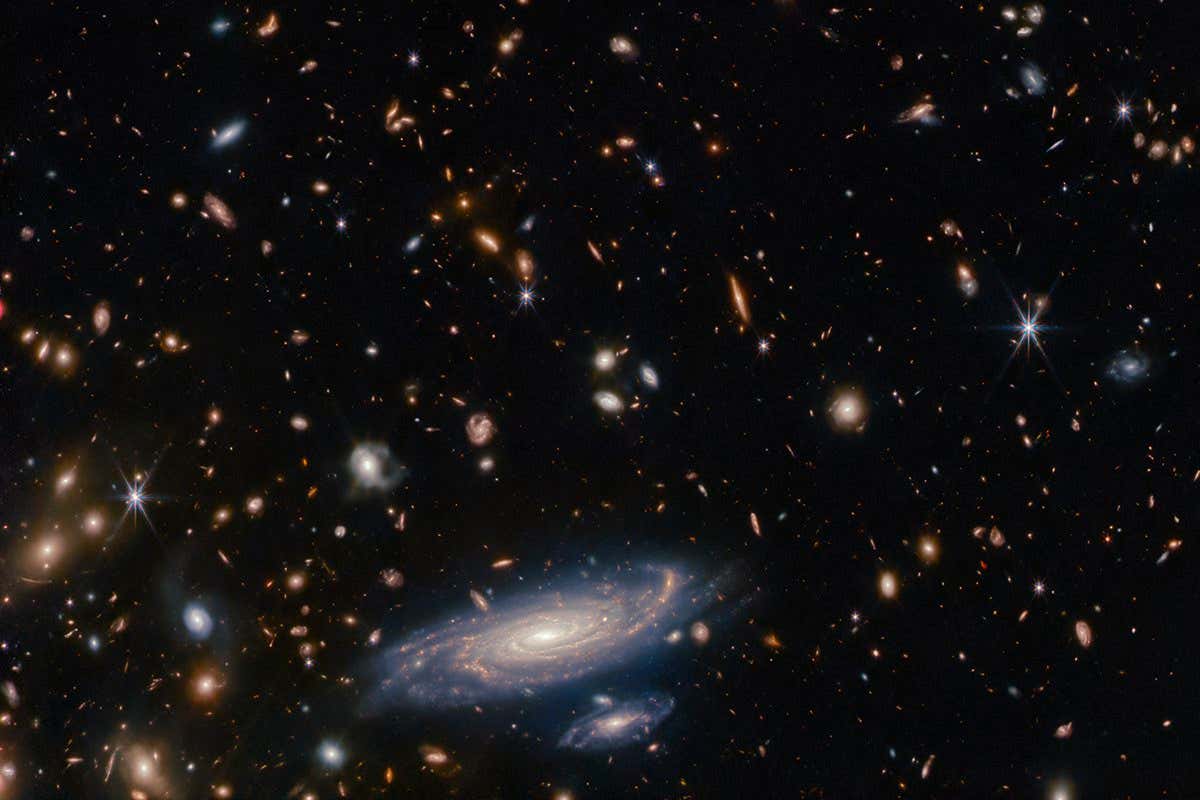

JWST image of crowded field of galaxies

Huge young galaxies seen by JWST may upend our models of the universe

22 February 2023

Galaxies spotted by the James Webb Space Telescope seem far too massive to have formed so early on in the universe’s history, which could be a problem for our ideas of galaxy formation
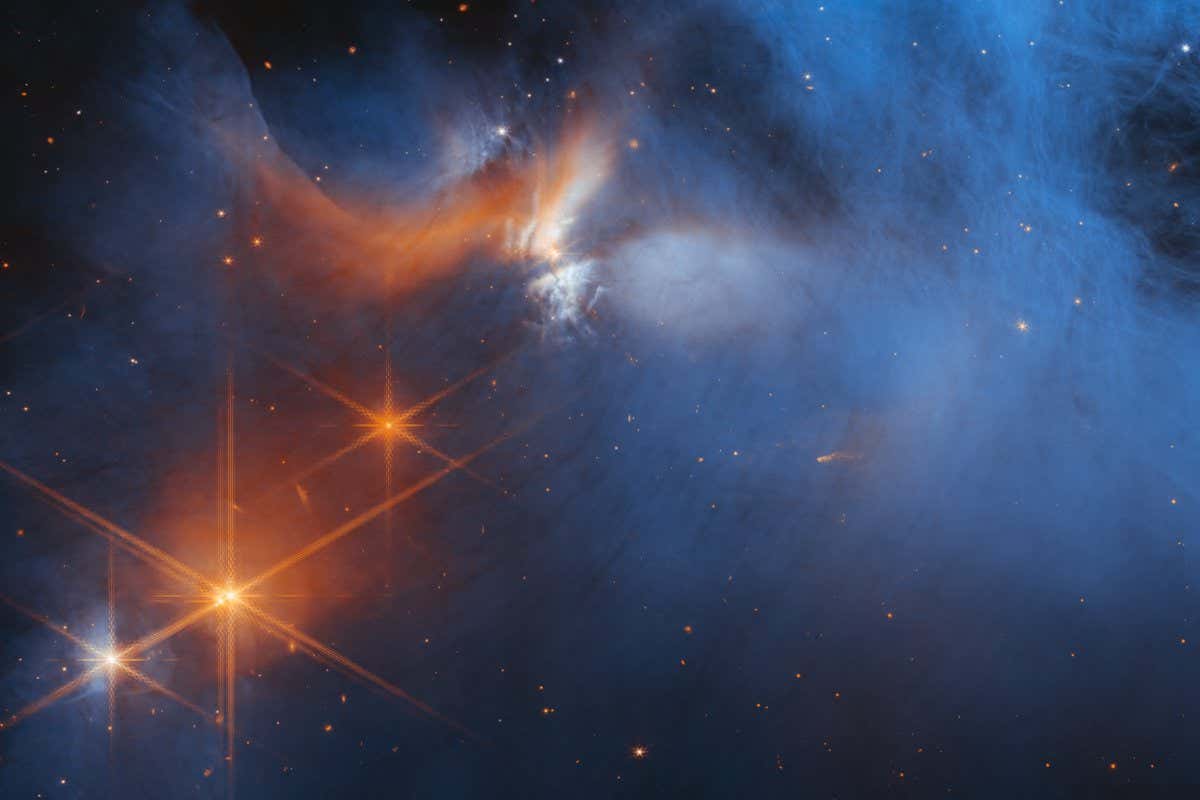

This image by NASA?s James Webb Space Telescope?s Near-Infrared Camera (NIRCam) features the central region of the Chamaeleon I dark molecular cloud, which resides 630 light years away. The cold, wispy cloud material (blue, center) is illuminated in the infrared by the glow of the young, outflowing protostar Ced 110 IRS 4 (orange, upper left). The light from numerous background stars, seen as orange dots behind the cloud, can be used to detect ices in the cloud, which absorb the starlight passing through them.

JWST has seen building blocks of life in a dark, cold cloud in space

23 January 2023

The James Webb Space Telescope has observed a frigid cloud of dust and gas where stars are forming, and it found frozen elements that are crucial for the development of life


Sign up to our weekly newsletter

Receive a weekly dose of discovery in your inbox. We'll also keep you up to date with New Scientist events and special offers.

Sign up
Piano Exit Overlay Banner Mobile Piano Exit Overlay Banner Desktop