
Subscribe now
An extreme form of encryption could solve big data's privacy problem

An extreme form of encryption could solve big data's privacy problem

6 April 2022

Fully homomorphic encryption allows us to run analysis on data without ever seeing the contents. It could help us reap the full benefits of big data, from fighting financial fraud to catching diseases early
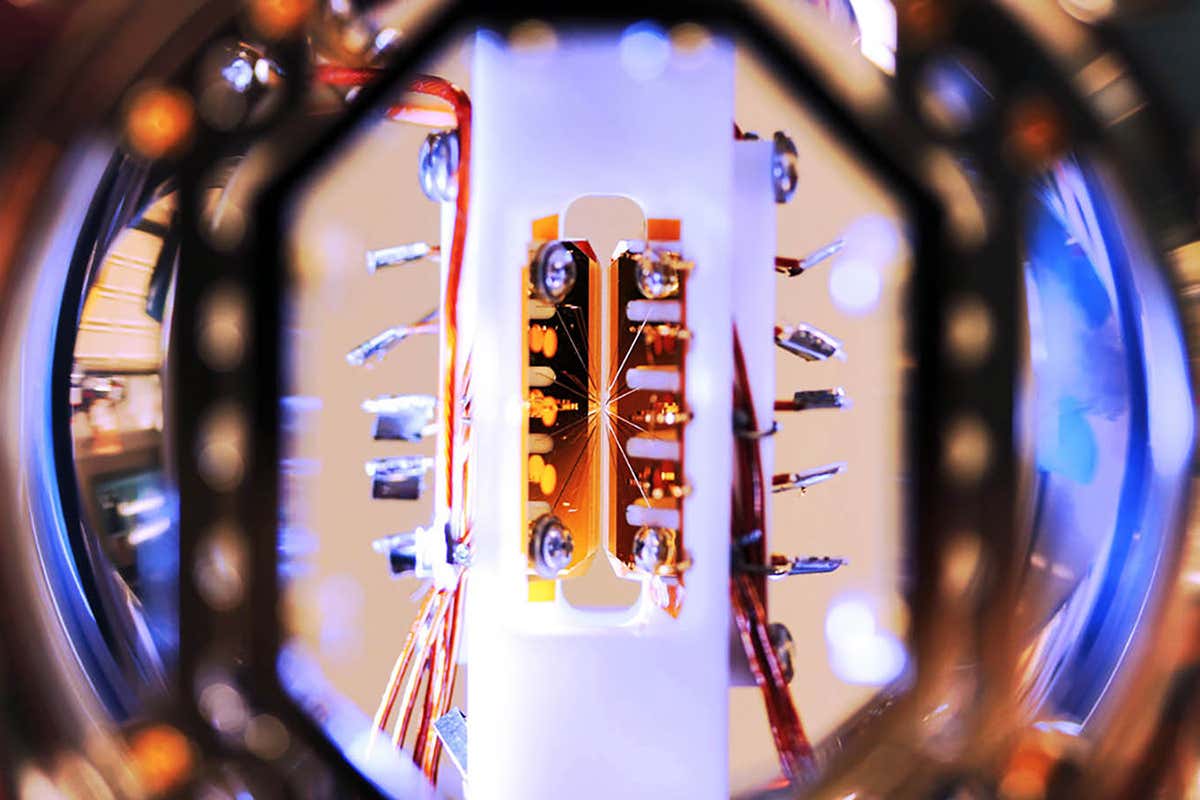


University of Maryland's fully connected trapped-ion system

Best-yet quantum simulator with 53 qubits could really be useful

29 November 2017

A 53-qubit quantum simulator is the biggest of its kind, and has already done some calculations that outperform most, if not all, classical computers


Person with cosmos where their head should be

We can’t ever know whether or not our universe is a simulation

6 October 2017

Despite recent headlines saying we don’t live in a simulation, the answer to a question that’s more science fiction than science remains far out of reach


Claude Shannon

The playful inventor whose copper-whiskered mouse led us to AIs

9 August 2017

Claude Shannon laid the groundwork for the information age, with the help of a wooden mouse that could navigate mazes, and other seriously unserious inventions


One of the RFID chips to be implanted

A US firm is microchipping staff – here's what they should fear

1 August 2017

Sure, an electronic implant will do away with troublesome security cards and forgotten computer passwords, but beware the hidden downsides, says Jamais Cascio


Rosalind Picard

What will happen when machines can tell how you feel?

19 July 2017

Now that technology is finally getting emotion-savvy, could the machines give us the benefit of their new-found wisdom? Rosalind Picard thinks so


Sign up to our weekly newsletter

Receive a weekly dose of discovery in your inbox. We'll also keep you up to date with New Scientist events and special offers.

Sign up
Piano Exit Overlay Banner Mobile Piano Exit Overlay Banner Desktop