Subscribe now

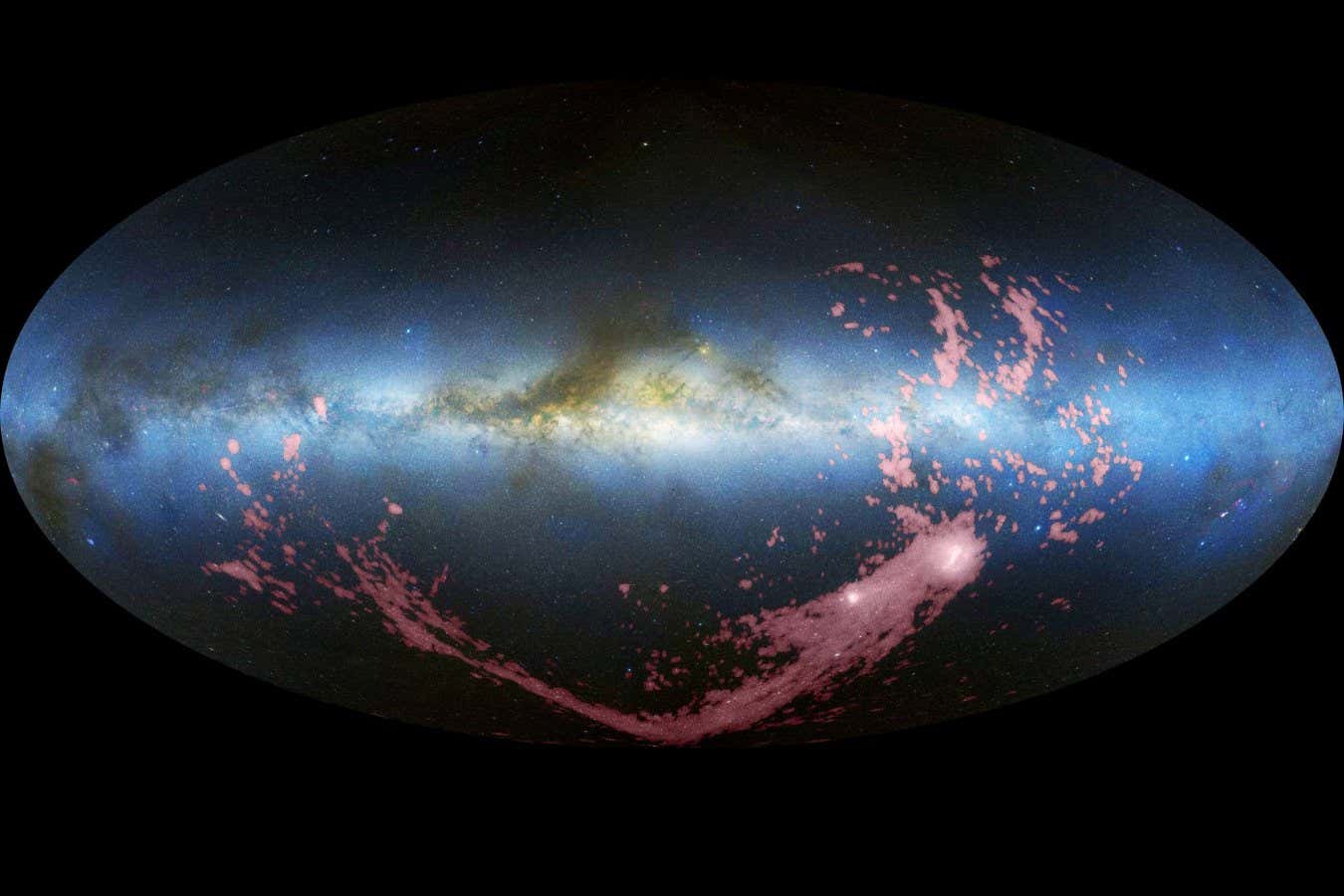
Stars found hidden in huge cloud wrapped around the Milky Way

13 July 2023

The Magellanic stream is a cloud of dust and gas that wraps around our galaxy. It has long been thought to host stars, but they have never been seen until now
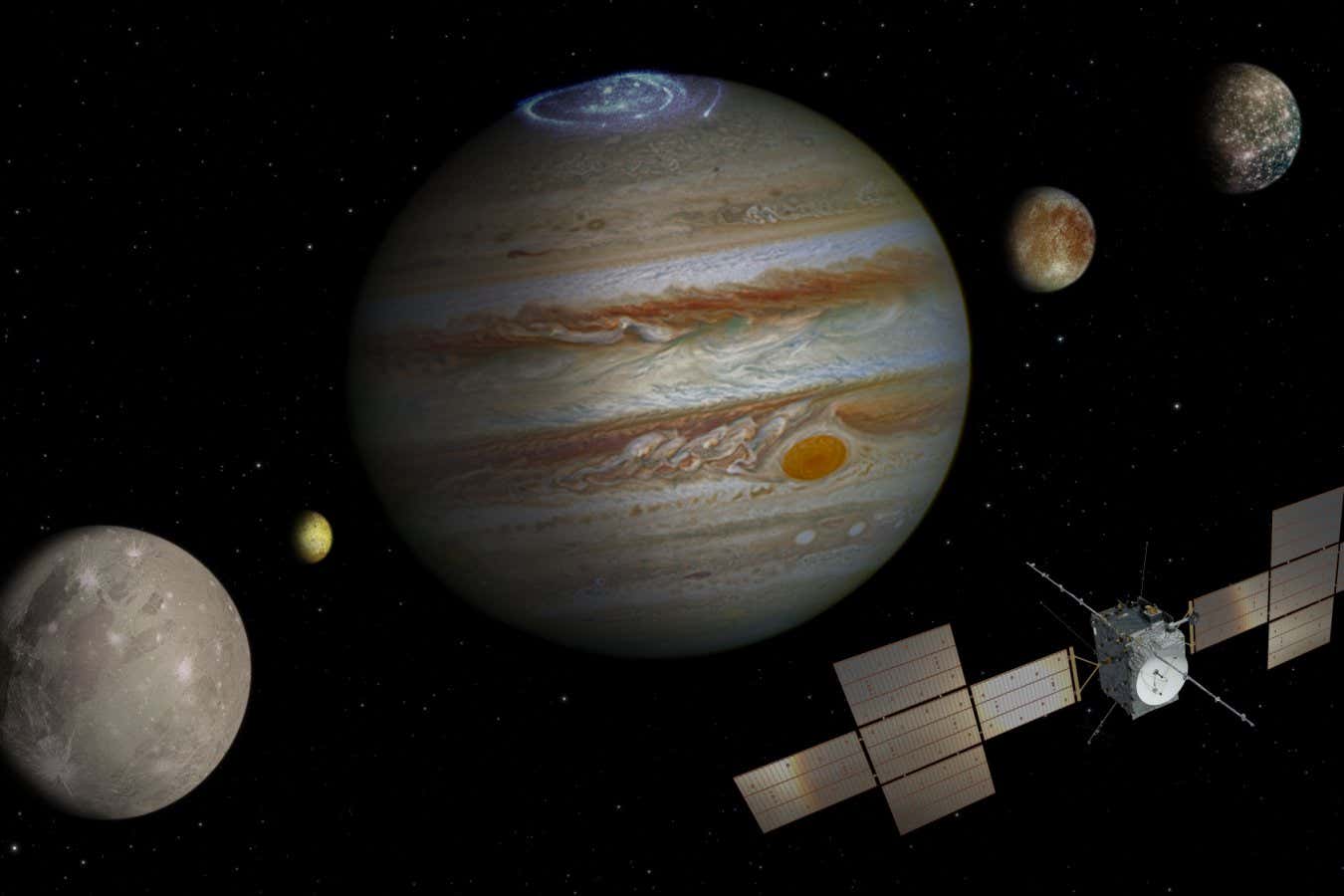

https://www.esa.int/ESA_Multimedia/Images/2017/07/Exploring_Jupiter t may still be some years away from launch, and over a decade before our Jupiter Icy Moons Explorer reaches the gas giant and its icy moons, but preparations are well under way. This new artist?s impression depicts the final spacecraft design, the construction of which is being overseen by Airbus Defence and Space. The spacecraft?s solar wings form a distinctive cross-shape totalling 97 sq m, the largest ever flown on an interplanetary mission. The size is essential to generate sufficient power ? around 850 W ? for the instruments and spacecraft so far from the Sun. The spacecraft is furnished with a laboratory of instruments that will investigate Jupiter?s turbulent atmosphere and vast magnetosphere, as well as study the planet-sized moons Ganymede, Europa and Callisto. All three moons are thought to have oceans of liquid water beneath their icy crusts and should provide key clues on the potential for such moons to harbour habitable environments. Juice?s cameras will capture exquisite details of the moon?s features, as well as identify the ices and minerals on their surfaces. Other instruments will sound the subsurface and interior of the moons to better understand the location and nature of their buried oceans. The tenuous atmosphere around the moons will also be explored. The spacecraft will also include booms such as a 10 m-long magnetometer mast (seen towards the bottom of Juice in the artist impression), a 16 m radar antenna (the long boom across the top), and antennas to measure electric and magnetic fields. Ganymede is the only moon in the Solar System to generate its own internal magnetic field, and Juice is well equipped to document its behaviour and explore its interaction with Jupiter?s own magnetosphere. Juice is scheduled for launch in 2022 on a seven-year journey to the Jovian system. Its tour will include a dedicated orbit phase of Jupiter, targeted flybys of Europa, Ganymede and Callisto, and finally nine months orbiting Ganymede ? the first time any moon beyond our own has been orbited by a spacecraft. In the artist?s impression, which is not to scale, Ganymede is shown in the foreground, Callisto to the far right, and Europa centre-right. Volcanically active moon Io is also shown, at left. The moons were imaged by NASA?s Galileo spacecraft; Jupiter is seen here with a vivid aurora, captured by the NASA/ESA Hubble Space Telescope. ESA/ATG medialab; Jupiter: NASA/ESA/J. Nichols (University of Leicester); Ganymede: NASA/JPL; Io: NASA/JPL/University of Arizona; Callisto and Europa: NASA/JPL/DLR

How to spot Jupiter's icy moons

5 July 2023

Jupiter’s Galilean moons are promising places to look for life. Now is a great time to see them, says Abigail Beall
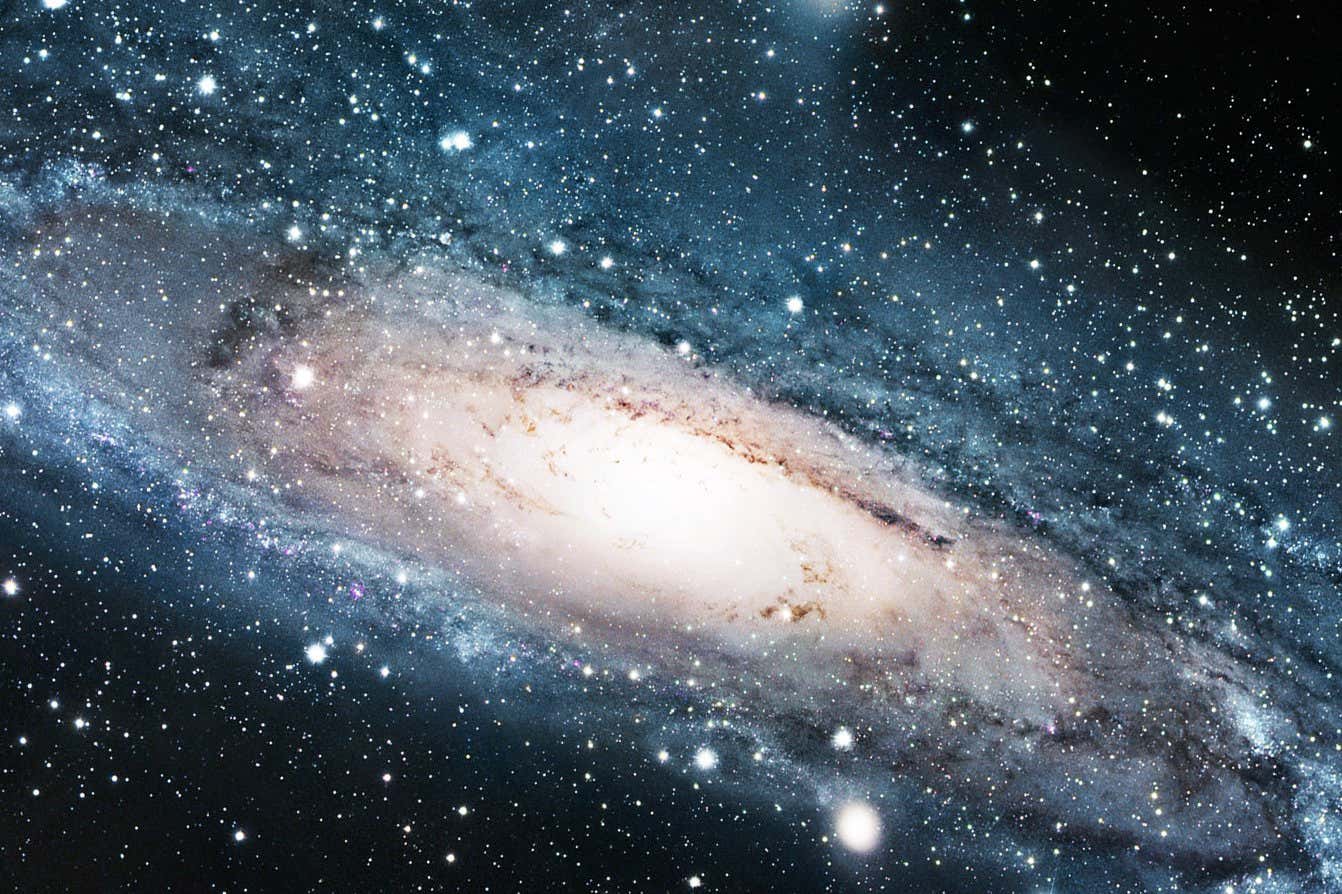

The Milky Way could contain thousands of stars from another galaxy

22 June 2023

We know there are stars moving fast enough to escape the Milky Way, so the same is probably true of other galaxies. Now, simulations suggest there could be almost 4000 stars from the Andromeda galaxy in the Milky Way today
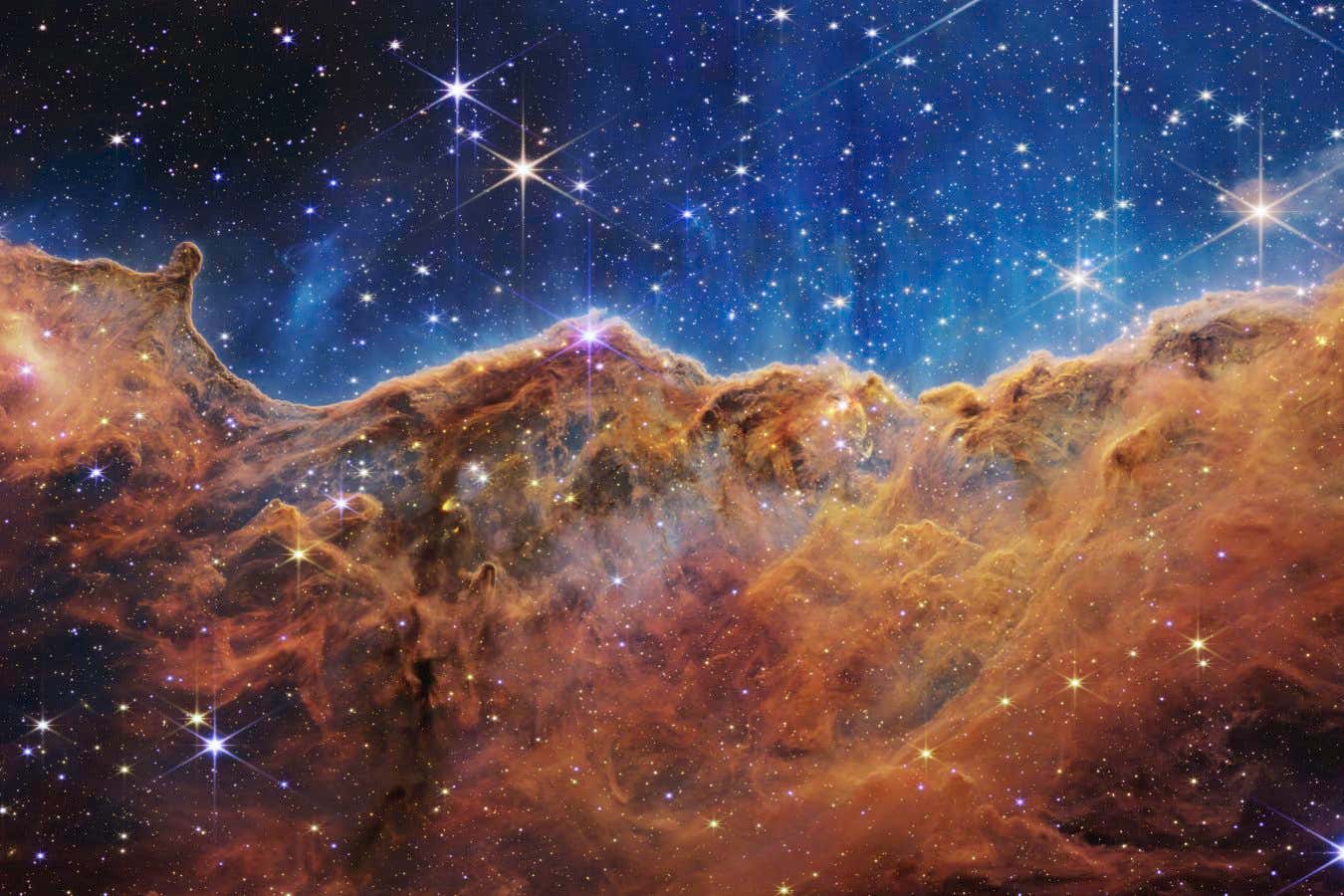

What looks much like craggy mountains on a moonlit evening is actually the edge of a nearby, young, star-forming region NGC 3324 in the Carina Nebula. Captured in infrared light by the Near-Infrared Camera (NIRCam) on NASA???s James Webb Space Telescope, this image reveals previously obscured areas of star birth. Called the Cosmic Cliffs, the region is actually the edge of a gigantic, gaseous cavity within NGC 3324, roughly 7,600 light-years away. The cavernous area has been carved from the nebula by the intense ultraviolet radiation and stellar winds from extremely massive, hot, young stars located in the center of the bubble, above the area shown in this image. The high-energy radiation from these stars is sculpting the nebula???s wall by slowly eroding it away. NIRCam ??? with its crisp resolution and unparalleled sensitivity ??? unveils hundreds of previously hidden stars, and even numerous background galaxies. Several prominent features in this image are described below. ??? The ???steam??? that appears to rise from the celestial ???mountains??? is actually hot, ionized gas and hot dust streaming away from the nebula due to intense, ultraviolet radiation. ??? Dramatic pillars rise above the glowing wall of gas, resisting the blistering ultraviolet radiation from the young stars. ??? Bubbles and cavities are being blown by the intense radiation and stellar winds of newborn stars. ??? Protostellar jets and outflows, which appear in gold, shoot from dust-enshrouded, nascent stars. ??? A ???blow-out??? erupts at the top-center of the ridge, spewing gas and dust into the interstellar medium. ??? An unusual ???arch??? appears, looking like a bent-over cylinder. This period of very early star formation is difficult to capture because, for an individual star, it lasts only about 50,000 to 100,000 years ??? but Webb???s extreme sensitivity and exquisite spatial resolution have chronicled this rare event. Located roughly 7,600 light-years away, NGC 3324 was first cat

The JWST is already delivering on its promise to transform cosmology

14 June 2023

Almost a year after its first images were released, the James Webb Space Telescope is living up to the hype, and its price tag, by revolutionising our understanding of the universe
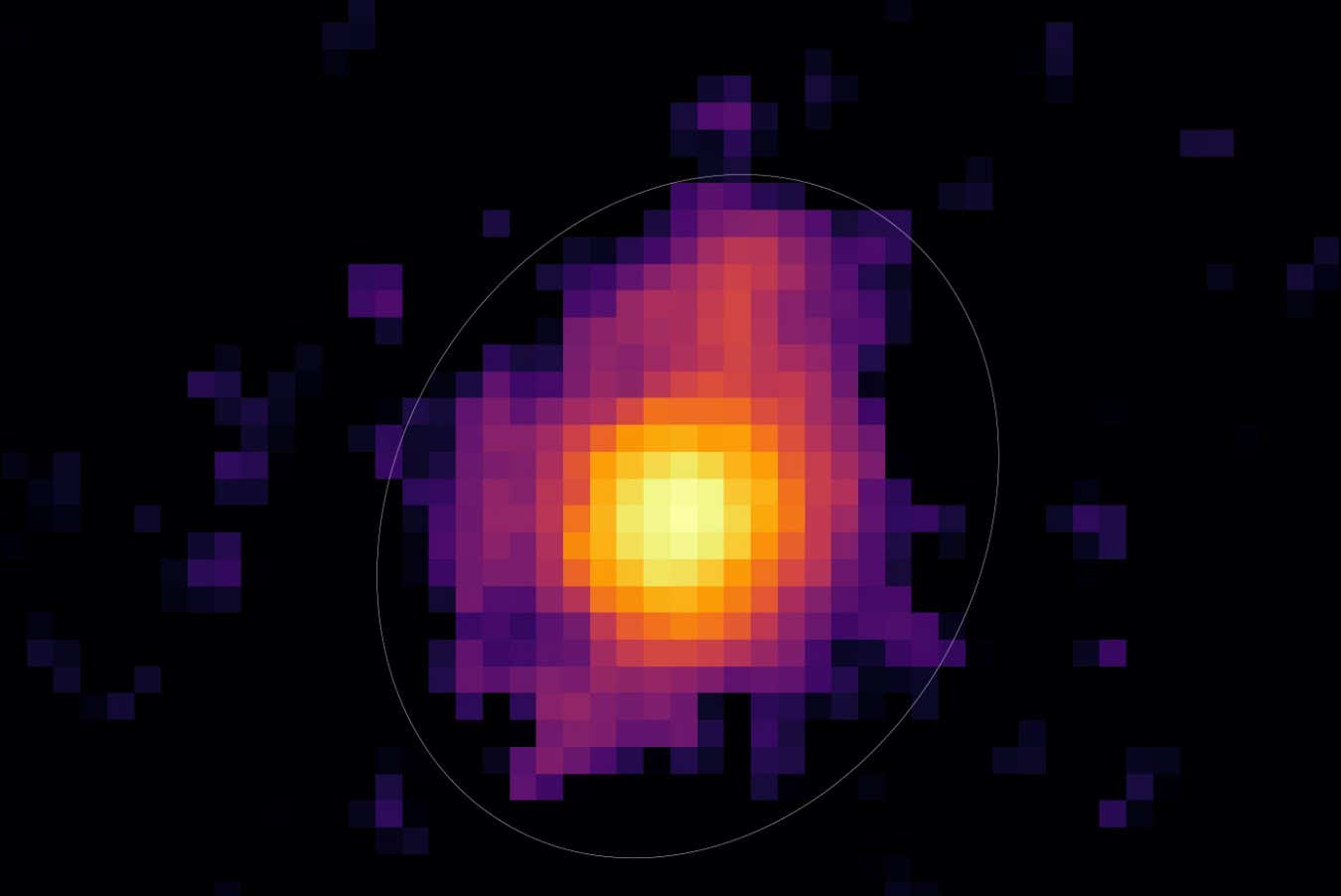

Fast-growing galaxy seen by JWST offers window on the early universe

12 June 2023

A galaxy seen 700 million years after the big bang appears surprisingly mature, suggesting some pockets of the early universe were more tranquil than expected
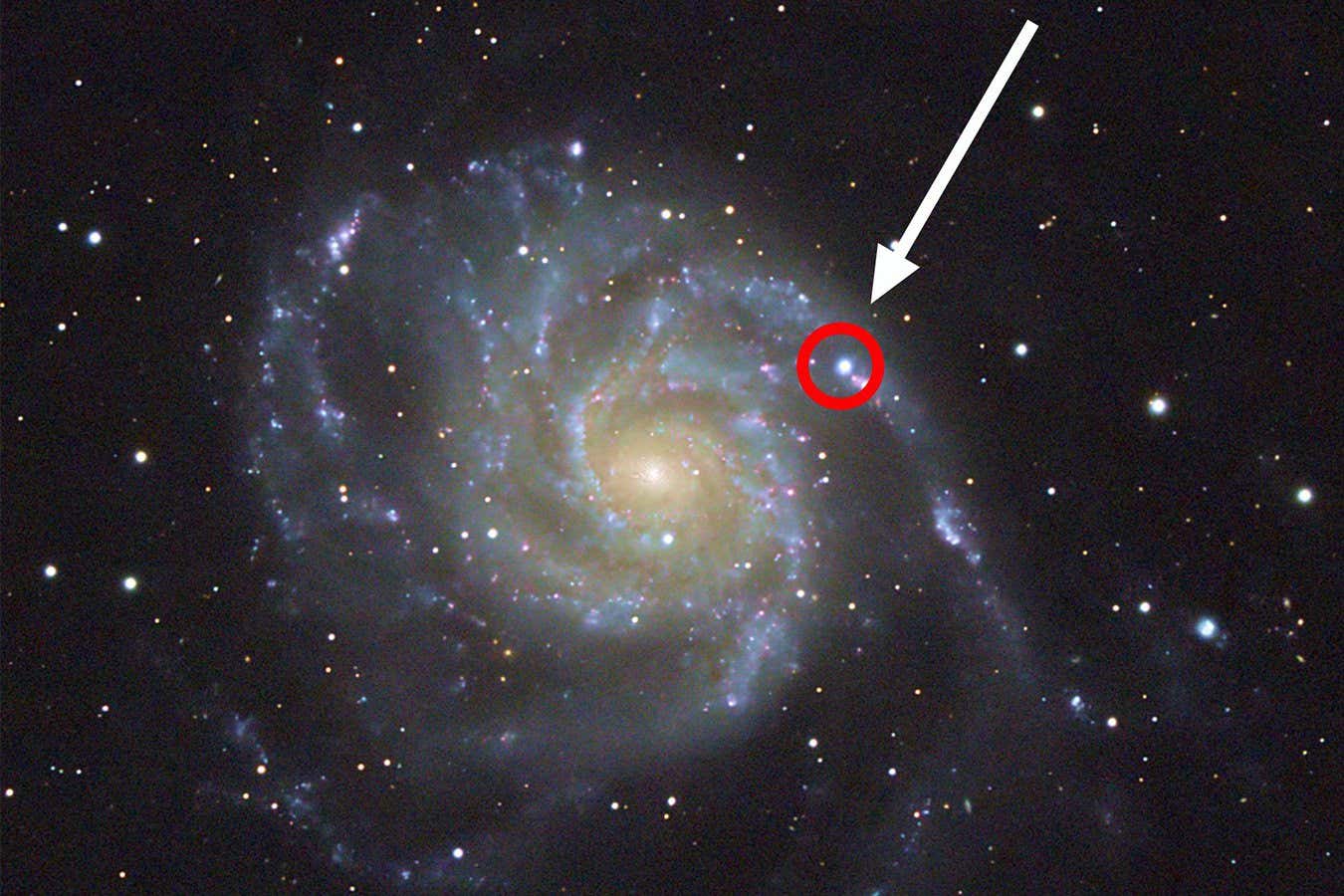

Astronomers are using a new supernova to search for alien signals

9 June 2023

If any alien civilisations have spotted the new supernova SN 2023ixf in the Pinwheel galaxy, they may use it to try to make contact
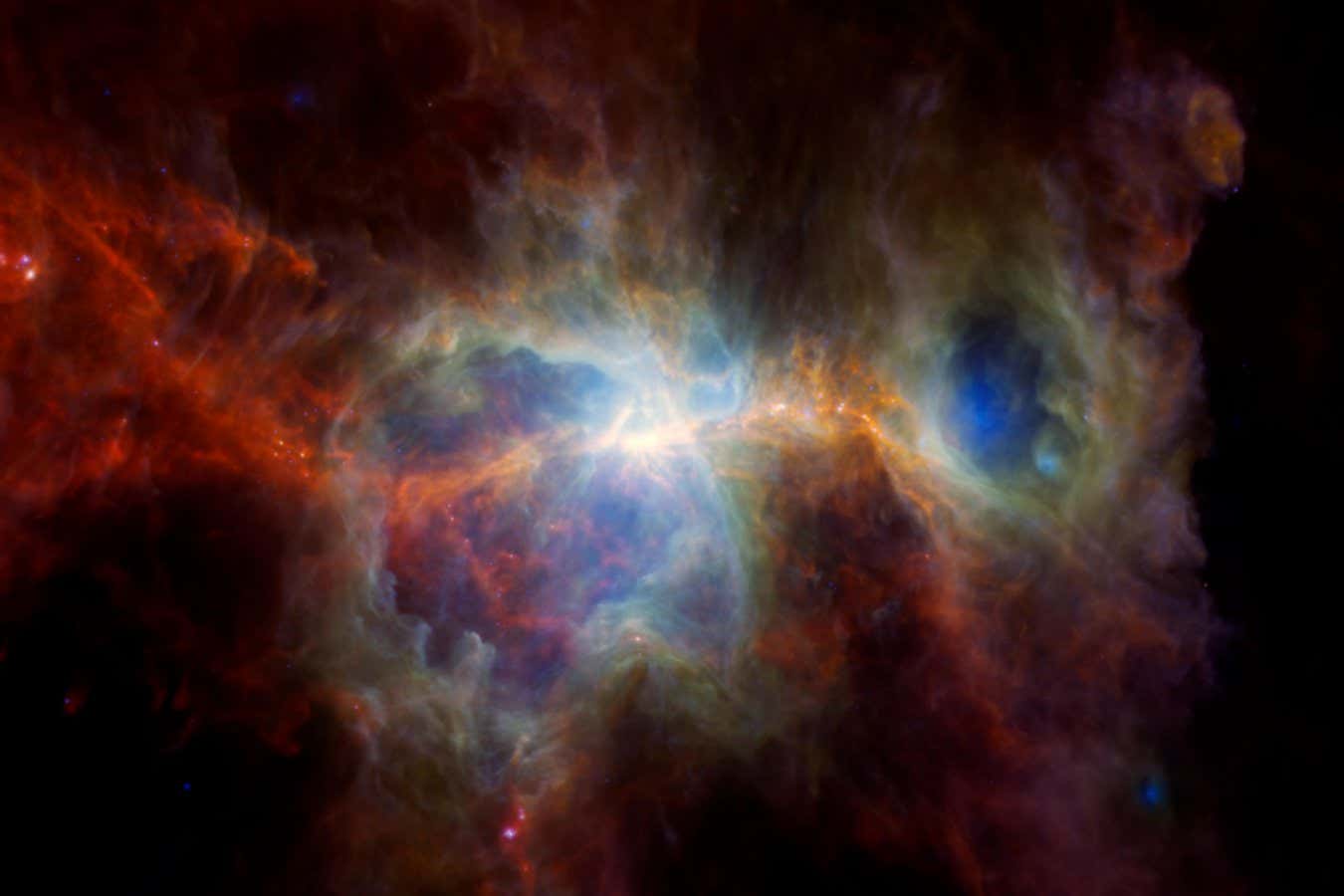

Orion Nebula in Infrared NASA ID: PIA25434 This new image of the Orion Nebula produced using previously released data from three telescopes shows two enormous caverns carved out by unseen giant stars that can release up to a million times more light than our Sun. All that radiation breaks apart dust grains there, helping to create the pair of cavities. Much of the remaining dust is swept away when the stars produce wind or when they die explosive deaths as supernovae. This infrared image shows dust but no stars. Blue light indicates warm dust heated by unseen massive stars. Observed in infrared light ? a range of wavelengths outside what human eyes can detect ? the views were provided by NASA's retired Spitzer Space Telescope and the Wide-Field Infrared Survey Explorer (WISE), which now operates under the moniker NEOWISE. Spitzer and WISE were both managed by NASA's Jet Propulsion Laboratory in Southern California, ...more 508 Description:This infrared image of the Orion Nebula features plenty of dust but no stars. In these infrared wavelengths, it's possible to see hot spots where new stars are forming, while unseen bright, massive stars have carved out caverns of empty space. Date Created:2022-11-22 Center:JPL Keywords: Herschel Space Observatory , Spitzer Space Telescope , Wide-field Infrared Survey Explorer (WISE) , Orion Nebula Secondary Creator Credit: ESA/NASA/JPL-Caltech Visit JPL Website

Under Alien Skies review: A terrific guide to our spectacular universe

7 June 2023

Phil Plait, the man behind the Bad Astronomy blog, is a great guide to the wonders of the cosmos. But would it be a bad thing if his new book created a fresh reverence for our home planet among some readers?
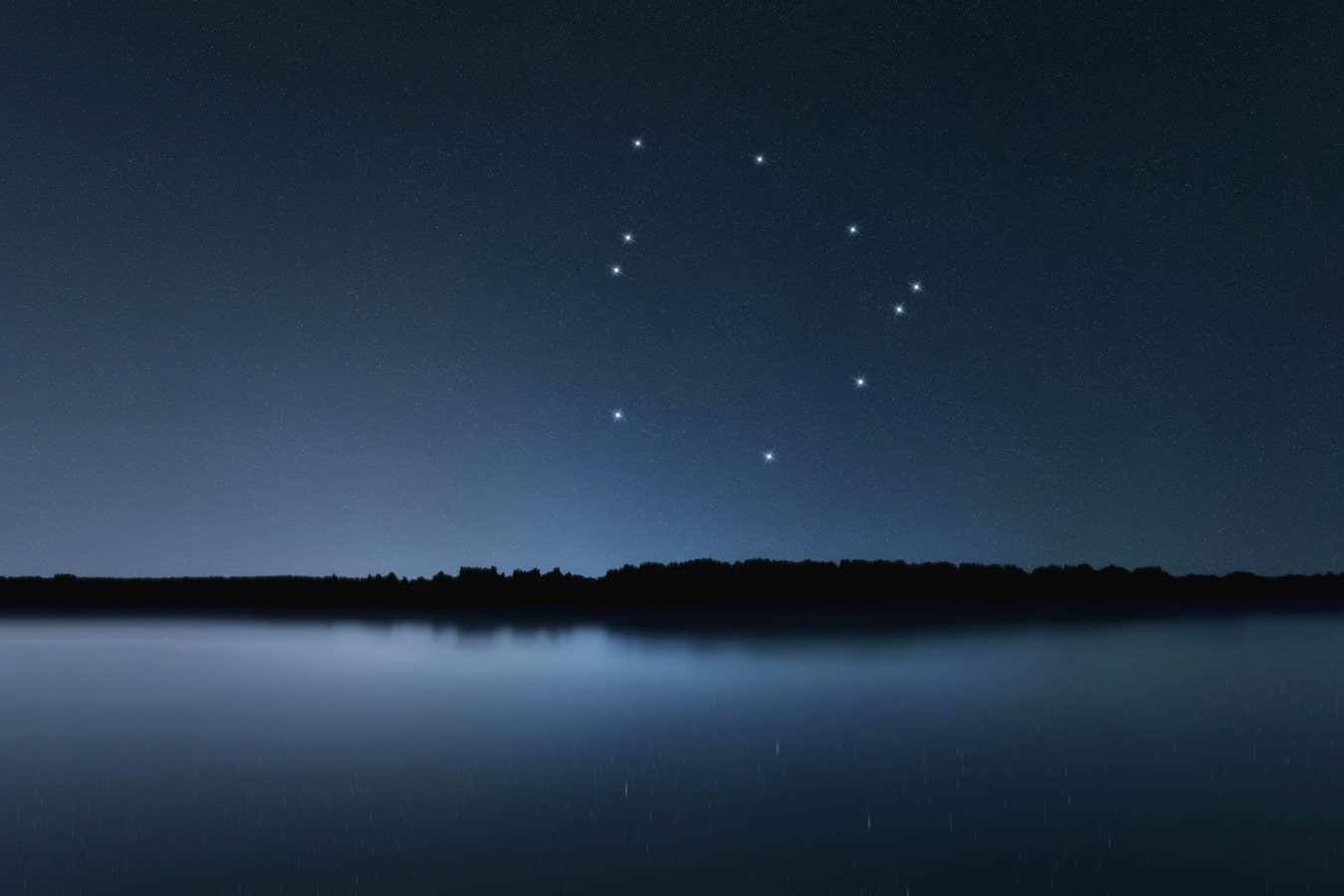

2CNWGJN Ophiuchus star constellation, Night sky, Cluster of stars, Deep space,?Serpentarius, Serpent bearer

How to spot Ophiuchus, the thirteenth zodiacal constellation

31 May 2023

Often referred to as the thirteenth sign of the zodiac, Ophiuchus sits alongside Sagittarius and Scorpius. Now is a great time to spot it, says Abigail Beall
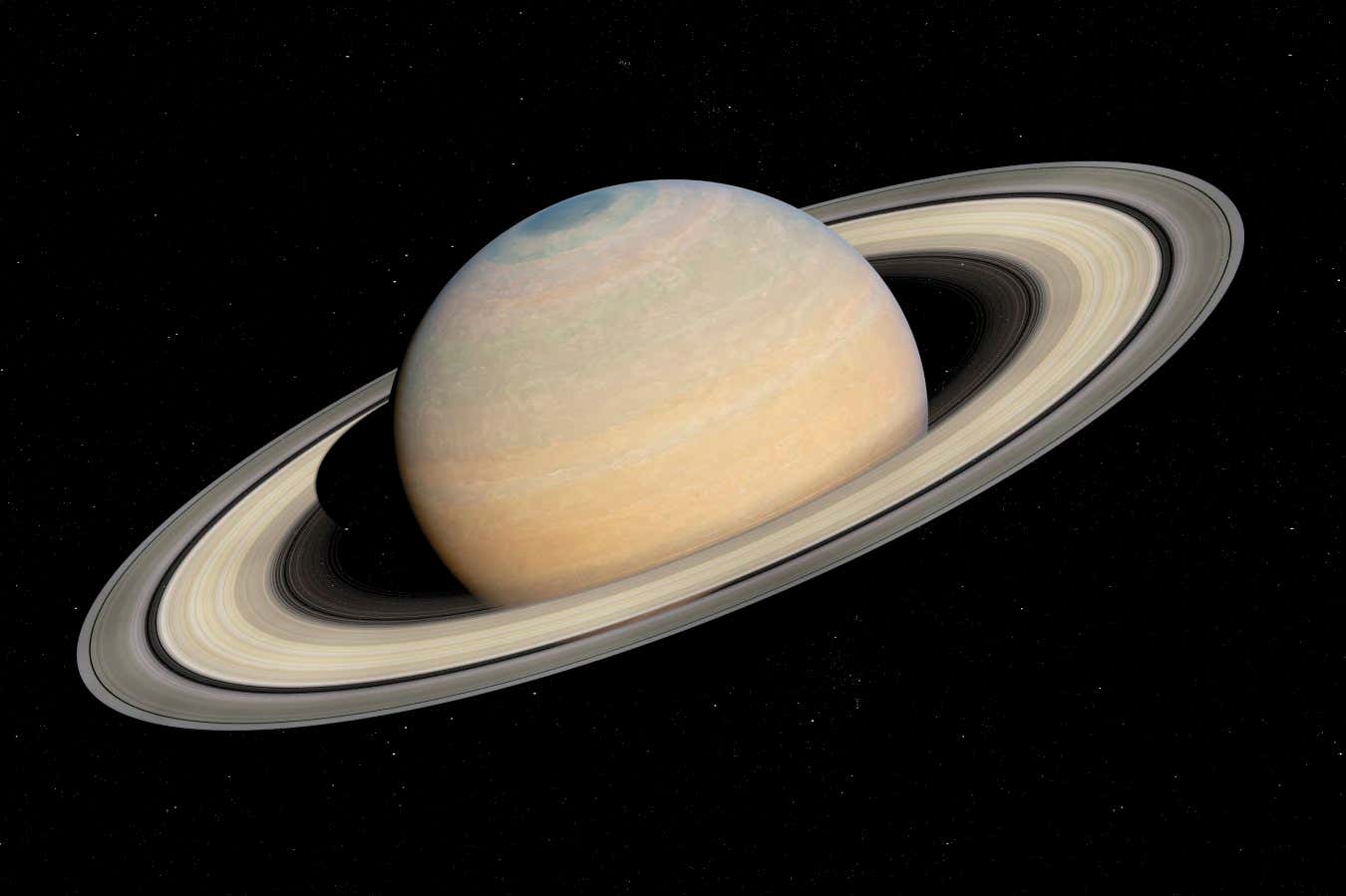

Saturn now has over 100 known moons - more than any other planet

10 May 2023

Astronomers are still discovering new natural satellites of Saturn and Jupiter, with the latest update seeing Saturn claim the crown for the solar system's most moons
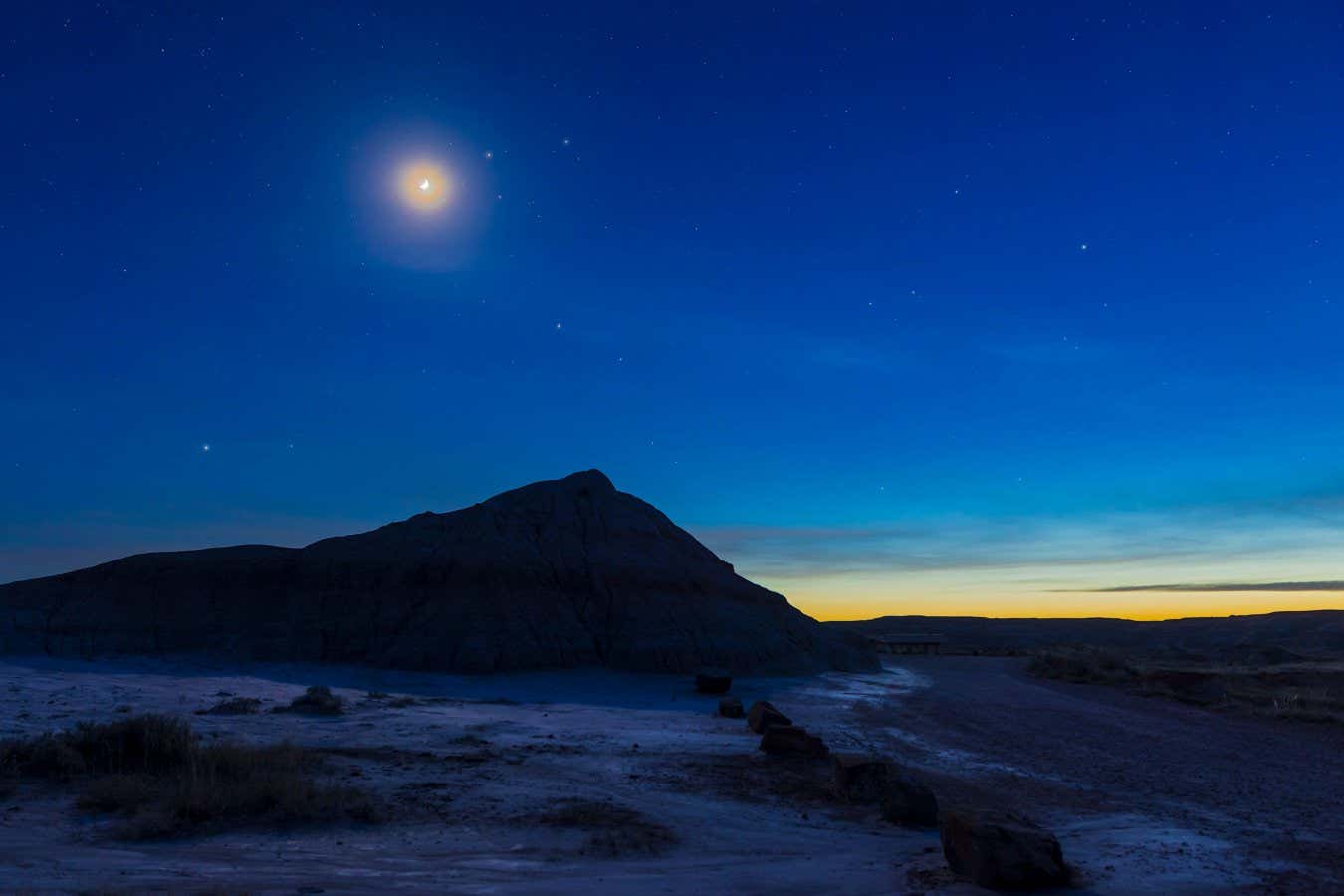

2GYKRJN The waxing crescent Moon near the stars Castor and Pollux in Gemini, with Mars below, as the last of the winter stars set into the western twilight on

How to spot Mars travelling through Gemini this week

26 April 2023

No matter where you live, Mars is currently taking a little stroll through Gemini, so it is a great time to get to know this constellation with its twin stars, Castor and Pollux, and take a look at the Red Planet too, says Abby Beall


Sign up to our weekly newsletter

Receive a weekly dose of discovery in your inbox. We'll also keep you up to date with New Scientist events and special offers.

Sign up
Piano Exit Overlay Banner Mobile Piano Exit Overlay Banner Desktop