Subscribe now

A star has been eating an orbiting planet for 85 years

18 June 2023

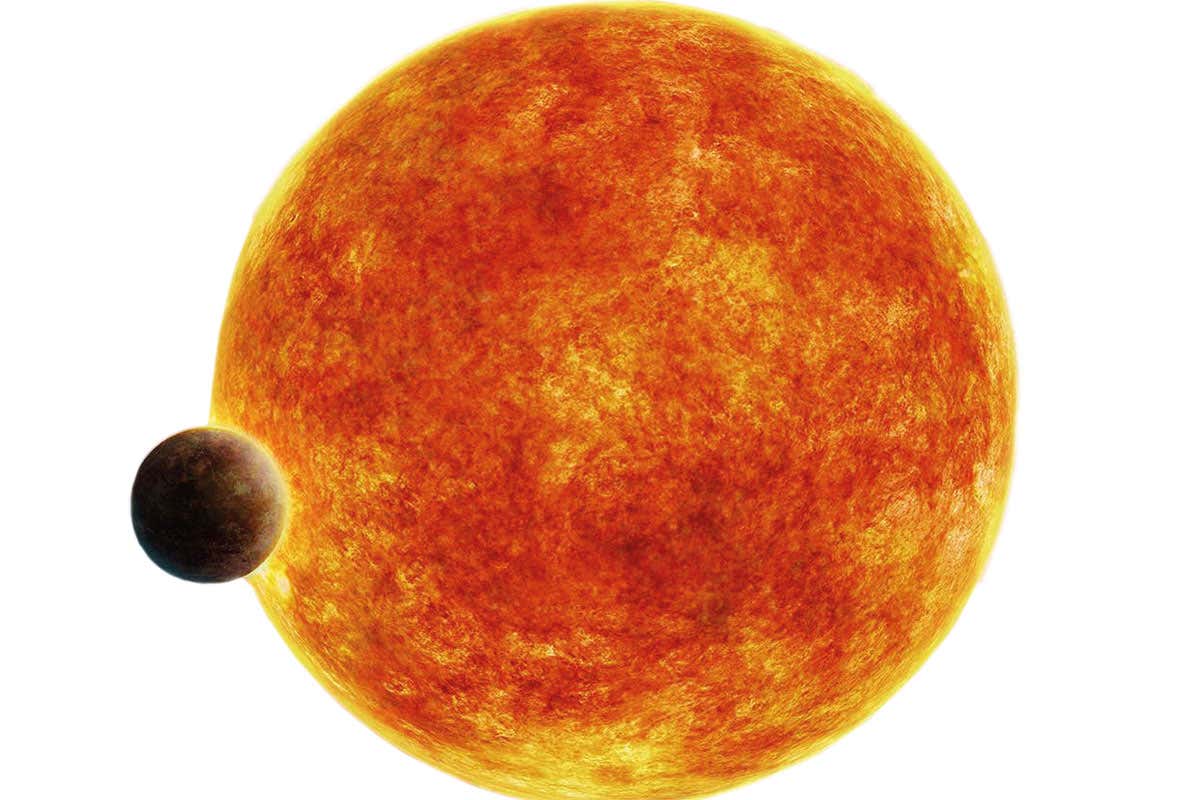
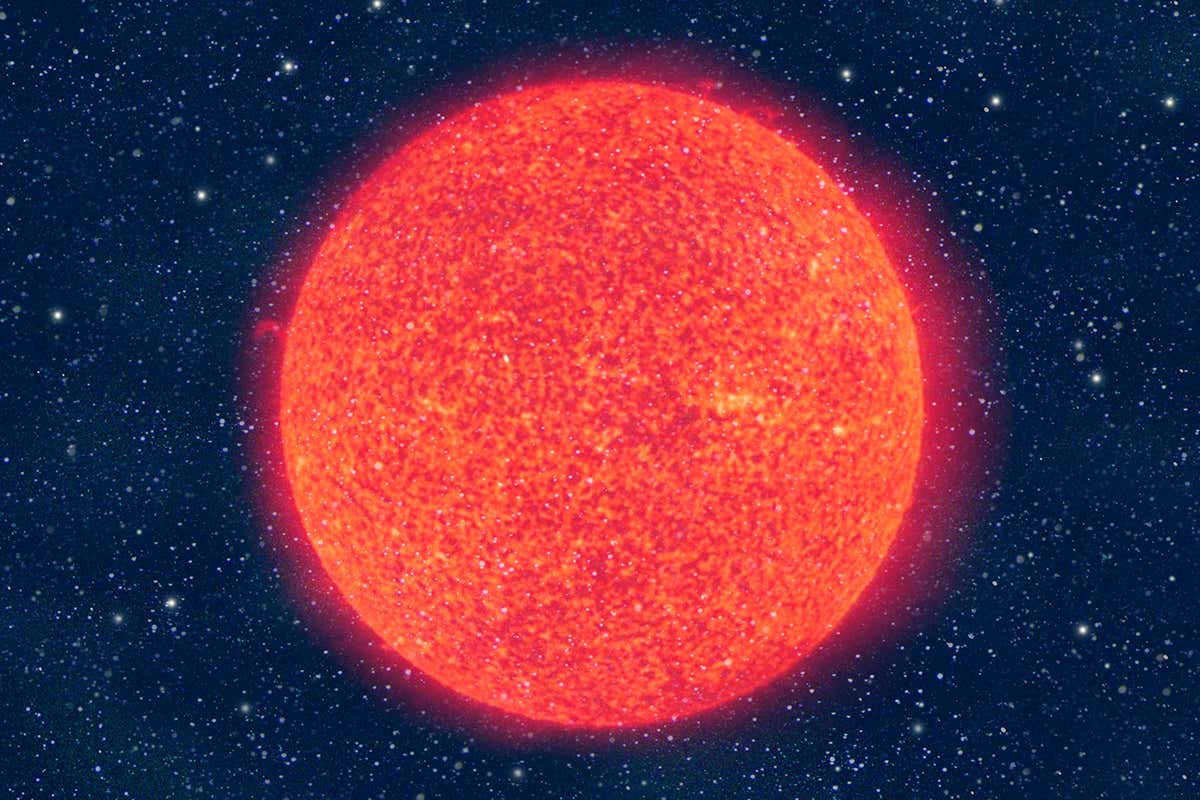
A distant star called FU Orionis has been shining extraordinarily bright for the last 85 years, and it may be because it is incinerating a young, nearby planet that could be fully consumed in another 300 years
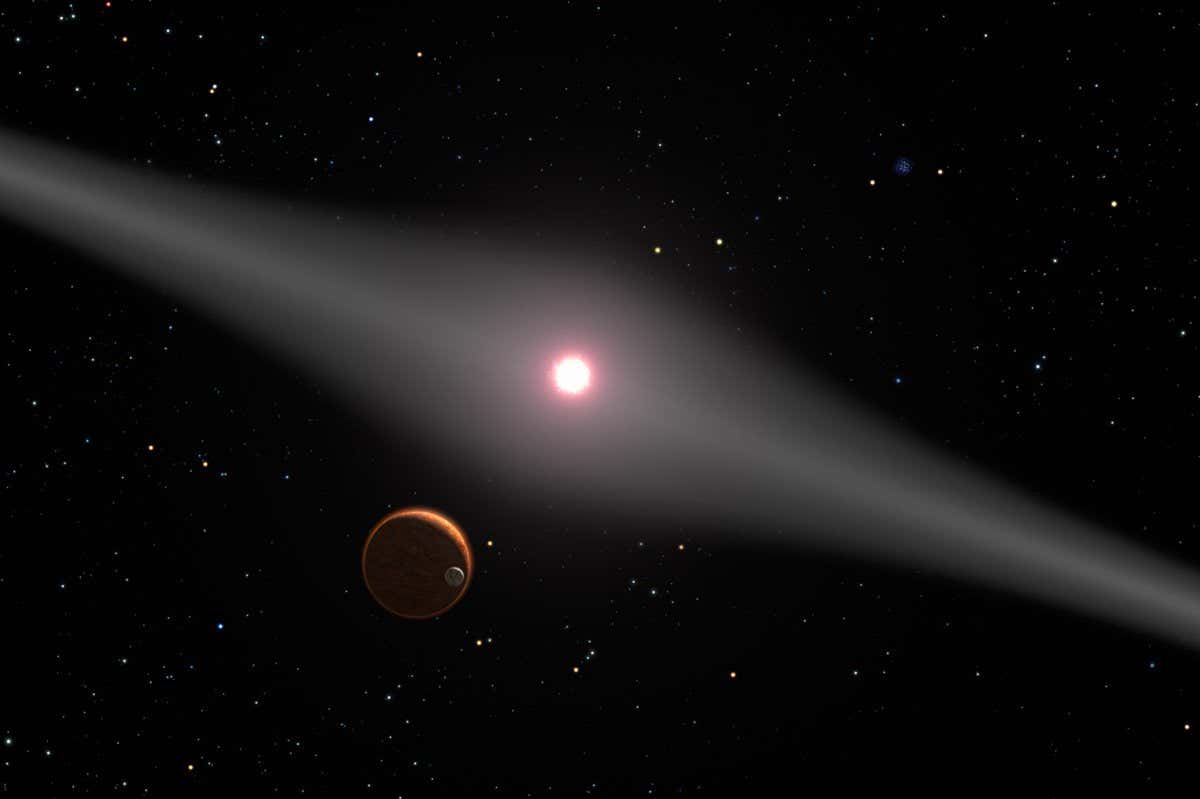
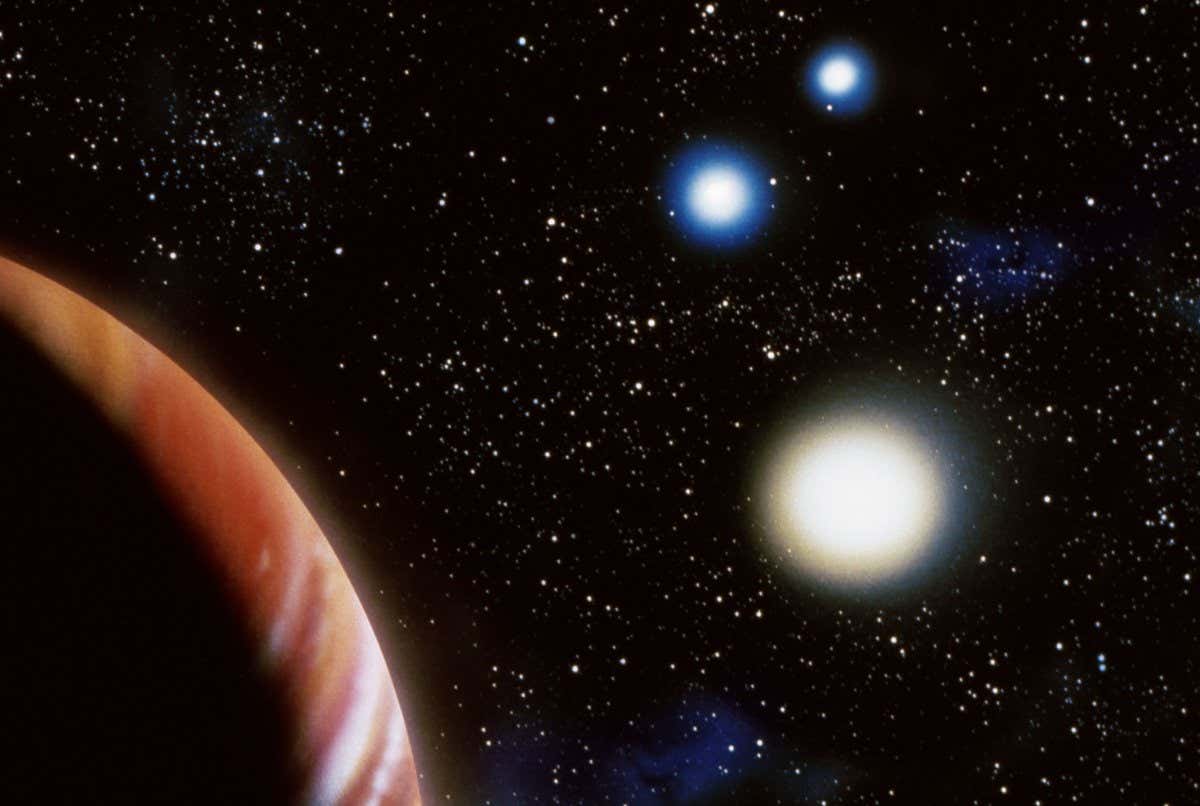
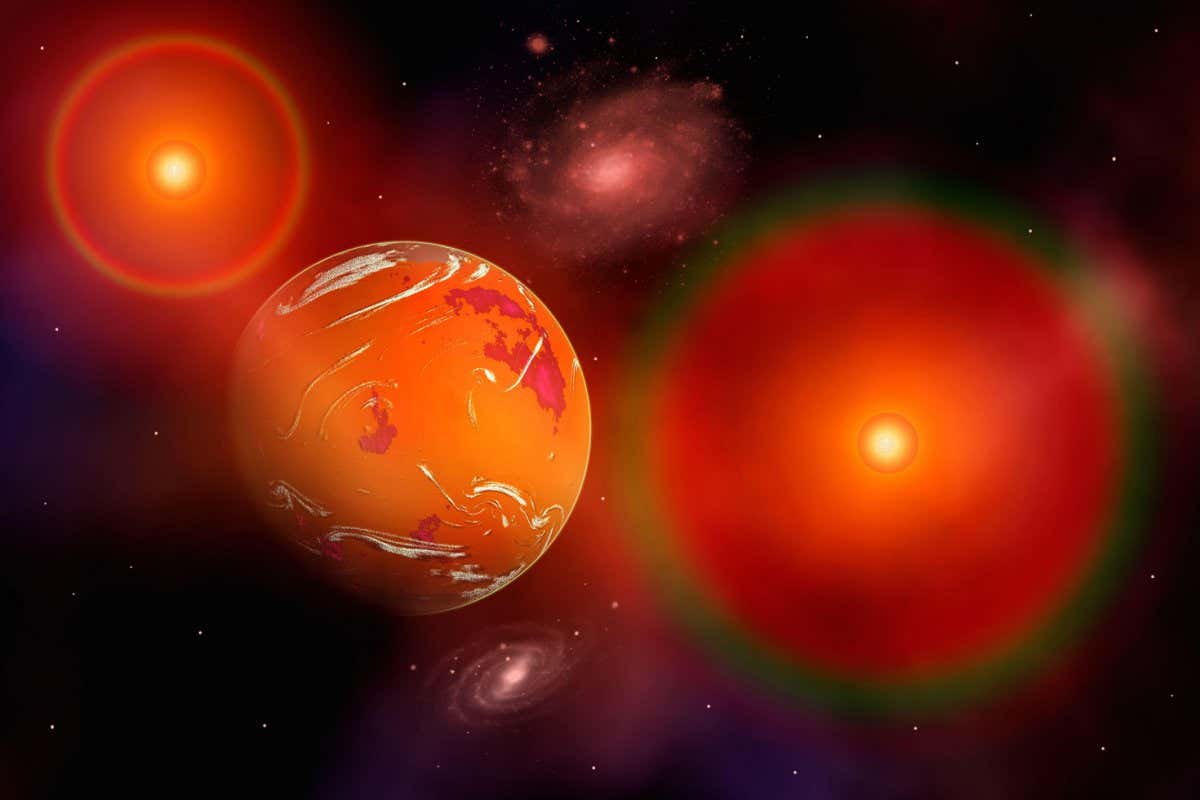
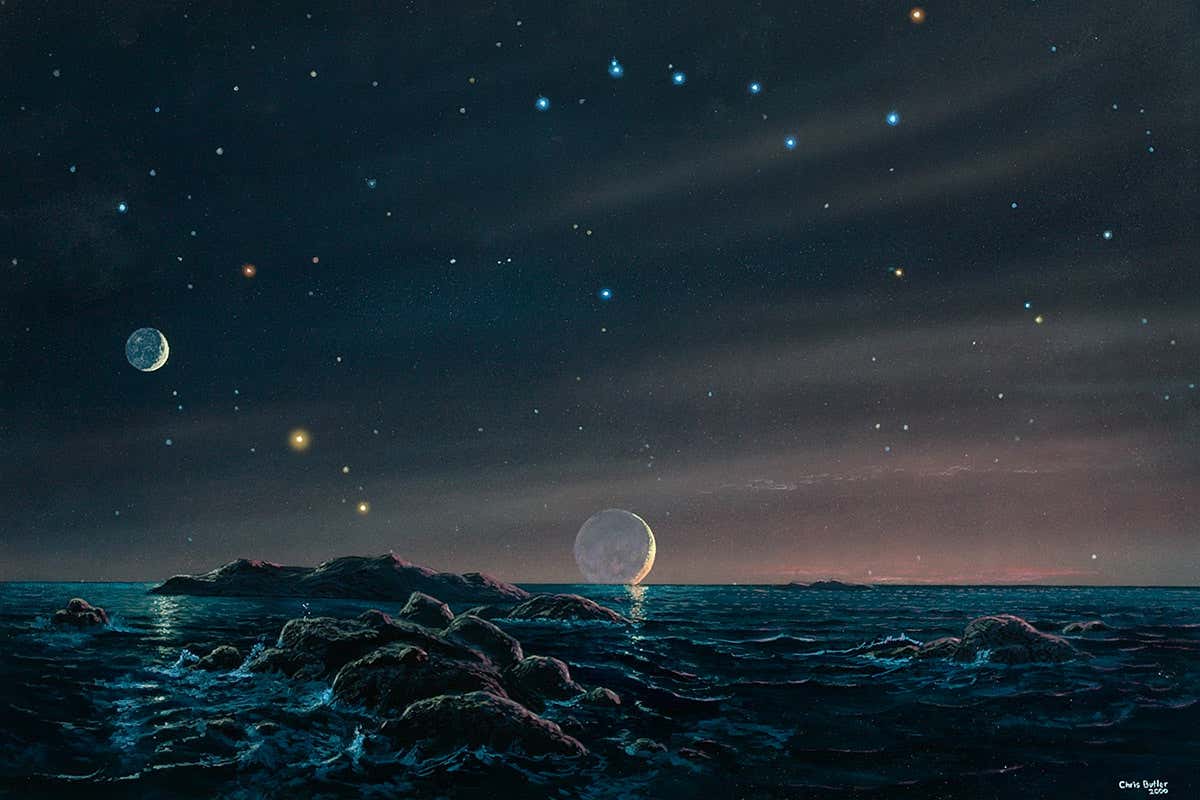
KRB4DP This is an artist's impression of the view from the vicinity of a hypothetical terrestrial planet and moon orbiting the red dwarf star AU Microscopii. The relatively newborn 12 million year-old star is surrounded by a very dusty disk of debris from the collision of comets, asteroids, and planetissimals swirling around the young star. Though no planets have been discovered around the star, the disk is strong circumstantial evidence for planets. Not only is it dusty, but also it is warped, possibly by the pull of one or more planets. In this view the glow of starlight reflecting off the disk cre

Mysterious cold blobs may be hiding inside a distant star

10 June 2022

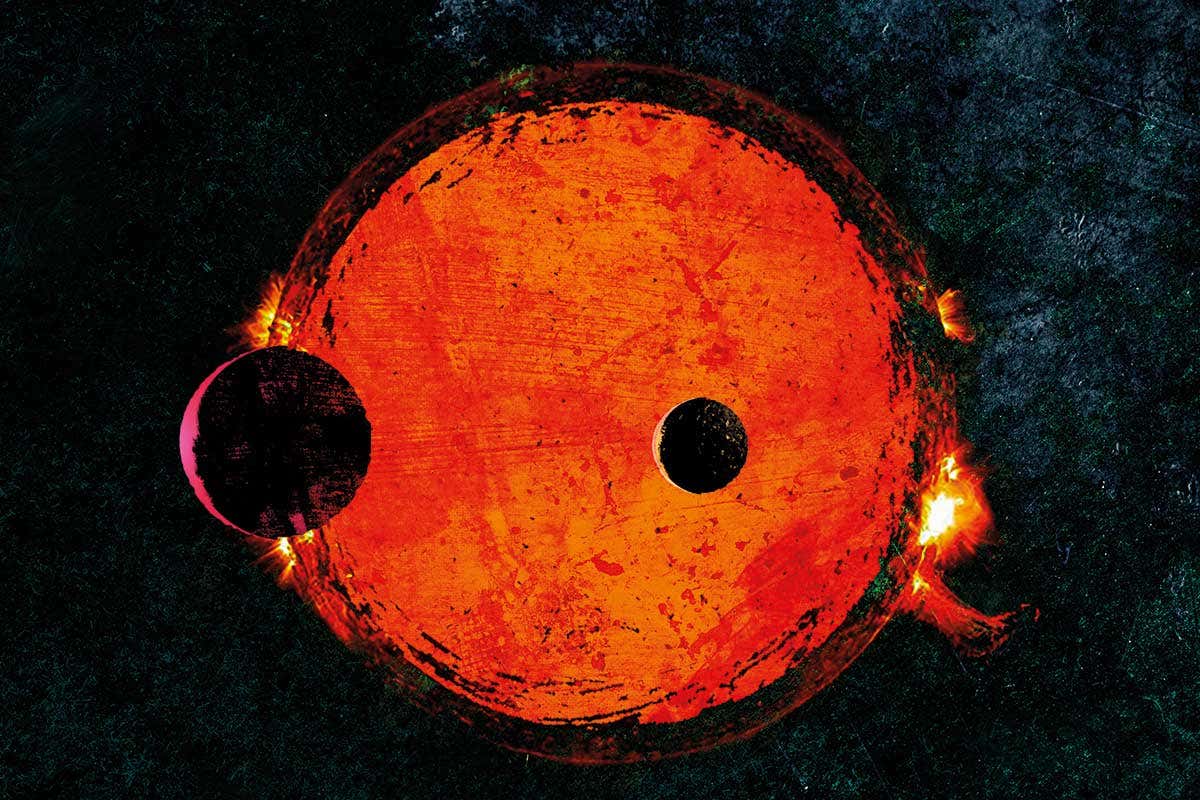
A small star called AU Microscopii seems to contain strange pockets of hydrogen that are more than 1500°C cooler than the rest of the star, and astronomers aren’t sure why


AArtist's impression of a planet near three stars

Exoplanet in a triple star system may orbit all three at once

28 September 2021

Astronomers have spotted hints of a planet that orbits a distant system of three stars – if confirmed, it will be the first time such a world has been found


An Exoplanet In Orbit Around A Binary Star System

Planet-eating stars can be identified by their telltale chemistry

13 September 2021

Stars that have eaten their planets aren't promising places to look for alien life, and now there is a technique that can help quickly identify such stars from their chemistry


An Earth-like planet might orbit our closest single sun-like star

An Earth-like planet might orbit our closest single sun-like star

14 January 2021

Tau Ceti is a star just 12 light years away – and it could host a planet called PXP-4 that sits as close to the star as Earth does to our sun with its year about as long as ours


How the coolest, smallest stars could help us discover new exoplanets

How the coolest, smallest stars could help us discover new exoplanets

7 August 2019

Exoplanets are abundant near the galaxy's smallest stars. Observing M dwarfs could teach us more about the worlds beyond our solar system, writes Chanda Prescod-Weinstein


planet

Why weird star systems are where we'll find alien life

18 July 2018

In the hunt for life beyond Earth, we've been looking for planets and stars like our own. But that is flawed – and a new plan promises answers in our lifetimes


Ultrahot planets bust up molecules then rebuild them into clouds

Ultrahot planets bust up molecules then rebuild them into clouds

1 June 2018

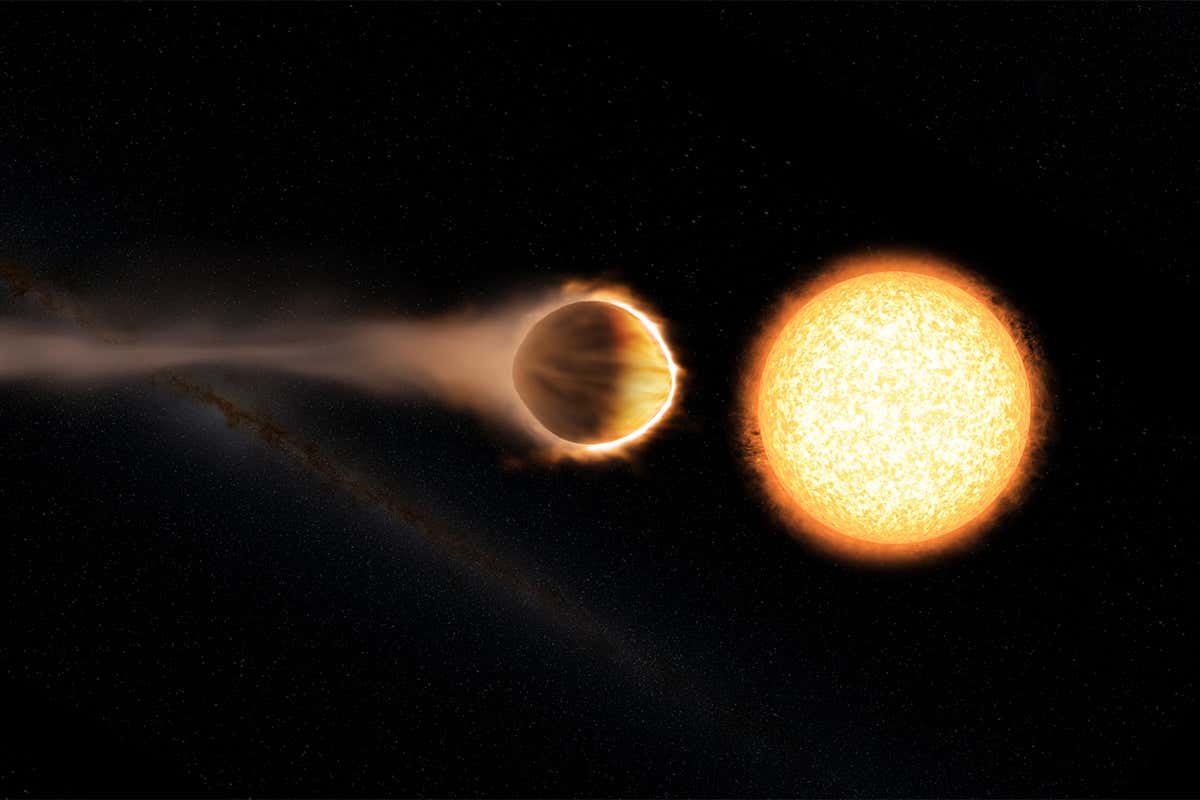
The hottest planets in the universe are half star, half cloudy oasis. In the light, it’s too hot for molecules to hold together, but they reform into clouds on the dark side


Distant Jupiter-like world may be the darkest planet ever found

Distant Jupiter-like world may be the darkest planet ever found

20 April 2018

The clouds on WASP-104b – an exoplanet orbiting a star 466 light years away – have been swept away by radiation, leaving a surface that reflects almost no light


Some exoplanets orbiting red giant stars may just be a mirage

Some exoplanets orbiting red giant stars may just be a mirage

18 January 2018

Red giant stars may be tricking us into thinking they have planets when they don’t. Instead, sunspots or atmospheric ripples might be distorting their light


Sign up to our weekly newsletter

Receive a weekly dose of discovery in your inbox. We'll also keep you up to date with New Scientist events and special offers.

Sign up
Piano Exit Overlay Banner Mobile Piano Exit Overlay Banner Desktop