Subscribe now
Found 180 results for asteroid
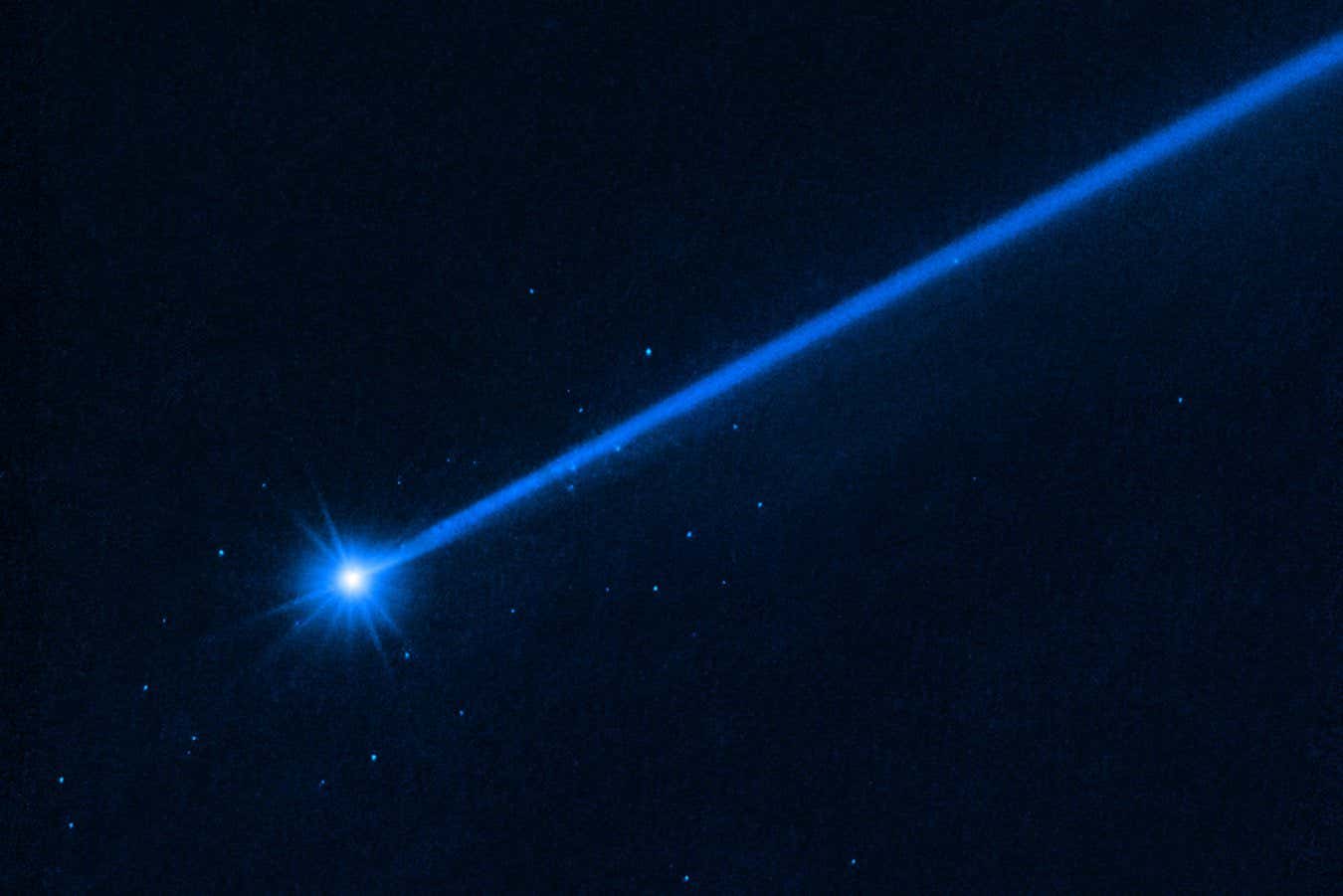
This Hubble Space Telescope image of the asteroid Dimorphos was taken on December 19, 2022, nearly four months after the asteroid was impacted by NASA?s DART mission (Double Asteroid Redirection Test). Hubble?s sensitivity reveals a few dozen boulders knocked off the asteroid by the force of the collision. These are among the faintest objects Hubble has ever photographed inside the solar system. The free-flung boulders range in size from three feet to 22 feet across, based on Hubble photometry. They are drifting away from the asteroid at a little more than a half-mile per hour. The discovery yields invaluable insights into the behavior of a small asteroid when it is hit by a projectile for the purpose of altering its trajectory.

NASA's asteroid-smashing space debris spotted by Hubble telescope

20 July 2023

The Hubble Space Telescope has snapped the results of smashing a spacecraft into the asteroid Dimorphous
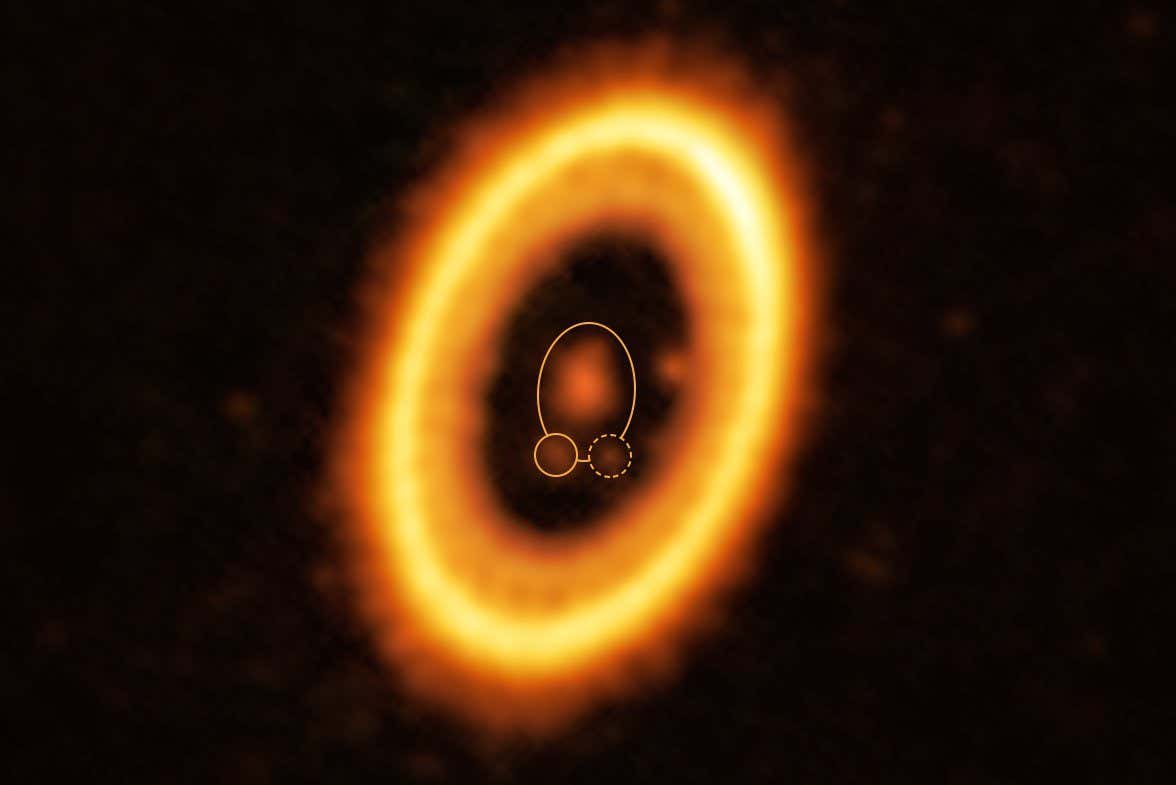

Distant planet may be the first known to share its orbit with another

19 July 2023

Exoplanet PDS 70b, a gas giant seven times the mass of Jupiter, appears to share an orbit with a ball of dust around the mass of Earth's moon, which could be forming a new planet


Could we put out the sun with a sun-sized orb of water?

18 July 2023

What would happen if we pushed a sun-sized ball of water into our star? The Dead Planets Society podcast dives into the possibilities
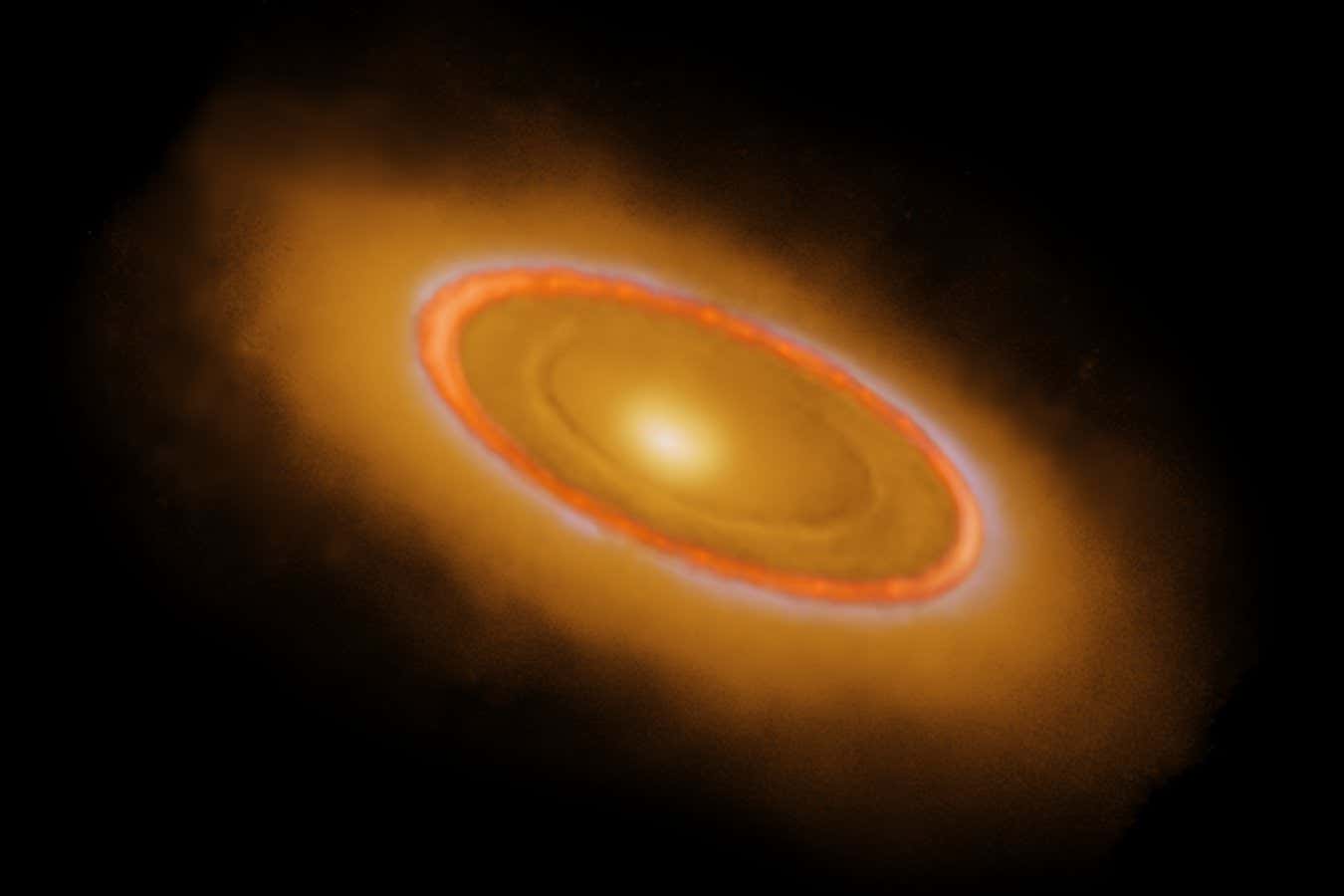

Absolutely enormous asteroid belt discovered around a nearby star

8 May 2023

Astronomers used the James Webb Space Telescope to spot strange asteroid belts around the nearby star Fomalhaut, along with evidence for at least three planets
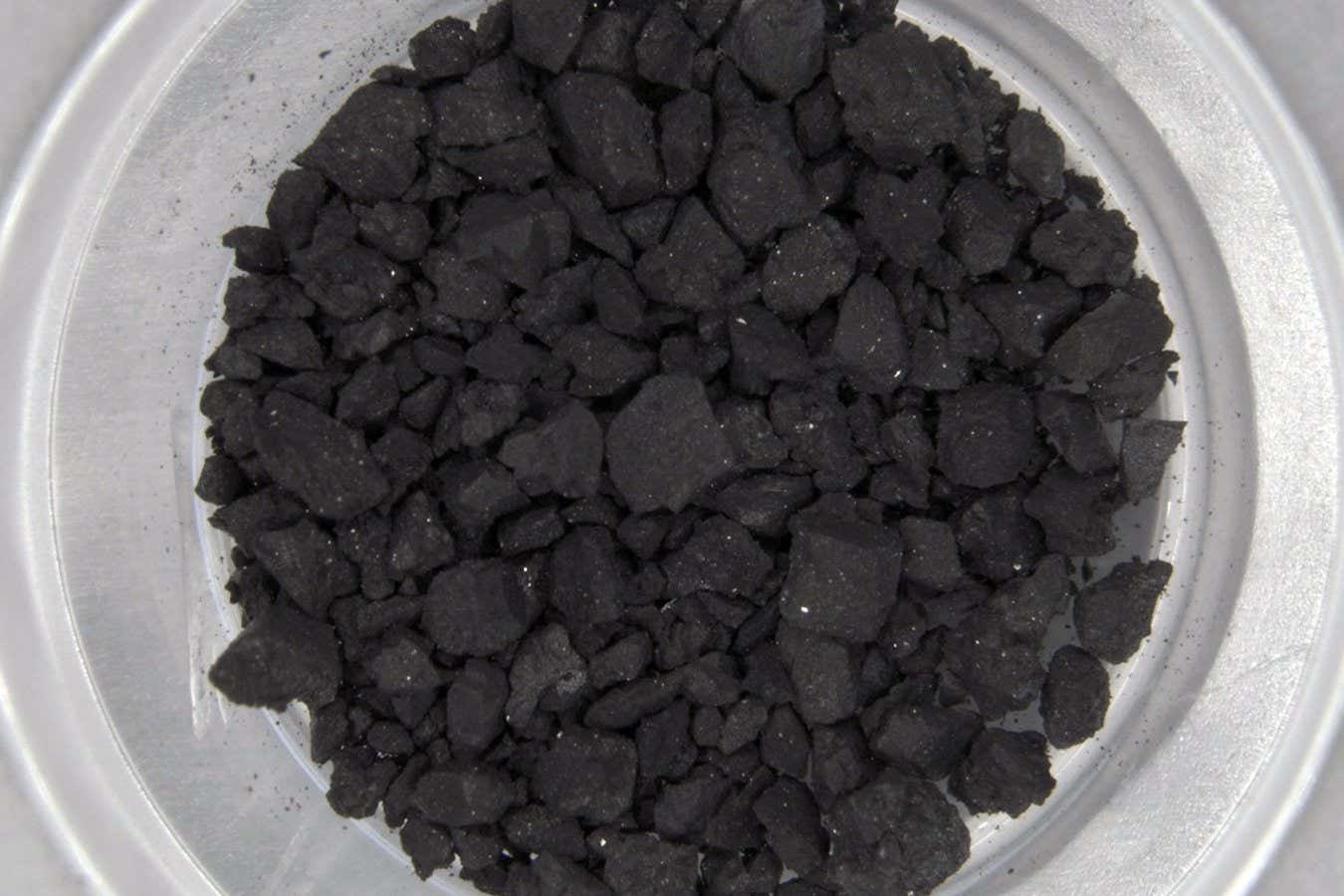

Grains from Ryugu

Samples from asteroid Ryugu contain one of the building blocks of RNA

21 March 2023

The Hayabusa 2 spacecraft brought back samples from Ryugu in 2020, and an analysis of a tiny portion of those samples has revealed key ingredients for life
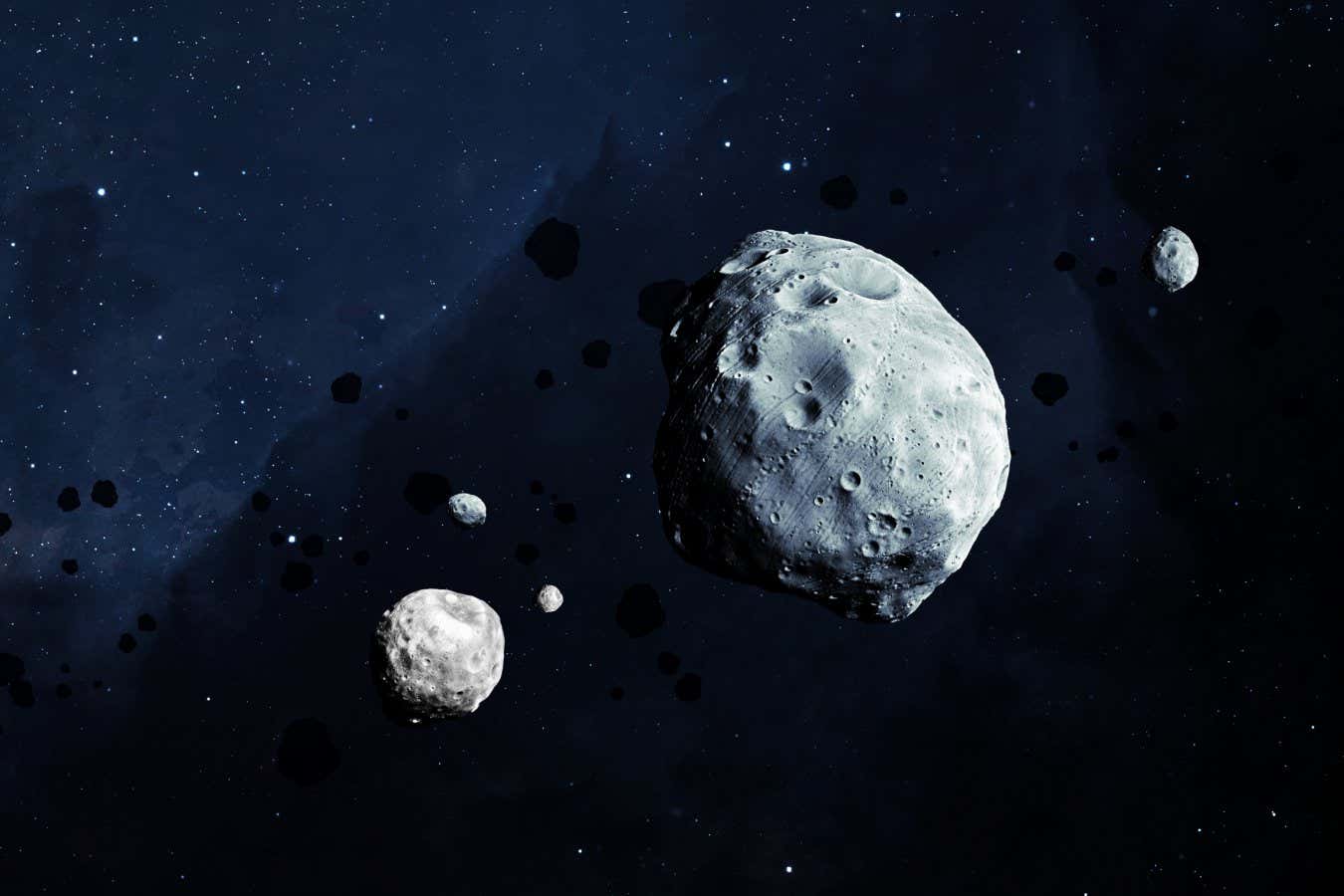

Asteroids that speed up unexpectedly may be ‘dark comets’ in disguise

21 March 2023

Some asteroids appear to accelerate in ways that can’t be accounted for by gravity, suggesting they might be firing out invisible jets of gas - like those of comets
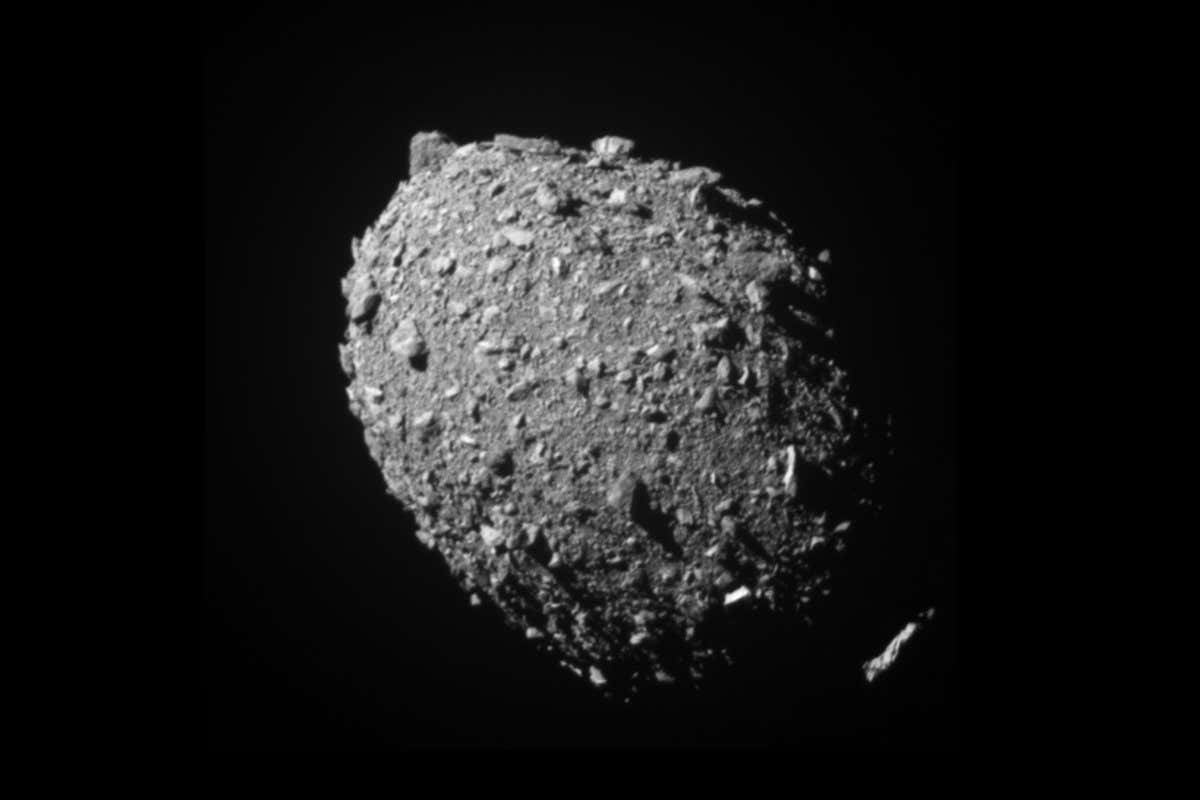

Asteroid moonlet Dimorphos as seen by the DART spacecraft 11 seconds before impact. DART?s onboard DRACO imager captured this image from a distance of 42 miles (68 kilometers). This image was the last to contain all of Dimorphos in the field of view. Dimorphos is roughly 525 feet (160 meters) in length. Dimorphos? north is toward the top of the image. Credit: NASA/Johns Hopkins APL

What we learned from NASA's asteroid-smashing DART mission

1 March 2023

The Double Asteroid Redirection Test smashed into the asteroid Dimorphos in 2022, and the huge plume of rubble from the collision more than tripled the momentum transferred from the spacecraft to the asteroid
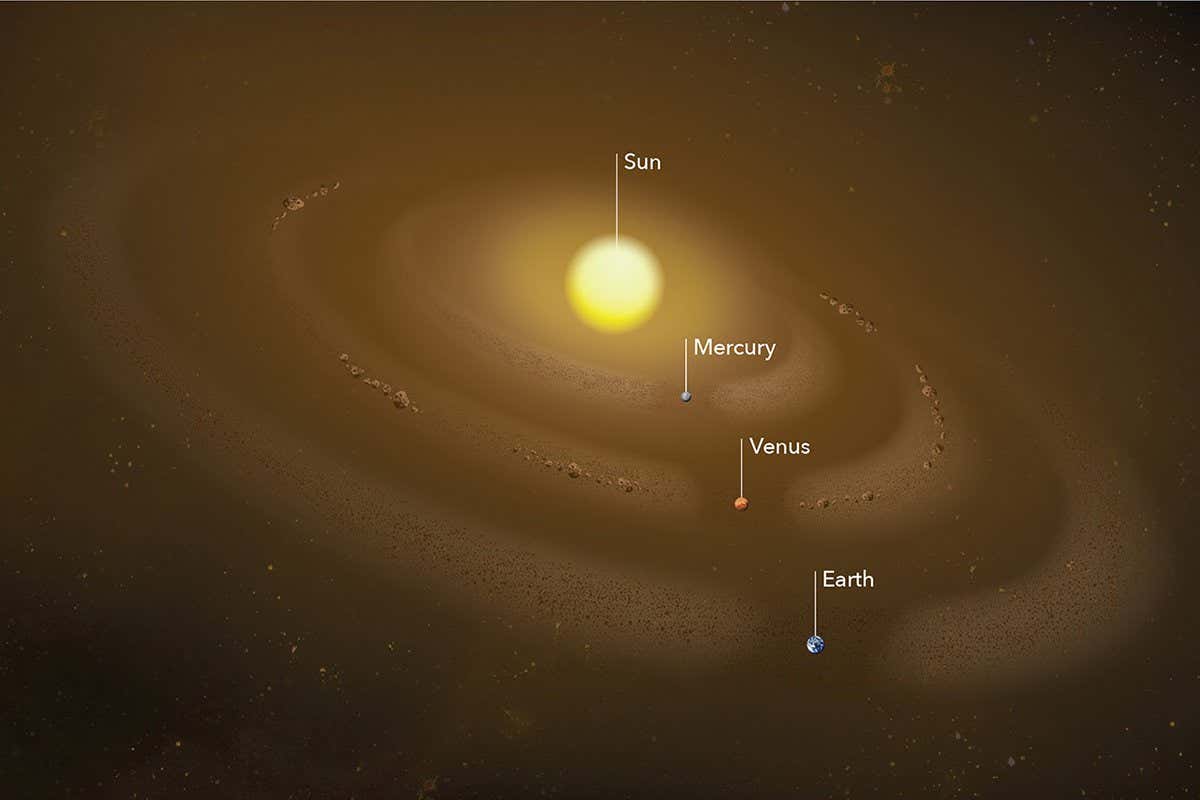

Several dust rings are illustrated circling the Sun. In line with these rings' position around the Sun are the planets Mercury, Venus, and Earth.

Weird dust ring orbits the sun alongside Mercury and we don't know why

8 February 2023

Very little debris should be able to survive for long in the area near Mercury, but the innermost planet seems to orbit the sun alongside a ring of dust that researchers can’t explain
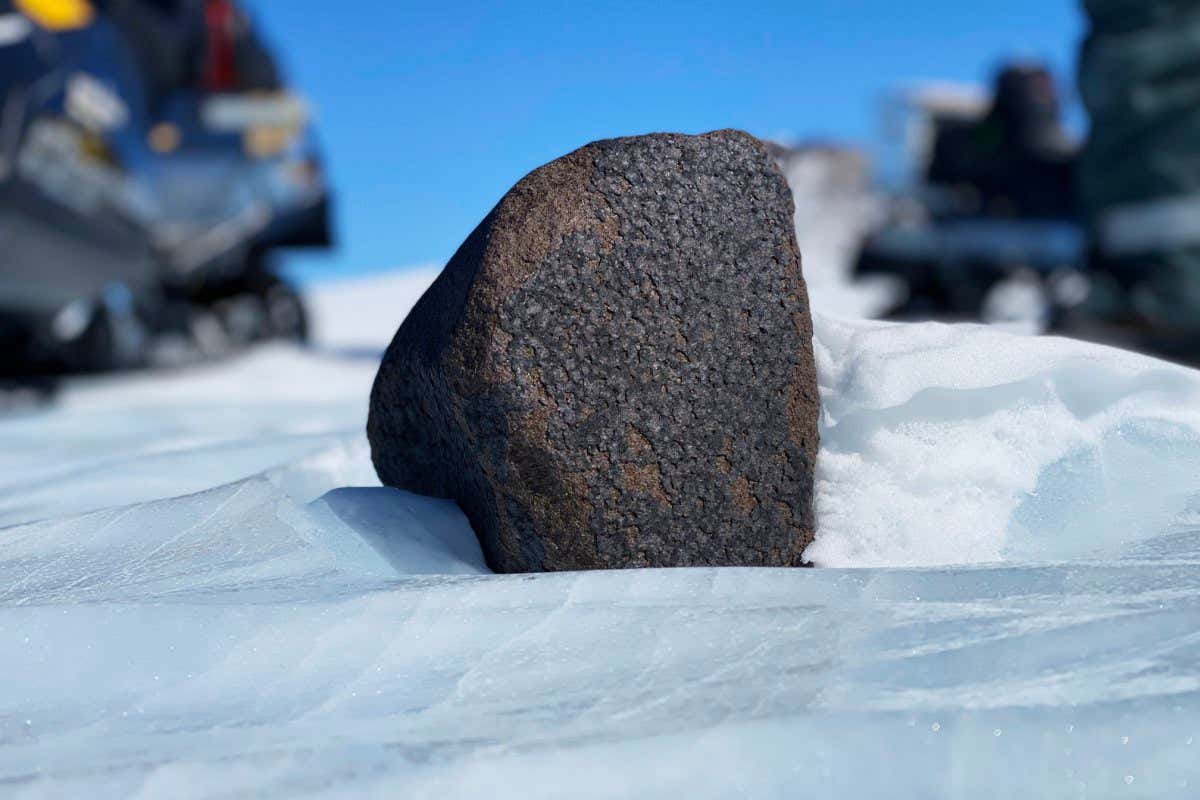

Meteorite

Rare Antarctic meteorite is one of the largest ever found

24 January 2023

Antarctica is the perfect place to go meteorite hunting, as space rocks stand out on the wide fields of ice, and researchers have found a new crop
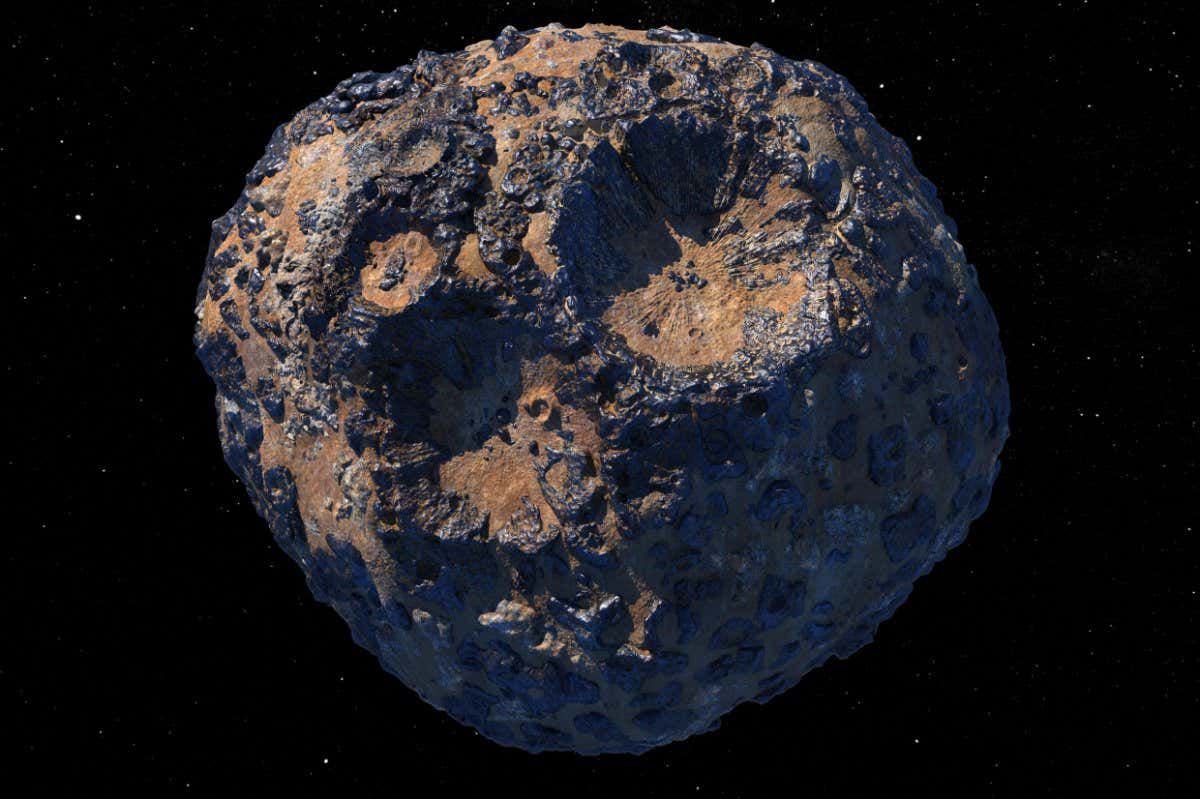

LARGE REGIONS OF ROCK AND METAL: PSYCHE ASTEROID ILLUSTRATION This illustration depicts the 140-mile-wide (226-kilometer-wide) asteroid Psyche, which lies in the main asteroid belt between Mars and Jupiter. Psyche is the focal point of NASA?s mission of the same name. The Psyche spacecraft is set to launch in August 2022 and arrive at the asteroid in 2026, where it will orbit for 21 months and investigate its composition. Based on data obtained from Earth, scientists believe Psyche is a mixture of metal and rock. The rock and metal may be in large provinces, or areas, on the asteroid, as illustrated in this rendering. Observing and measuring how the metal and rock are mixed will help scientists determine how Psyche formed. Exploring the asteroid could also give valuable insight into how our own planet and others formed. The Psyche team will use a magnetometer to measure the asteroid?s magnetic field. A multispectral imager will capture images of the surface, as well as data about Psyche?s composition and topography. Spectrometers will analyze the neutrons and gamma rays coming from the surface to reveal the elements that make up the asteroid itself. The illustration was created by Peter Rubin. View or download the full resolution versions from NASA?s Photojournal Date Added: 03-29-2021 Credit: Peter Rubin

Spacecraft are heading to a metal asteroid and Jupiter's moons in 2023

28 December 2022

The JUICE and Psyche mission are set to blast off in 2023, with the aim of studying Jupiter's largest moons and a possible iron core of a planet in the hopes of understanding how worlds become habitable


Sign up to our weekly newsletter

Receive a weekly dose of discovery in your inbox. We'll also keep you up to date with New Scientist events and special offers.

Sign up
Piano Exit Overlay Banner Mobile Piano Exit Overlay Banner Desktop