Subscribe now
Found 15 results for asteroid
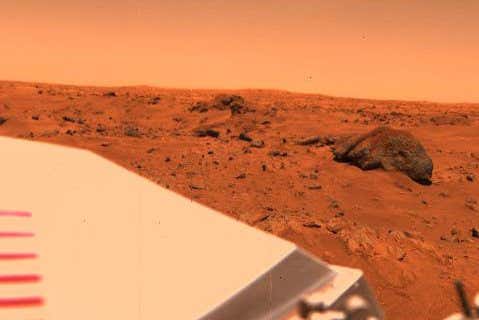
Original Caption Released with Image: Near the Viking 1 Lander on the Chryse Plains of Mars, 'Big Joe' stands a silent vigil. This large, often-photographed dark rock has a topping of reddish fine-grained silt that spills down its sides. It is about 2 meters (6.6 feet) long and lies about 8 meters (26 feet) from the spacecraft. The rough texture of the sides shows it to be coarse grained. Big Joe appears to be part of a field of large blocks that has a roughly circular alignment and which may be part of the rim of an ancient degraded crater. Some of the other blocks of the field can be seen to the left, extending out toward the horizon, perhaps 1.5 kilometers (1 mile) away. Drifts of fine-grained material cover the surface to the right and left of Big Joe. The part of the Lander that is visible in the lower left is the cover of the nuclear power supply. Image Credit: NASA/JPL

Ancient megatsunami on Mars traced to the crater where it began

1 December 2022

Before Mars dried up, an asteroid slammed into one of its oceans and caused a colossal megatsunami, and now researchers have found the crater where it hit
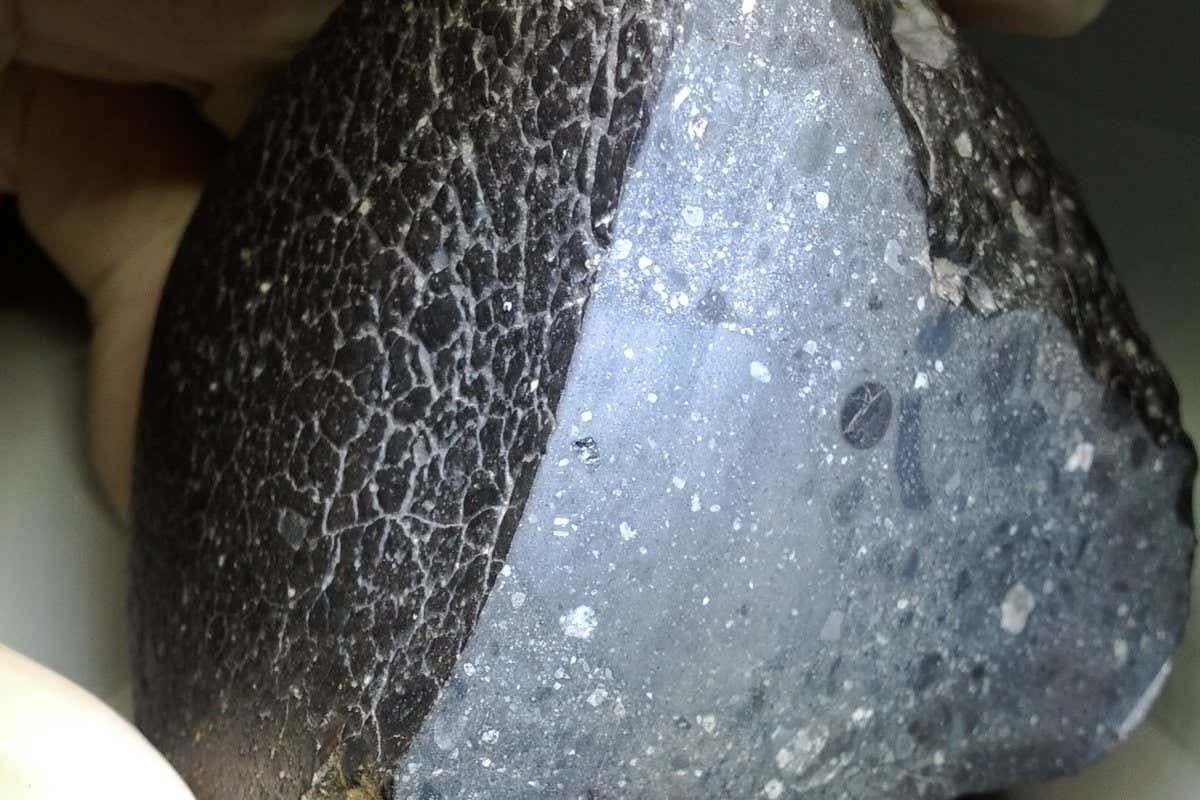

Close-up of black meteorite

Meteorite from Mars traced to crater where it was ejected by impact

12 July 2022

Researchers used a supercomputer to analyse thousands of images of craters on Mars to find one that matched the properties of an unusual rock
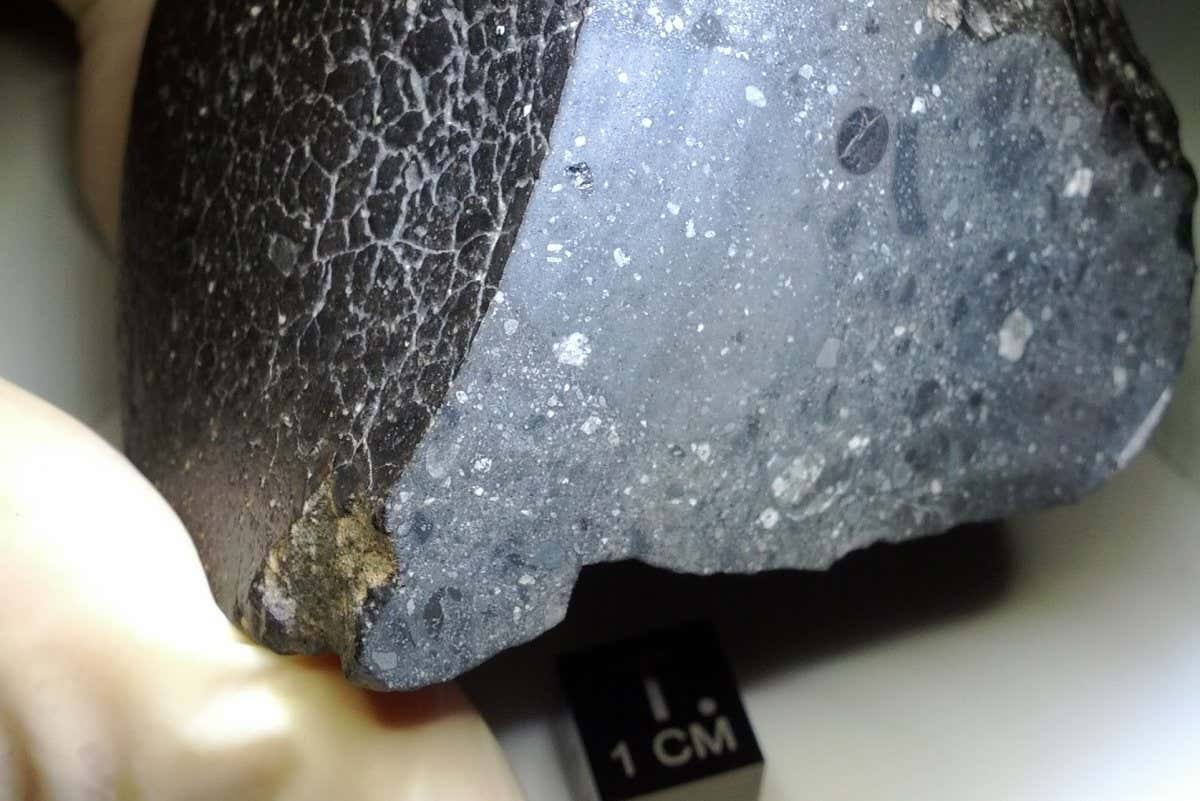

NWA 7034

Mars may have been habitable millions of years later than we thought

2 February 2022

Analysis of minerals in a Martian meteorite suggest that the planet may have begun to be hospitable for life 30 million years later than previously thought
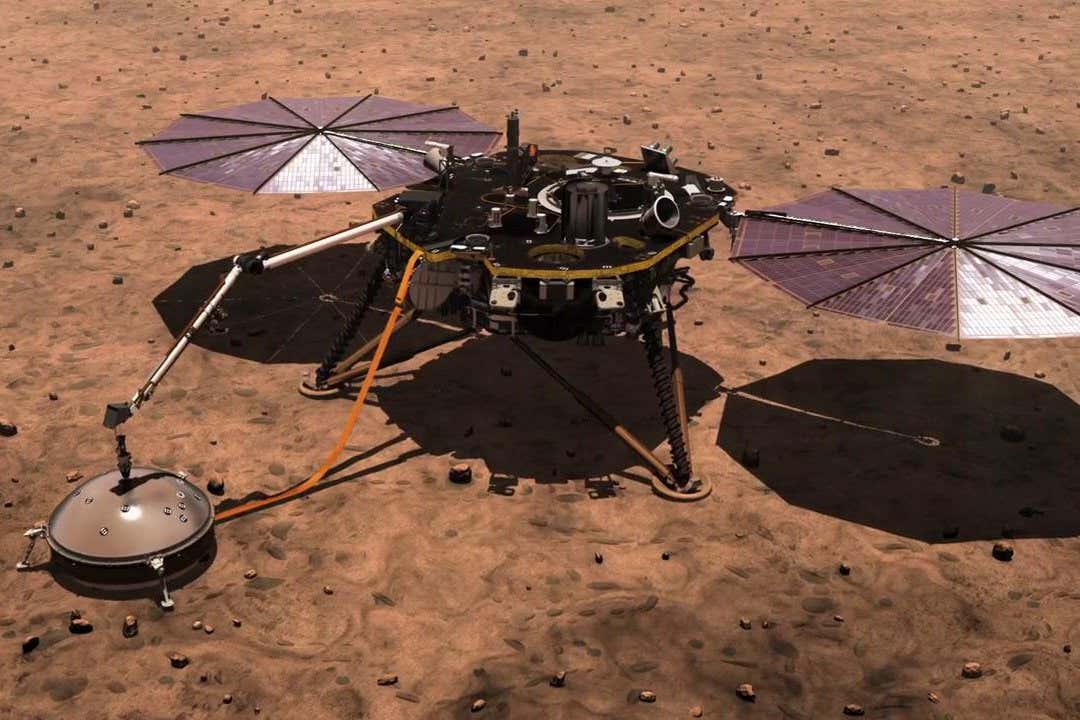

An artist's depiction of the InSight lander on Mars.

Marsquakes happen more often during the planet’s northern summer

9 November 2021

The NASA Insight lander has measured the frequency of shallow marsquakes and found they are more common when it is summer in Mars’s northern hemisphere
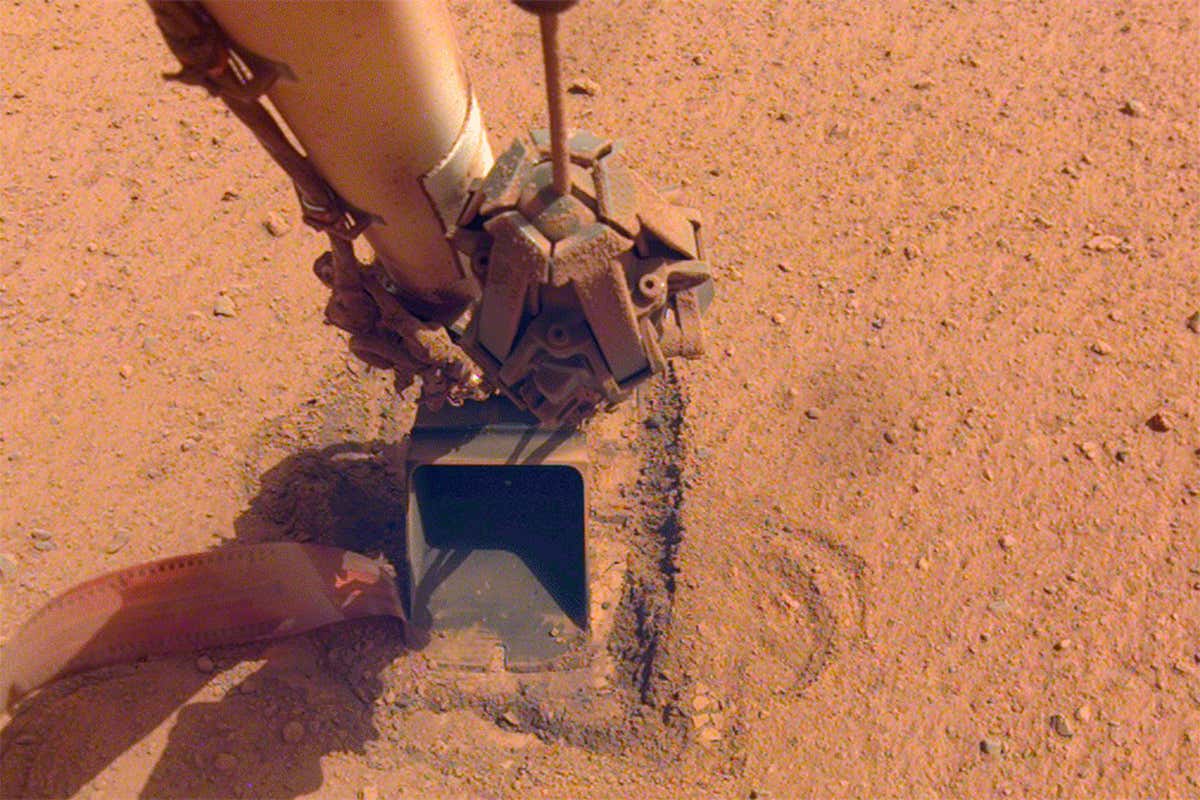

The InSight mole team tried to save the mole by pressing on it with the lander's arm scoop, but ultimately couldn't get it to dig down into Mars

NASA gives up trying to burrow under Mars surface with 'mole' probe

15 January 2021

For nearly two years, a heat probe attached to NASA’s InSight lander, nicknamed the mole, has been trying to burrow into the Martian surface – but now researchers have thrown in the towel
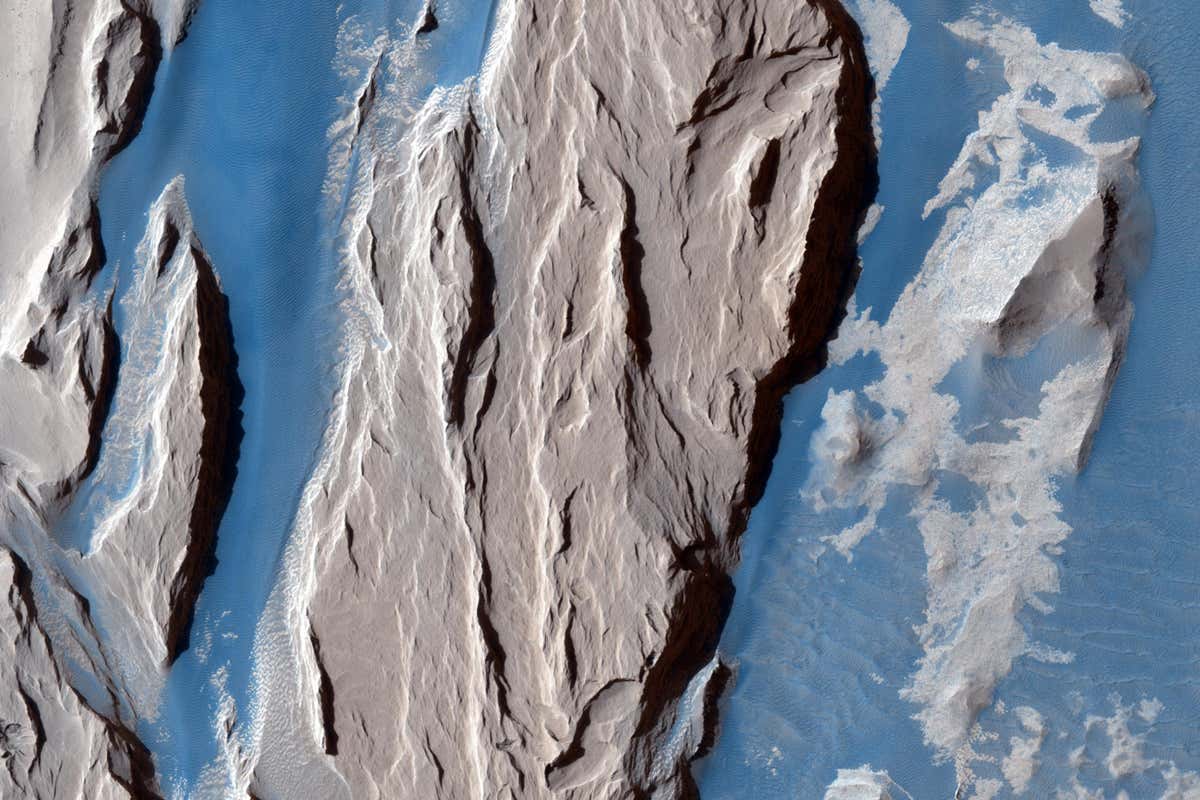

A giant raft of rock may once have floated across Mars’s ancient ocean

A giant raft of rock may once have floated across Mars’s ancient ocean

21 April 2020

Mars could have had an ancient ocean in its northern hemisphere, and a large raft of volcanic rock may have floated across it to settle into mounds we can see today
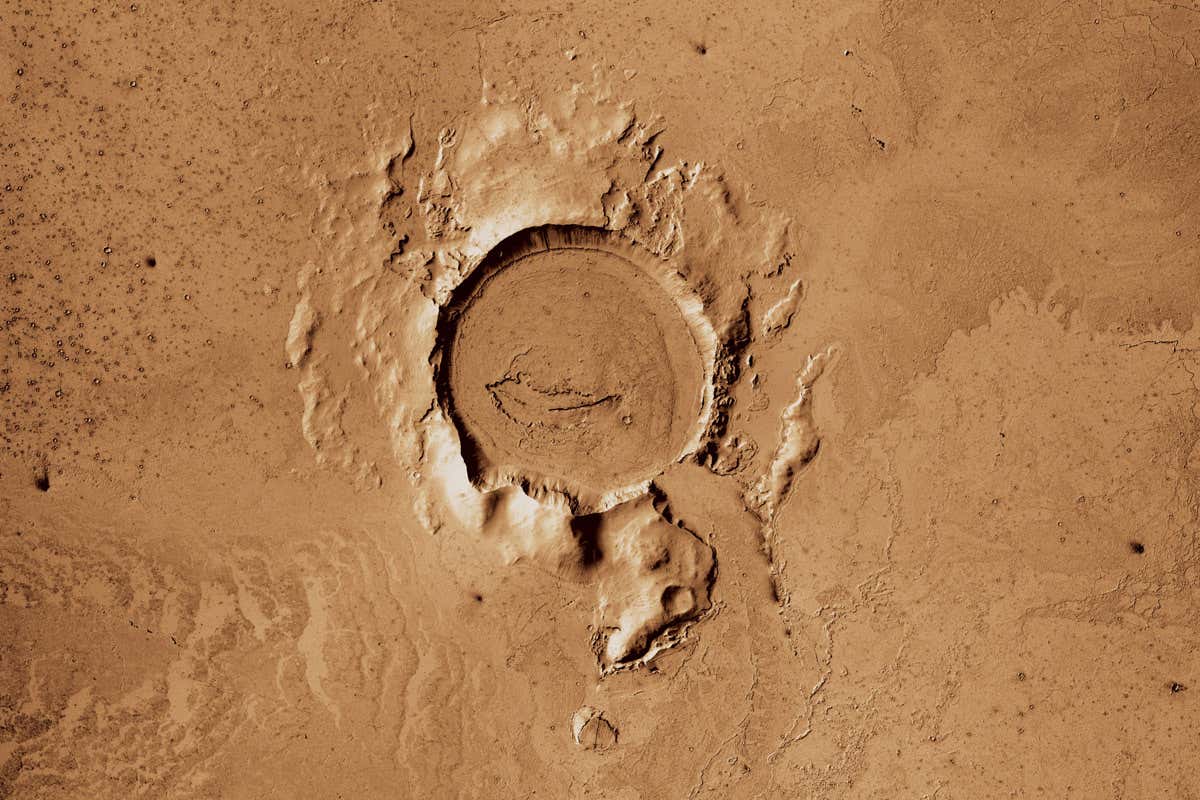

An asteroid strike may have popped the surface of Mars

An asteroid strike may have popped the surface of Mars

6 April 2020

An unusually round and symmetrical deposit on Mars may be the result of an impact that popped the surface of the planet, causing a volcanic eruption less than 200,000 years ago
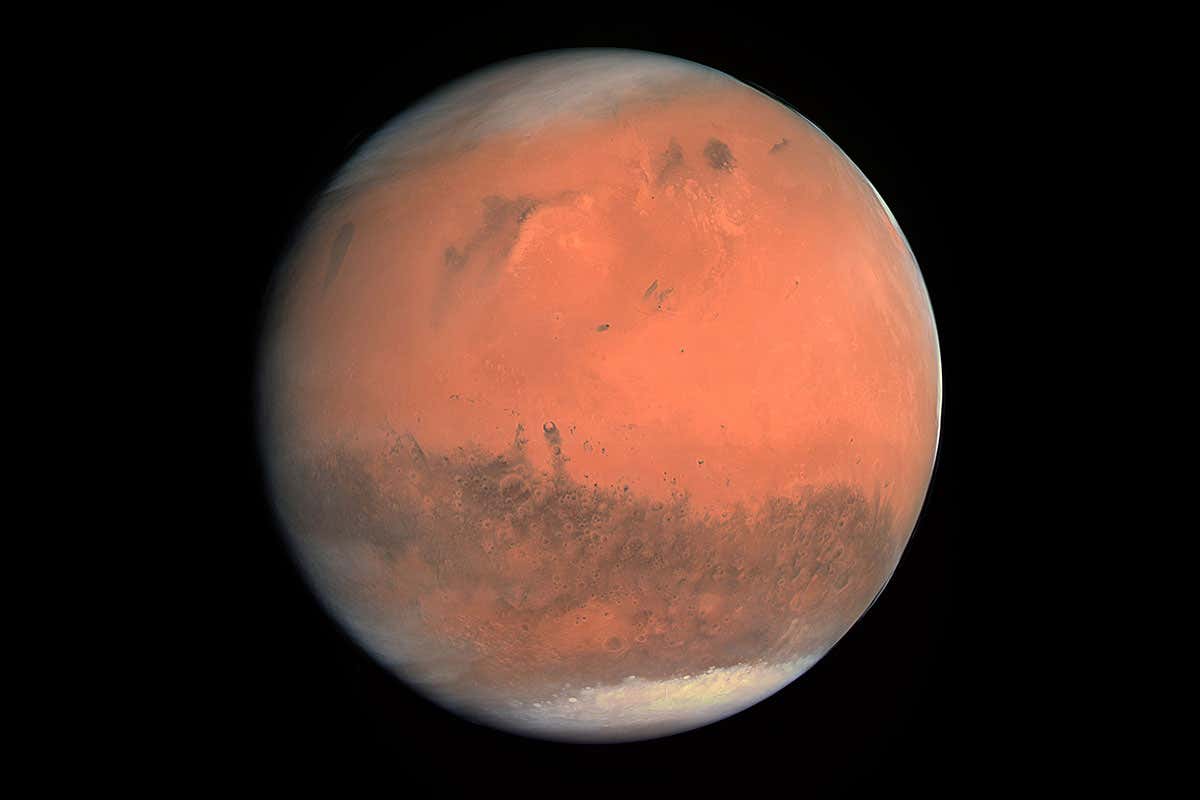

Mars may have formed 15 million years later than we thought

Mars may have formed 15 million years later than we thought

12 February 2020

Young Mars may have endured a series of huge collisions that smashed its mantle, throwing off our measurements of when it formed by up to 15 million years
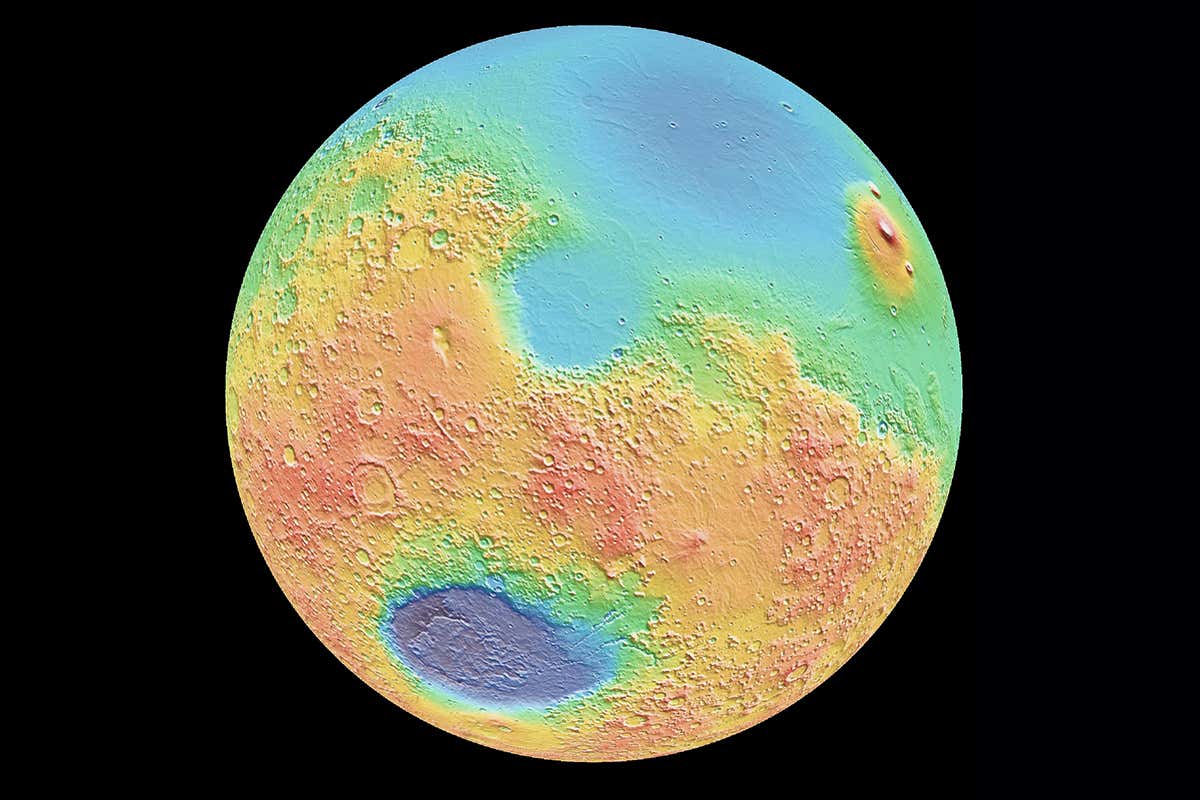

the NASA-MOLA false-colour topographic model of the Mars surface Courtesy NASA/JPL-Caltech shows the hemispheric dichotomy and southern highlands (orange), a likely source for the Martian polymict breccia meteorites

Mars meteorite assault stopped 500 million years earlier than thought

24 June 2019

The Late Heavy Bombardment may have stopped on Mars 4.48 billion years ago, allowing it to become more favourable to life earlier than previously suggested
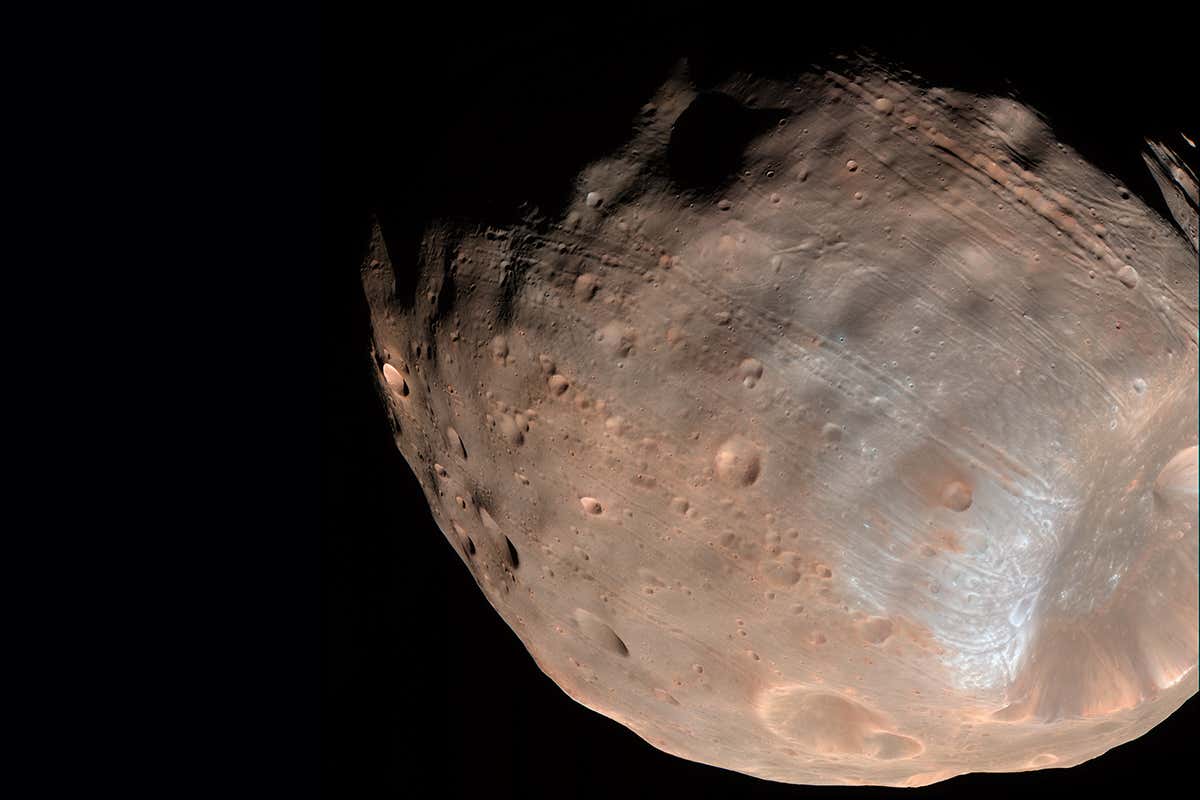

Phobos

Japan wants to launch the first ever rover to visit a Martian moon

20 June 2019

In 2024, Japan wants to send a rover to one of Mars’s moons, Phobos and Deimos. Samples taken there could help us sort out how they formed and whether they hold ice


Sign up to our weekly newsletter

Receive a weekly dose of discovery in your inbox. We'll also keep you up to date with New Scientist events and special offers.

Sign up
Piano Exit Overlay Banner Mobile Piano Exit Overlay Banner Desktop