Subscribe now
Found 16 results for asteroid
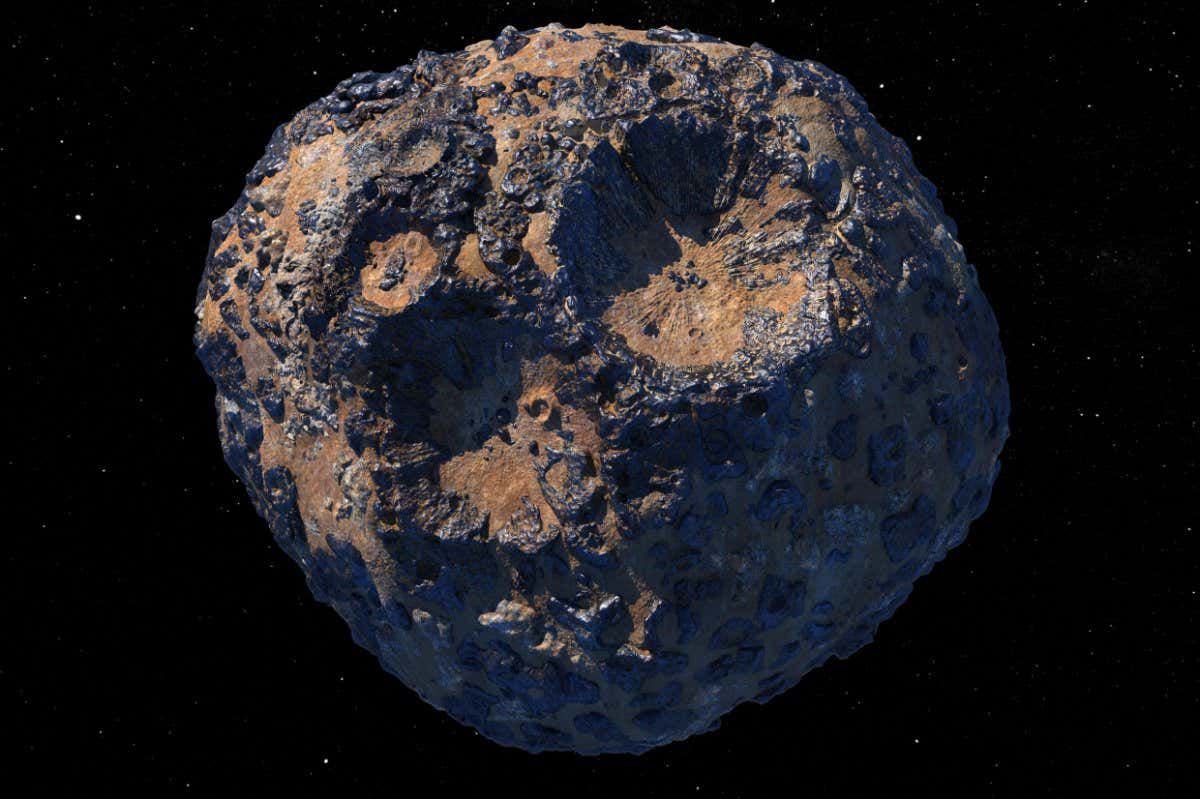
LARGE REGIONS OF ROCK AND METAL: PSYCHE ASTEROID ILLUSTRATION This illustration depicts the 140-mile-wide (226-kilometer-wide) asteroid Psyche, which lies in the main asteroid belt between Mars and Jupiter. Psyche is the focal point of NASA?s mission of the same name. The Psyche spacecraft is set to launch in August 2022 and arrive at the asteroid in 2026, where it will orbit for 21 months and investigate its composition. Based on data obtained from Earth, scientists believe Psyche is a mixture of metal and rock. The rock and metal may be in large provinces, or areas, on the asteroid, as illustrated in this rendering. Observing and measuring how the metal and rock are mixed will help scientists determine how Psyche formed. Exploring the asteroid could also give valuable insight into how our own planet and others formed. The Psyche team will use a magnetometer to measure the asteroid?s magnetic field. A multispectral imager will capture images of the surface, as well as data about Psyche?s composition and topography. Spectrometers will analyze the neutrons and gamma rays coming from the surface to reveal the elements that make up the asteroid itself. The illustration was created by Peter Rubin. View or download the full resolution versions from NASA?s Photojournal Date Added: 03-29-2021 Credit: Peter Rubin

Spacecraft are heading to a metal asteroid and Jupiter's moons in 2023

28 December 2022

The JUICE and Psyche mission are set to blast off in 2023, with the aim of studying Jupiter's largest moons and a possible iron core of a planet in the hopes of understanding how worlds become habitable
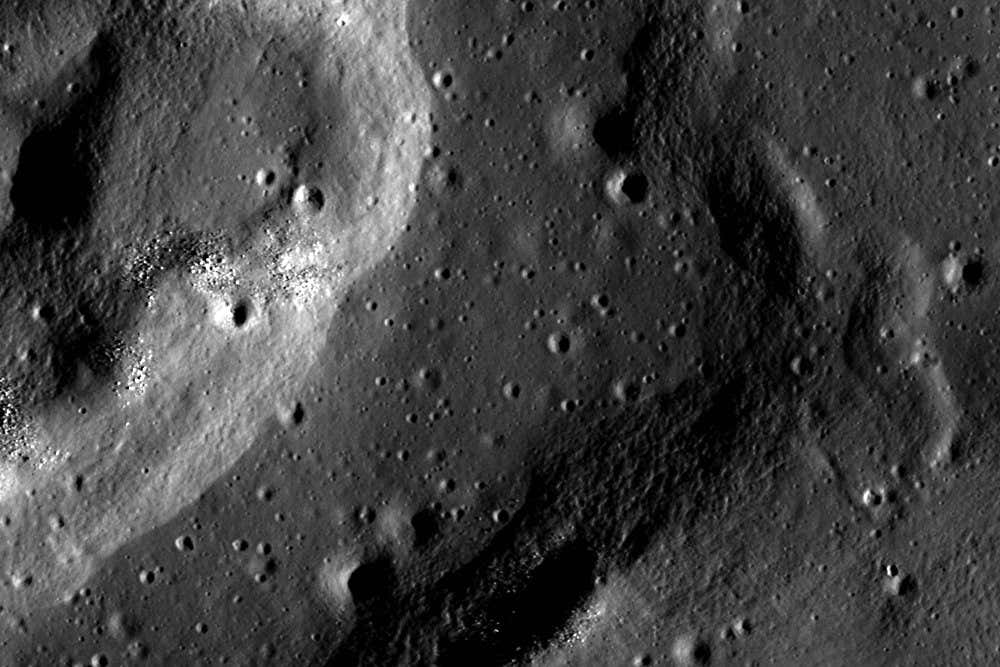
Mare Crisium is a large, dark, basaltic plain on the Moon that filled an ancient asteroid impact. Basaltic plains on the Moon were created by early volcanic eruptions. Mare Crisium was flooded with basaltic lava, a dark, runny lava commonly found on Earth. Basaltic plains on the Moon are also known as lunar maria, because of a mistaken belief by early astronomers that these dark areas were oceans ? ?maria? is the Latin word for ?seas.? We now know these spots to be plains of basalt created by early volcanic eruptions, but the nomenclature of ?maria? (plural) or ?mare? (singular) remains. The basalts in Mare Crisium range in age from 2.5 to 3.3 billion years old! These dates come from measuring the radioactive isotope signatures of samples returned from Mare Crisium by the Soviet Luna 24 mission. Along the rim of Mare Crisium lies an outer boundary of wrinkle ridges. Wrinkle ridges are commonly found in places where the surface has contracted. As the surface is compressed, it bends and fractures, and can form complicated patterns of faults and folds.

Bricks made of dust from the moon and Mars could make space buildings

25 May 2022

Baking a mixture of saltwater and materials that mimic dust from the moon or Mars at a high temperature produced sturdy bricks that could be used to build human habitats in space


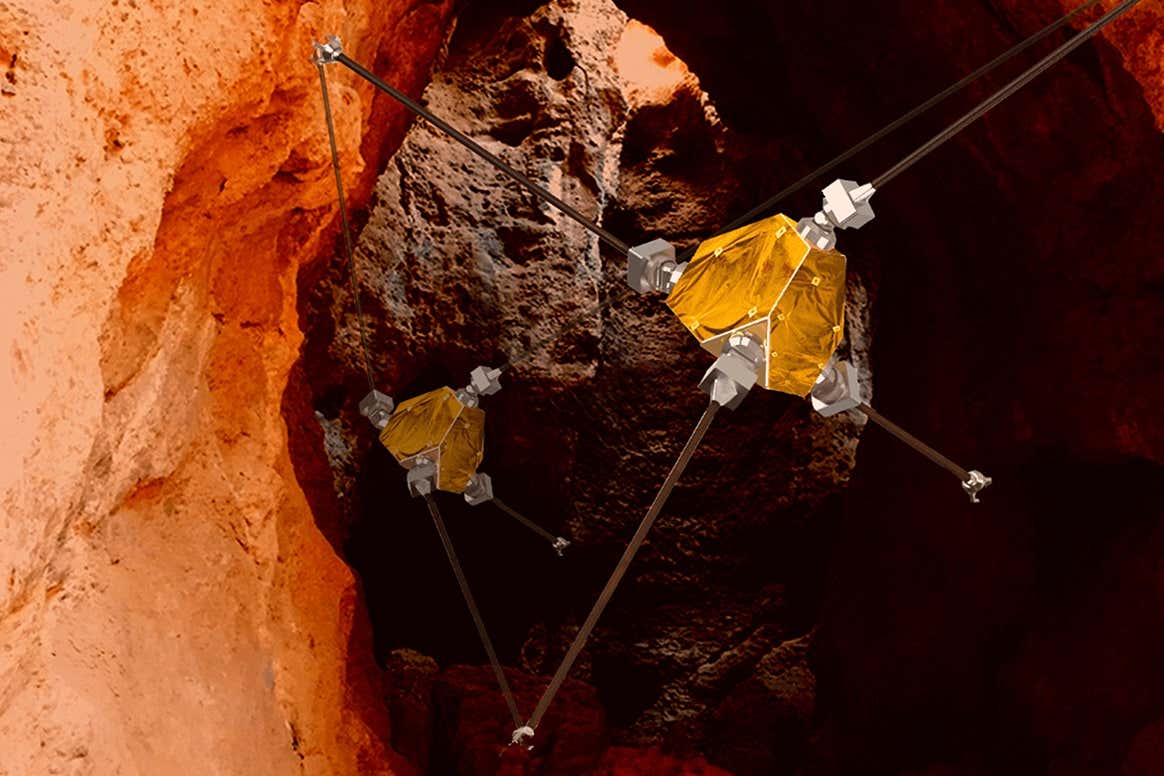
NASA funds experimental radiation shield and Mars climbing robot

NASA funds experimental radiation shield and Mars climbing robot

3 March 2022

Several futuristic projects have just been awarded money through NASA’s Innovative Advanced Concepts programme – here are New Scientist's top five choices


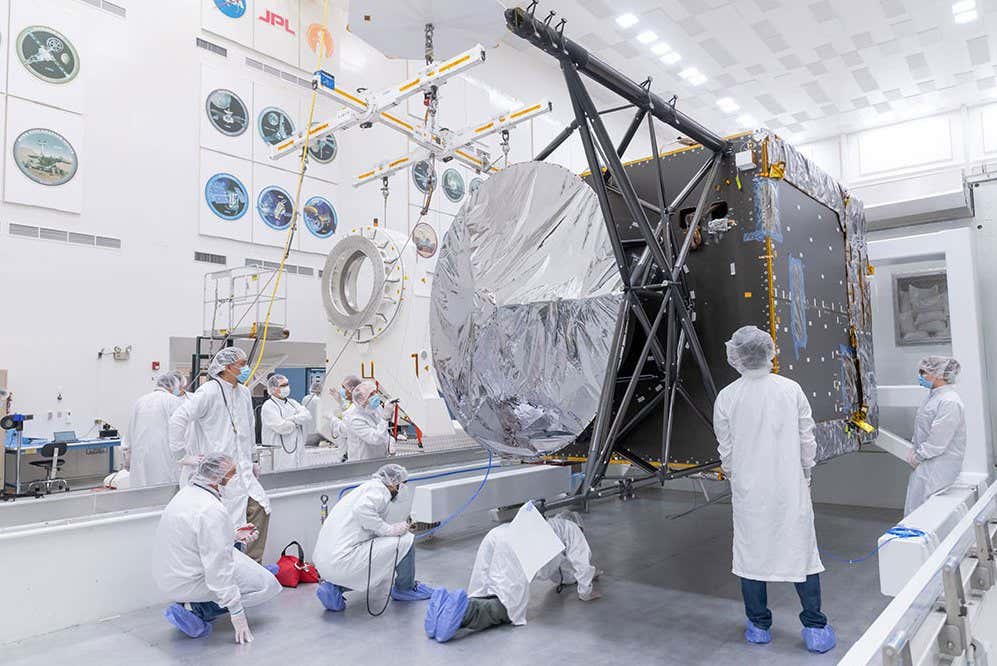
A major component of NASA?s Psyche spacecraft has been delivered to NASA?s Jet Propulsion Laboratory in Southern California, where the phase known as assembly, test, and launch operations (ATLO) is now underway. This photo, shot March 28, 2021 shows engineers and technicians preparing to move the Solar Electric Propulsion (SEP) Chassis from its shipping container to a dolly in High Bay 1 of JPL?s Spacecraft Assembly Facility. The photo was captured just after the chassis was delivered to JPL by Maxar Technologies. Maxar?s team in Palo Alto, California, designed and built the SEP Chassis, which includes all the primary and secondary structure and the hardware components needed for the high-power electrical system, the propulsion system, the thermal system, guidance and navigation sensors and actuators, and the high-gain antenna. Over the next year, additional hardware will be added to the spacecraft including the command and data handling system, a power distribution assembly, the X-band telecommunications hardware suite, three science instruments (two imagers, two magnetometers, and a gamma ray neutron Spectrometer), and a deep space optical communications technology demonstrator. The spacecraft will finish assembly and then undergo rigorous checkout and testing before being shipped to NASA?s Kennedy Space Center in Cape Canaveral, Florida, for an August 2022 launch to the main asteroid belt. Psyche will arrive at the metal-rich asteroid of the same name in 2026, orbiting for 21 months to investigate its composition. Scientists think that Psyche is made up of mostly iron and nickel ? similar to Earth?s core. Exploring the asteroid could give valuable insight into how our own planet and others formed. Arizona State University in Tempe leads the mission. JPL is responsible for the mission?s overall management, system engineering, integration and test, and mission operations. For more information about NASA?s Psyche mission, go to: http://www.nasa.gov/psyche or https://psyche.asu.edu/ Image Credit: NASA/JPL-Caltech

2022 preview: A round-up of the year's most exciting space missions

29 December 2021

Around a dozen missions to the moon are scheduled in 2022, along with a rover landing on Mars and a spacecraft headed to in-vestigate the metal asteroid Psyche


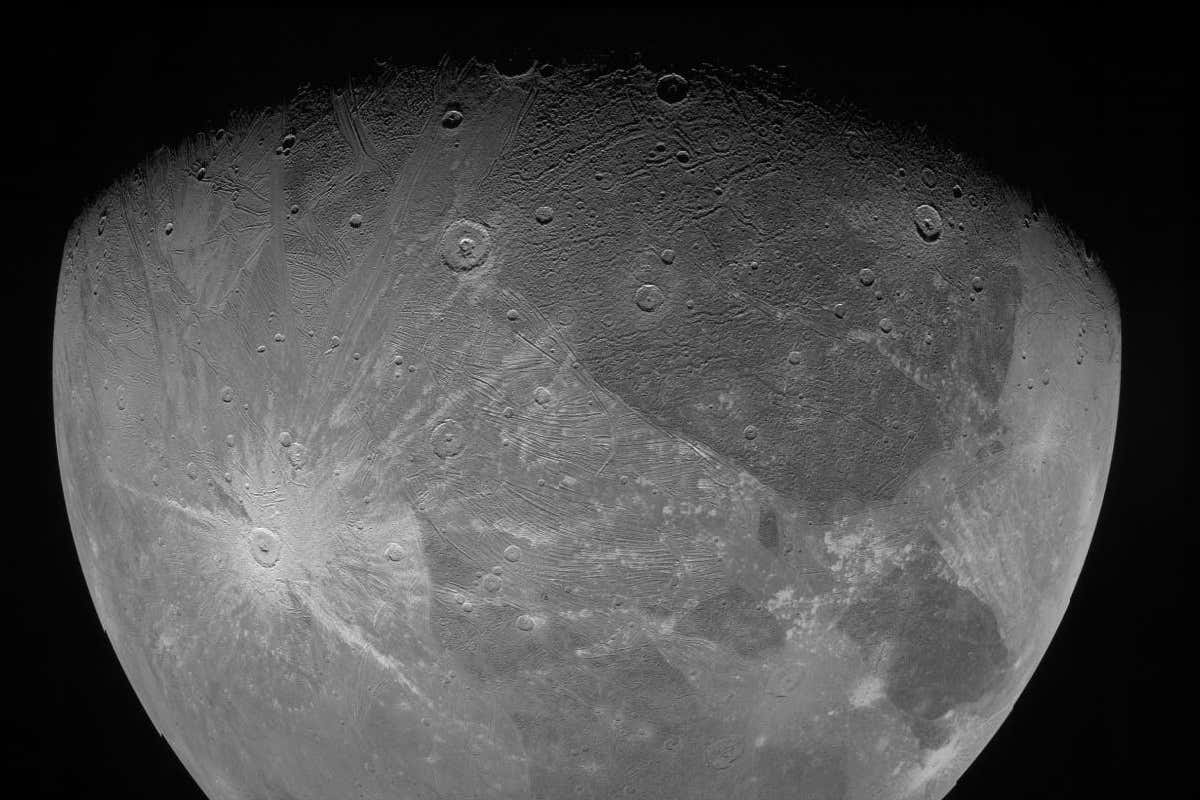
NASA mission takes first close-up images of Ganymede in two decades

NASA mission takes first close-up images of Ganymede in two decades

7 June 2021

NASA took pictures of Jupiter's largest moon Ganymede with its Galileo and Voyager missions, and now it has returned for the first time in over two decades with the Juno mission


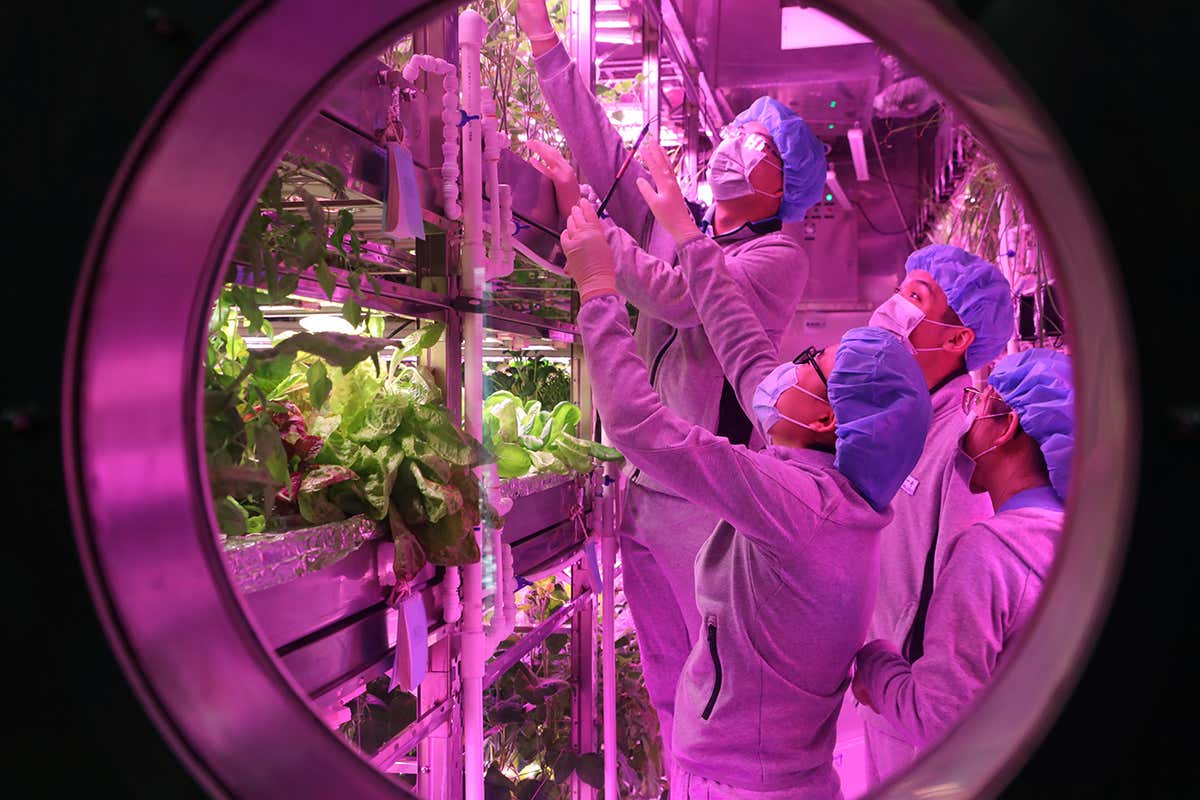
Crew of mock lunar 'biosphere' grew food and made oxygen for 200 days

Crew of mock lunar 'biosphere' grew food and made oxygen for 200 days

2 March 2021

The inhabitants of China’s Lunar Palace biosphere lived on recycled oxygen and water, and grew their own food for a record-setting 200 days without outside intervention


froghopper

Physicists find best way for insects to avoid collisions when jumping

21 January 2021

Equations show that jumping at 60 degrees relative to the horizontal helps insects avoid hitting obstacles – a finding that might help in the design of space exploration rovers


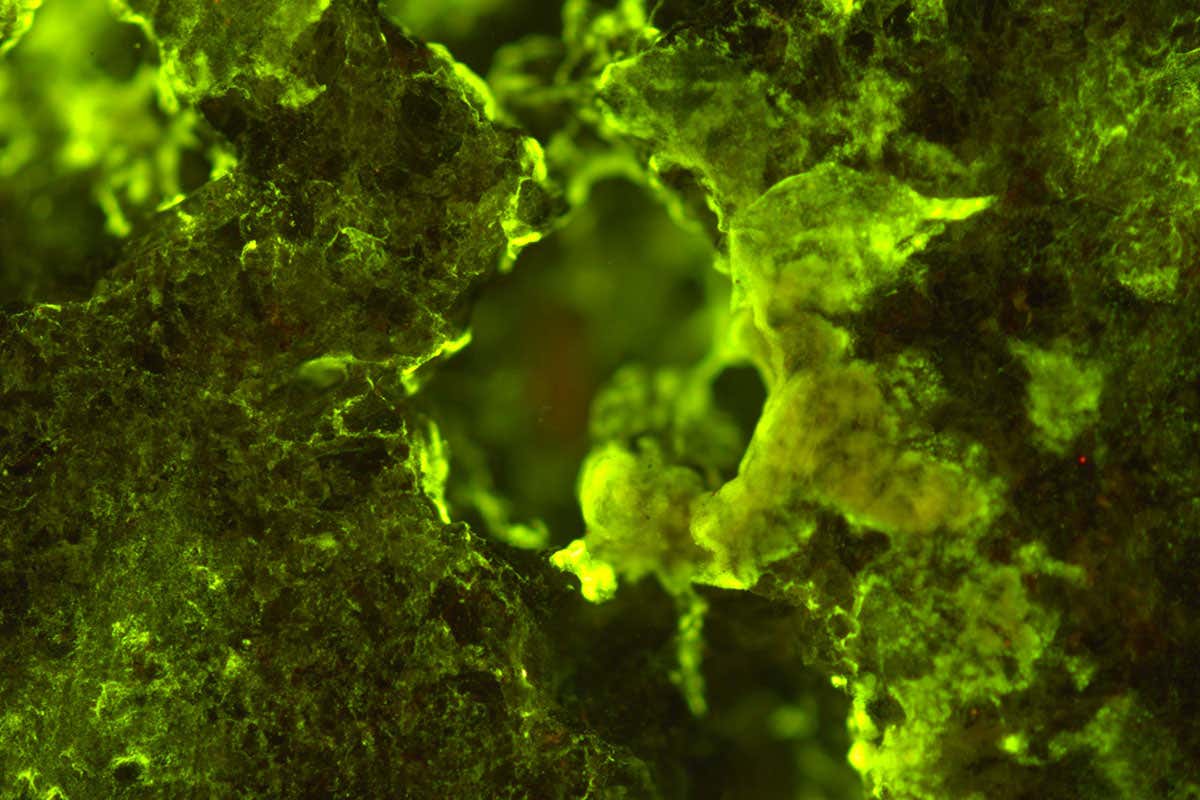
Asteroid-munching microbes could mine materials from space rocks

Asteroid-munching microbes could mine materials from space rocks

10 November 2020

Some microbes break down rocks and leach certain elements out of them for nutrients, and experiments in space show they could be used for mining beyond Earth


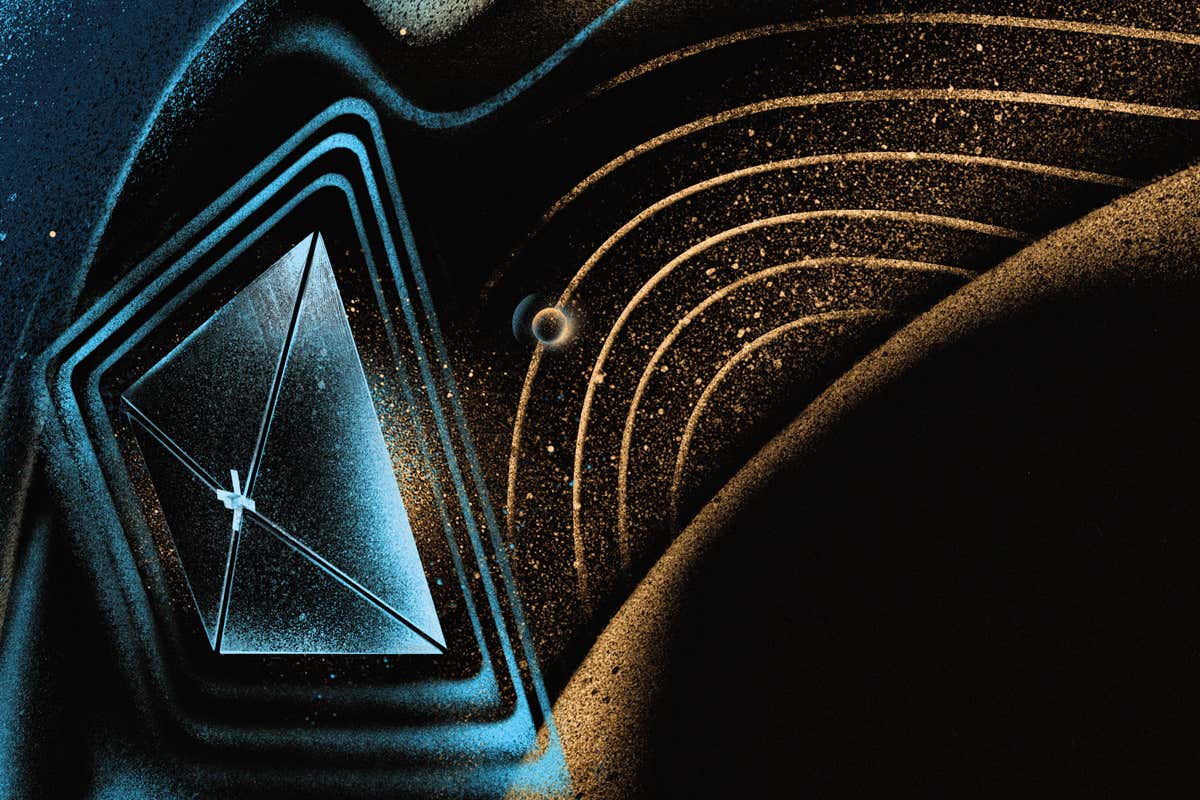
We can harness the solar wind to sail to the farthest corners of space

We can harness the solar wind to sail to the farthest corners of space

28 October 2020

Rockets eventually run out of fuel, which limits how far they can go. But now we are mastering the art of solar sailing, we can expect to keep exploring into distant, uncharted space


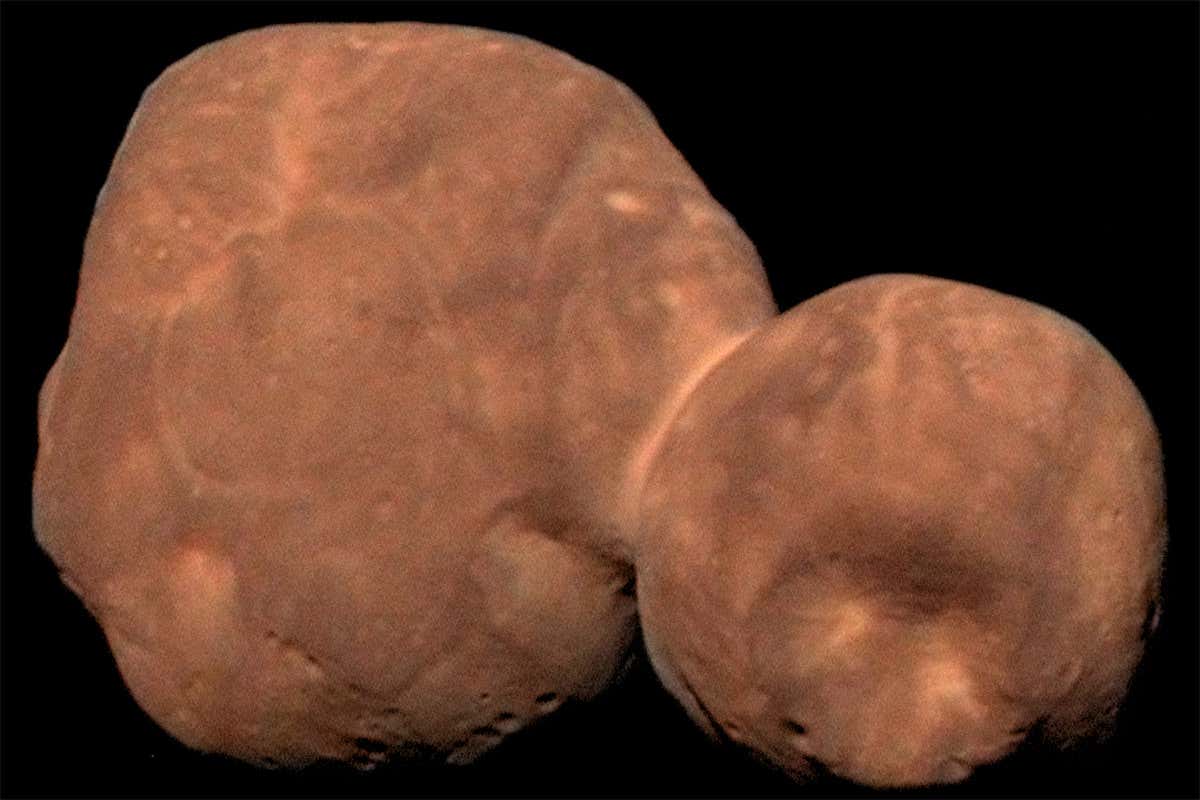
Arrokoth

Space rock Arrokoth may have been flattened by the heat of the sun

5 October 2020

The surface of Arrokoth, an oddly flat body on the edge of the solar system, may have been boiled away by heat from the sun


Sign up to our weekly newsletter

Receive a weekly dose of discovery in your inbox. We'll also keep you up to date with New Scientist events and special offers.

Sign up
Piano Exit Overlay Banner Mobile Piano Exit Overlay Banner Desktop