Subscribe now
Found 27 results for dwarf planet

Two-faced star seems to have one hydrogen side and one helium side

19 July 2023

A strange star more than 1300 light years away appears to have two sides with completely different compositions, and astronomers aren’t sure how it ended up that way
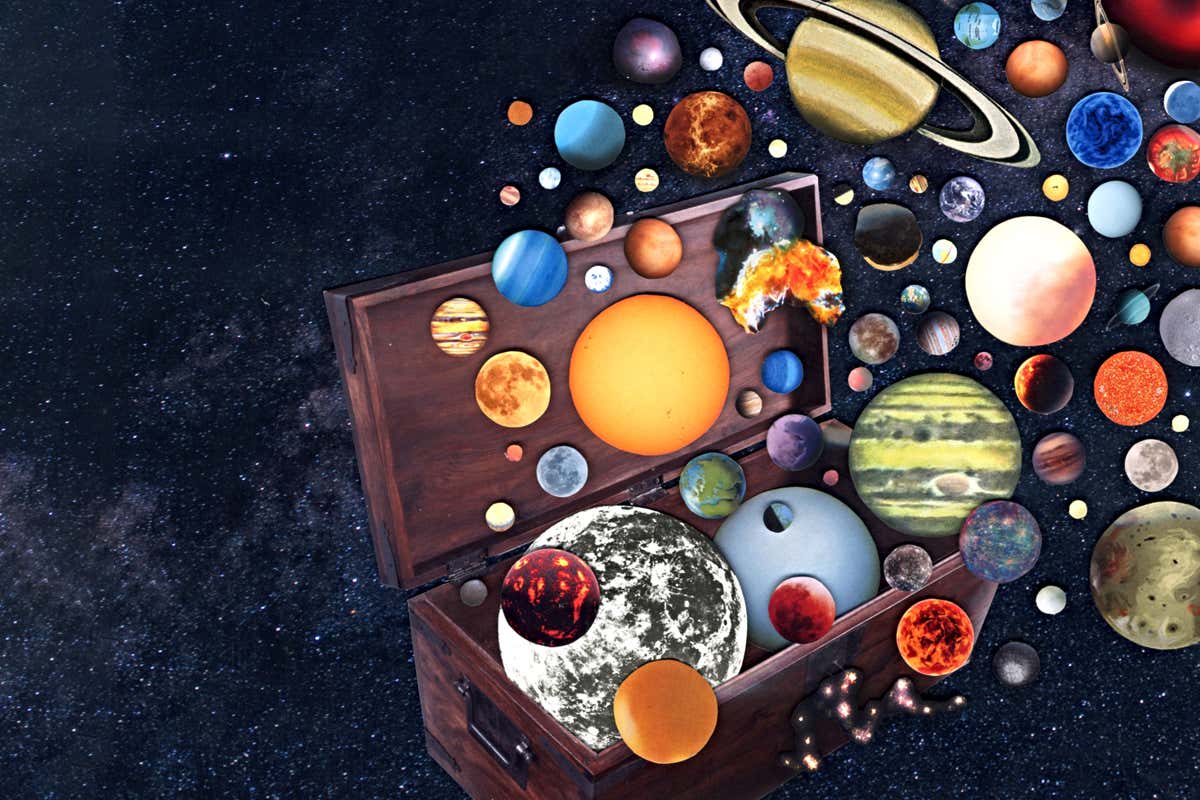

inventory of the universe

Your essential guide to the many breathtaking wonders of the universe

22 April 2023

An abridged inventory of everything there is in the universe – from rogue planets and exomoons to supernovae, supermassive black holes and the cosmic web.
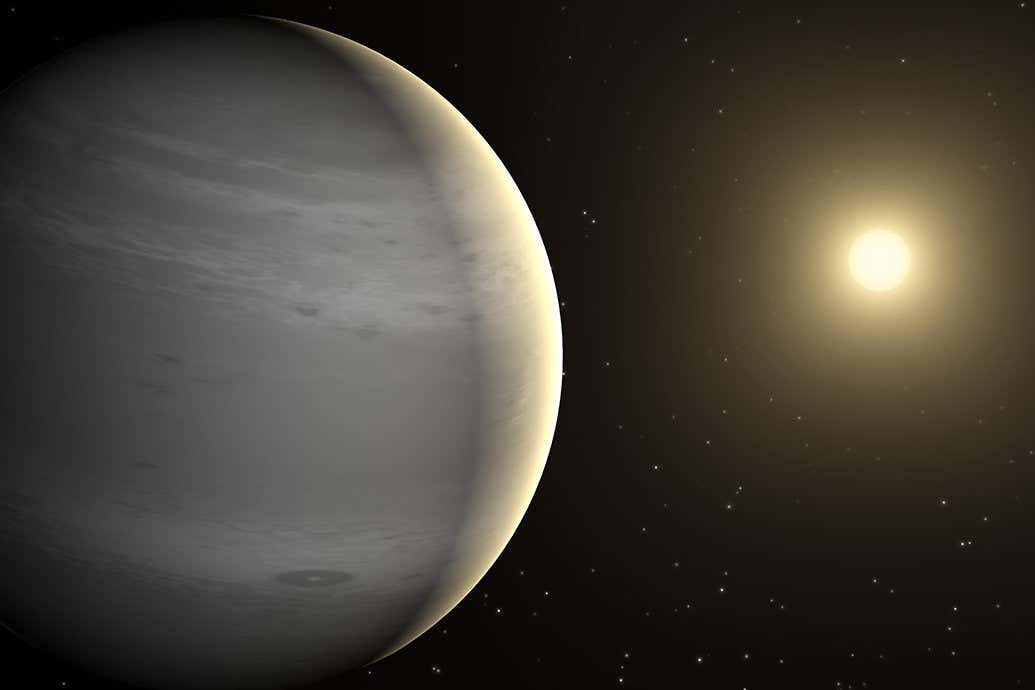

The planet 8 Ursae Minoris b

‘Forbidden’ planet somehow escaped consumption by its dying host star

26 January 2023

The planet 8 Ursae Minoris b should have been destroyed when its star became a red giant, but it continues to orbit strangely close to it
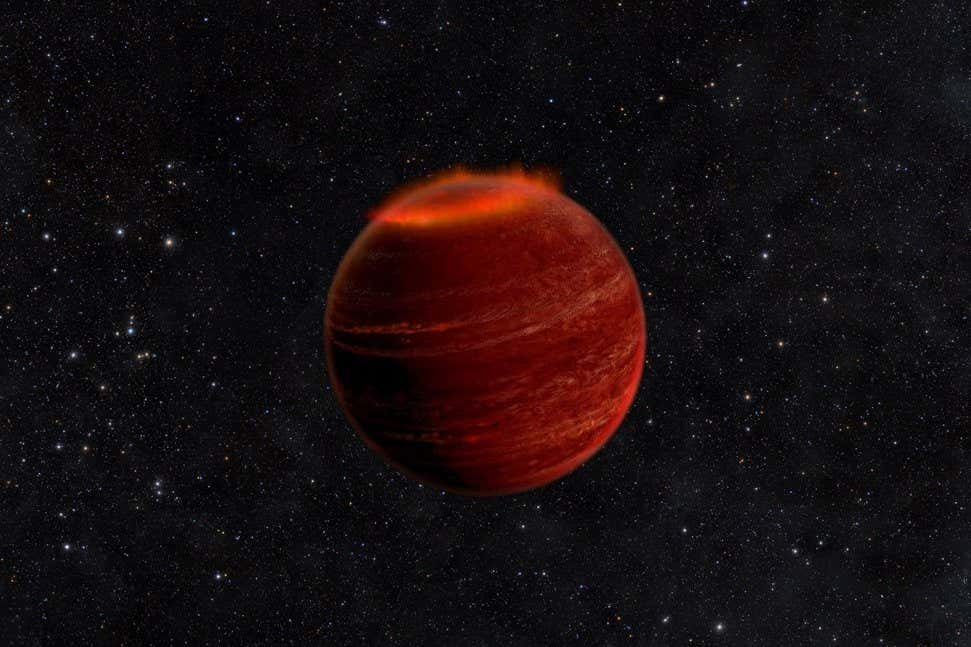

This artist's concept shows an auroral display on a brown dwarf. If you could see an aurora on a brown dwarf, it would be a million times brighter than an aurora on Earth.

Weird ‘failed star’ seen blasting off its outer layers for first time

13 September 2022

A brown dwarf – partway between a planet and a star – has been spotted engulfed in a cloud of gas, which it probably produced after a huge pulse of heat blasted through it
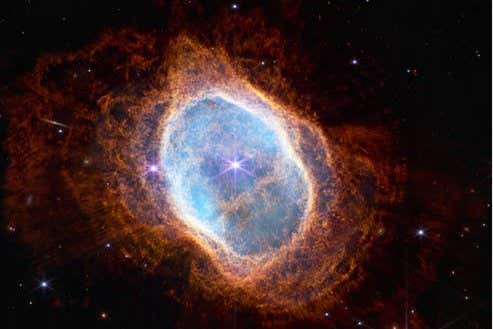

This side-by-side comparison shows observations of the Southern Ring Nebula in near-infrared light, at left, and mid-infrared light, at right, from NASA???s Webb Telescope. This scene was created by a white dwarf star ??? the remains of a star like our Sun after it shed its outer layers and stopped burning fuel though nuclear fusion. Those outer layers now form the ejected shells all along this view. In the Near-Infrared Camera (NIRCam) image, the white dwarf appears to the lower left of the bright, central star, partially hidden by a diffraction spike. The same star appears ??? but brighter, larger, and redder ??? in the Mid-Infrared Instrument (MIRI) image. This white dwarf star is cloaked in thick layers of dust, which make it appear larger. The brighter star in both images hasn???t yet shed its layers. It closely orbits the dimmer white dwarf, helping to distribute what it???s ejected. Over thousands of years and before it became a white dwarf, the star periodically ejected mass ??? the visible shells of material. As if on repeat, it contracted, heated up ??? and then, unable to push out more material, pulsated. Stellar material was sent in all directions ??? like a rotating sprinkler ??? and provided the ingredients for this asymmetrical landscape. Today, the white dwarf is heating up the gas in the inner regions ??? which appear blue at left and red at right. Both stars are lighting up the outer regions, shown in orange and blue, respectively. The images look very different because NIRCam and MIRI collect different wavelengths of light. NIRCam observes near-infrared light, which is closer to the visible wavelengths our eyes detect. MIRI goes farther into the infrared, picking up mid-infrared wavelengths. The second star more clearly appears in the MIRI image, because this instrument can see the gleaming dust around it, bringing it more clearly into view. The stars ??? and their layers of light ??? steal more attention in the NIRCam image, while dust pl

James Webb Space Telescope releases dazzling first science images

12 July 2022

Incredibly clear images of the Carina Nebula, the Eight-Burst Nebula, a galaxy cluster called Stephan’s Quintet and an exoplanet named WASP-96b make up the first set of science data from JWST
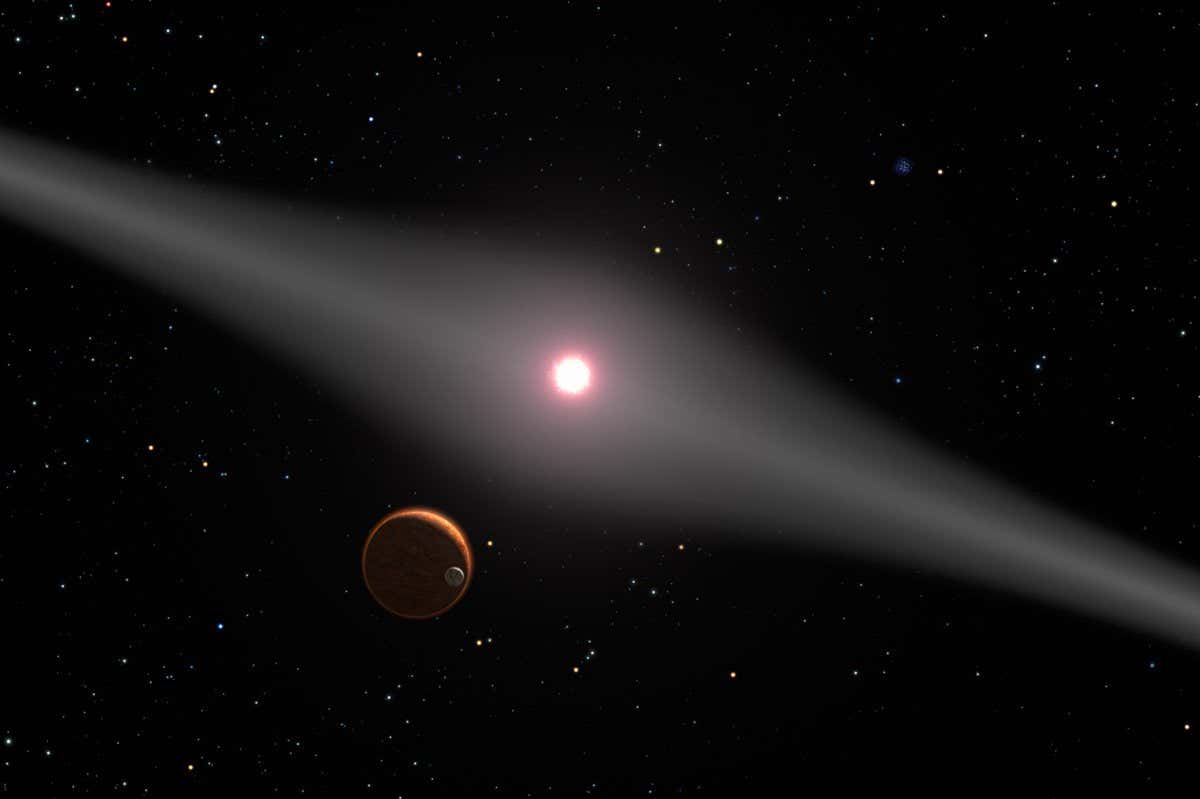

KRB4DP This is an artist's impression of the view from the vicinity of a hypothetical terrestrial planet and moon orbiting the red dwarf star AU Microscopii. The relatively newborn 12 million year-old star is surrounded by a very dusty disk of debris from the collision of comets, asteroids, and planetissimals swirling around the young star. Though no planets have been discovered around the star, the disk is strong circumstantial evidence for planets. Not only is it dusty, but also it is warped, possibly by the pull of one or more planets. In this view the glow of starlight reflecting off the disk cre

Mysterious cold blobs may be hiding inside a distant star

10 June 2022

A small star called AU Microscopii seems to contain strange pockets of hydrogen that are more than 1500°C cooler than the rest of the star, and astronomers aren’t sure why
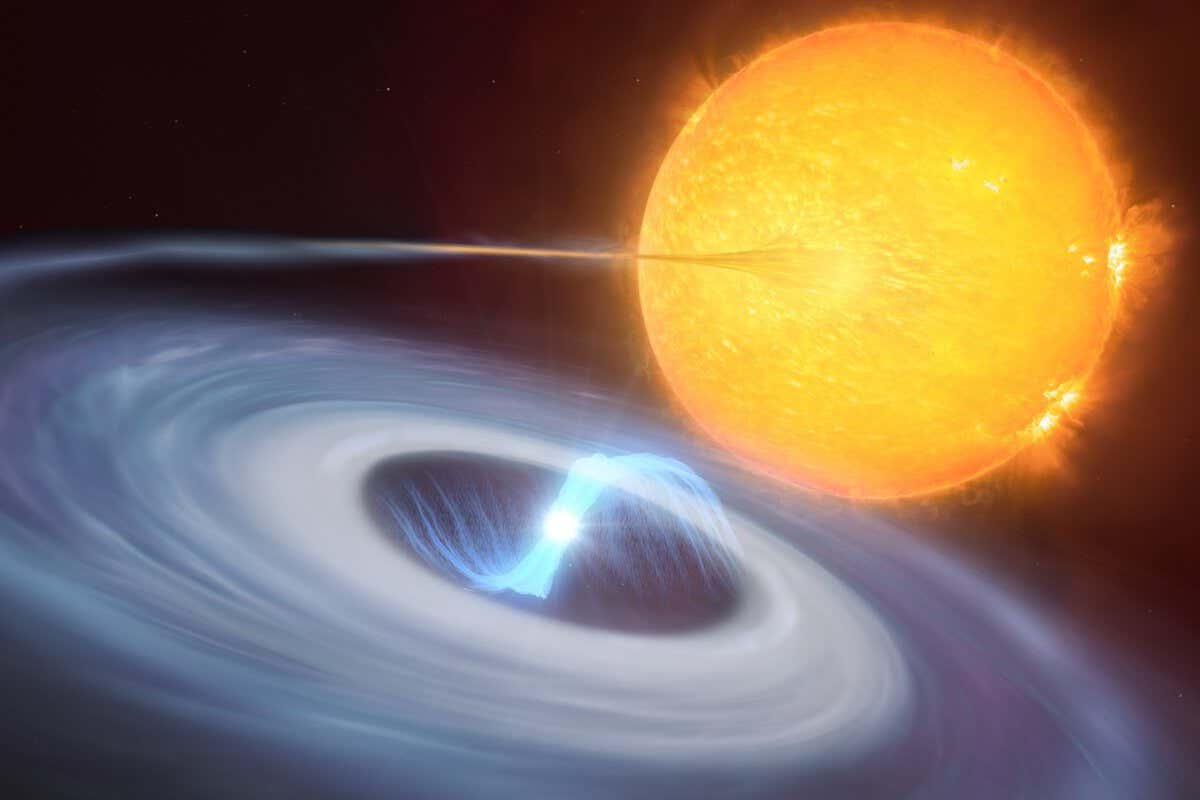

This artist???s impression shows a two-star system where micronovae may occur. The blue disc swirling around the bright white dwarf in the centre of the image is made up of material, mostly hydrogen, stolen from its companion star. Towards the centre of the disc, the white dwarf uses its strong magnetic fields to funnel the hydrogen towards its poles. As the material falls on the hot surface of the star, it triggers a micronova explosion, contained by the magnetic fields at one of the white dwarf???s poles.

Small explosions called micronovae discovered on dead stars

20 April 2022

Micronovae are about 1 million times less bright than a classical nova and last just half a day, but they release as much energy as the sun would in a day
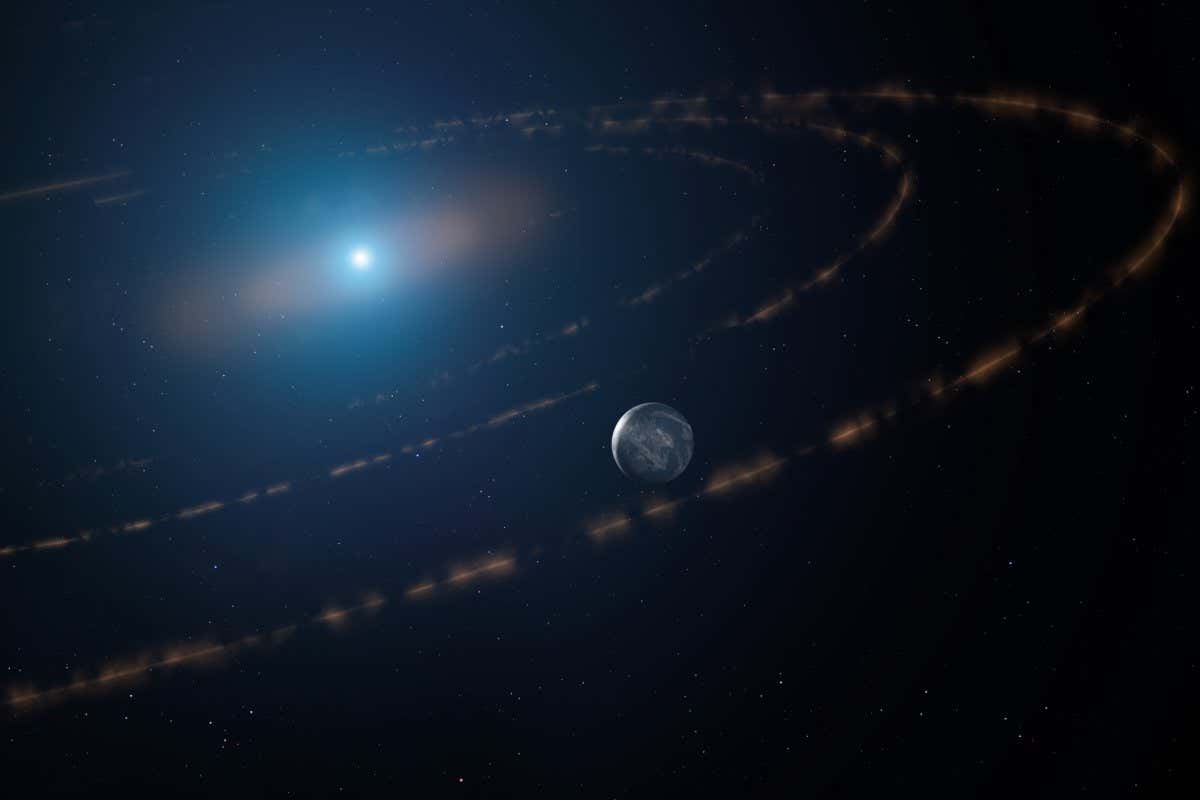

An artist?s impression of the white dwarf star WD1054?226 orbited by clouds of planetary debris and a major planet in the habitable zone.

First hints of a planet orbiting in a white dwarf’s habitable zone

11 February 2022

Astronomers have found 65 evenly spaced rocks orbiting a white dwarf star in its habitable zone, hinting that a planet’s gravity may be holding them there
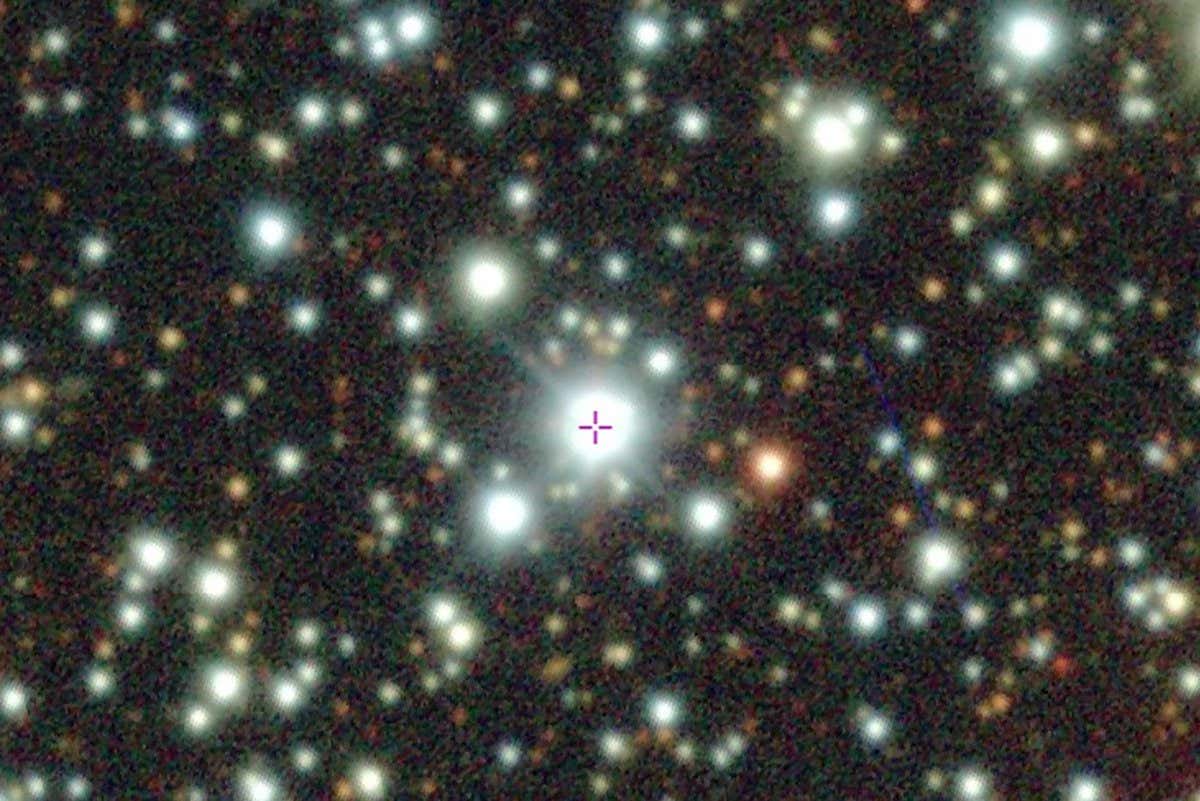

Stars imaged by the DECam Plane Survey TIC 400799224 is identified in the crosshairs.

Weird shape-shifting clouds of dust seem to be orbiting a distant star

14 October 2021

The light from a distant star appears to be orbited by something that is continually changing shape and size, possibly clouds of dust from repeated collisions
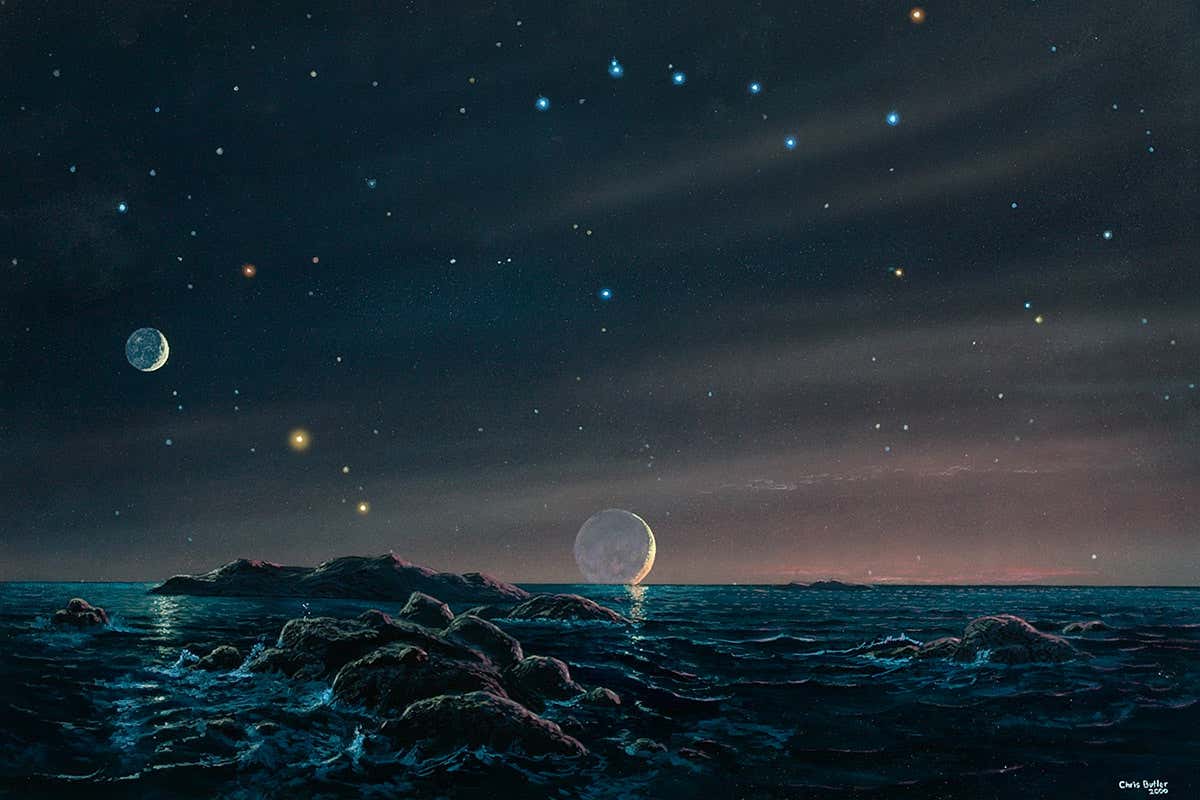

An Earth-like planet might orbit our closest single sun-like star

An Earth-like planet might orbit our closest single sun-like star

14 January 2021

Tau Ceti is a star just 12 light years away – and it could host a planet called PXP-4 that sits as close to the star as Earth does to our sun with its year about as long as ours


Sign up to our weekly newsletter

Receive a weekly dose of discovery in your inbox. We'll also keep you up to date with New Scientist events and special offers.

Sign up
Piano Exit Overlay Banner Mobile Piano Exit Overlay Banner Desktop