Gravitational waves spark hunt for cosmic strings and dark matter
10 July 2023
The discovery of low-level ripples throughout the universe called the gravitational wave background has set physicists looking for exotic explanations
10 July 2023
The discovery of low-level ripples throughout the universe called the gravitational wave background has set physicists looking for exotic explanations

29 June 2023
After decades of searching, astronomers have found a distinctive pattern of light, from spinning stars called pulsars, that suggests huge gravitational waves are creating gentle ripples in space-time across the universe
31 December 2022
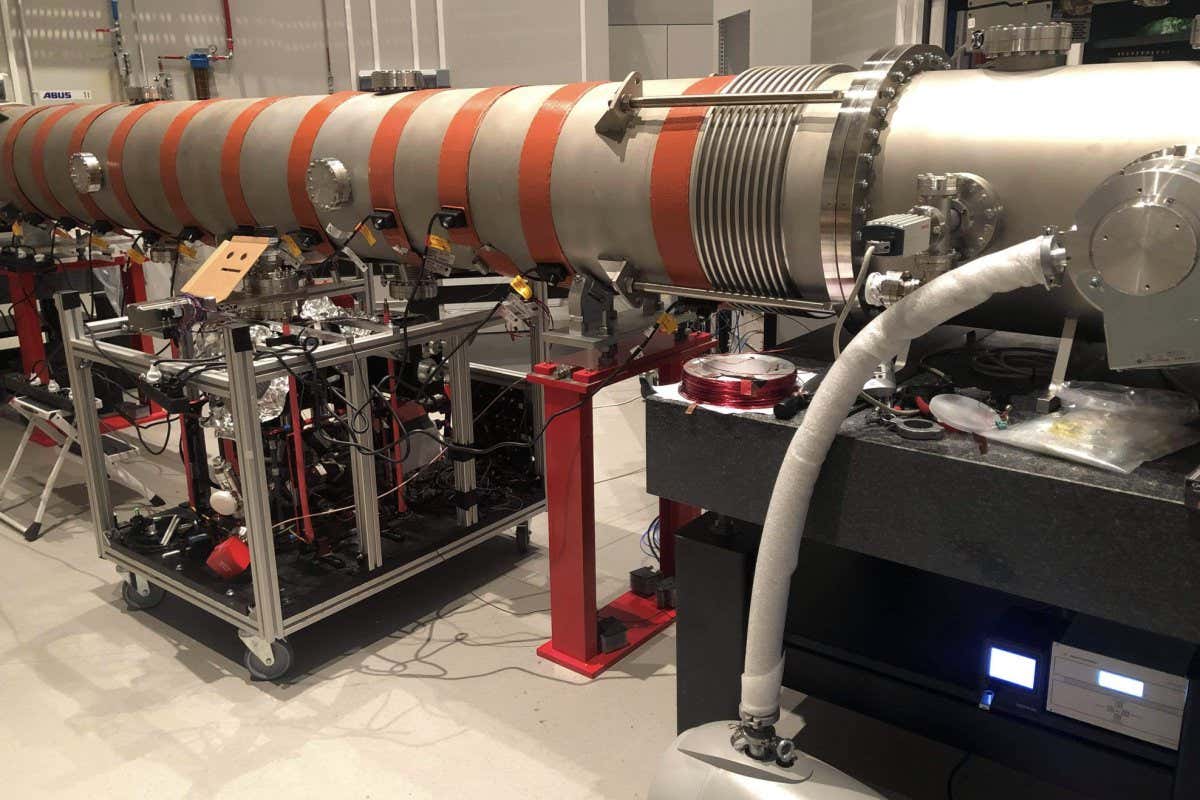
We have been detecting gravitational waves since 2015, but there is still much more to learn. The Matter-wave Laser Interferometric Gravitation Antenna will use ultracold atoms to spot ripples in space-time at lower frequencies than ever before
9 December 2022
If aliens were to make spacecraft as massive as Jupiter or ones that use warp drives, we might be able to detect them using the ripples they produce in space-time
15 April 2022
A primordial black hole falling into a neutron star would sink to its centre and devour it in seconds, and we might be able to detect this process using gravitational waves
27 January 2022
When gravitational waves pass over massive objects, they should create an echo that could allow us to examine objects that we can’t otherwise see, including dark matter
11 January 2022
Astronomers have long suspected that merging black holes can give the resulting larger black hole a massive boost of speed, and have finally spotted this happening
30 August 2021
Perhaps the most important problem in physics is how gravity and quantum mechanics fit together, and strange fluctuations in gravitational waves could help us figure it out
29 June 2021
Astronomers have definitively detected a black hole devouring a neutron star for the first – and second – time. These cataclysmic events created ripples in space-time called gravitational waves that travelled more than 900 million light years...
17 June 2021
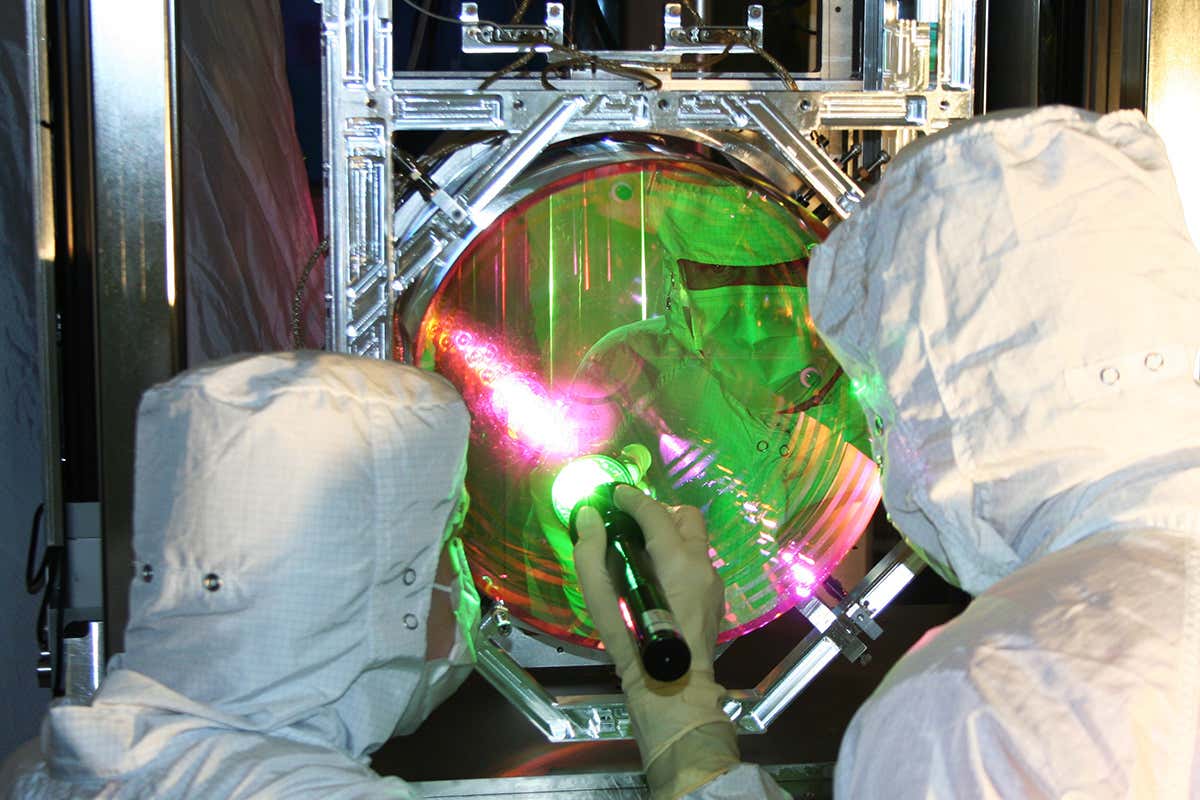
A set of mirrors used to detect gravitational waves is the largest system ever to be brought close to a frigid quantum state at a temperature of just 77 nanokelvin
