Subscribe now
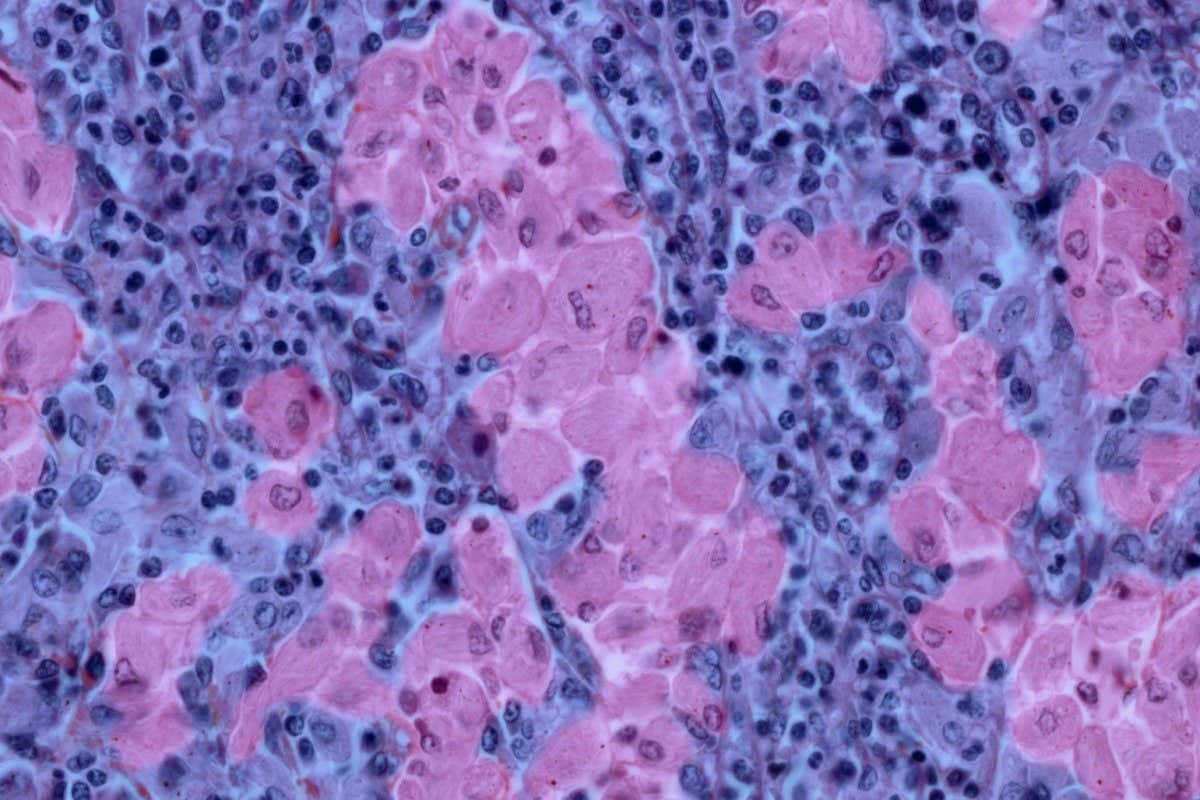
Light micrograph of a section through the spleen of a patient with Gaucher's disease. Small lymphocytes and large macrophage cells (Gaucher?s cells, pink, a type of white blood cell) are present. Gaucher's disease is an inherited metabolic disorder in which a fatty substance called glucocerebroside accumulates in the spleen (in macrophages), lungs, liver and bone marrow, and sometimes the brain. This is due to an absence of the enzyme glucocerebrosidase (GC). The disease appears in childhood, and some forms are fatal in the first few years. Other forms cause enlargement of the affected organs, weak and painful bones and anaemia. Some forms also cause severe nervous system damage. There is no cure, but enzyme replacement therapy using GC can relieve the symptoms. Haematoxylin-eosin saffron (HES) stain. Magnification: x400 at 24x36 mm size.

Genes for Gaucher disease may have protected Jewish people against TB

6 February 2023

Gaucher disease, a genetic condition that is more common in Ashkenazi Jewish people, may confer protection against tuberculosis, according to research in zebrafish


Geneticist Svante Pääbo has been awarded a Nobel prize for his work on evolutionary genetics

Nobel prize awarded for study of human evolution using ancient DNA

3 October 2022

Geneticist Svante Pääbo has been awarded a Nobel prize for his work on evolutionary genetics

The surprising, ancient origins of TB, humanity's most deadly disease

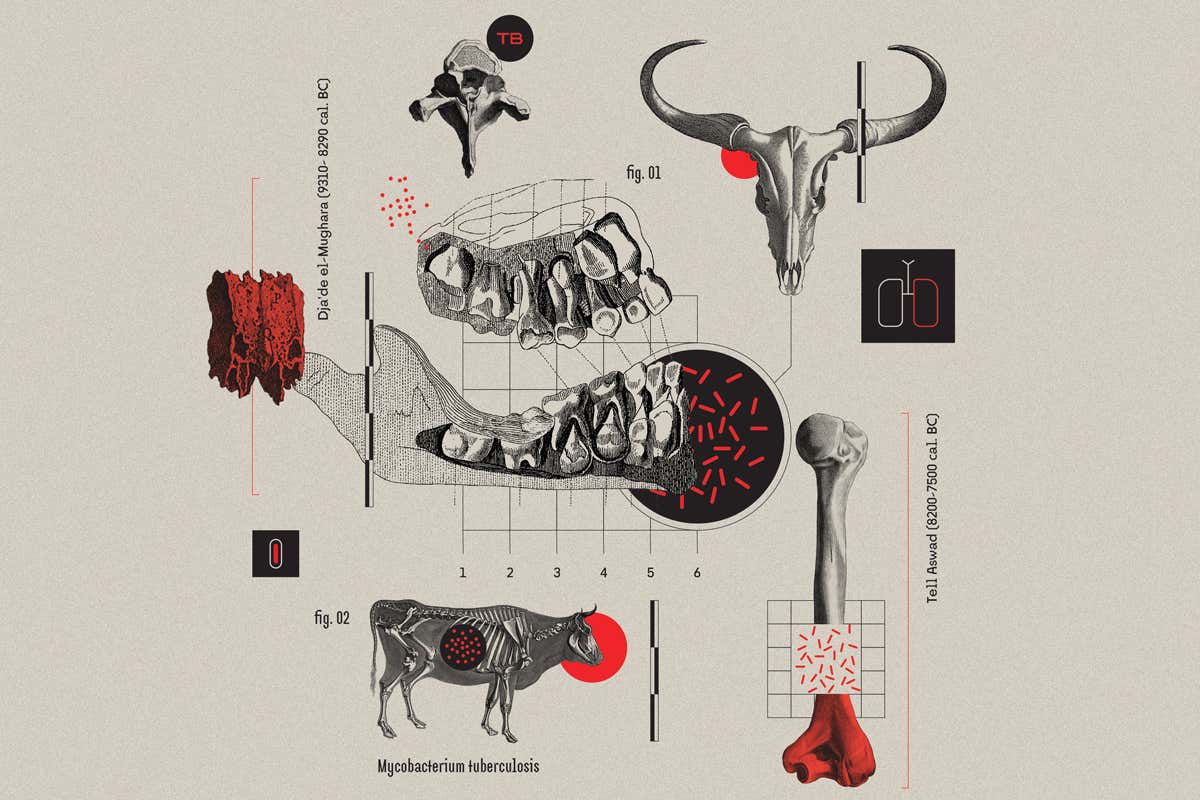
The surprising, ancient origins of TB, humanity's most deadly disease

23 June 2021

New developments in a 10,000-year-old cold case have upended our ideas about how and when tuberculosis began infecting humans – and offered hope for a better vaccine


The real reasons miscarriage exists – and why it's so misunderstood

The real reasons miscarriage exists – and why it's so misunderstood

5 August 2020

New research reveals that miscarriage serves a critical role in human evolution – and in some instances, may even be associated with optimal fertility


European populations have accumulated many mutations

Europeans have steadily accumulated mutations for thousands of years

9 September 2019

The number of mildly harmful mutations in the European population has increased over the last 45,000 years, a lingering effect of early migration into Europe


person running

Do you run with bent arms? Turns out it doesn't make much difference

9 July 2019

A study found that people don’t use any more energy by running with their arms held straight, even though they found it was a more awkward running style


How many steps a day do you really need? Spoiler: It isn't 10,000

How many steps a day do you really need? Spoiler: It isn't 10,000

12 June 2019

Forget 10,000 steps a day. Modern sports science and evolutionary biology now tell us how much exercise the human body really needs


father and baby

Men who have children later in life may prime their kids for longevity

16 April 2019

Older dads may change the chromosomes in their sperm so that their children will be able to live longer lives – a phenomenon similar to Lamarckian evolution


Helen O'Neill: The CRISPR genome editing revolution

Helen O'Neill: The CRISPR genome editing revolution

3 December 2018

Molecular biologist Helen O’Neill reveals why precision genetic engineering is the most exciting thing since spliced DNA


Sign up to our weekly newsletter

Receive a weekly dose of discovery in your inbox. We'll also keep you up to date with New Scientist events and special offers.

Sign up
Piano Exit Overlay Banner Mobile Piano Exit Overlay Banner Desktop