Subscribe now

People in China are the least likely to report being left-handed

19 April 2023

In some countries, including China, people are more likely to report being right handed if they are educated beyond secondary school level or live in a country where there may be a stigma around left-handedness



Child breaking an egg into a bowl, accidentally making a mess in the process. Space for copy.

Make mistakes on purpose – it can dramatically boost your performance

9 March 2022

"Deliberate erring" offers a surprising but effective way to enhance your memory and improve how you perform in many unexpected areas of life, says David Robson


WHY do we grieve? A floral tribute fastened to a lamp post at the scene of a fatal road accident in Birmingam city centre, UK. The flowers were placed there by family and friends of the victim.

Why do we grieve? The surprising origin of the feeling of loss

17 November 2021

The debilitating pain we sometimes feel at the loss of those we love is an evolutionary mystery. It could all come down to what happens in our childhoods


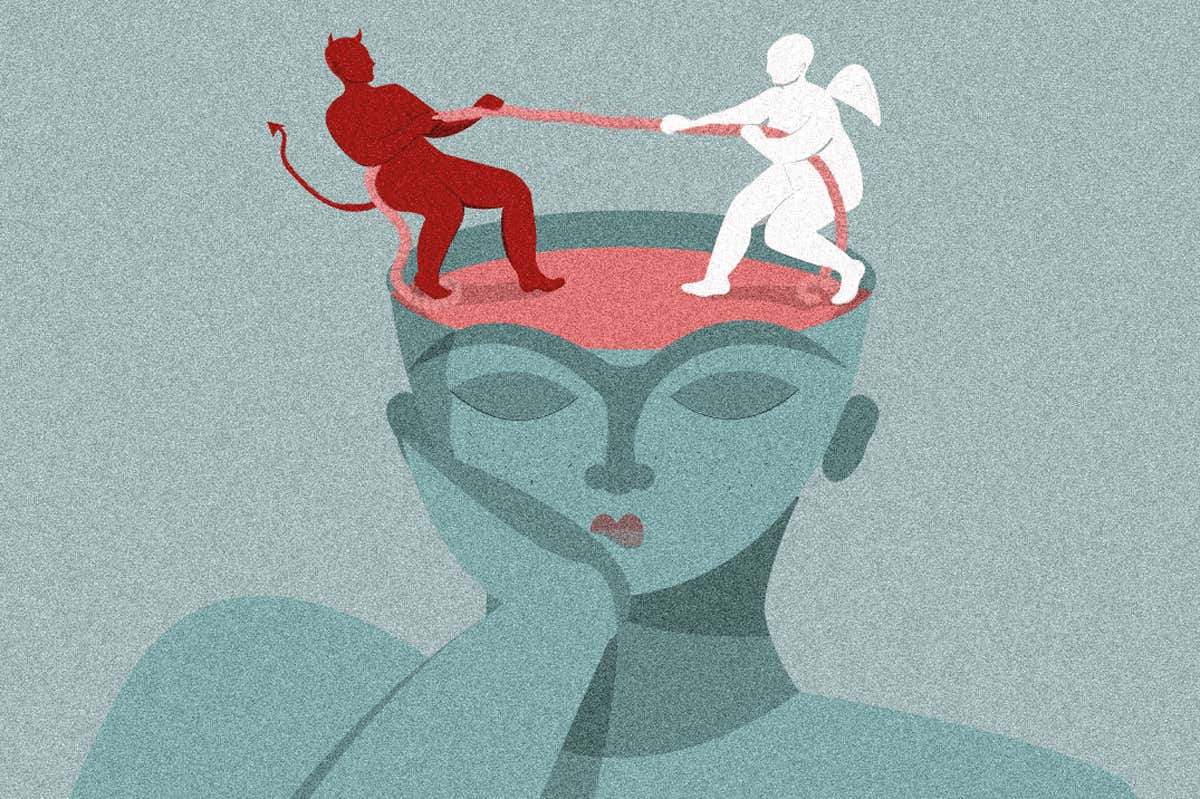
WHY are we both good and evil? 3d render illustration of light grey and black colored female faces on black background, relationship, psychology or good and evil concept.

Why are we good and evil? A single quality may be at the root of it

17 November 2021

The human capacity for both good and evil has long mystified philosophers. Evolutionary biology suggests they are both offshoots of one of our oddest character traits


The surprising upsides of spite and how to harness them

The surprising upsides of spite and how to harness them

1 September 2021

In an era of social media cancelling, our nasty side has never been more prominent. But the latest research suggests that, when wielded right, petty ill will can be a force for good


people with phones

Glancing at your phone quickly prompts other people to do the same

23 April 2021

When one person looks at a smartphone, around half the people nearby will start checking their phones within 30 seconds  


The reason we love to gather around the TV lies in Stone Age embers

The reason we love to gather around the TV lies in Stone Age embers

16 December 2020

Watching TV and staring at flickering flames produce similar physiological effects, offering intriguing clues to the enduring power of entertainment – and the origins of sociability


Why you probably aren't as moral as you think you are

Why you probably aren't as moral as you think you are

28 October 2020

Thanks to virtual reality, we can run experiments that test what people will do in situations where lives are on the line. We often find people act against what they claim to regard as morally acceptable, says Sylvia Terbeck


Social community seamless pattern of diverse people group in modern style, colorful crowd loop background with mixed men and women.

What can we learn from failed attempts to change people's behaviour?

28 October 2020

Failed interventions to change people's behaviour tend to have common features, such as relying on social pressure or using letters and text messages


Can nudge theory really stop covid-19 by changing our behaviour?

Can nudge theory really stop covid-19 by changing our behaviour?

6 May 2020

Human behaviour is key to the spread of coronavirus, so government scientists are trying to control our decisions. Does it work, and what happens when they get it wrong?


Sign up to our weekly newsletter

Receive a weekly dose of discovery in your inbox. We'll also keep you up to date with New Scientist events and special offers.

Sign up
Piano Exit Overlay Banner Mobile Piano Exit Overlay Banner Desktop