Subscribe now

Nuclear clocks could be the best timepiece in the universe

24 May 2023

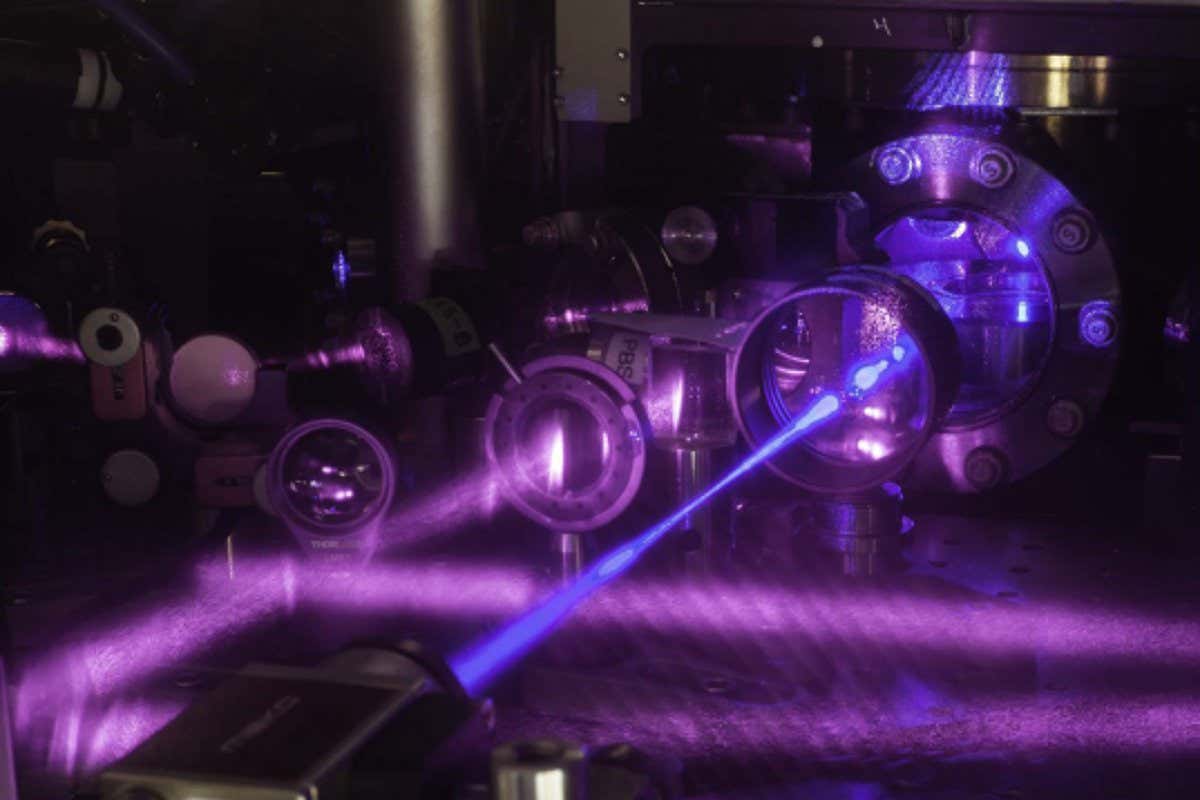
Atomic clocks work by using a laser to bounce the electrons in an atom at a given frequency, while nuclear clocks would theoretically do the same for atomic nuclei, and we are a step closer to building one
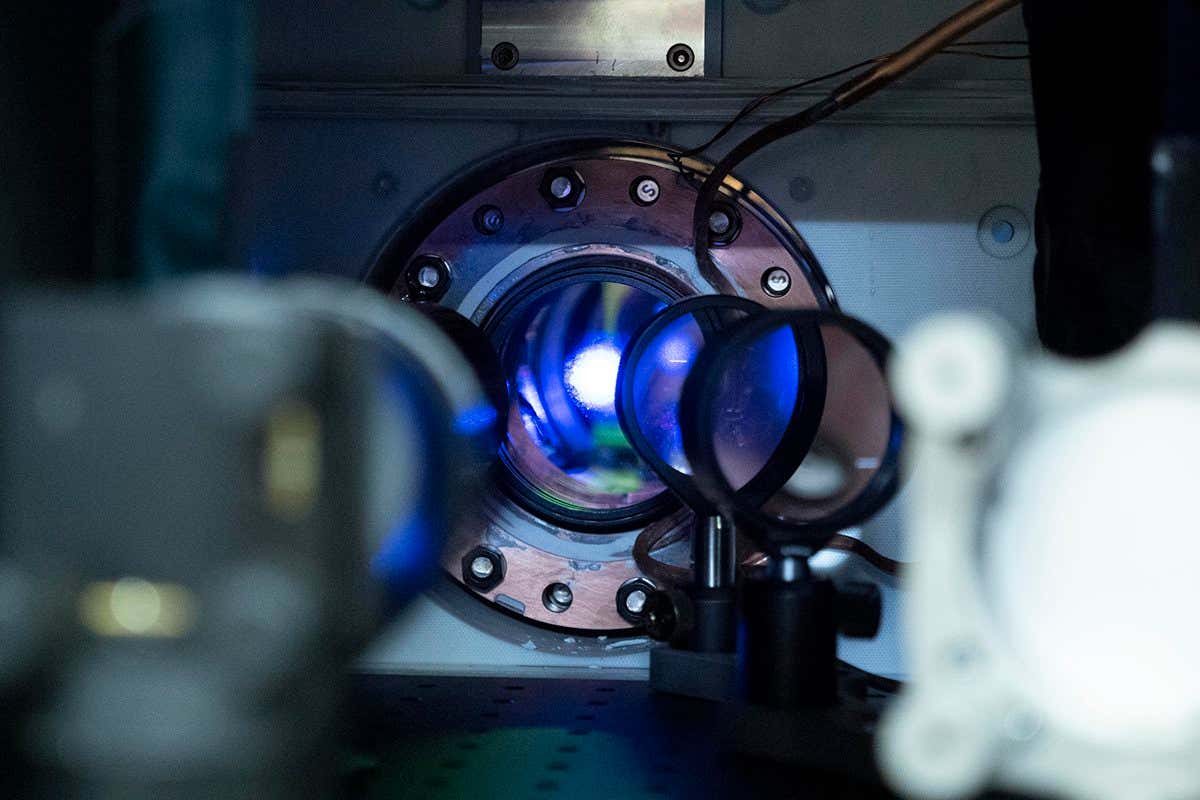

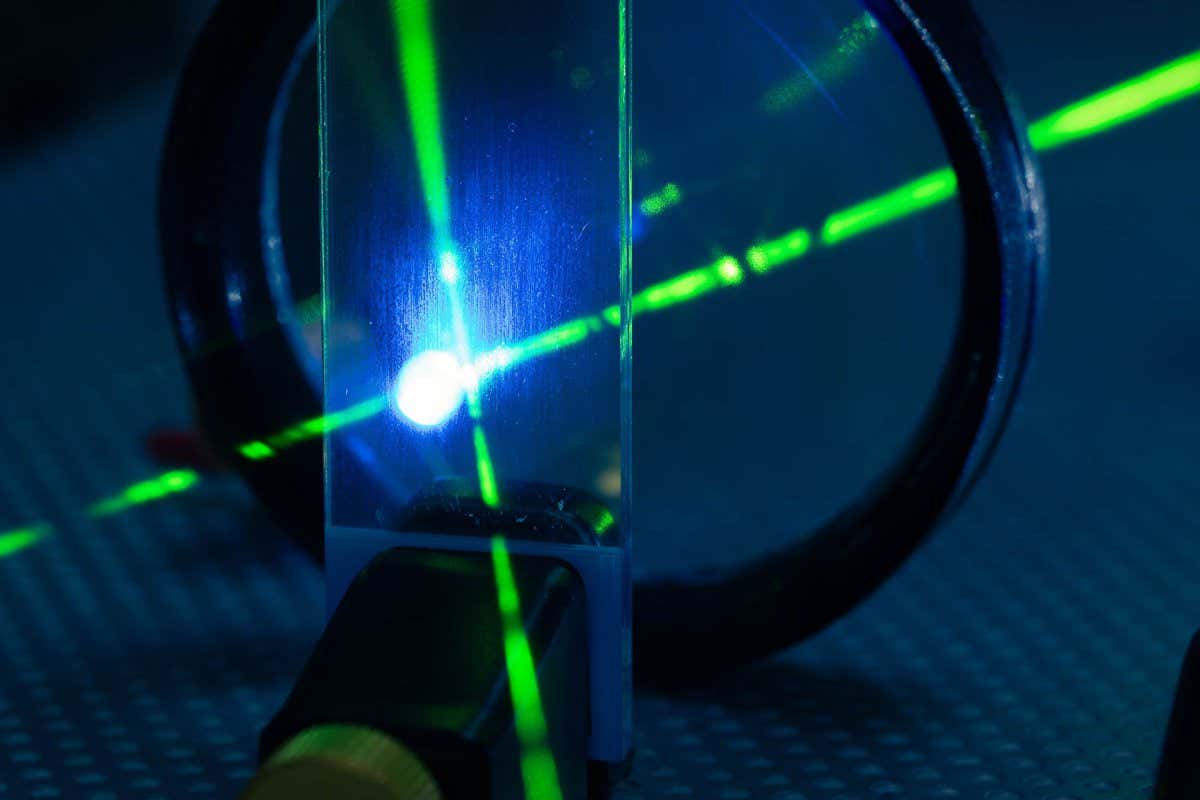
Atomic clock components sit in a laboratory setting, a blue light laser shines through a metal chamber, partially obscured by a pair of lenses

Most accurate molecular clock yet uses extremely cold strontium

1 March 2023

A clock that ticks using vibrations of strontium molecules could be used to test Albert Einstein’s theory of relativity or to search for forces that have yet to be described


Coloured arrows

Quantum trick sees light move forwards and back in time simultaneously

10 November 2022

Placing a particle of light in a superposition so that it is travelling both forwards and backwards in time could prove useful for quantum computation


Experiment in photonic laboratory with laser

Quantum watch is a 'completely new way of measuring time'

24 October 2022

A quantum stopwatch made of lasers and helium atoms can measure the time that has passed with complete accuracy, without counting seconds like other clocks


Illustration of a clock in a spiral

Time loops may not be forbidden by physics after all

5 July 2022

Physicists find that causal loops, where two events separated in time influence each other in paradoxical ways, are allowed in many theoretical universes, some of which share features with our own


Contemplating the mysteries of the fourth dimension is time well spent

Contemplating the mysteries of the fourth dimension is time well spent

15 June 2022

From what it is and why it only goes one way to how we perceive its passage and whether we could live without it, a journey exploring the many outstanding questions about time is always worth taking


JILA?s three-dimensional (3-D) quantum gas atomic clock consists of a grid of light formed by three pairs of laser beams. A stack of two tables is used to configure optical components around a vacuum chamber. Shown here is the upper table, where lenses and other optics are mounted. A blue laser beam excites a cube-shaped cloud of strontium atoms located behind the round window in the middle of the table. Strontium atoms fluorescence strongly when excited with blue light.

Jun Ye interview: What use is the world's most accurate clock?

15 June 2022

The most advanced atomic clocks don’t just tell time – they could soon get so ludicrously accurate that they could be used for detecting gravitational waves and testing the limits of relativity


Will time ever end? The answer lies in the death throes of the cosmos

Will time ever end? The answer lies in the death throes of the cosmos

15 June 2022

The universe might meet its end in a big freeze, a big crunch, or a big rip. But whether time ends with the demise of the cosmos depends on whether it is even real after all


6 Will we ever unite physics? The infinite time is circulating in the universe, 3D illustration; Shutterstock ID 498879817; purchase_order: -; job: -; client: -; other: -

Will we ever unite physics? Clocks in superposition could offer clues

15 June 2022

Physicists have long sought to marry general relativity and quantum mechanics – now some reckon experiments that probe the way each theory treats time could finally make it happen


Could we ever go back in time? Relativity does not rule it out

Could we ever go back in time? Relativity does not rule it out

15 June 2022

The physics thought to explain the arrow of time is not as simple as you might think – and in traversable wormholes, Einstein’s theory of general relativity does in principle offer routes to the past


Sign up to our weekly newsletter

Receive a weekly dose of discovery in your inbox. We'll also keep you up to date with New Scientist events and special offers.

Sign up
Piano Exit Overlay Banner Mobile Piano Exit Overlay Banner Desktop