Subscribe now
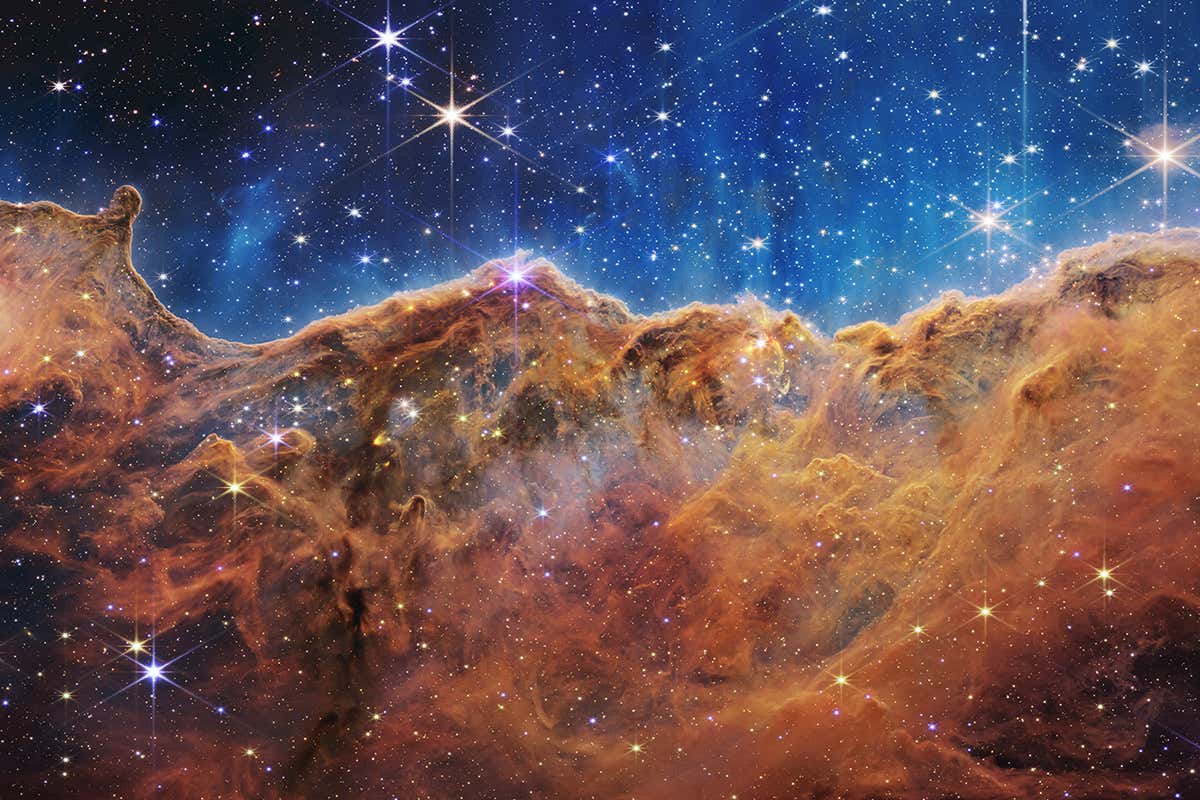
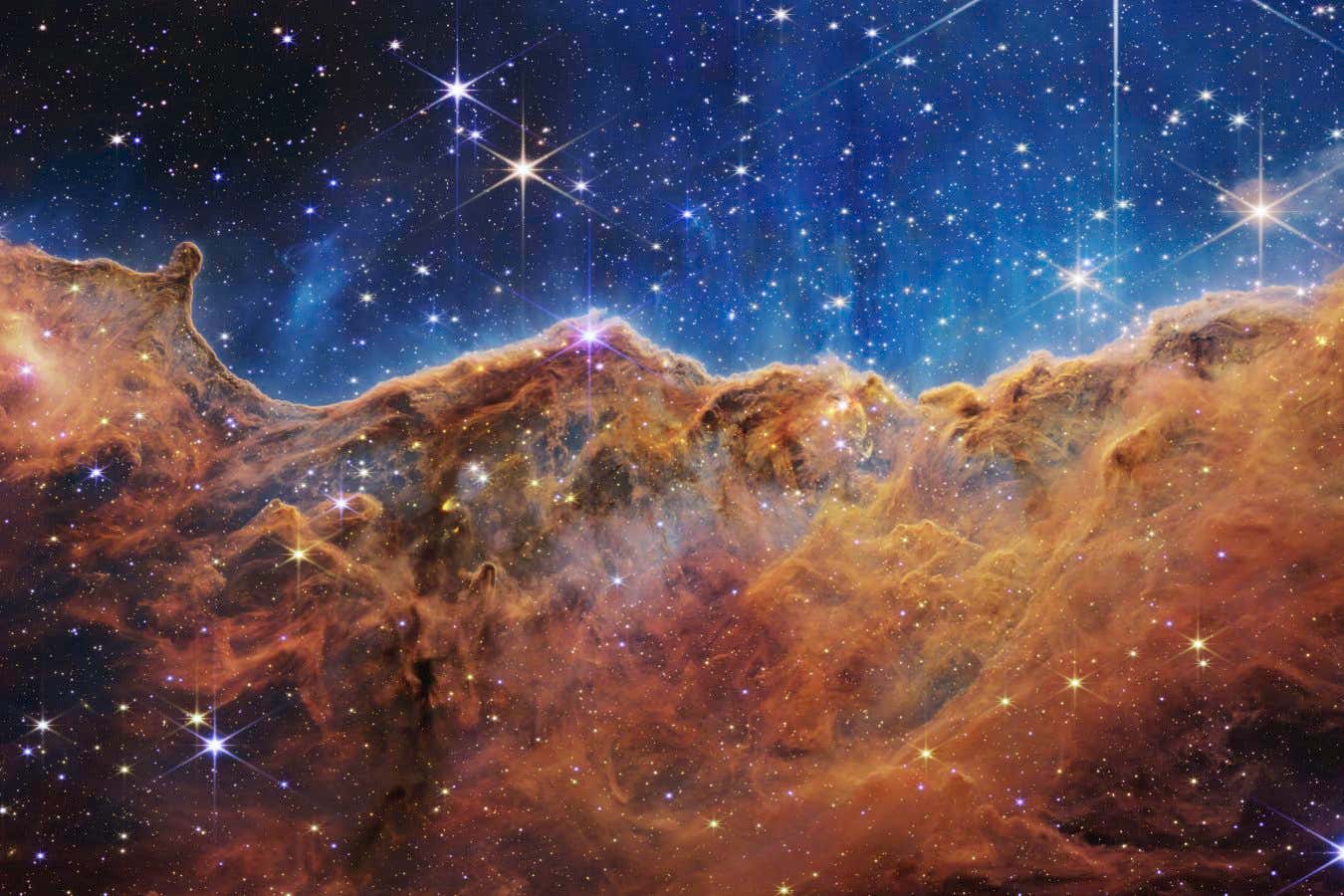
What looks much like craggy mountains on a moonlit evening is actually the edge of a nearby, young, star-forming region NGC 3324 in the Carina Nebula. Captured in infrared light by the Near-Infrared Camera (NIRCam) on NASA???s James Webb Space Telescope, this image reveals previously obscured areas of star birth. Called the Cosmic Cliffs, the region is actually the edge of a gigantic, gaseous cavity within NGC 3324, roughly 7,600 light-years away. The cavernous area has been carved from the nebula by the intense ultraviolet radiation and stellar winds from extremely massive, hot, young stars located in the center of the bubble, above the area shown in this image. The high-energy radiation from these stars is sculpting the nebula???s wall by slowly eroding it away. NIRCam ??? with its crisp resolution and unparalleled sensitivity ??? unveils hundreds of previously hidden stars, and even numerous background galaxies. Several prominent features in this image are described below. ??? The ???steam??? that appears to rise from the celestial ???mountains??? is actually hot, ionized gas and hot dust streaming away from the nebula due to intense, ultraviolet radiation. ??? Dramatic pillars rise above the glowing wall of gas, resisting the blistering ultraviolet radiation from the young stars. ??? Bubbles and cavities are being blown by the intense radiation and stellar winds of newborn stars. ??? Protostellar jets and outflows, which appear in gold, shoot from dust-enshrouded, nascent stars. ??? A ???blow-out??? erupts at the top-center of the ridge, spewing gas and dust into the interstellar medium. ??? An unusual ???arch??? appears, looking like a bent-over cylinder. This period of very early star formation is difficult to capture because, for an individual star, it lasts only about 50,000 to 100,000 years ??? but Webb???s extreme sensitivity and exquisite spatial resolution have chronicled this rare event. Located roughly 7,600 light-years away, NGC 3324 was first cat

The JWST is already delivering on its promise to transform cosmology

14 June 2023

Almost a year after its first images were released, the James Webb Space Telescope is living up to the hype, and its price tag, by revolutionising our understanding of the universe
What the huge young galaxies seen by JWST tell us about the universe

What the huge young galaxies seen by JWST tell us about the universe

13 June 2023

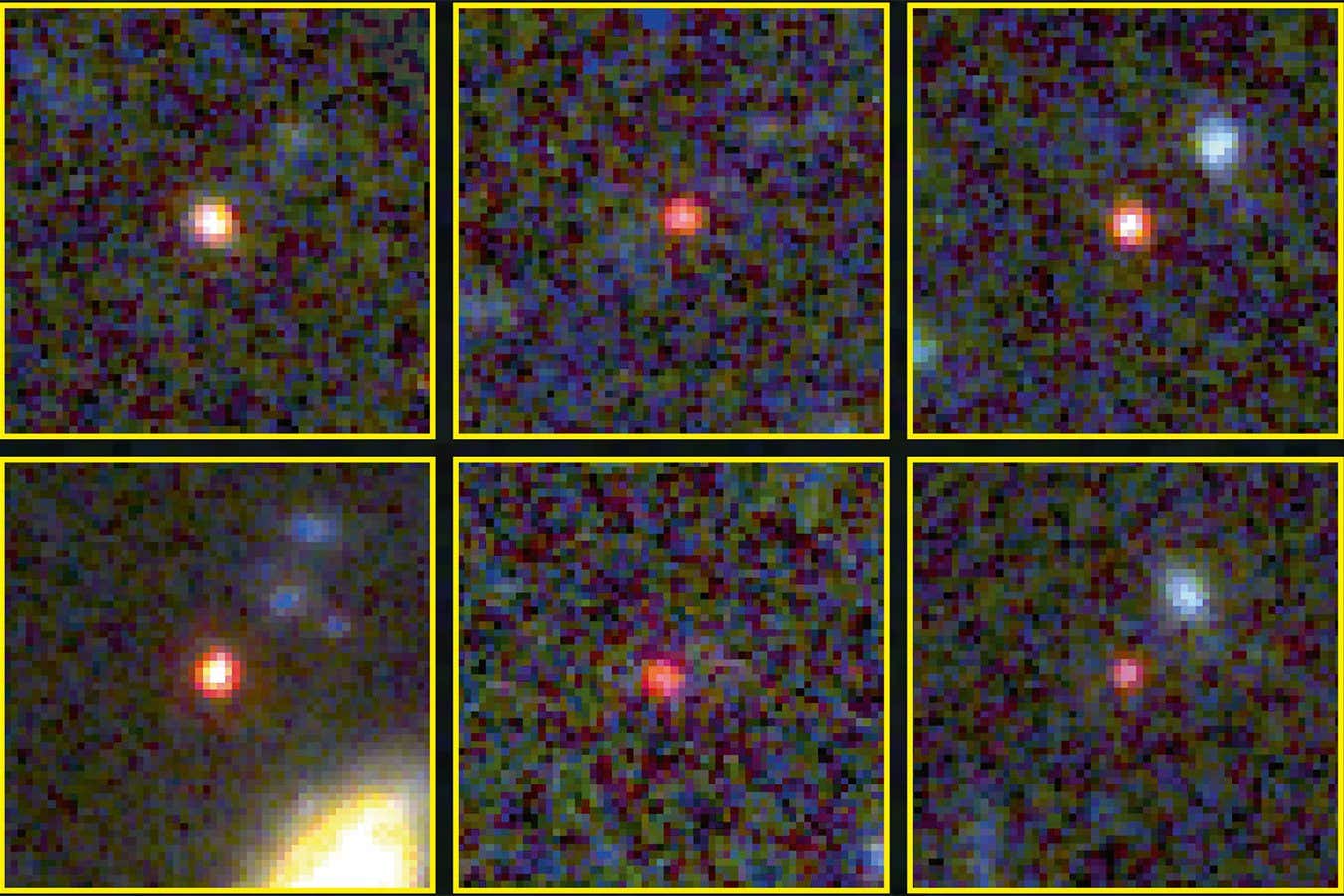
A few months ago, the James Webb Space Telescope spotted six early galaxies that were so large they threatened to break our best theory of how the cosmos evolved. Did they?


Milky Way. Night sky and silhouette of a standing man

Questions I dread: How did the universe begin, and what is space-time?

24 May 2023

As a theoretical cosmologist, you would think I'd welcome the chance to answer these questions - but it isn't clear this is an inquiry that physics can answer, says Chanda Prescod-Weinstein


inventory of the universe

Your essential guide to the many breathtaking wonders of the universe

22 April 2023

An abridged inventory of everything there is in the universe – from rogue planets and exomoons to supernovae, supermassive black holes and the cosmic web.


The hunt for black holes older than the universe itself

The hunt for black holes older than the universe itself

27 March 2023

Primordial black holes older than the big bang could rewrite cosmology by providing evidence for a previous universe. It's a wild idea, but some physicists think we've got a chance of finding them


Clock in the starry cosmic sky. Leaving time. Time and space. Time concept. Abstraction.; Shutterstock ID 1962091081; purchase_order: -; job: -; client: -; other: -

The cosmos doesn't work to my research schedule – but that's OK

28 September 2022

I work on the dark matter problem knowing the questions I have may be answered long after I die. This is the life I signed up for: to think about interesting ideas and hopefully find out whether any of them are correct, says Chanda Prescod-Weinstein


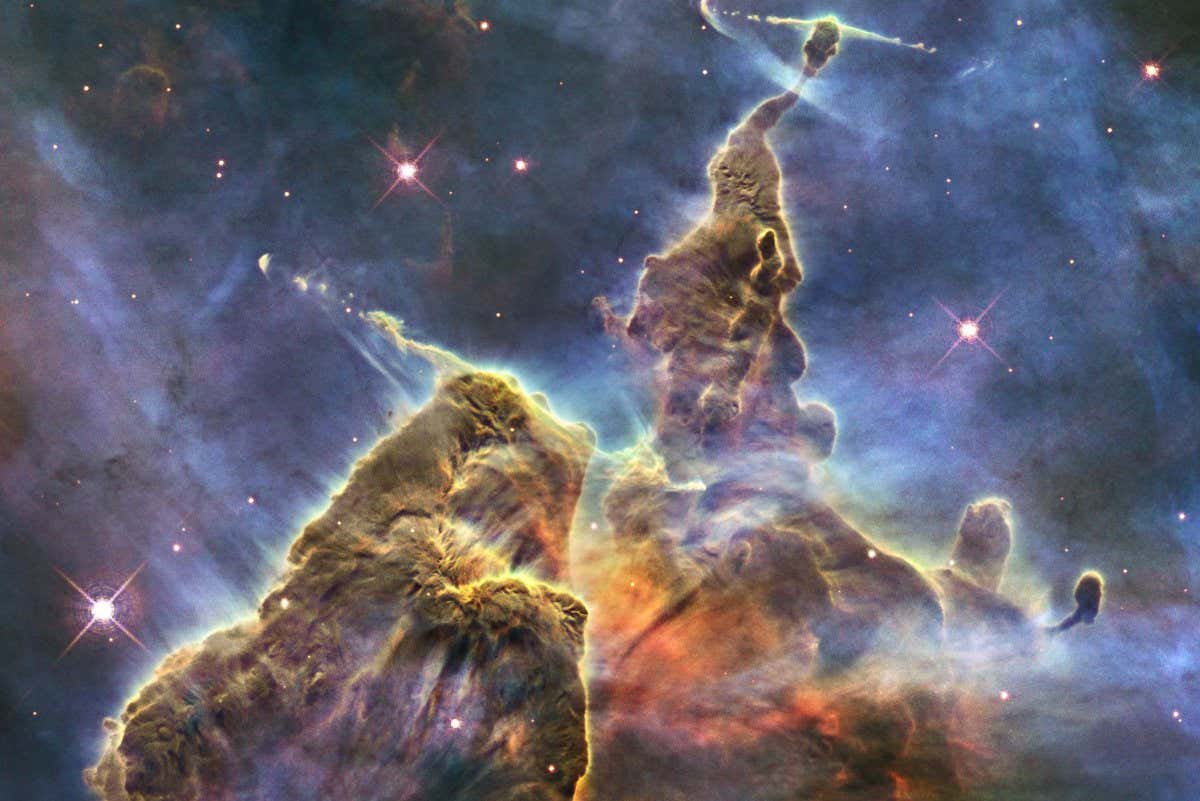
NASA's Hubble Space Telescope captures the chaotic activity atop a three-light-year-tall pillar of gas and dust that is being eaten away by the brilliant light from nearby bright stars in a tempestuous stellar nursery called the Carina Nebula.

Two smart books probe multiverses, dark matter – and sexual politics

27 July 2022

Is our universe one of a myriad? How hard is it to be a woman in science? Beyond the Big Bang and The Elephant in the Universe explore these questions and more


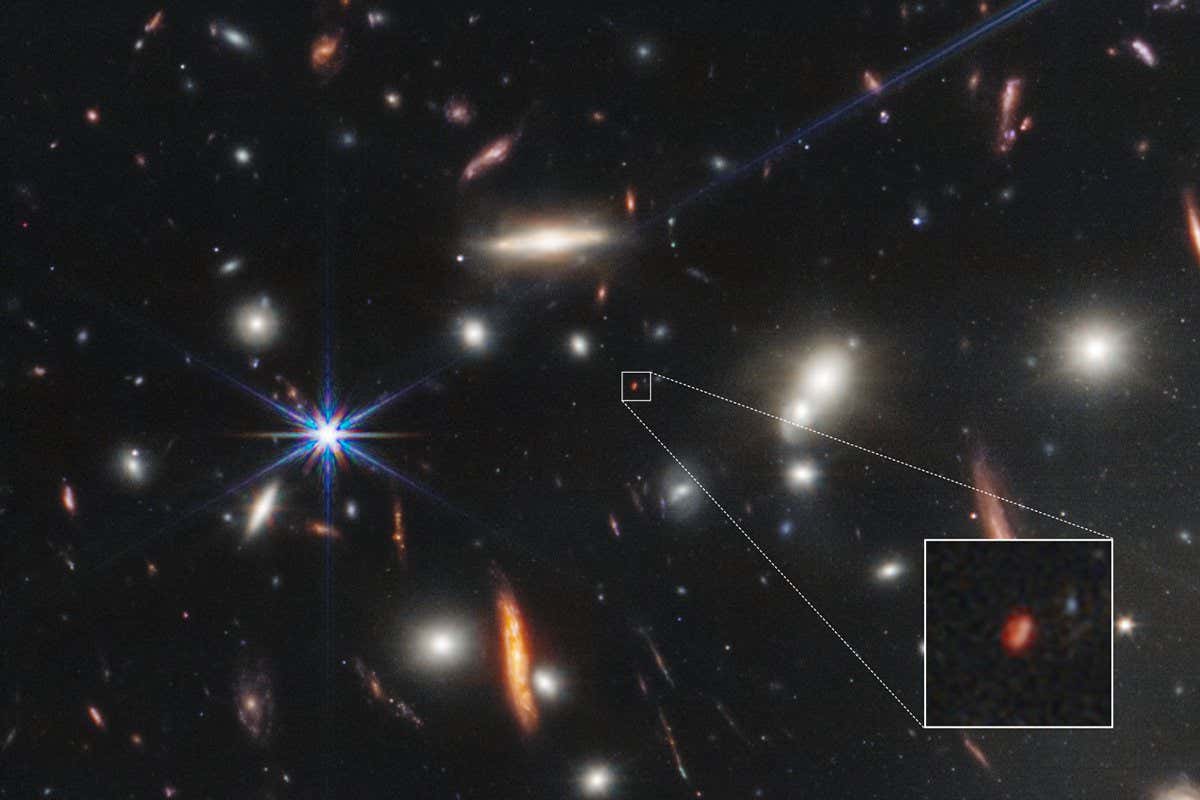
Red galaxy

Red smudge seen by JWST could unlock chemistry of the early universe

18 July 2022

A galaxy caught in the distant background of the James Webb Space Telescope's first "deep field" image could help astronomers understand the chemistry of the early universe


James Webb Space Telescope images reveal dazzling view of the universe

James Webb Space Telescope images reveal dazzling view of the universe

12 July 2022

The first images from the James Webb Space telescope have been revealed


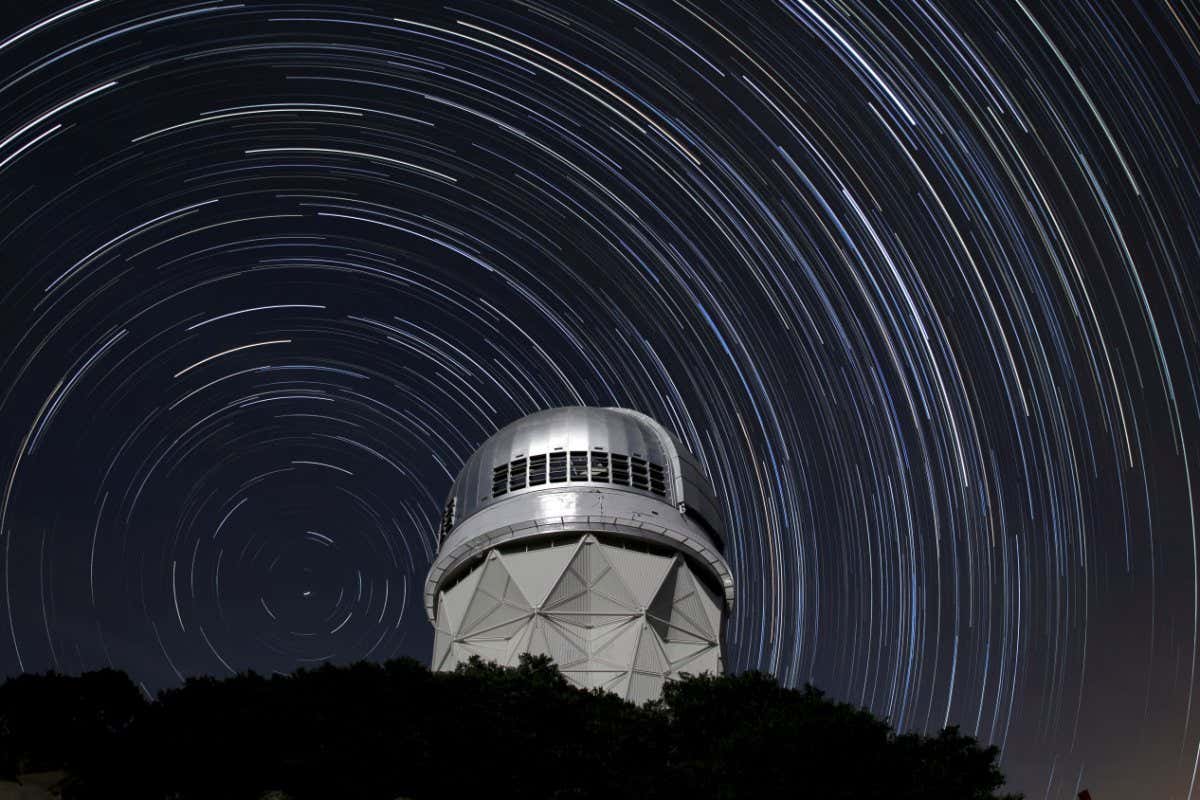
Star trails over the Nicholas U. Mayall 4-meter Telescope on Kitt Peak National Observatory near Tucson, AZ.??

Largest 3D map of the universe contains 8 million galaxies

13 January 2022

Astrophysicists hope a map created by the Dark Energy Spectroscopic Instrument will help answer questions about the expansion of the universe


Sign up to our weekly newsletter

Receive a weekly dose of discovery in your inbox. We'll also keep you up to date with New Scientist events and special offers.

Sign up
Piano Exit Overlay Banner Mobile Piano Exit Overlay Banner Desktop