Subscribe now
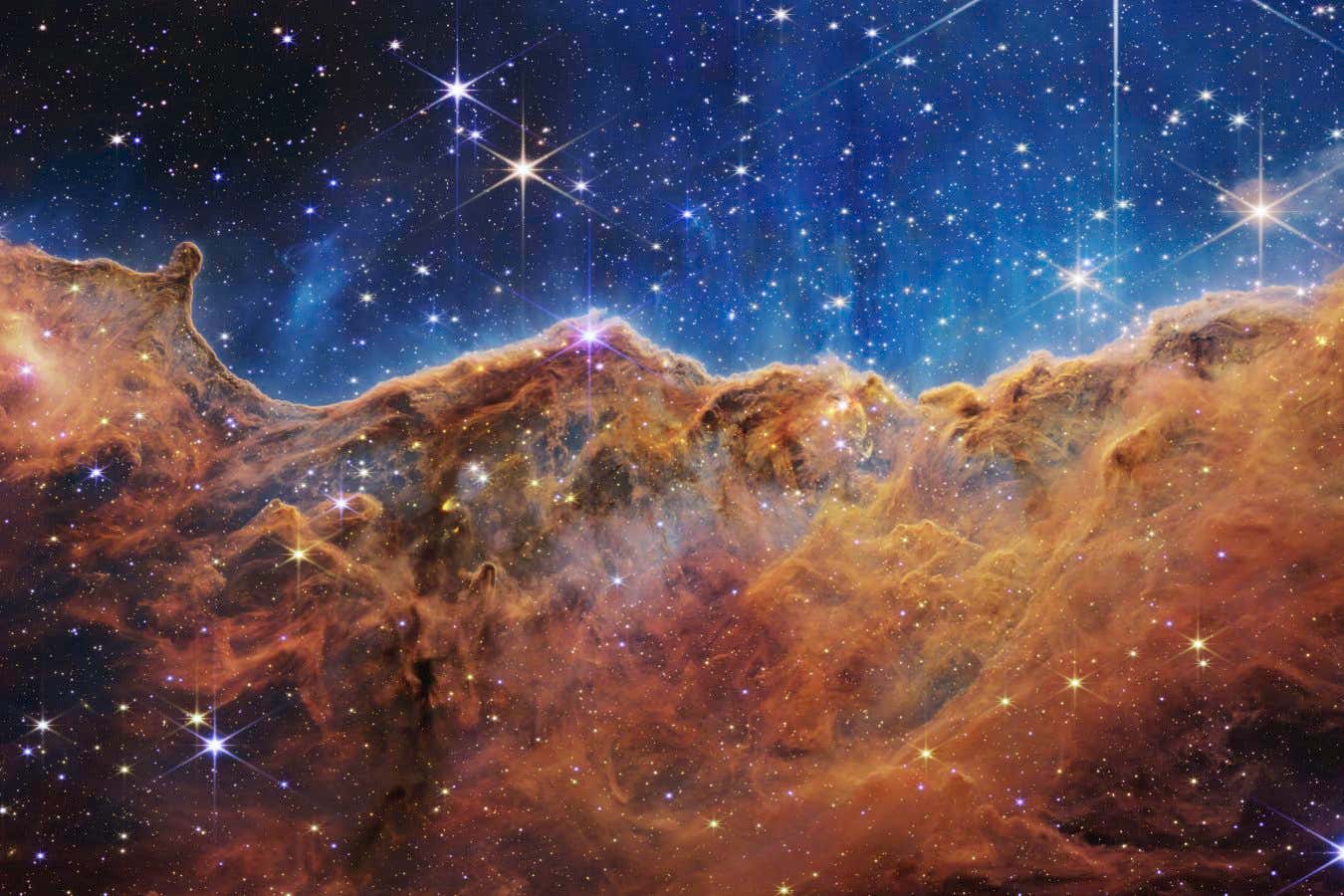
What looks much like craggy mountains on a moonlit evening is actually the edge of a nearby, young, star-forming region NGC 3324 in the Carina Nebula. Captured in infrared light by the Near-Infrared Camera (NIRCam) on NASA???s James Webb Space Telescope, this image reveals previously obscured areas of star birth. Called the Cosmic Cliffs, the region is actually the edge of a gigantic, gaseous cavity within NGC 3324, roughly 7,600 light-years away. The cavernous area has been carved from the nebula by the intense ultraviolet radiation and stellar winds from extremely massive, hot, young stars located in the center of the bubble, above the area shown in this image. The high-energy radiation from these stars is sculpting the nebula???s wall by slowly eroding it away. NIRCam ??? with its crisp resolution and unparalleled sensitivity ??? unveils hundreds of previously hidden stars, and even numerous background galaxies. Several prominent features in this image are described below. ??? The ???steam??? that appears to rise from the celestial ???mountains??? is actually hot, ionized gas and hot dust streaming away from the nebula due to intense, ultraviolet radiation. ??? Dramatic pillars rise above the glowing wall of gas, resisting the blistering ultraviolet radiation from the young stars. ??? Bubbles and cavities are being blown by the intense radiation and stellar winds of newborn stars. ??? Protostellar jets and outflows, which appear in gold, shoot from dust-enshrouded, nascent stars. ??? A ???blow-out??? erupts at the top-center of the ridge, spewing gas and dust into the interstellar medium. ??? An unusual ???arch??? appears, looking like a bent-over cylinder. This period of very early star formation is difficult to capture because, for an individual star, it lasts only about 50,000 to 100,000 years ??? but Webb???s extreme sensitivity and exquisite spatial resolution have chronicled this rare event. Located roughly 7,600 light-years away, NGC 3324 was first cat

The JWST is already delivering on its promise to transform cosmology

14 June 2023

Almost a year after its first images were released, the James Webb Space Telescope is living up to the hype, and its price tag, by revolutionising our understanding of the universe
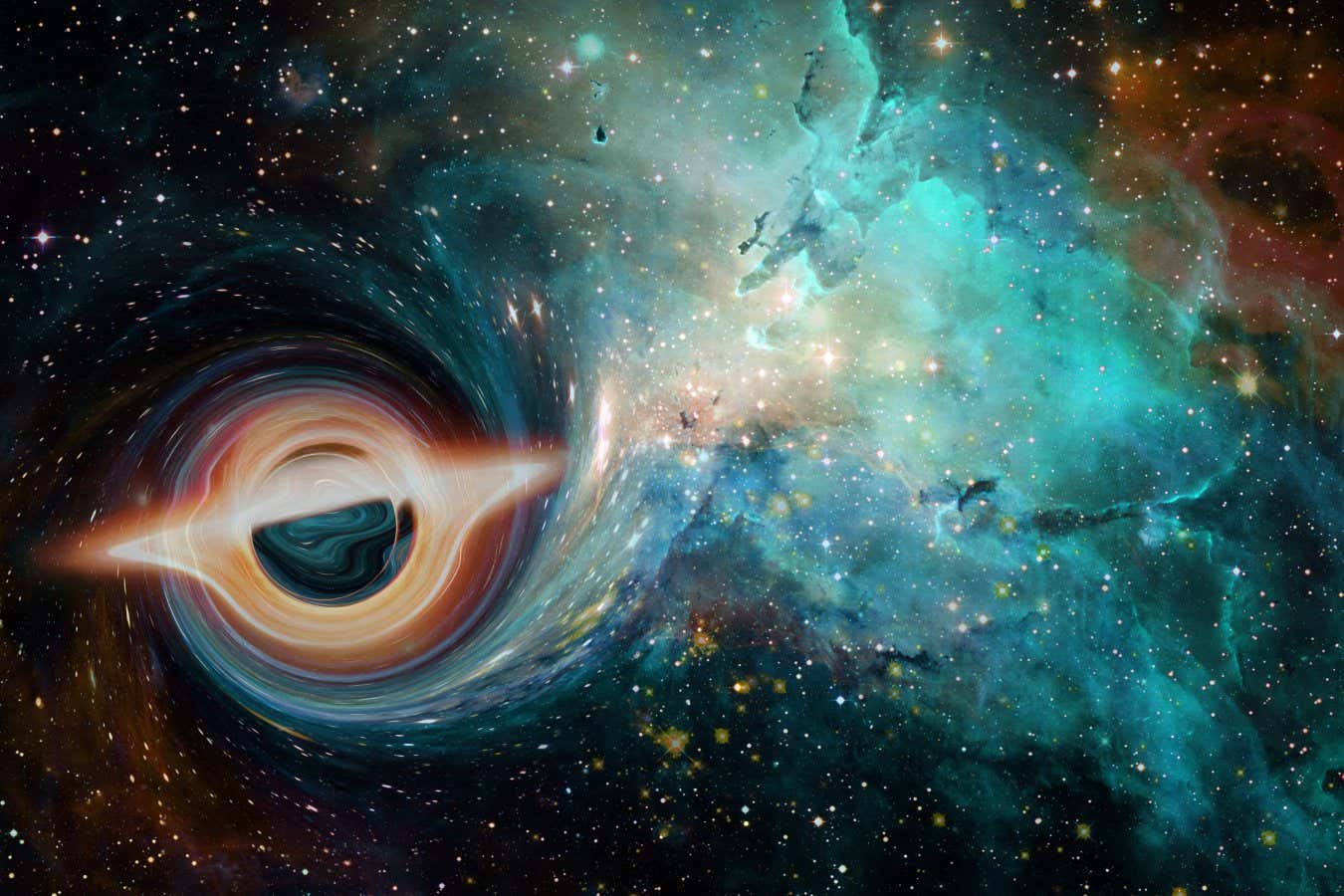
Supermassive black hole. Elements of this image furnished by NASA.; Shutterstock ID 1756053335; purchase_order: -; job: -; client: -; other: -

Lab imitations of the unobservable cosmos can be genuinely insightful

24 May 2023

Despite the obvious caveats, physicists are right to use fluids and other physical analogues to search for fresh insights about extreme cosmic phenomena, from black holes to the big bang


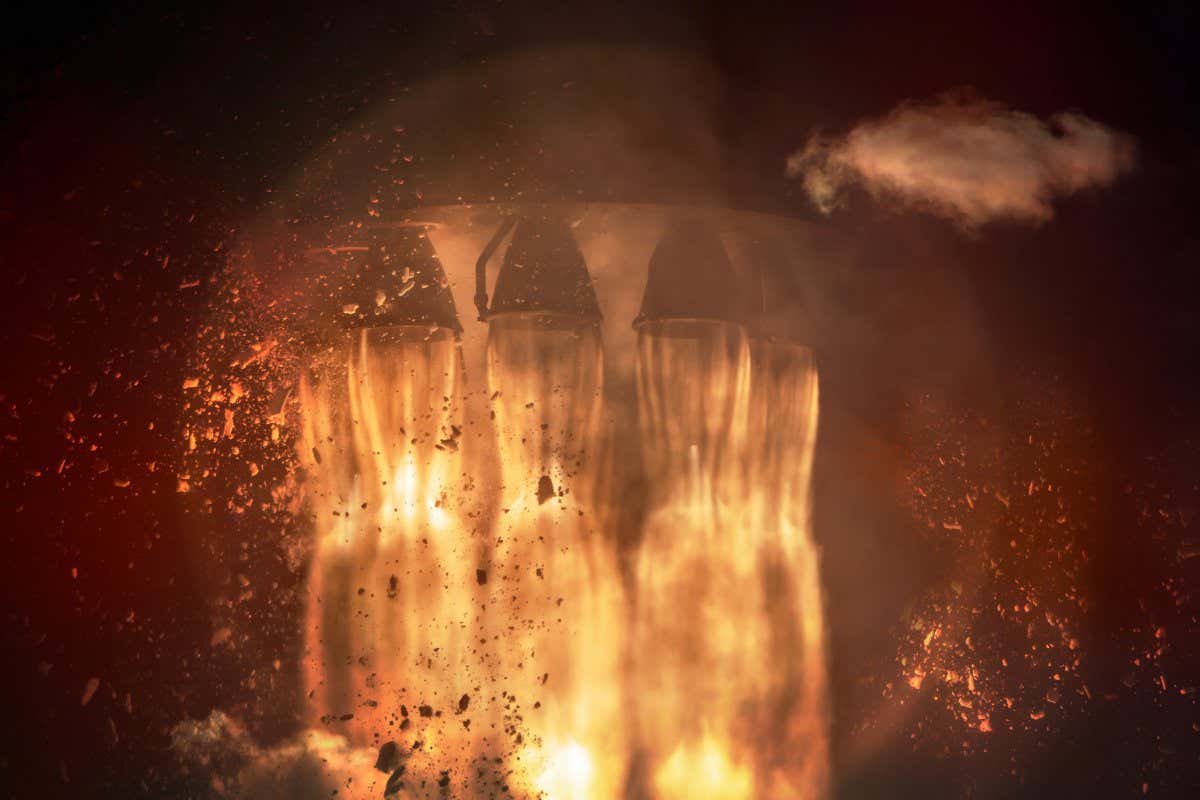
Rocket engines and fire duting the missile launch at night, close up. Elements of this image furnished by NASA.; Shutterstock ID 1327041179; purchase_order: -; job: -; client: -; other: -

Growing off-world diversity is making space for everyone

30 November 2022

With more groups and organisations exploring space than ever before, we will all benefit from a diverse range of people and views in low Earth orbit and beyond


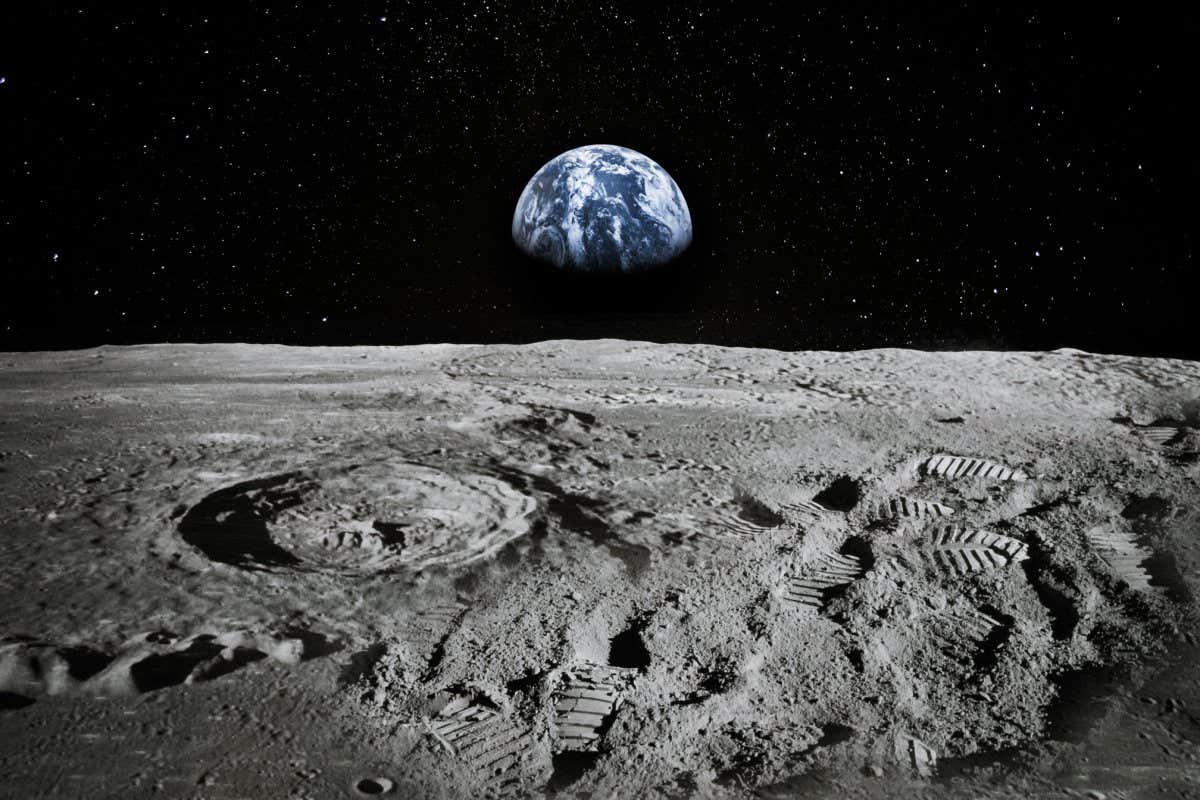
View of Moon limb with Earth rising on the horizon. Footprints as an evidence of people being there or great forgery. Collage. Elements of this image furnished by NASA.; Shutterstock ID 1454730908; purchase_order: -; job: -; client: -; other: -

Why we should go back to the moon – and this time to build a home

14 September 2022

Achieving a lunar outpost is important not as a means of escaping our home planet, but learning better ways to thrive on it


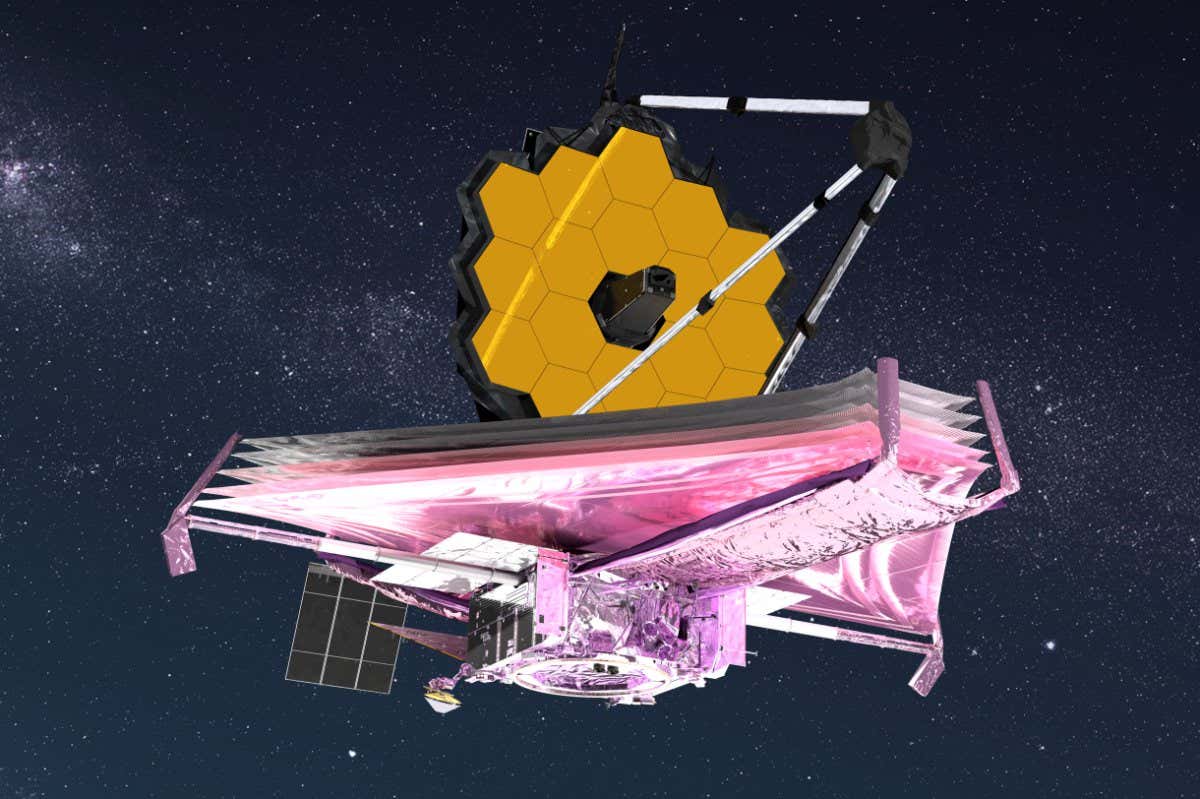
The James Webb Space Telescope heralds a new era for astronomy

The James Webb Space Telescope heralds a new era for astronomy

6 July 2022

We are about to get our hands on the first observations from the world’s most powerful space telescope - and it’s a moment to savour


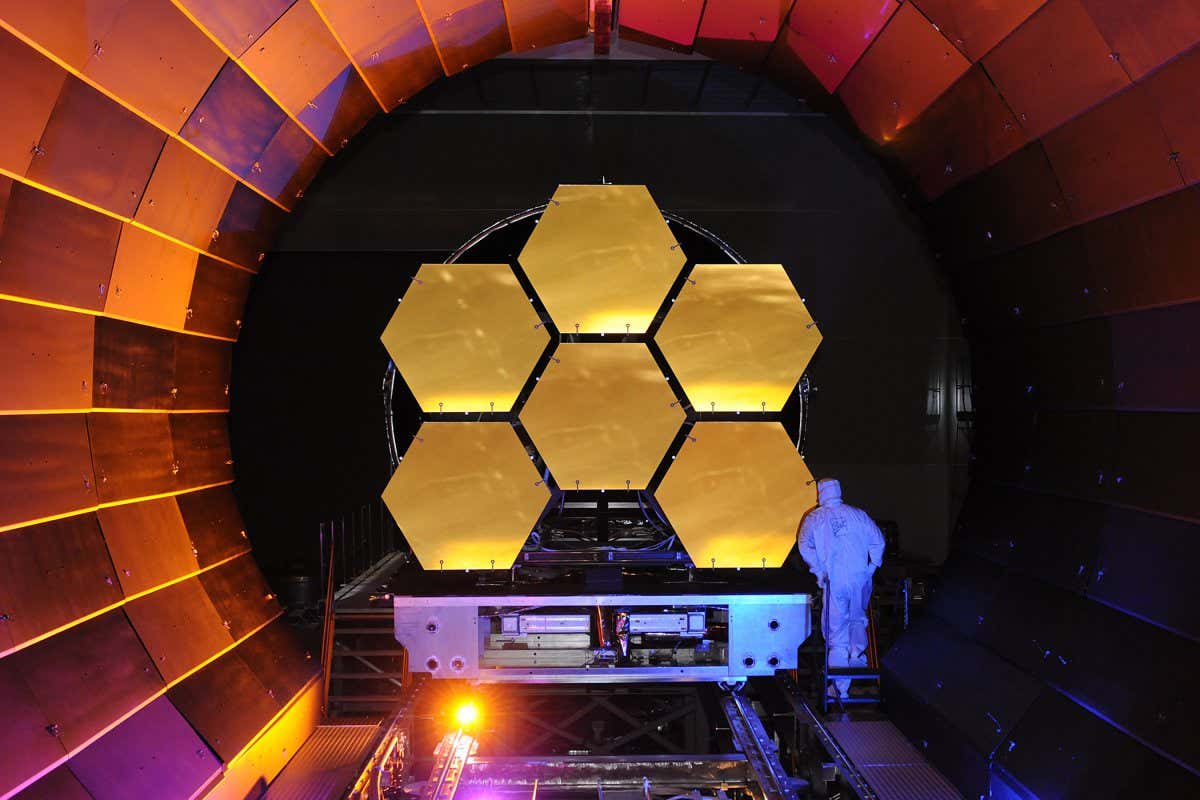
James Webb Space Telescope Mirrors Undergoing Cryogenic Testing The flight mirrors for the James Webb Space Telescope undergo cryogenic testing at NASA Marshall. Credit: Ball Aerospace

The James Webb Space Telescope is expensive, but it should be worth it

8 December 2021

It may be extremely late and over-budget, but the James Webb Space Telescope promises to show us the moment the first stars lit up and solve cosmic mysteries


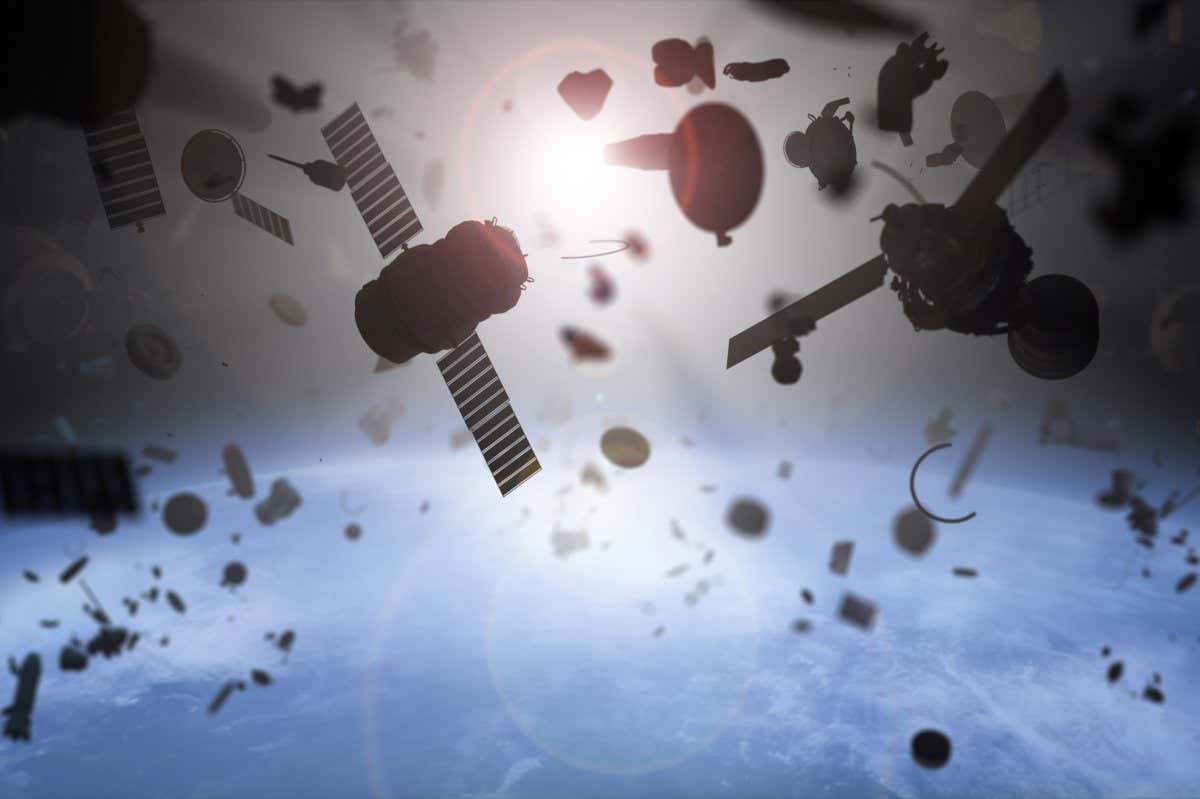
Space junk concept. Toxic garbage in the space over Earth

Why we need to get serious about solving the space junk problem

27 October 2021

The overcrowding of low Earth orbit with commercial satellites is a problem for astronomers and the satellites – and it needs urgent international action to solve it


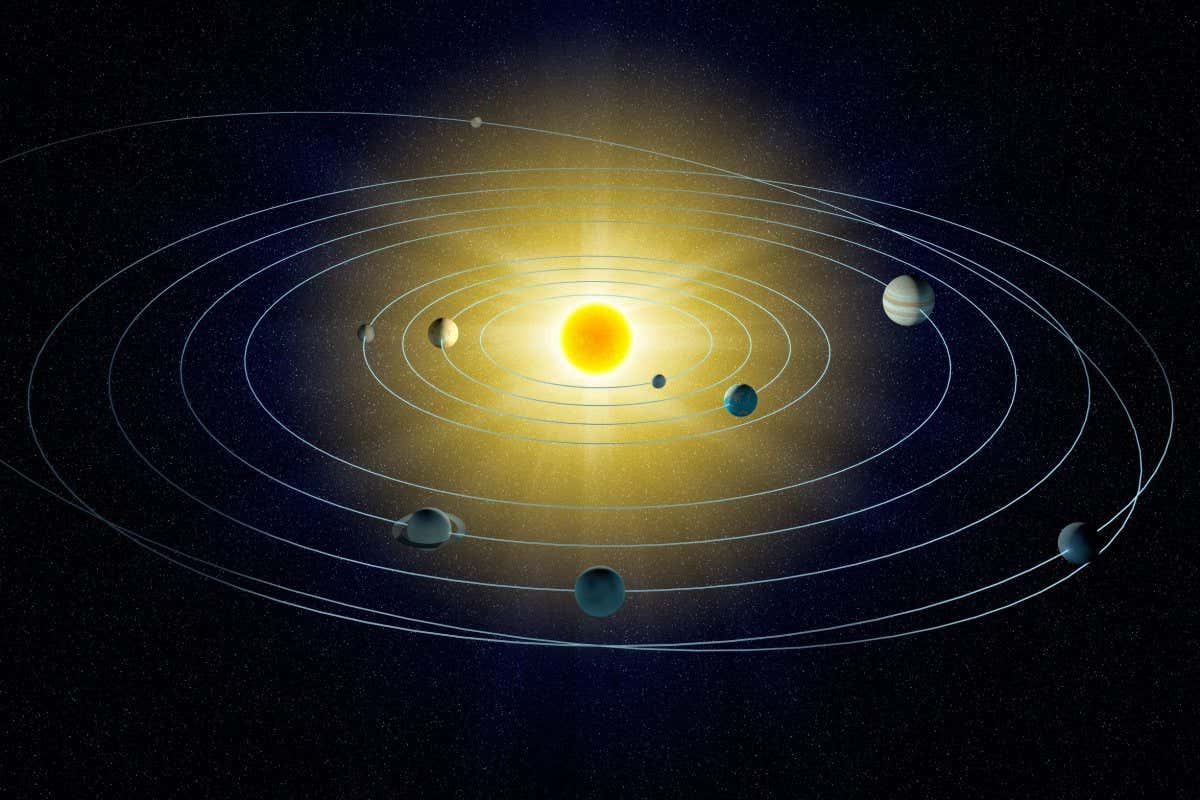
D1P5RK Solar system, artwork

Our cosmic neighbourhood has so many more secrets for us to reveal

29 September 2021

An unusual meteorite seems to help explain why the planets are in their odd present positions, but plenty of other mysteries remain about our solar system


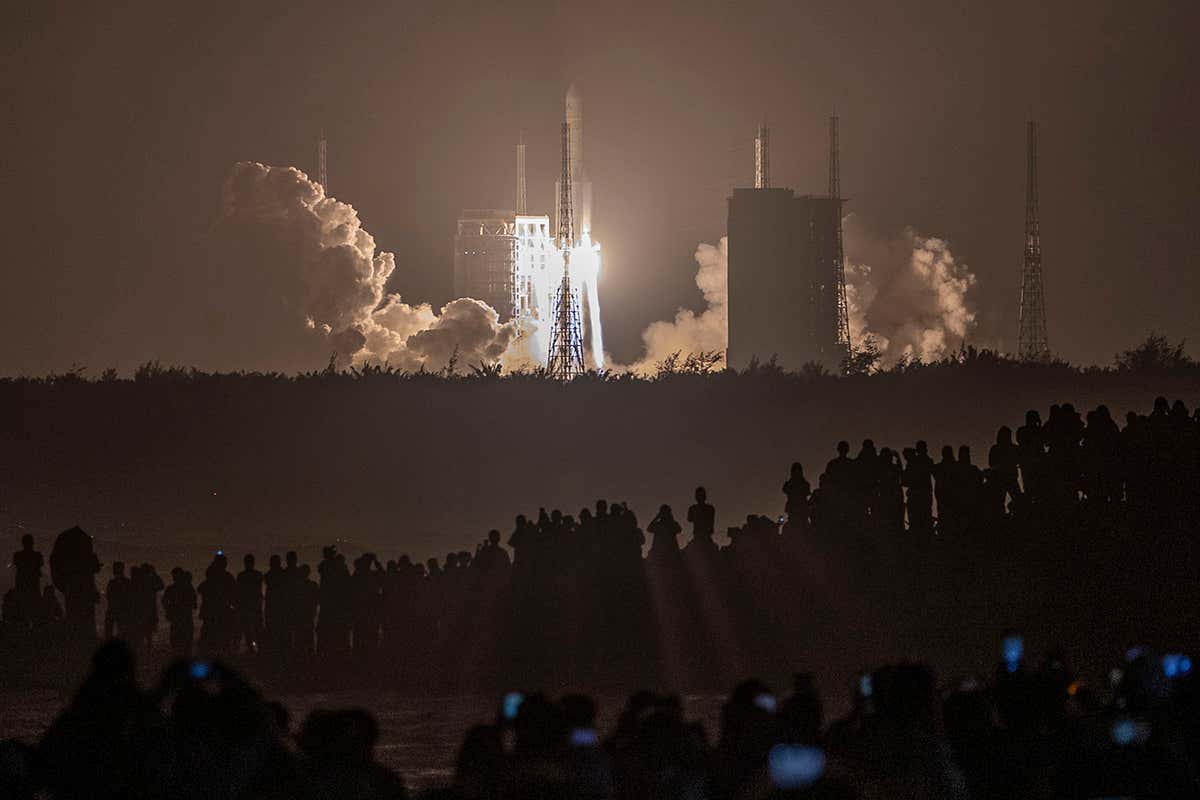
China's Chang'e 5 probe is the start of a new era of lunar exploration

China's Chang'e 5 probe is the start of a new era of lunar exploration

25 November 2020

Chang'e 5 is set to bring moon rocks back to Earth for the first time in more than four decades – and China has even more ambitious plans for lunar missions in the coming years


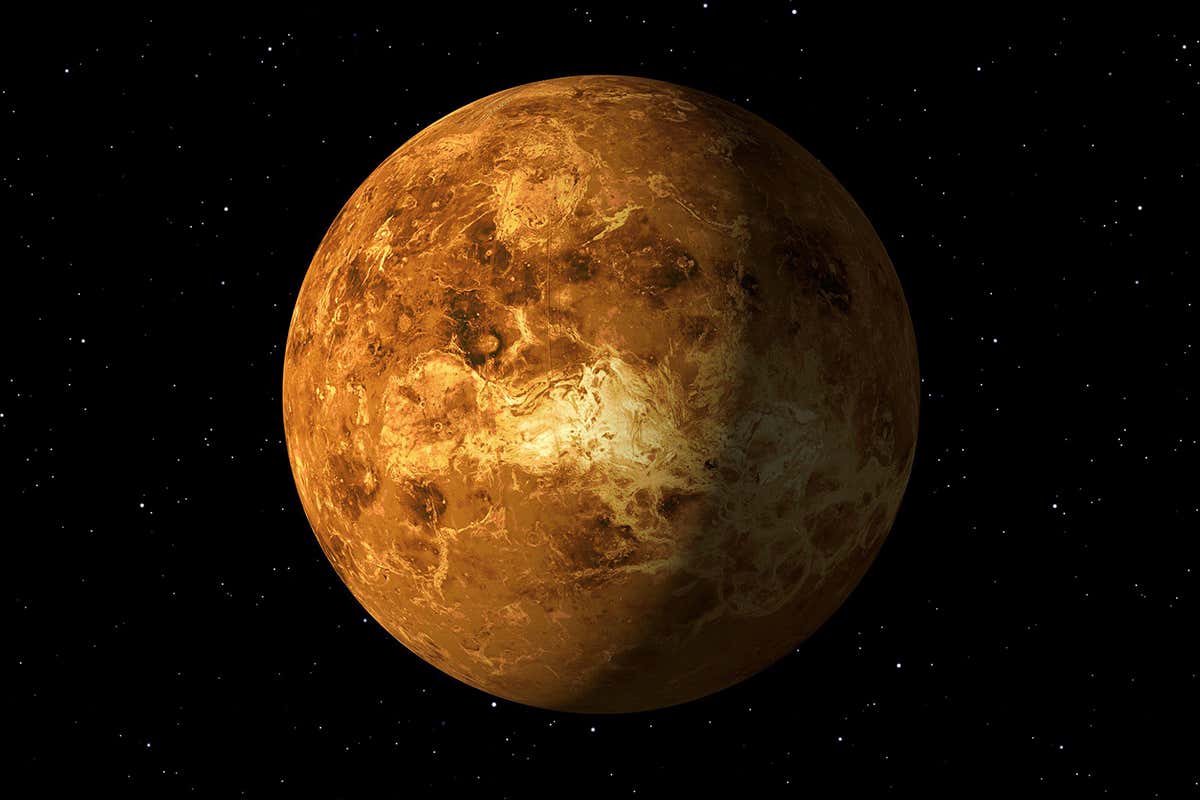
There may not be life on Venus after all but we shouldn't despair

There may not be life on Venus after all but we shouldn't despair

28 October 2020

New analyses have cast doubt on recent observations of phosphine gas in the atmosphere of Venus, a possible sign of life. Though disappointing, we must remember science will one day provide us with an answer


Sign up to our weekly newsletter

Receive a weekly dose of discovery in your inbox. We'll also keep you up to date with New Scientist events and special offers.

Sign up
Piano Exit Overlay Banner Mobile Piano Exit Overlay Banner Desktop