Subscribe now
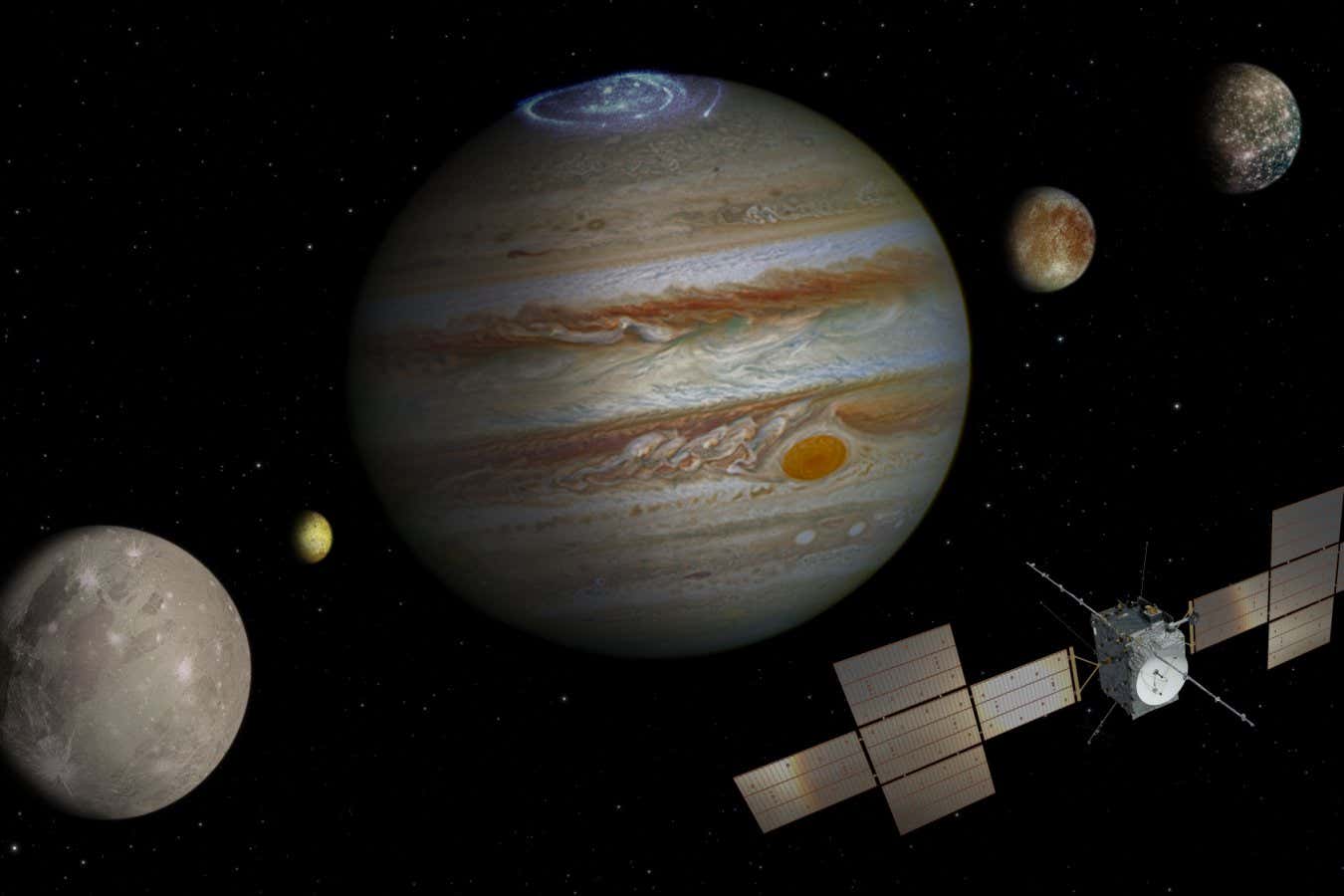
https://www.esa.int/ESA_Multimedia/Images/2017/07/Exploring_Jupiter t may still be some years away from launch, and over a decade before our Jupiter Icy Moons Explorer reaches the gas giant and its icy moons, but preparations are well under way. This new artist?s impression depicts the final spacecraft design, the construction of which is being overseen by Airbus Defence and Space. The spacecraft?s solar wings form a distinctive cross-shape totalling 97 sq m, the largest ever flown on an interplanetary mission. The size is essential to generate sufficient power ? around 850 W ? for the instruments and spacecraft so far from the Sun. The spacecraft is furnished with a laboratory of instruments that will investigate Jupiter?s turbulent atmosphere and vast magnetosphere, as well as study the planet-sized moons Ganymede, Europa and Callisto. All three moons are thought to have oceans of liquid water beneath their icy crusts and should provide key clues on the potential for such moons to harbour habitable environments. Juice?s cameras will capture exquisite details of the moon?s features, as well as identify the ices and minerals on their surfaces. Other instruments will sound the subsurface and interior of the moons to better understand the location and nature of their buried oceans. The tenuous atmosphere around the moons will also be explored. The spacecraft will also include booms such as a 10 m-long magnetometer mast (seen towards the bottom of Juice in the artist impression), a 16 m radar antenna (the long boom across the top), and antennas to measure electric and magnetic fields. Ganymede is the only moon in the Solar System to generate its own internal magnetic field, and Juice is well equipped to document its behaviour and explore its interaction with Jupiter?s own magnetosphere. Juice is scheduled for launch in 2022 on a seven-year journey to the Jovian system. Its tour will include a dedicated orbit phase of Jupiter, targeted flybys of Europa, Ganymede and Callisto, and finally nine months orbiting Ganymede ? the first time any moon beyond our own has been orbited by a spacecraft. In the artist?s impression, which is not to scale, Ganymede is shown in the foreground, Callisto to the far right, and Europa centre-right. Volcanically active moon Io is also shown, at left. The moons were imaged by NASA?s Galileo spacecraft; Jupiter is seen here with a vivid aurora, captured by the NASA/ESA Hubble Space Telescope. ESA/ATG medialab; Jupiter: NASA/ESA/J. Nichols (University of Leicester); Ganymede: NASA/JPL; Io: NASA/JPL/University of Arizona; Callisto and Europa: NASA/JPL/DLR

How to spot Jupiter's icy moons

5 July 2023

Jupiter’s Galilean moons are promising places to look for life. Now is a great time to see them, says Abigail Beall
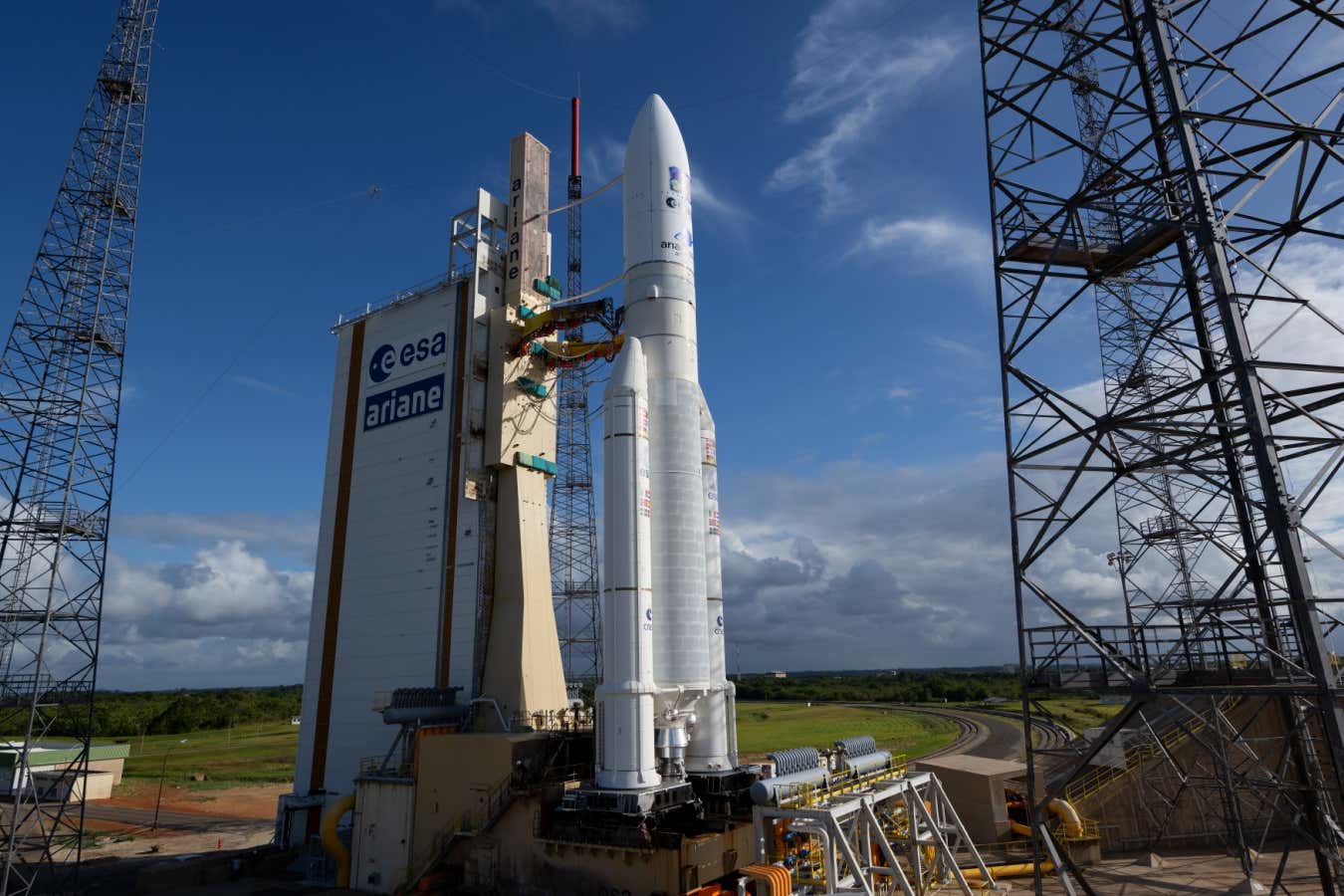

Ariane 5 VA 260 with the Jupiter Icy Moons Explorer

JUICE livestream: Watch the launch of ESA’s mission to Jupiter’s moons

14 April 2023

The JUICE mission to explore three of Jupiter’s icy moons and examine whether they have the right conditions for life is launching on 14 April. Watch the live launch coverage here
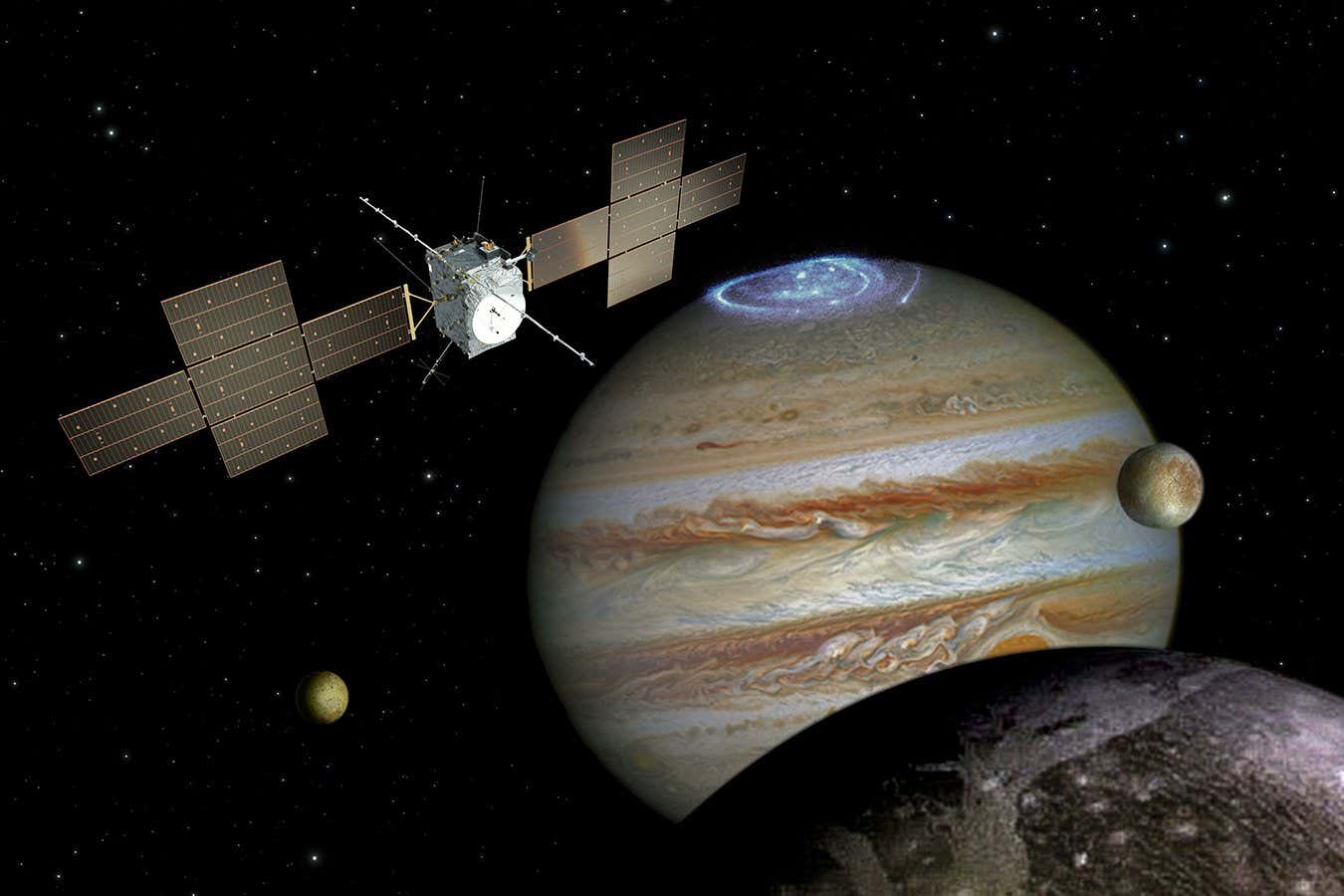

An artists' impression of ESA's JUICE spacecraft at Jupiter

The JUICE mission to explore Jupiter’s ocean moons is about to launch

11 April 2023

Jupiter’s icy moons are thought to host buried oceans that could have the right conditions for life, and the European Space Agency’s JUICE mission is about to go find out if they do
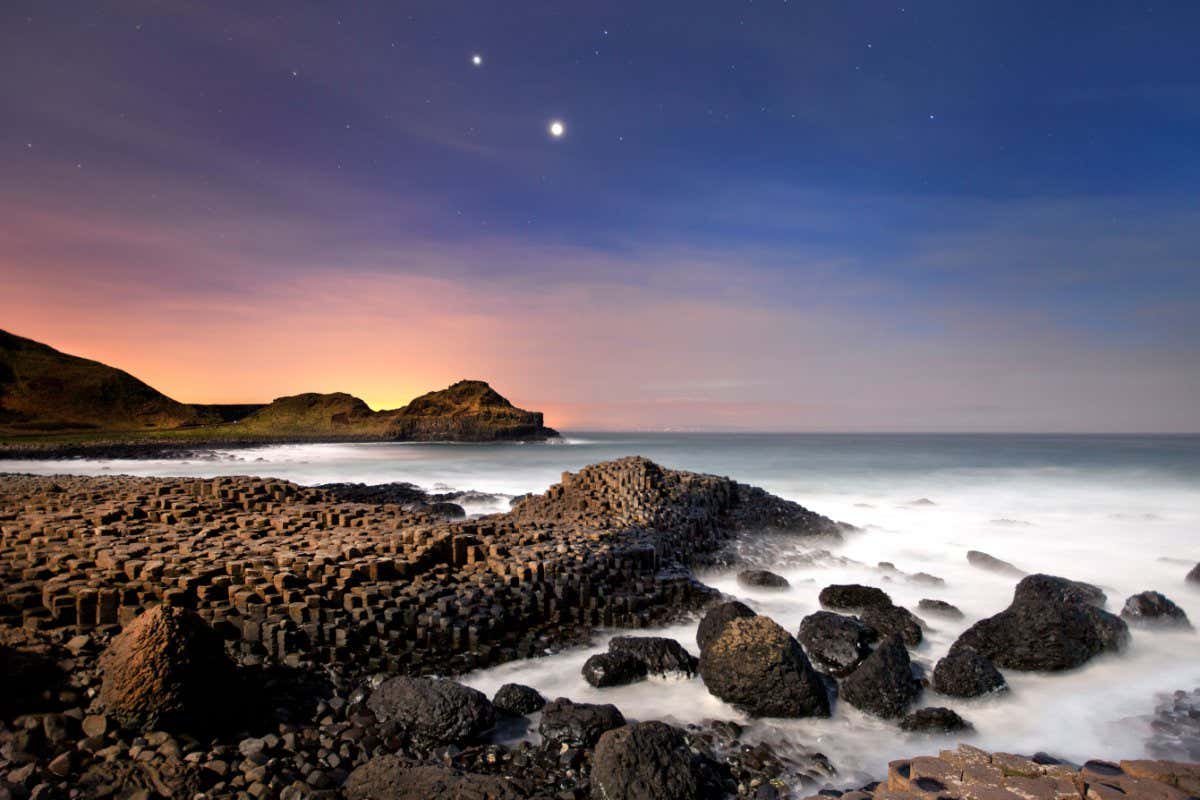

Conjunction of Jupiter and Venus as seen from the Giants Causeway in Northern Ireland

What is the Venus-Jupiter conjunction and how can you view it?

1 March 2023

The solar system’s largest planet, Jupiter, and its brightest planet, Venus, will appear to touch in the sky tonight – here’s why
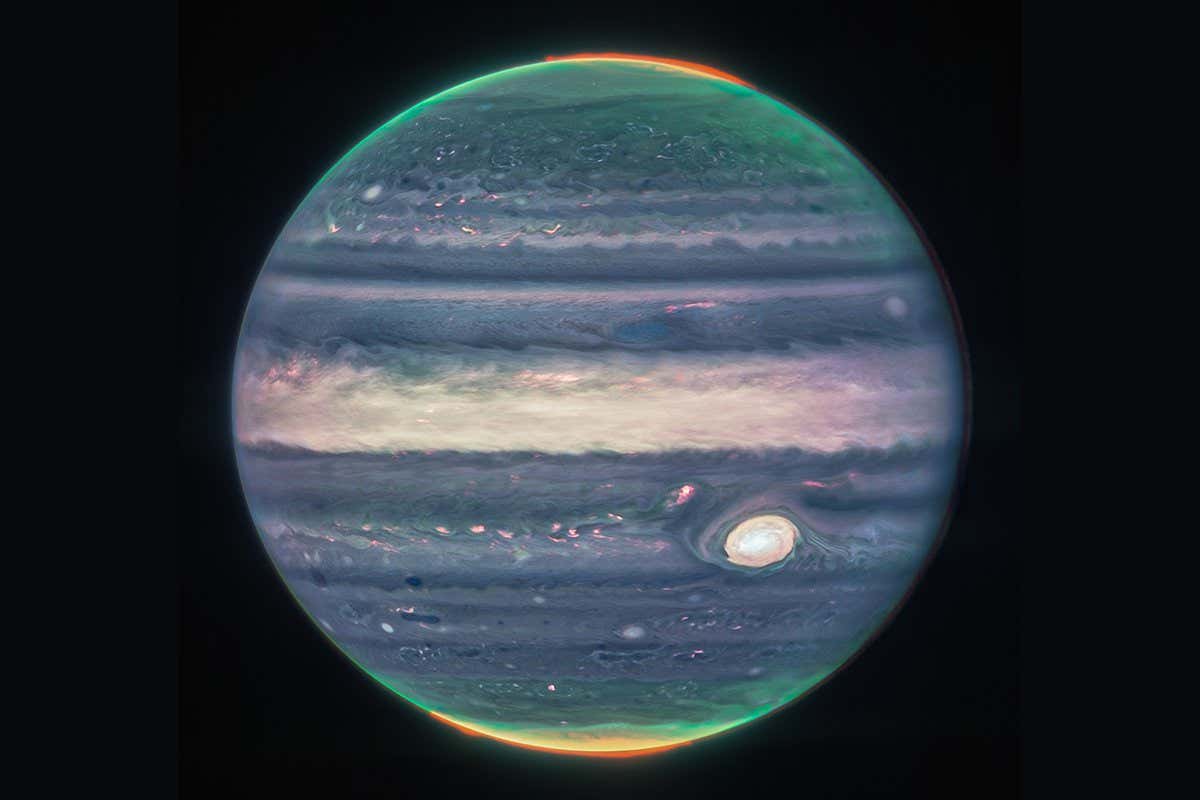

Webb NIRCam composite image of Jupiter from three filters ? F360M (red), F212N (yellow-green), and F150W2 (cyan) ? and alignment due to the planet's rotation.

JWST has taken even more beautiful images of Jupiter and its aurora

22 August 2022

The James Webb Space Telescope has taken new images of Jupiter, showing off its bright hazes, tenuous rings and auroras with the hopes of understanding the entire system better


Scott Bolton on his missions to the gas giants of the solar system

Scott Bolton on his missions to the gas giants of the solar system

19 July 2022

After decades of heading NASA’s exploration of Saturn, Jupiter and their moons, the space physicist describes what we have learned and what future missions must now answer
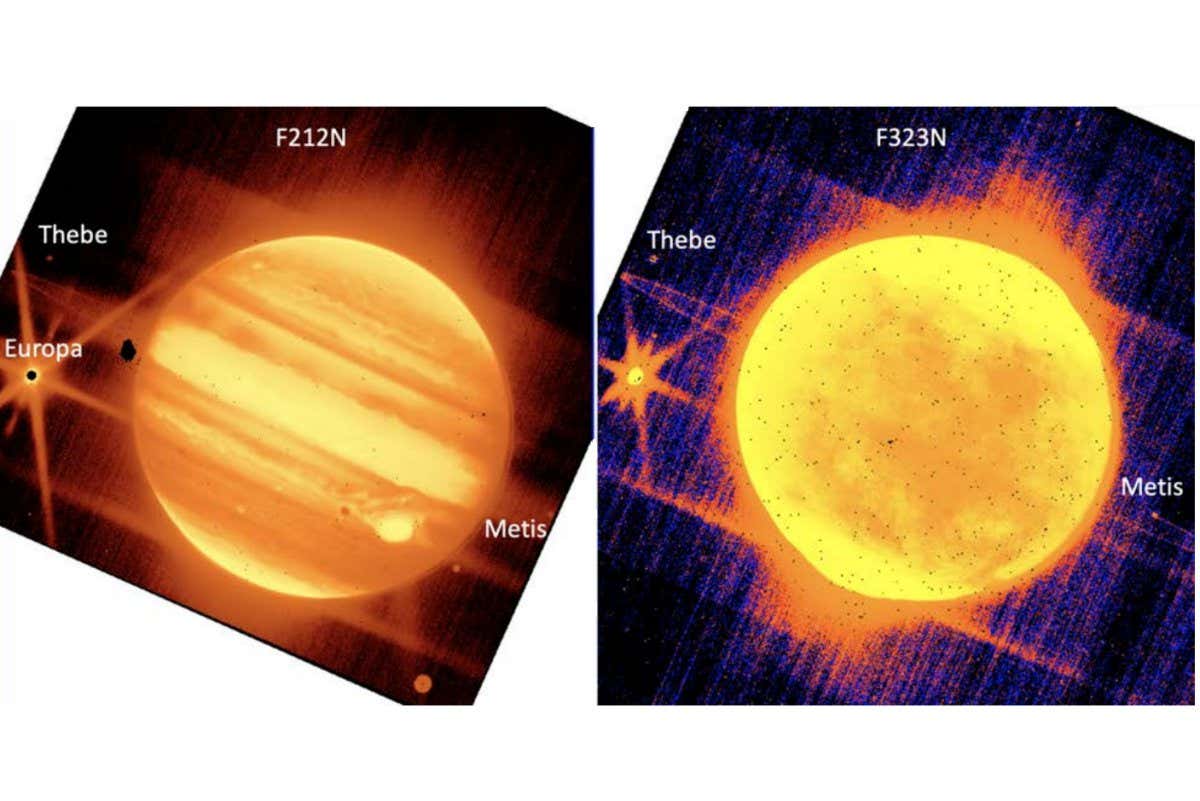

Jupiter

James Webb Space Telescope team quietly releases a picture of Jupiter

12 July 2022

On top of the first high-resolution science images that NASA’s James Webb Space Telescope team has just released, there was also a picture of Jupiter hidden in a document about telescope testing
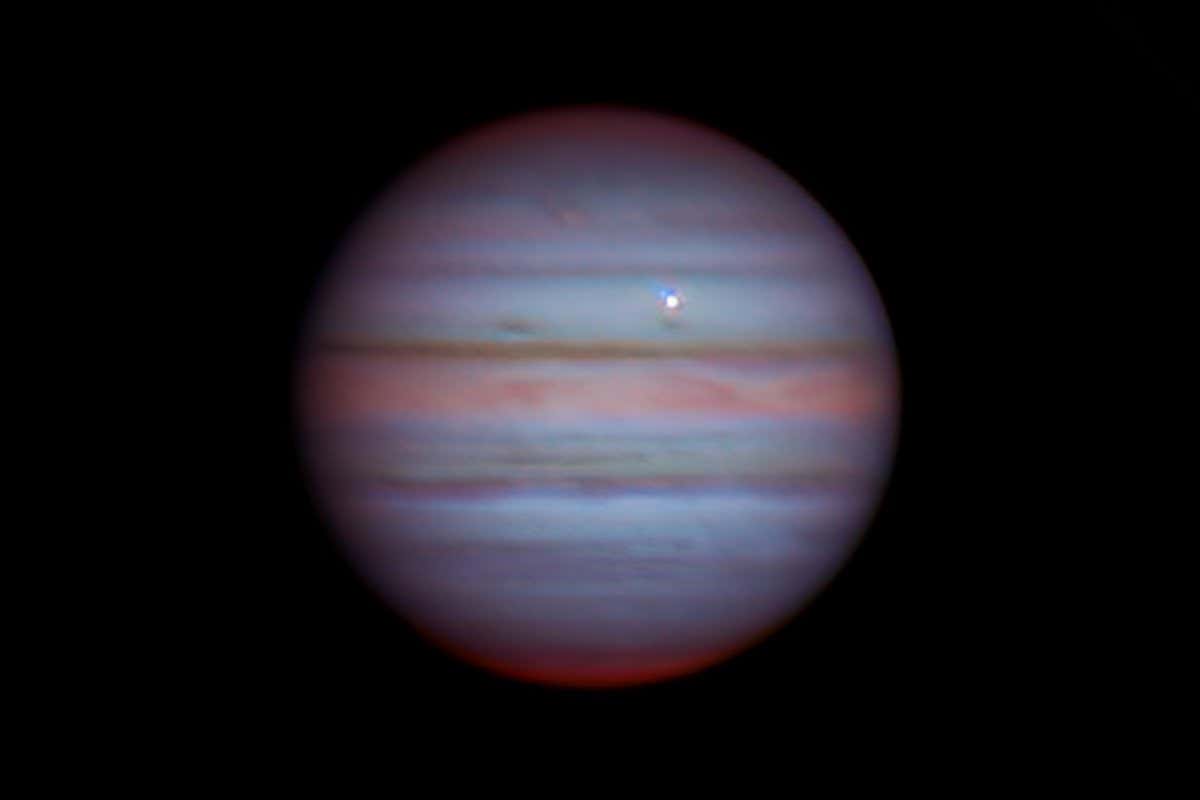

Flash seen on Jupiter

Enormous impact flash seen lighting up Jupiter’s atmosphere

16 June 2022

Astronomers spotted a huge space rock slamming into Jupiter, creating a blast of light and energy equivalent to 2 million tonnes of TNT – the brightest such event since 1994
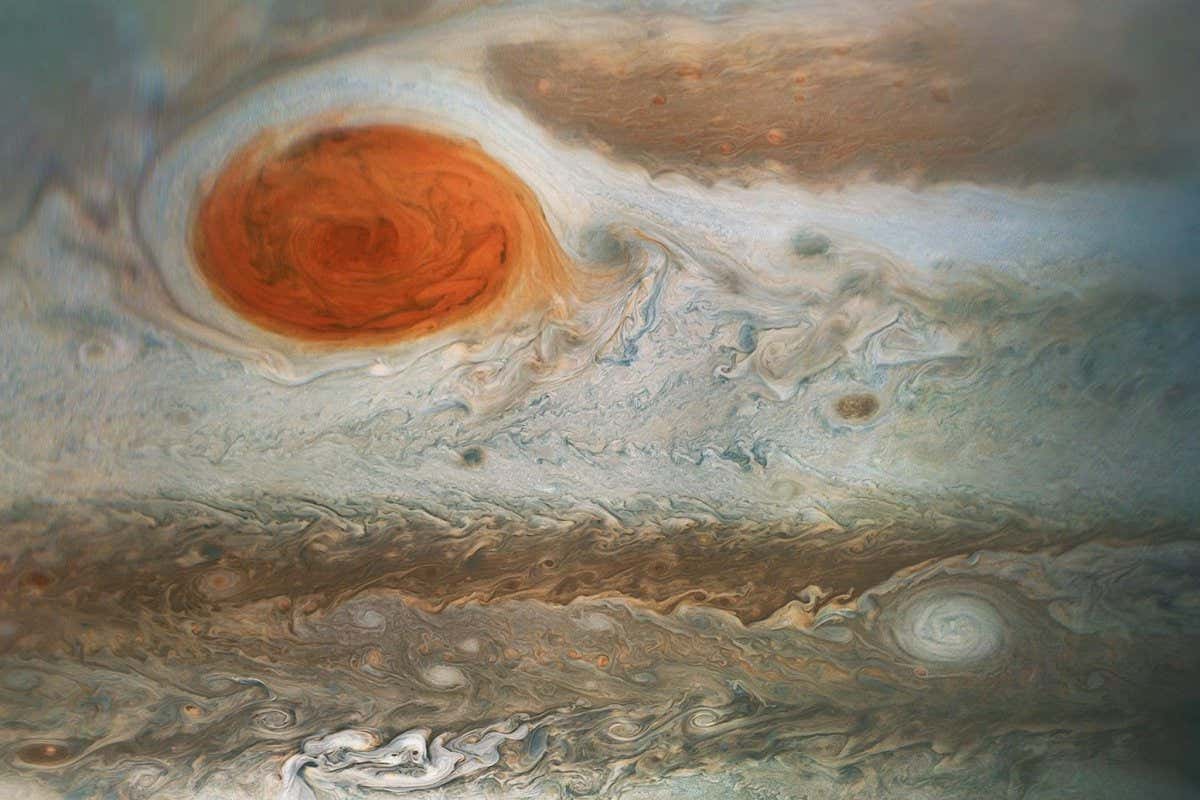

Jupiter's iconic Great Red Spot

Jupiter's Great Red Spot extends far deeper than we realised

28 October 2021

We only had a skin-deep look at Jupiter before the Juno spacecraft began orbiting the planet in 2016 and the measurements the NASA mission has taken reveal unexpected information about its deep interior
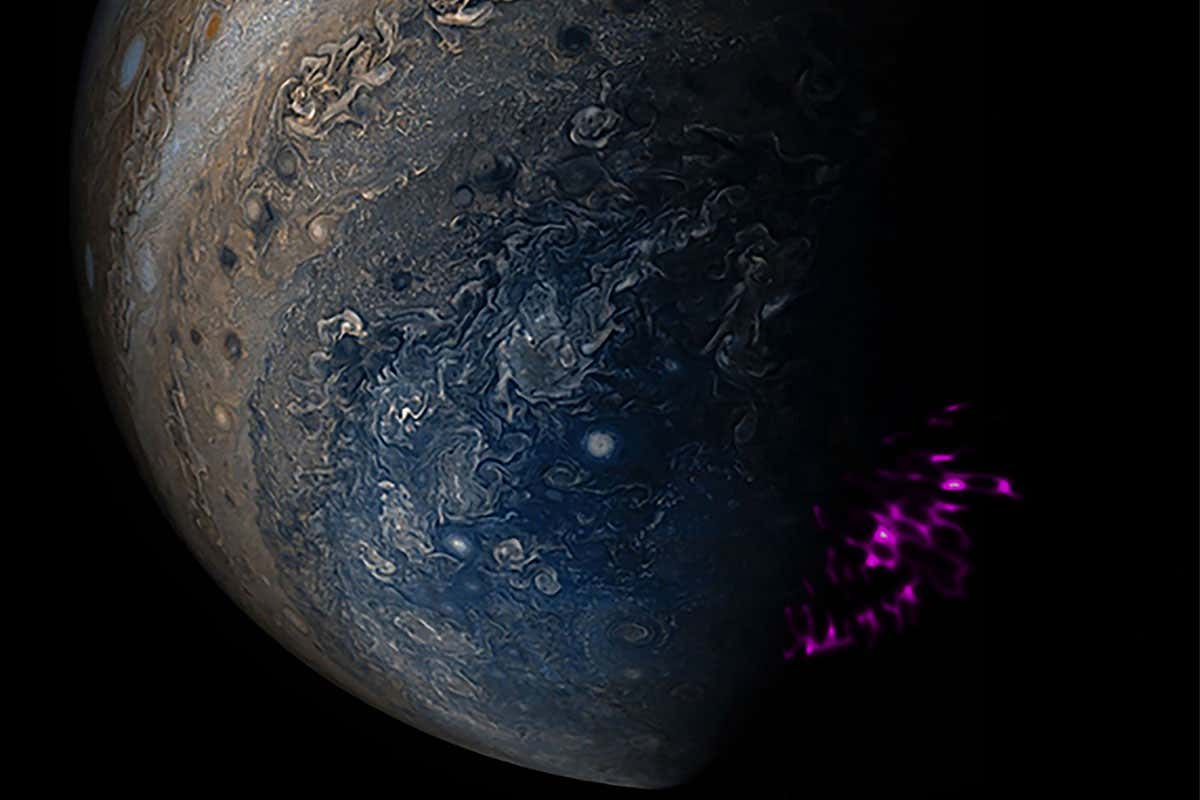

Mysterious X-ray flares on Jupiter come from magnetic field vibrations

Mysterious X-ray flares on Jupiter come from magnetic field vibrations

9 July 2021

Jupiter blasts out strange X-ray flares that have gone unexplained for decades, and the mystery has now been solved by vibrations in the planet’s magnetic field


Sign up to our weekly newsletter

Receive a weekly dose of discovery in your inbox. We'll also keep you up to date with New Scientist events and special offers.

Sign up
Piano Exit Overlay Banner Mobile Piano Exit Overlay Banner Desktop