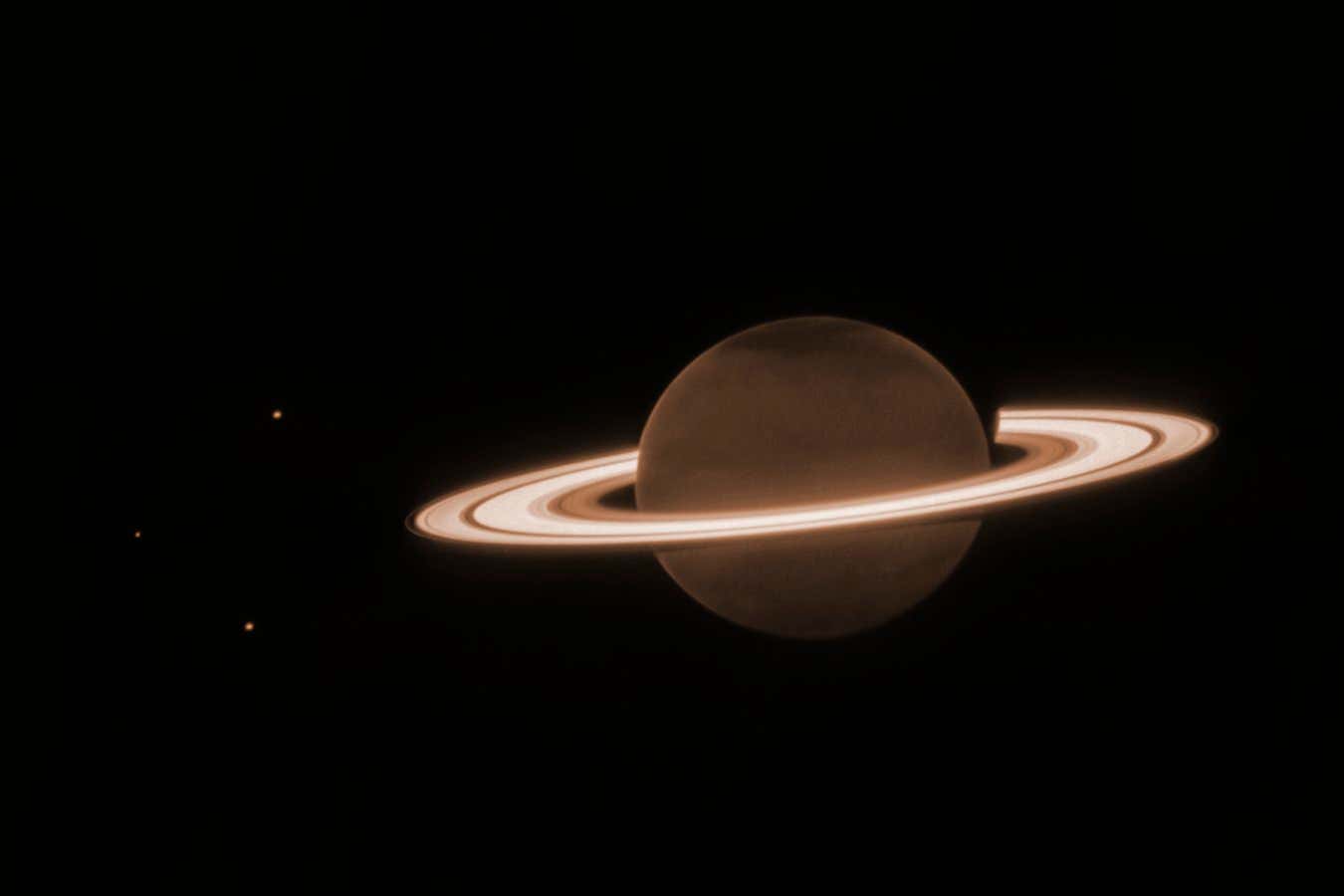
Stunning JWST image sees Saturn show off its glowing rings
30 June 2023
A strange and unfamiliar view of Saturn has been captured by the James Webb Space Telescope to help researchers identify its smaller objects and structures
30 June 2023
A strange and unfamiliar view of Saturn has been captured by the James Webb Space Telescope to help researchers identify its smaller objects and structures
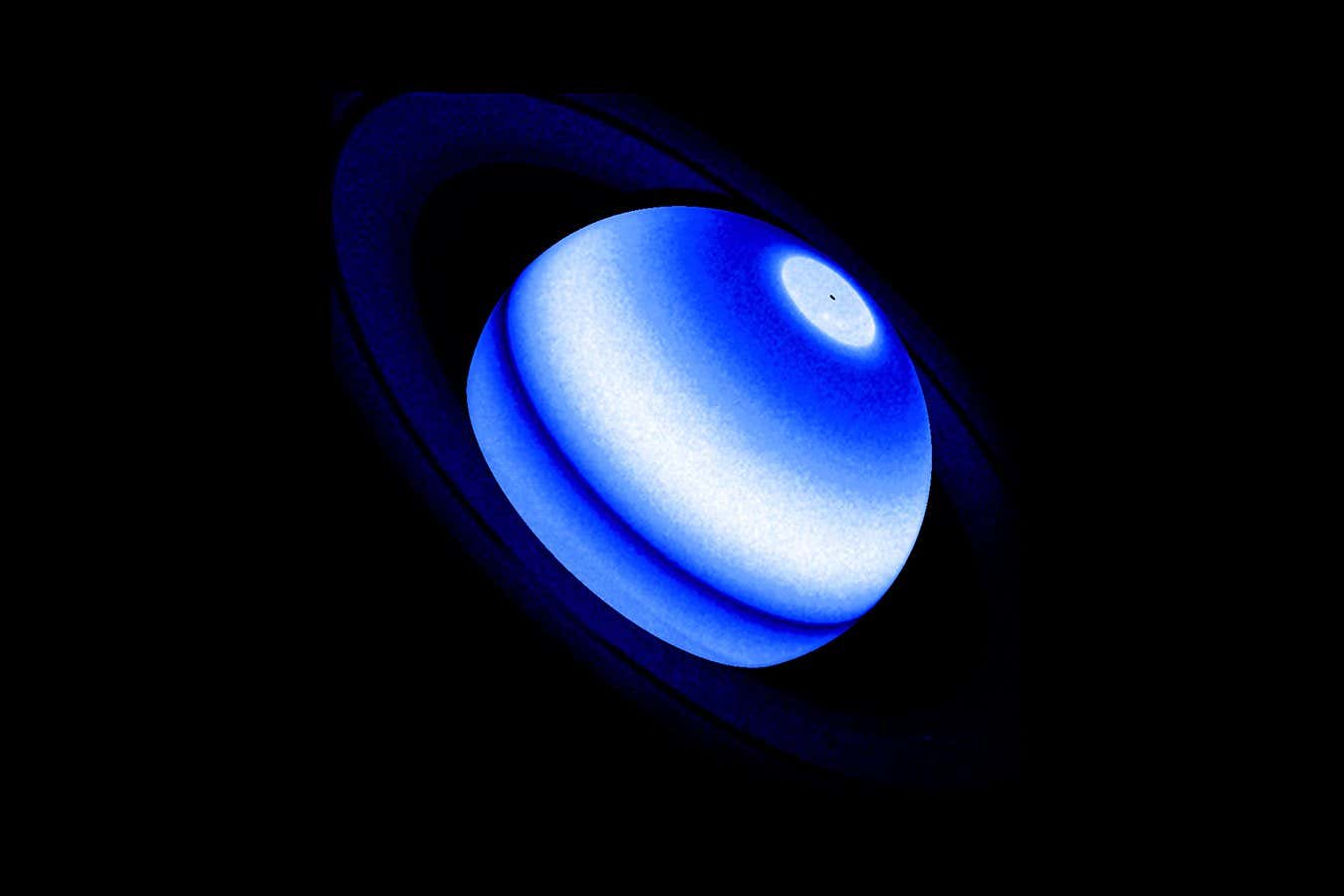
30 March 2023
Observations from five spacecraft over 40 years have shown that as Saturn’s rings slowly disintegrate, the particles fall into the planet’s atmosphere and heat it
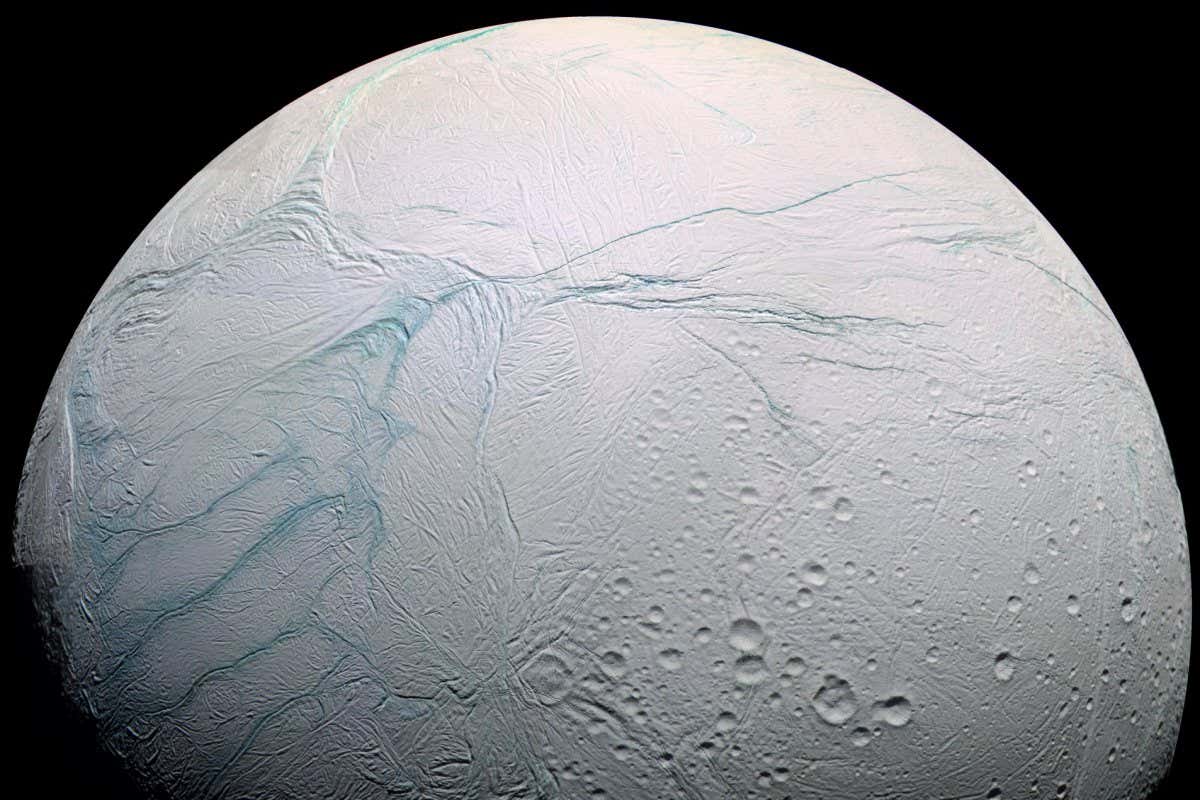
21 September 2022
Reanalysis of icy rock grains from a ring of Saturn – fed by ice plumes from its moon Enceladus – has revealed the presence of phosphorus, the only key essential element for life that hadn’t already been spotted
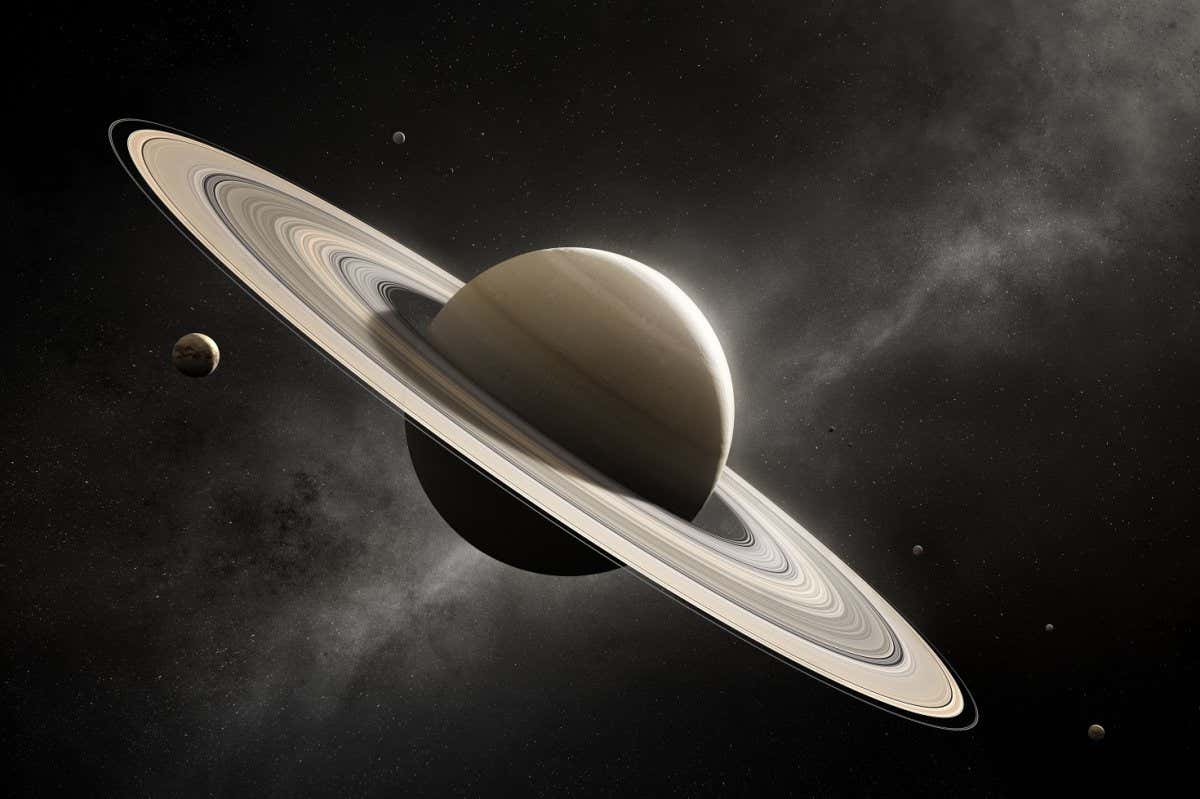
15 September 2022
The origins of Saturn’s rings, its unusual tilt and the strange tie between the planet and Neptune have been mysteries for years. They could all be solved by the destruction of a moon
11 January 2022
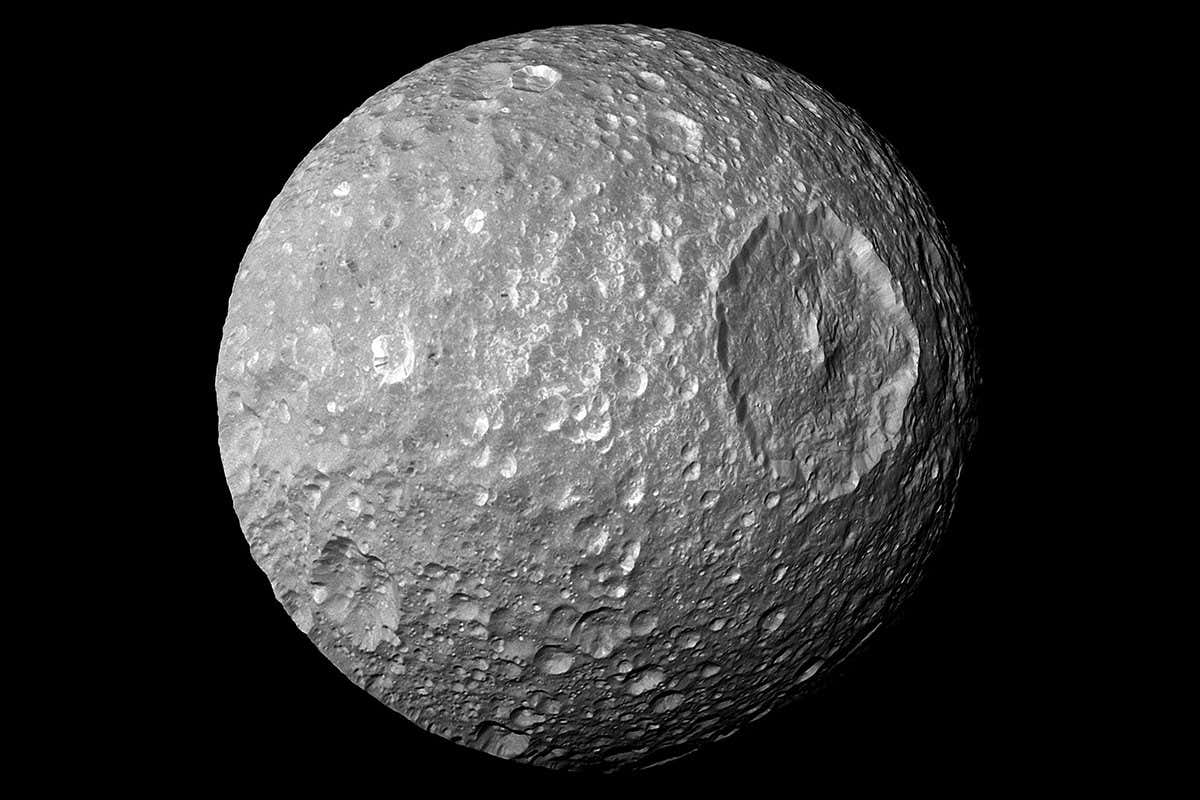
Mimas doesn’t show any hints of liquid water, and it seems impossible that it could have an ocean under its surface, but that’s exactly what a new set of simulations suggest
22 October 2021
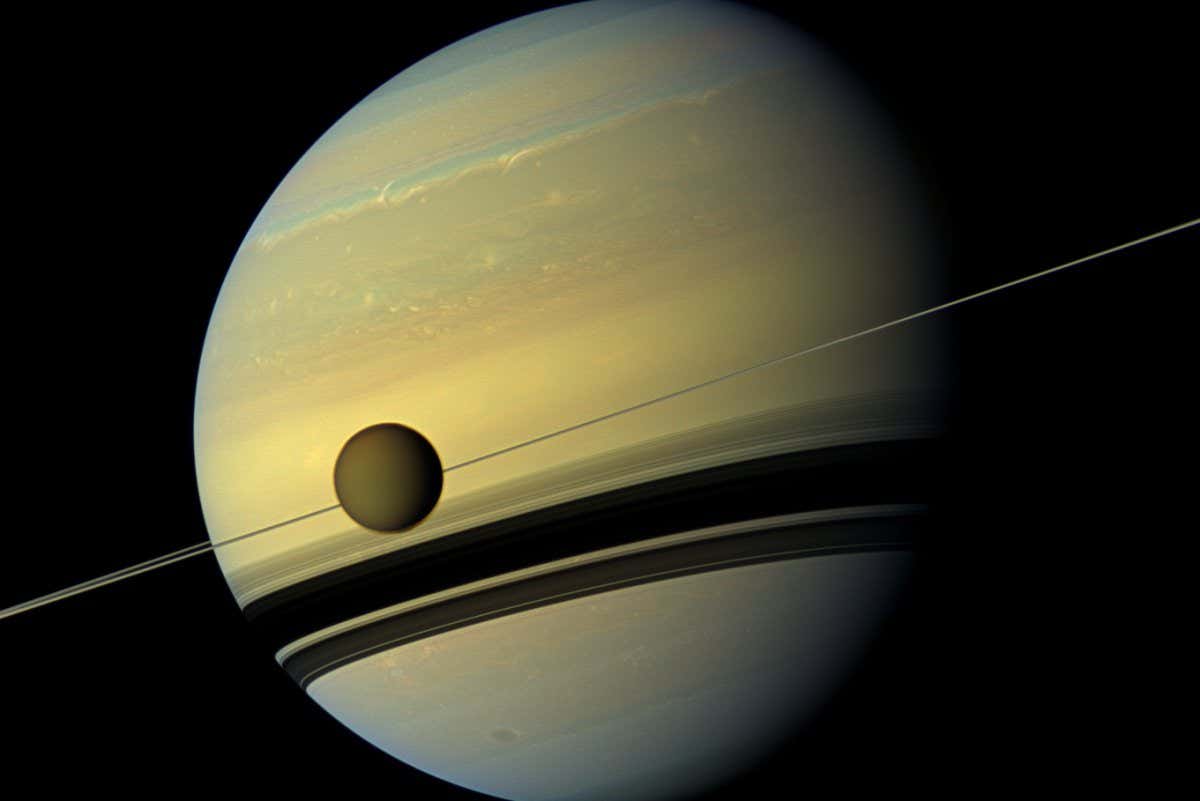
Titan, Saturn’s largest moon, is slowly migrating away from the planet, which is tilting Saturn onto its side and may eventually doom the moon to orbital chaos
28 September 2021
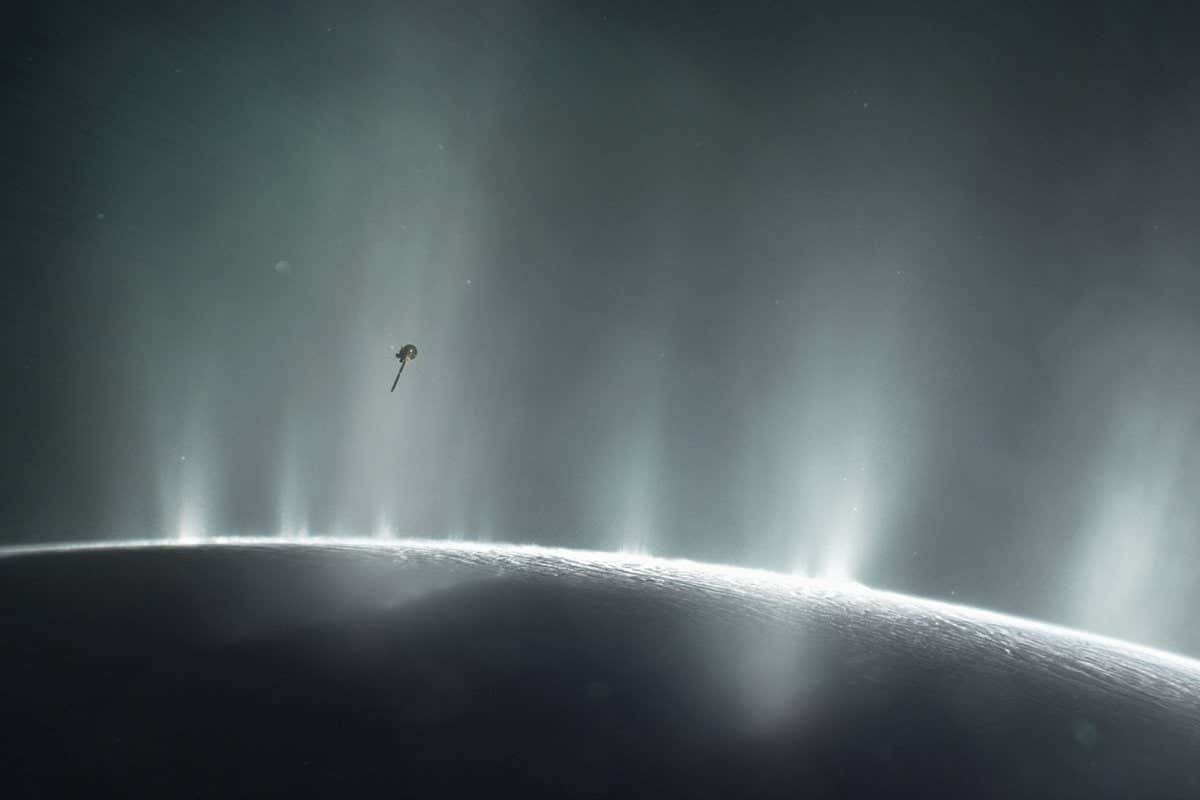
Plumes of water shot into space by Enceladus, the icy moon of Saturn, may contain molecular signs of alien life, and a spacecraft could collect them from orbit
13 August 2021
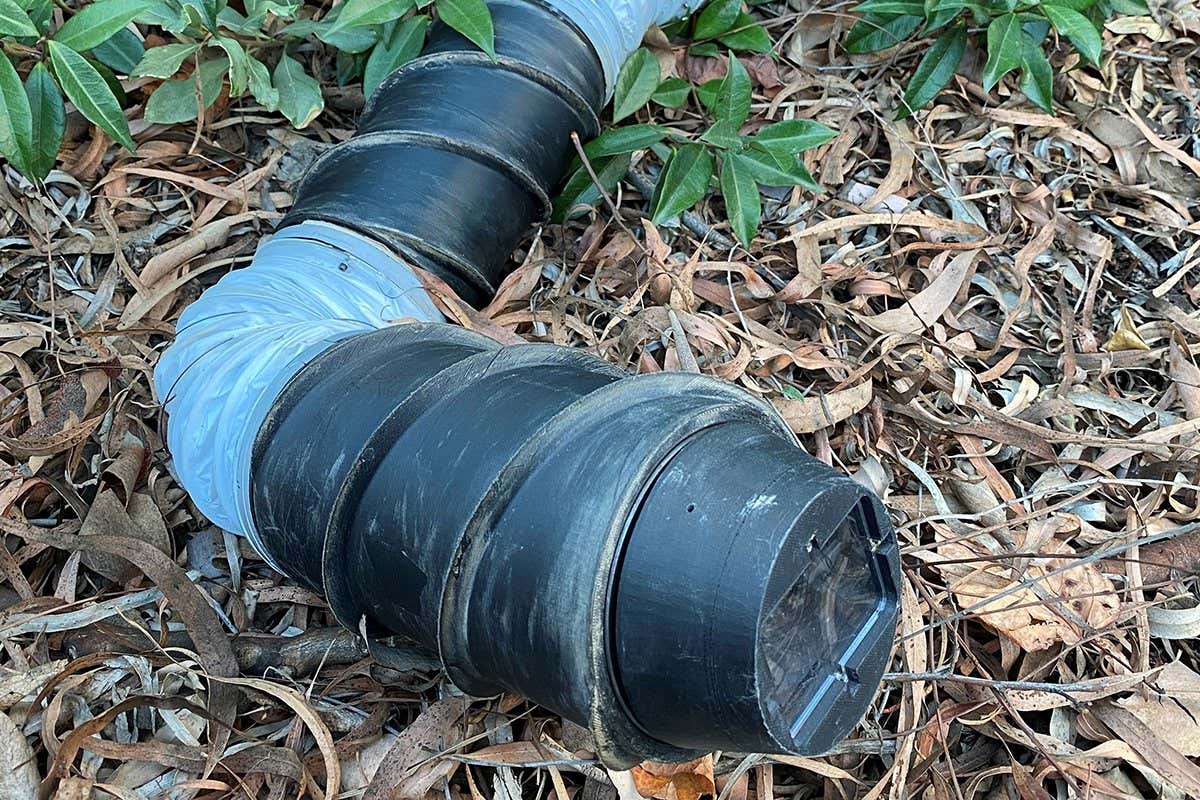
A snake-like robot made of giant screws and flexible joints that can travel across hard or loose surfaces and worm into tiny spaces such as tubes and tunnels may be key to exploring the interior of Saturn’s icy moon Enceladus
22 January 2021
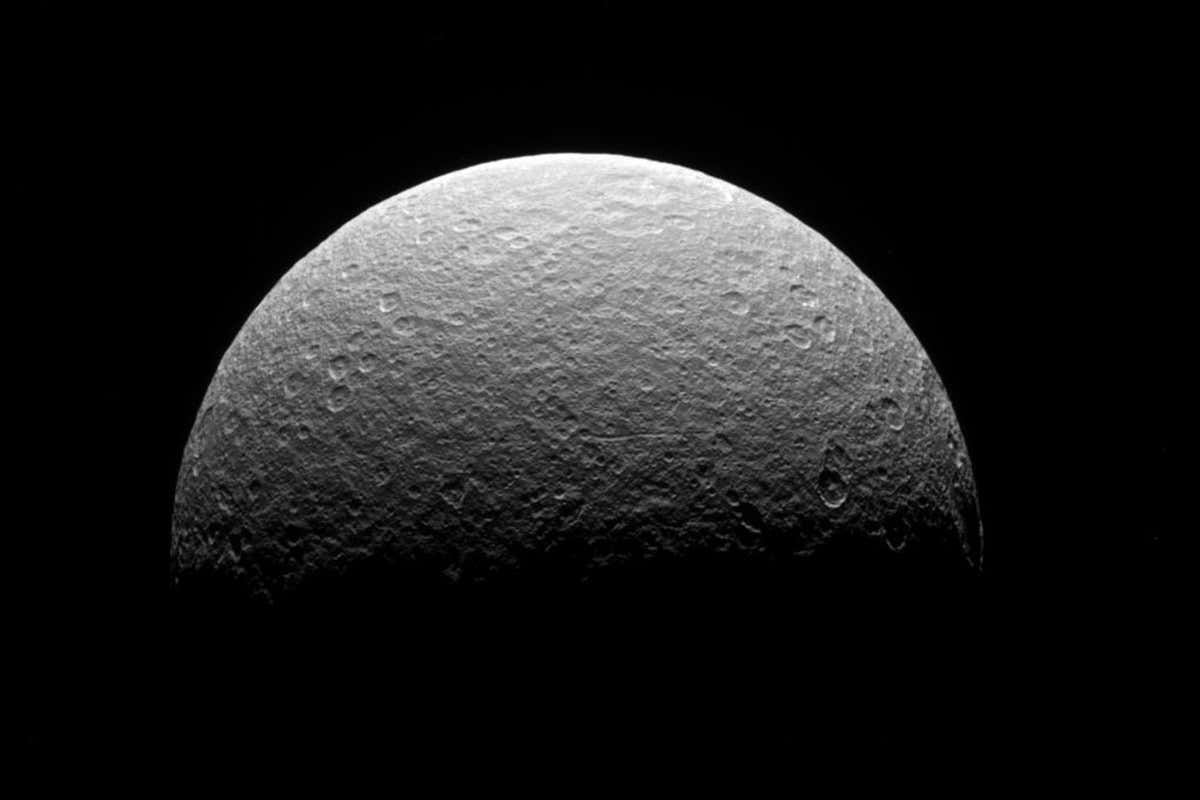
NASA’s Cassini mission spotted a strange signal coming from Saturn’s second-largest moon Rhea – it may be from hydrazine, a compound often used in rocket fuel
9 October 2019
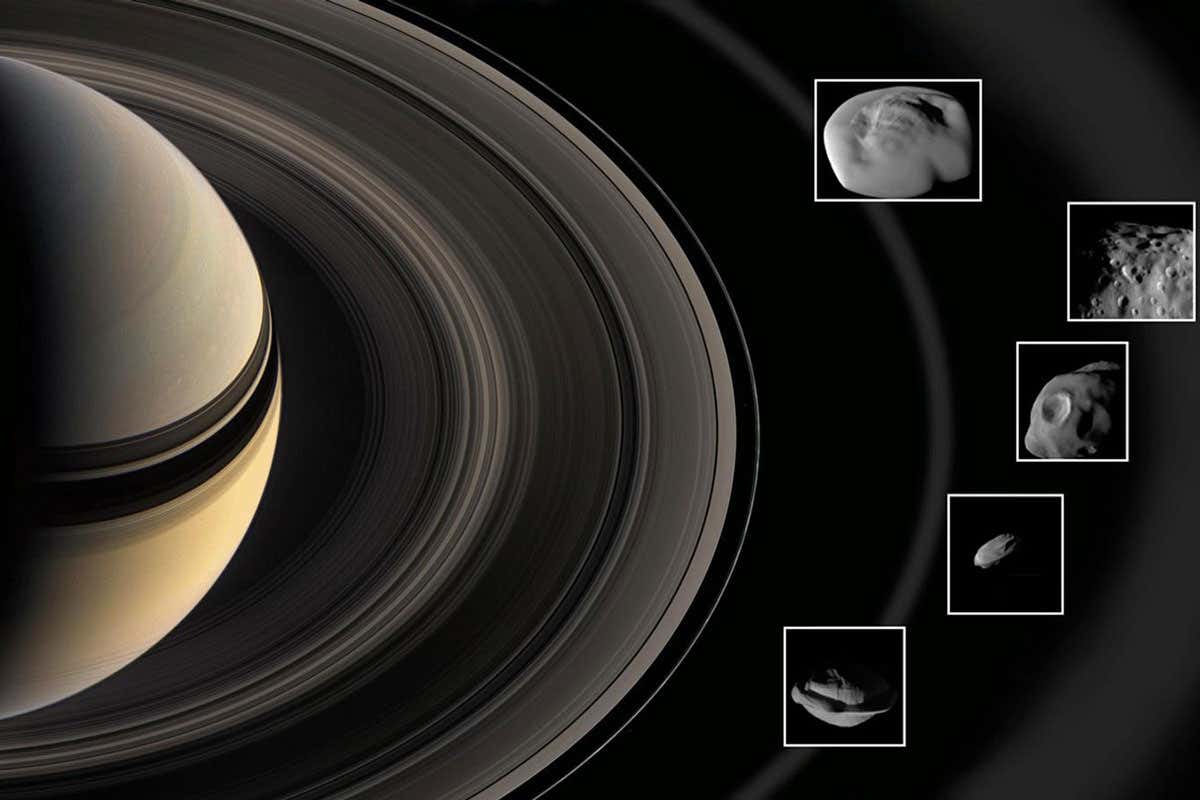
We have discovered 20 new moons orbiting Saturn, all of them less than 5 kilometres across. This means Saturn has 82 moons, the most of any known planet
