Subscribe now
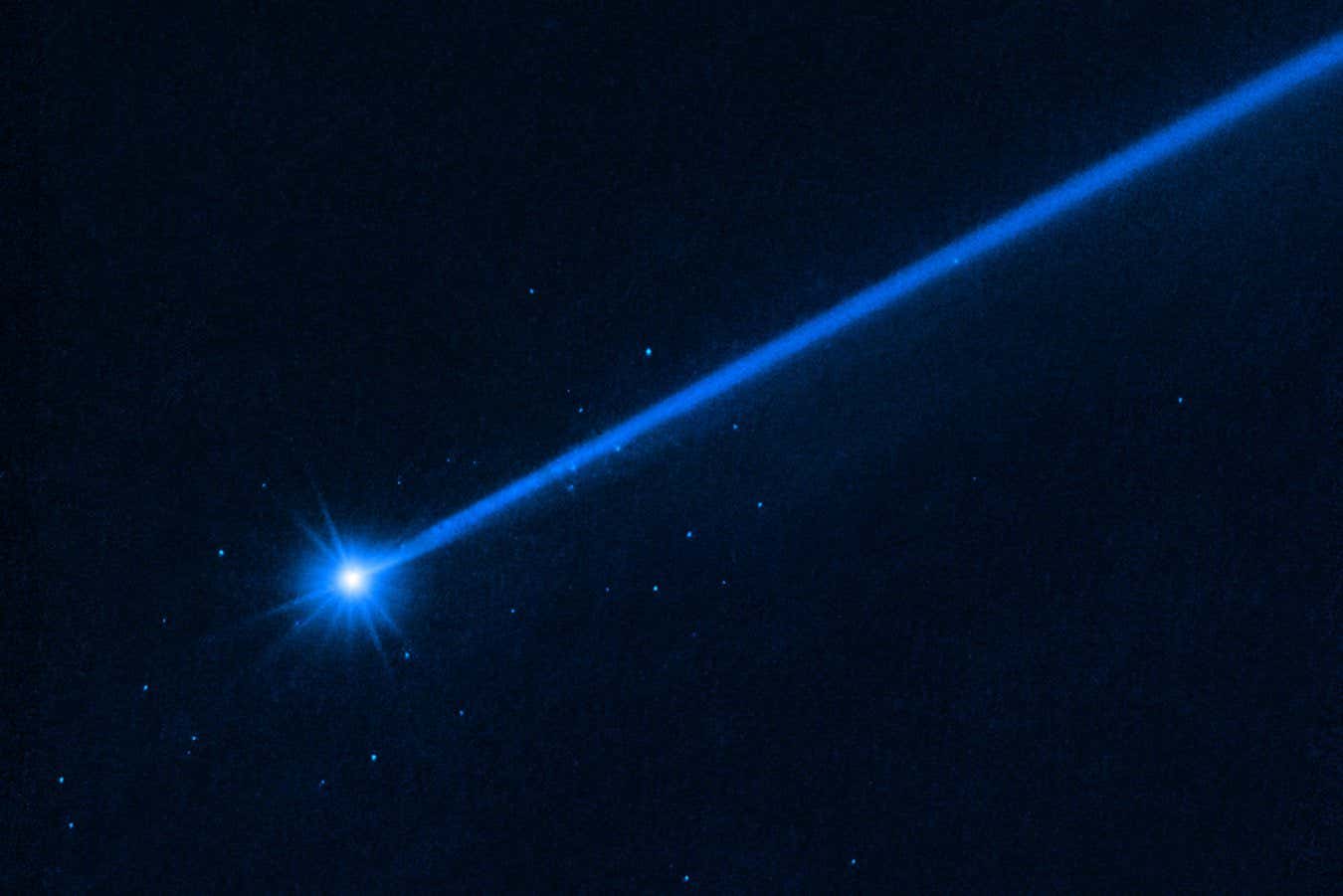
This Hubble Space Telescope image of the asteroid Dimorphos was taken on December 19, 2022, nearly four months after the asteroid was impacted by NASA?s DART mission (Double Asteroid Redirection Test). Hubble?s sensitivity reveals a few dozen boulders knocked off the asteroid by the force of the collision. These are among the faintest objects Hubble has ever photographed inside the solar system. The free-flung boulders range in size from three feet to 22 feet across, based on Hubble photometry. They are drifting away from the asteroid at a little more than a half-mile per hour. The discovery yields invaluable insights into the behavior of a small asteroid when it is hit by a projectile for the purpose of altering its trajectory.

NASA's asteroid-smashing space debris spotted by Hubble telescope

20 July 2023

The Hubble Space Telescope has snapped the results of smashing a spacecraft into the asteroid Dimorphous

Surface of asteroid Dimorphos

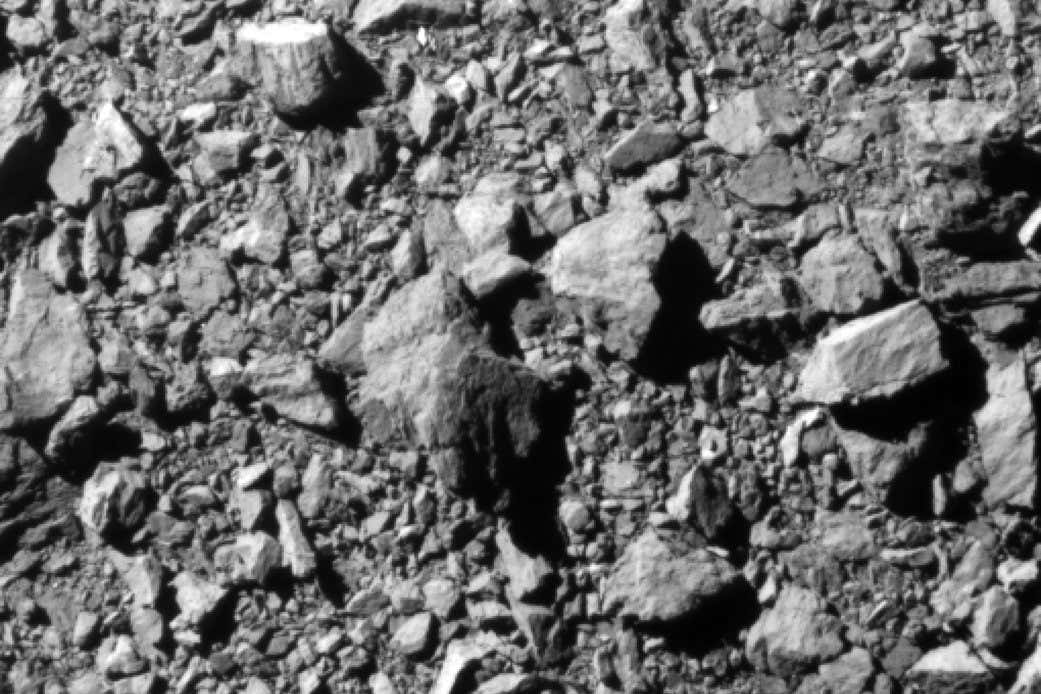
NASA's DART mission successfully smashed into asteroid Dimorphos

27 September 2022

The Double Asteroid Redirection Test spacecraft beamed back its final moments before colliding with the asteroid Dimorphos in an attempt to change its orbit, and the collision was captured by telescopes on Earth

Fireball

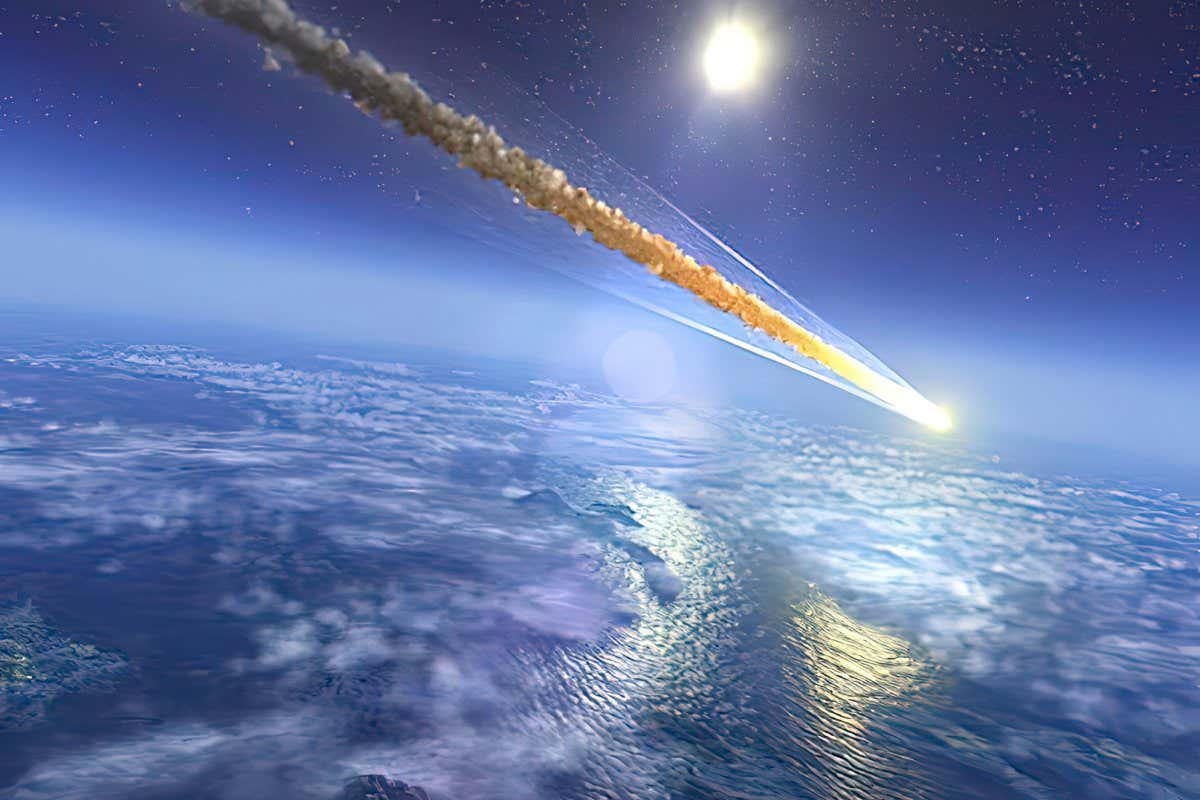
Astronomers trace fireball in Earth's skies to space rock that made it

22 September 2022

In an effort to learn more about near-Earth asteroids, astronomers have used telescopic surveys to find an image of a space rock that produced a 0.4-kiloton fireball over the Pacific Ocean

DART spacecraft

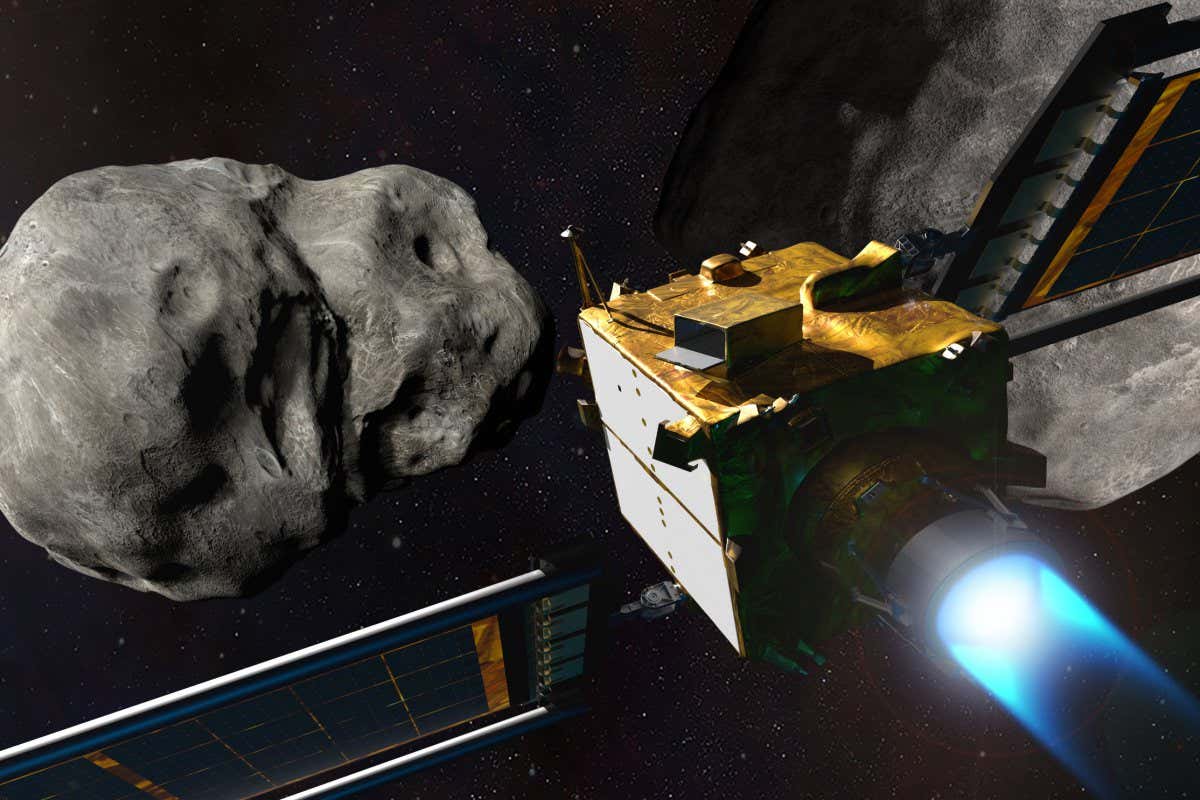
NASA is ready to knock an asteroid off course with its DART spacecraft

20 September 2022

The Double Asteroid Redirection Test is preparing to crash into the asteroid Dimorphos in an attempt to change its orbit


DON'T LOOK UP (L to R) Cate Blanchett as Brie Evantee and Tyler Perry as Jack Bremmer, Leonardo DiCaprio as Dr. Randall Mindy, and Jennifer Lawrence as Kate Dibiasky. Cr. Niko Tavernise / Netflix ?? 2021

Don’t Look Up: Could we save Earth from a comet in just six months?

28 January 2022

Astrophysicists calculate that we could use nuclear devices to stop a “planet killer” from colliding with Earth in a scenario like the one in the film
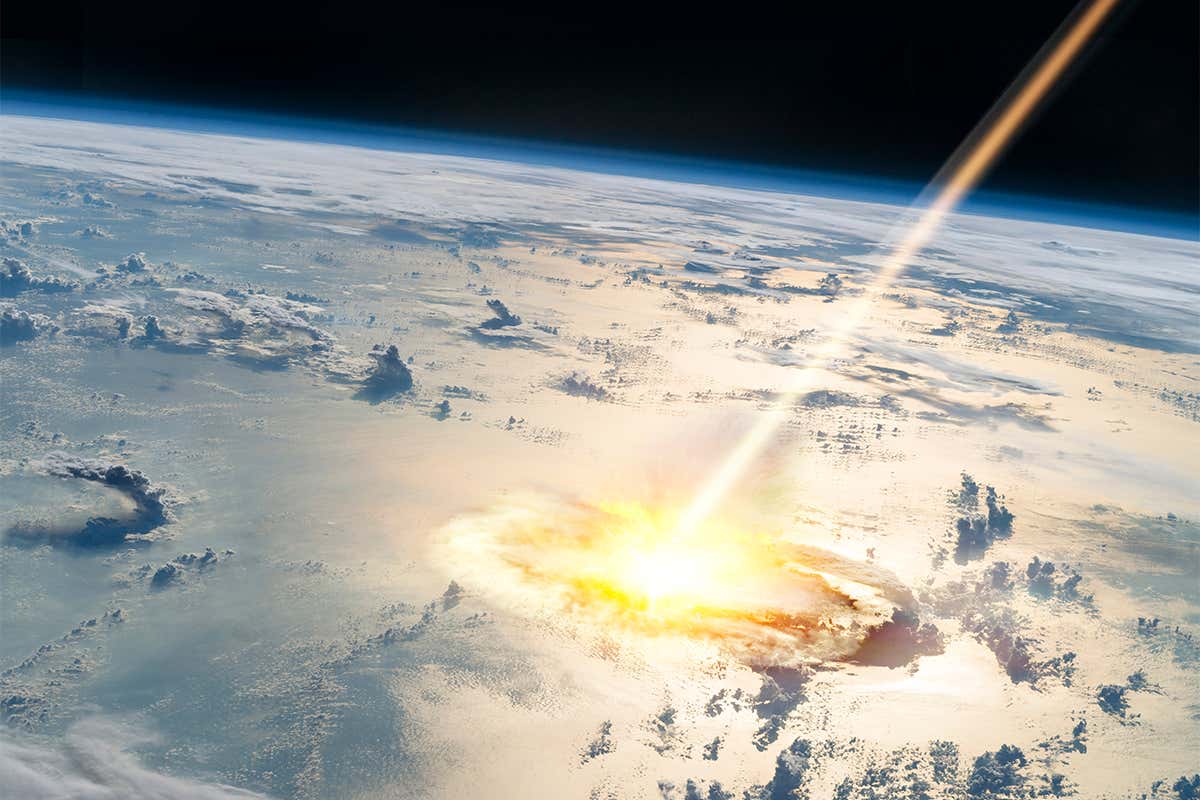

Asteroid strike

Only asteroids that hit a certain mineral trigger a mass extinction

25 May 2021

A comparison between geological records of asteroid impacts and mass extinctions suggests that only space rocks that strike an area rich in a certain mineral have a cataclysmic effect on life, no matter their size
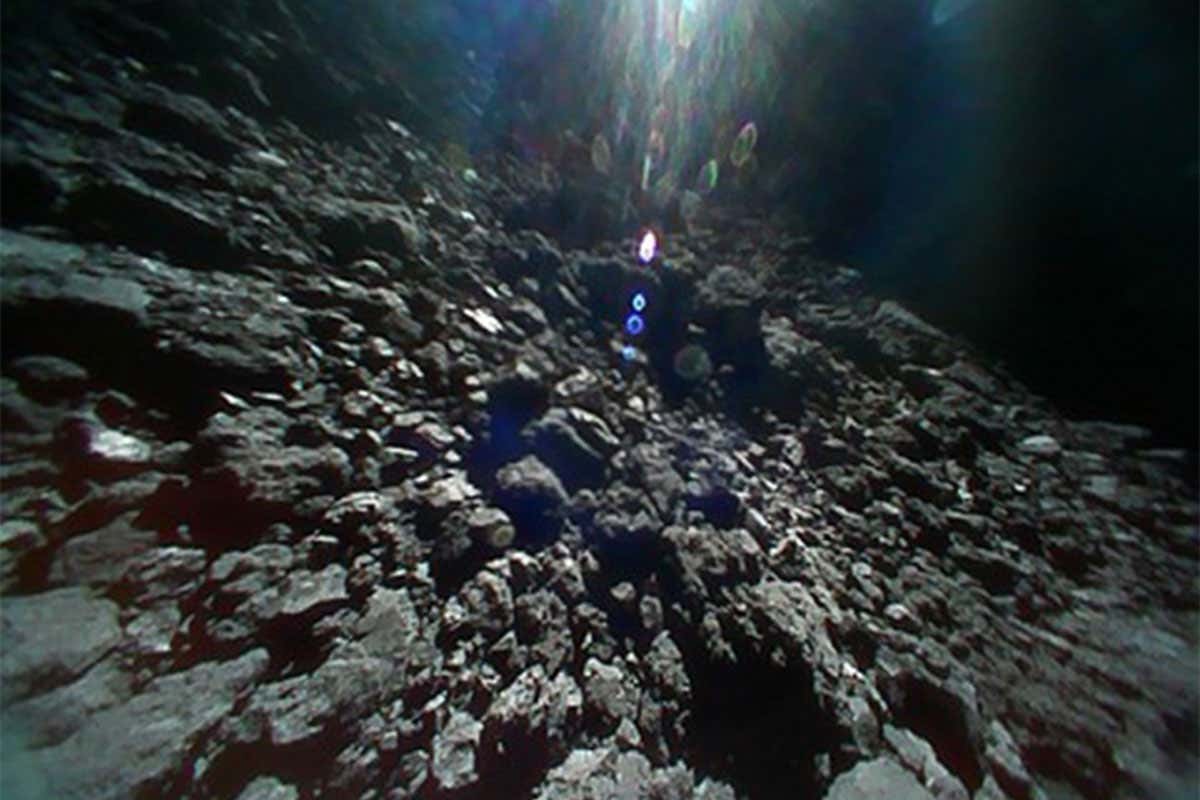

The rocky surface of asteroid Ryugu

Japanese space hoppers capture the sun moving across an asteroid sky

27 September 2018

Japanese landers on the asteroid Ryugu have sent back more stunning images and video of the alien landscape
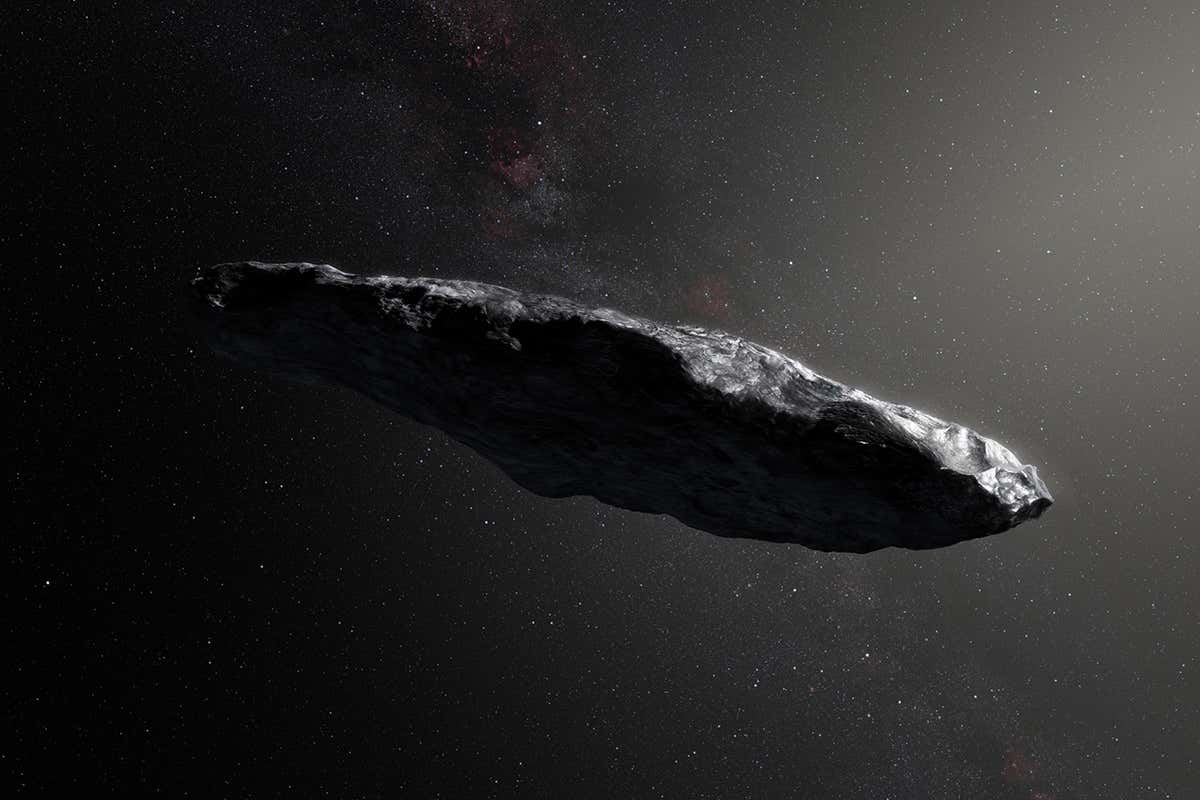

That interstellar asteroid could be a shard of a shredded planet

That interstellar asteroid could be a shard of a shredded planet

8 December 2017

'Oumuamua, an oddly shaped asteroid from beyond our solar system, recently passed by. It may have formed when a planet was ripped into fragments by its star
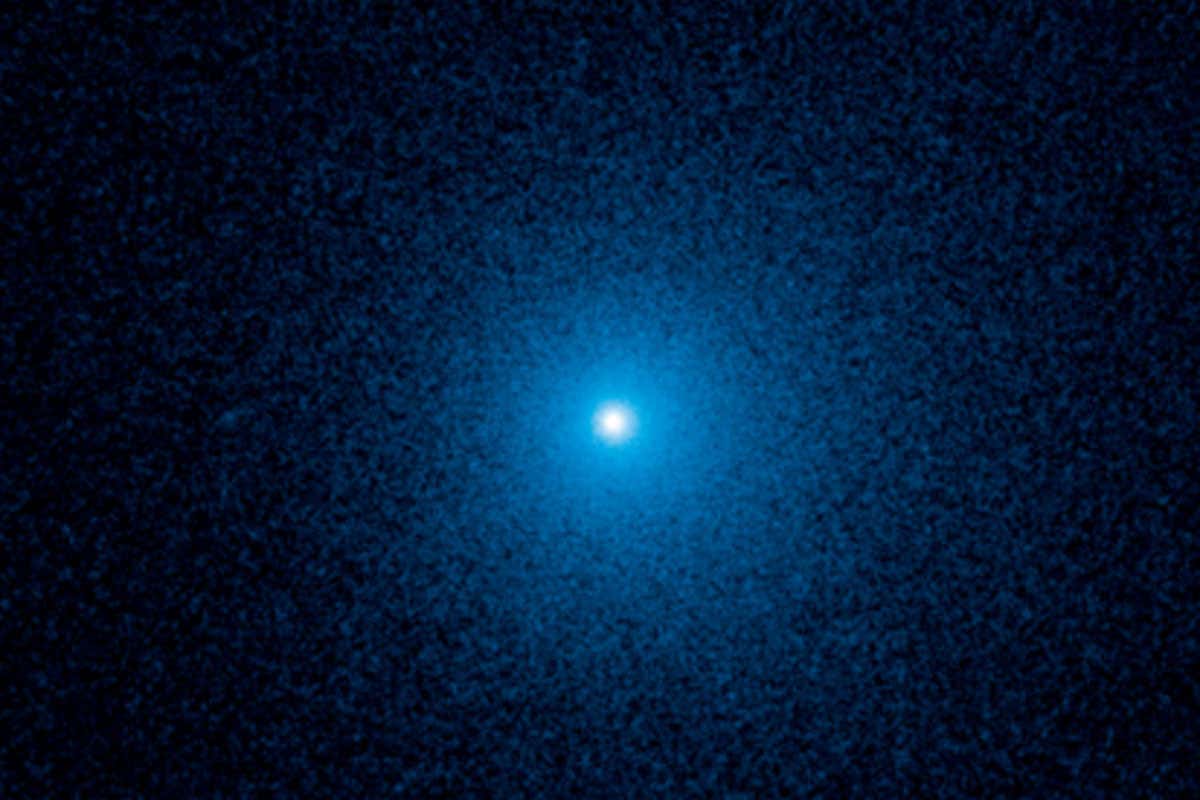

Tracking the first interstellar asteroid back to its home star

Tracking the first interstellar asteroid back to its home star

9 November 2017

Last month, astronomers saw the first asteroid from outside our solar system speed by. Now, they're tracing its orbit back to find out where it came from


Sign up to our weekly newsletter

Receive a weekly dose of discovery in your inbox. We'll also keep you up to date with New Scientist events and special offers.

Sign up
Piano Exit Overlay Banner Mobile Piano Exit Overlay Banner Desktop