Subscribe now
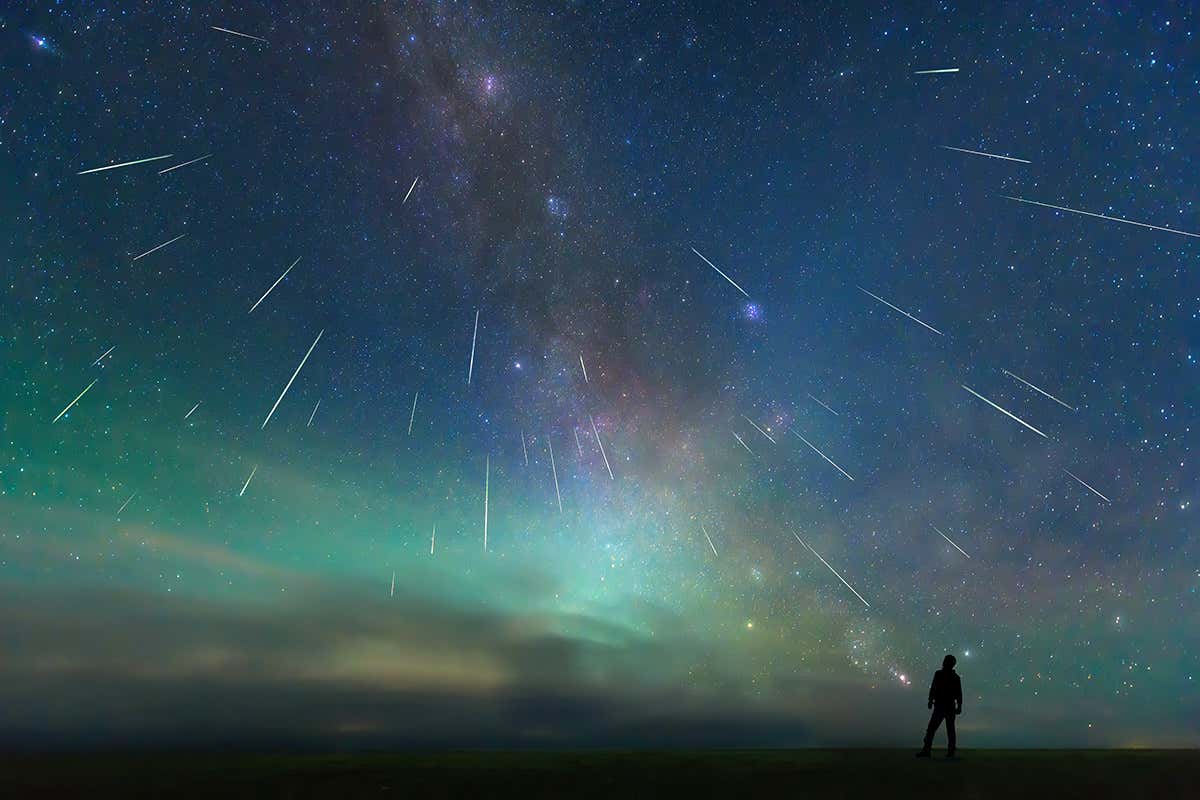
We are finally closing in on the cosmic origins of the “OMG particle”

We are finally closing in on the cosmic origins of the “OMG particle”

30 May 2023

Three decades ago, we spotted the single most energetic particle ever seen, nicknamed the 'Oh-My-God particle'. Since then, we have seen many more ultra-high-energy cosmic rays – and now we are unravelling the mystery of what produces them
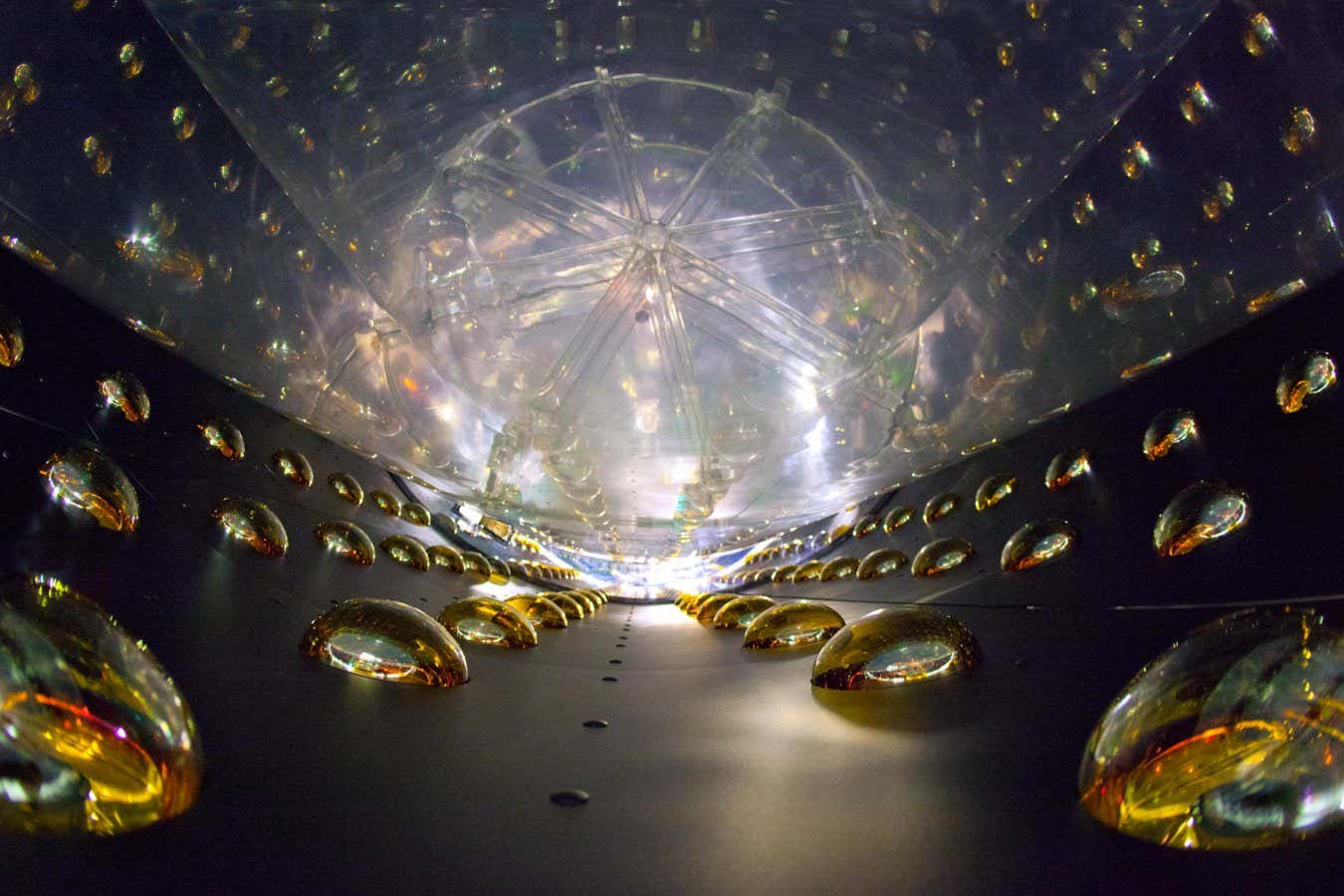
HA6GE7 departmentofenergy 8056998030 The Daya Bay Antineutrino Detector

What was the universe's first second like? These particles can tell us

24 April 2023

If we could detect them, cosmic neutrinos would paint a picture of the universe in the instant after it began. Physicist Martin Bauer has come up with a plan to do just that


inventory of the universe

Your essential guide to the many breathtaking wonders of the universe

22 April 2023

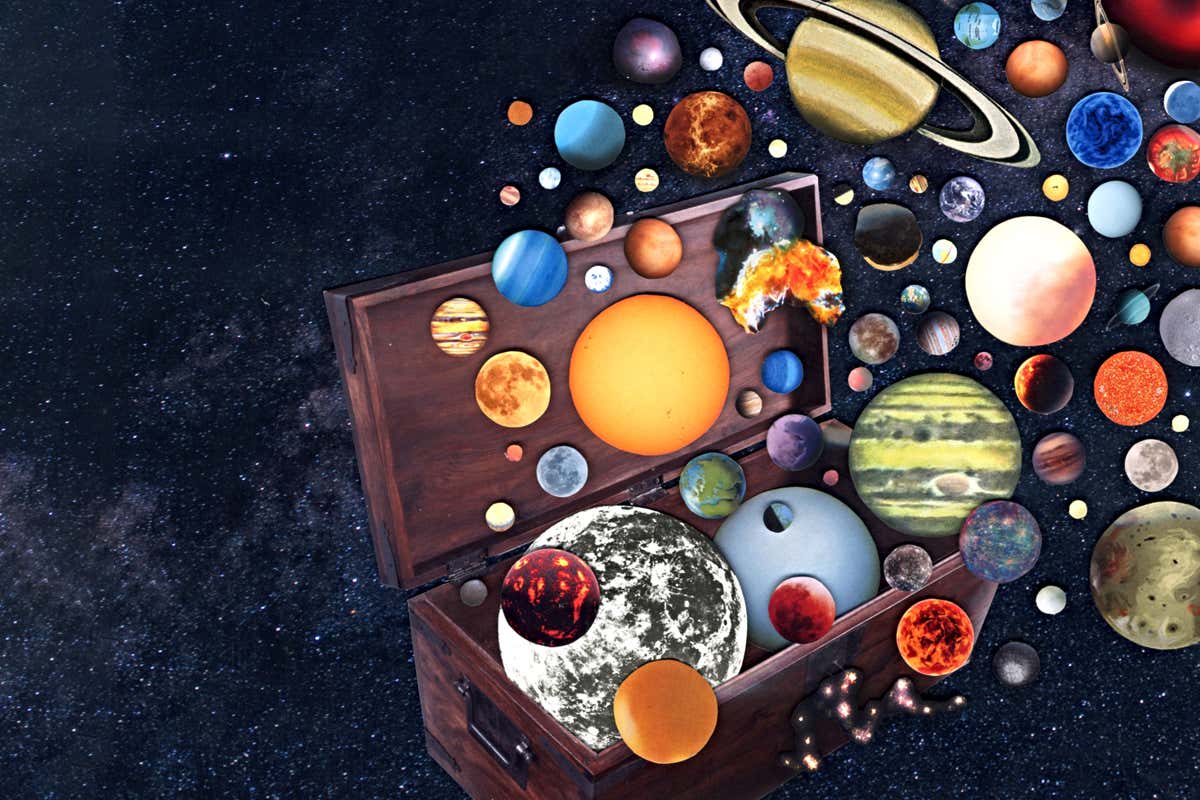
An abridged inventory of everything there is in the universe – from rogue planets and exomoons to supernovae, supermassive black holes and the cosmic web.


What our attempts to communicate with alien civilisations say about us

What our attempts to communicate with alien civilisations say about us

14 December 2022

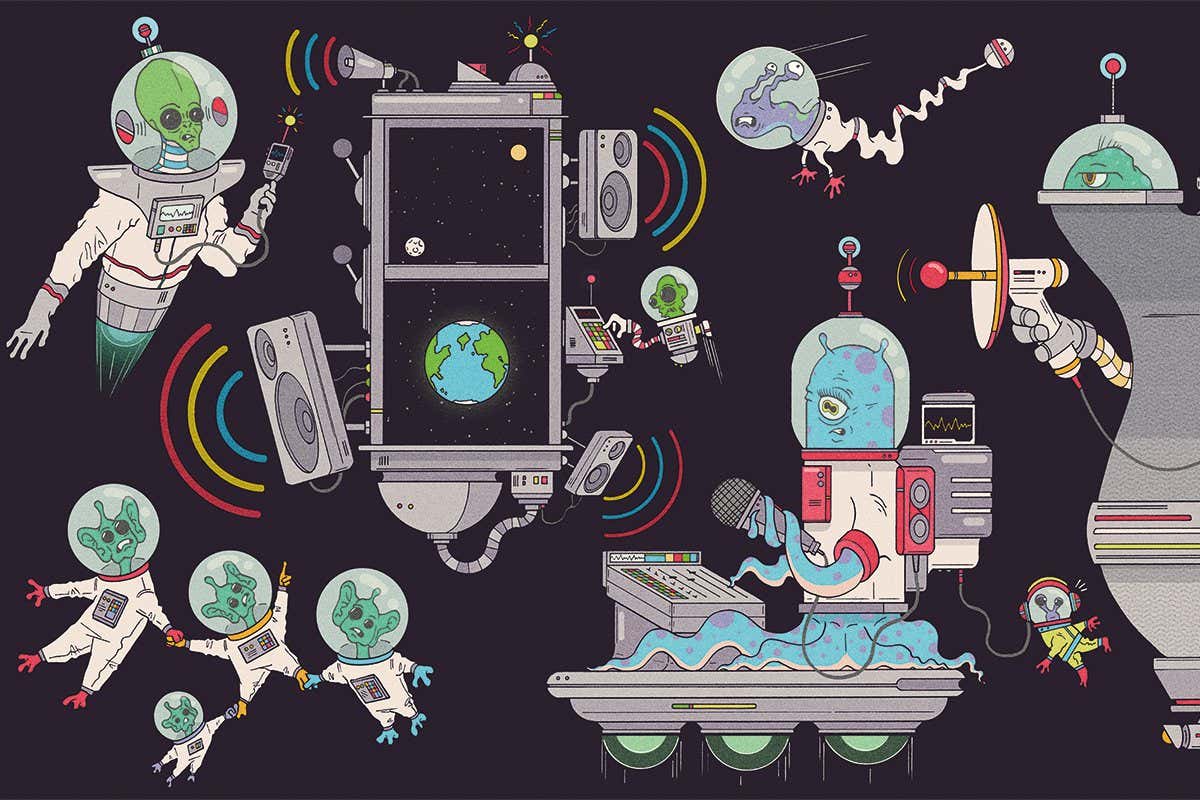
From serious efforts to declare our presence to extraterrestrial civilisations to daft publicity stunts, we have been sending messages to space for decades. What should a new postcard to the stars say?


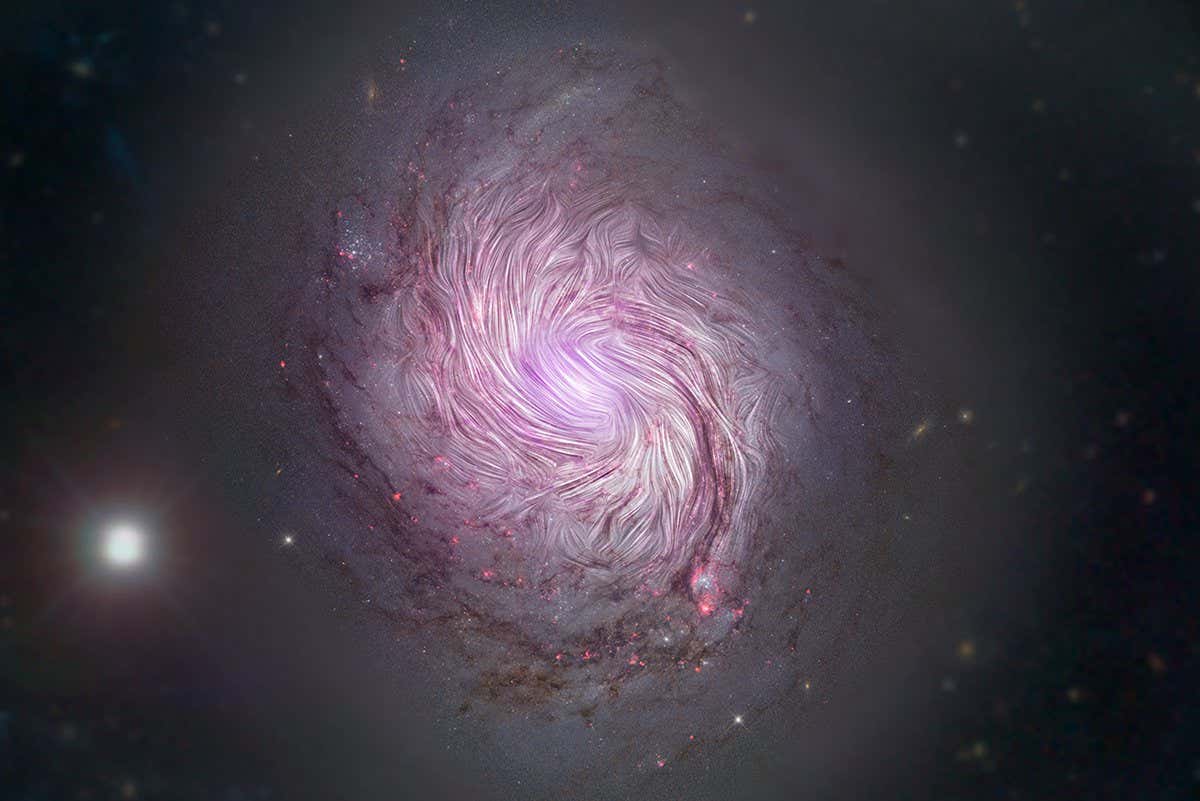
Magnetic fields in NGC 1068, or M77, are shown as streamlines over a visible light and X-ray composite image of the galaxy from the Hubble Space Telescope, the Nuclear Spectroscopic Array, and the Sloan Digital Sky Survey. The magnetic fields align along the entire length of the massive spiral arms ? 24,000 light years across (0.8 kiloparsecs) ? implying that the gravitational forces that created the galaxy?s shape are also compressing its magnetic field. This supports the leading theory of how the spiral arms are forced into their iconic shape known as ?density wave theory.? SOFIA studied the galaxy using far-infrared light (89 microns) to reveal facets of its magnetic fields that previous observations using visible and radio telescopes could not detect. Credits: NASA/SOFIA; NASA/JPL-Caltech/Roma Tre Univ. https://www.nasa.gov/feature/how-to-shape-a-spiral-galaxy

Did magnetism shape the universe? An epic experiment suggests it did

5 October 2022

The idea that magnetism helped shape the universe has been dismissed by scientists for decades, but now new experiments involving plasma that is hotter than the sun are prompting a rethink


Controversial claim that the universe is skewed could upend cosmology

Controversial claim that the universe is skewed could upend cosmology

27 April 2022

Our understanding of the universe is underpinned by the cosmological principle: the assumption that, on the grandest scales, it looks more or less the same in all directions. What if that's wrong?


How the James Webb telescope will rewrite the story of the universe

How the James Webb telescope will rewrite the story of the universe

8 December 2021

The most anticipated space telescope ever is about to launch. It will give us a clear picture of the first stars and reveal the atmospheres of exoplanets too – if it unfolds without a hitch


Satellites and junk are littering space and ruining our night skies

Satellites and junk are littering space and ruining our night skies

27 October 2021

We are sending ever more stuff into space, and now megaconstellations of satellites risk causing light pollution on Earth and disastrous debris in orbit - but it's not too late to save our skies


Is there an ancient black hole at the edge of the solar system?

Is there an ancient black hole at the edge of the solar system?

31 March 2021

Hints of a hefty source of gravity beyond Pluto sparked the search for a possible “Planet Nine”. Now, some astronomers think it could instead be a black hole from the big bang, offering a rare glimpse into the early universe


Searching for stardust: How to find micrometeorites in your gutters

Searching for stardust: How to find micrometeorites in your gutters

16 December 2020

Space dust is constantly falling to Earth, sprinkling rooftops with beautiful particles unchanged since the birth of the solar system. To find some, start with a sieve – and be patient


Sign up to our weekly newsletter

Receive a weekly dose of discovery in your inbox. We'll also keep you up to date with New Scientist events and special offers.

Sign up
Piano Exit Overlay Banner Mobile Piano Exit Overlay Banner Desktop