Subscribe now
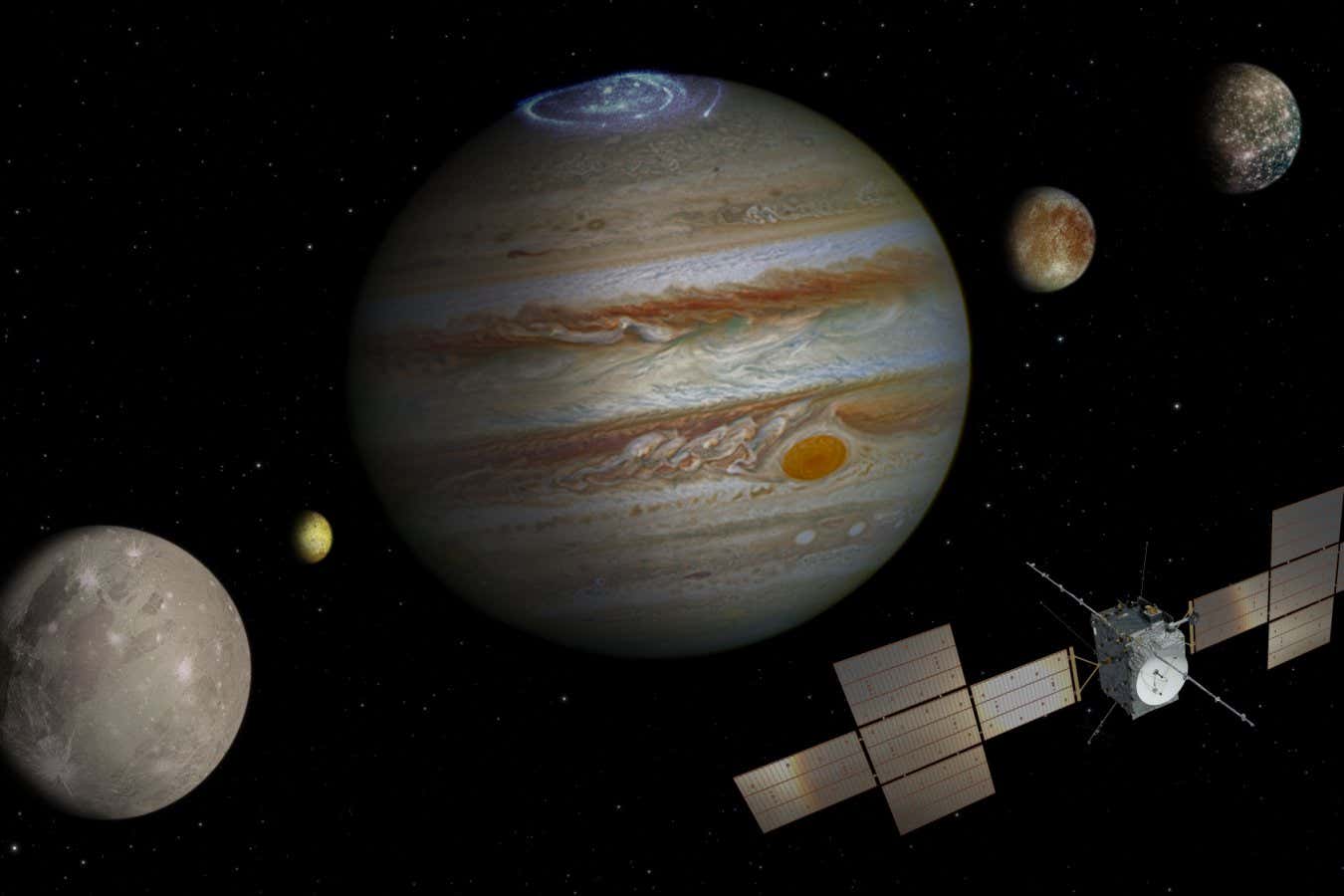
https://www.esa.int/ESA_Multimedia/Images/2017/07/Exploring_Jupiter t may still be some years away from launch, and over a decade before our Jupiter Icy Moons Explorer reaches the gas giant and its icy moons, but preparations are well under way. This new artist?s impression depicts the final spacecraft design, the construction of which is being overseen by Airbus Defence and Space. The spacecraft?s solar wings form a distinctive cross-shape totalling 97 sq m, the largest ever flown on an interplanetary mission. The size is essential to generate sufficient power ? around 850 W ? for the instruments and spacecraft so far from the Sun. The spacecraft is furnished with a laboratory of instruments that will investigate Jupiter?s turbulent atmosphere and vast magnetosphere, as well as study the planet-sized moons Ganymede, Europa and Callisto. All three moons are thought to have oceans of liquid water beneath their icy crusts and should provide key clues on the potential for such moons to harbour habitable environments. Juice?s cameras will capture exquisite details of the moon?s features, as well as identify the ices and minerals on their surfaces. Other instruments will sound the subsurface and interior of the moons to better understand the location and nature of their buried oceans. The tenuous atmosphere around the moons will also be explored. The spacecraft will also include booms such as a 10 m-long magnetometer mast (seen towards the bottom of Juice in the artist impression), a 16 m radar antenna (the long boom across the top), and antennas to measure electric and magnetic fields. Ganymede is the only moon in the Solar System to generate its own internal magnetic field, and Juice is well equipped to document its behaviour and explore its interaction with Jupiter?s own magnetosphere. Juice is scheduled for launch in 2022 on a seven-year journey to the Jovian system. Its tour will include a dedicated orbit phase of Jupiter, targeted flybys of Europa, Ganymede and Callisto, and finally nine months orbiting Ganymede ? the first time any moon beyond our own has been orbited by a spacecraft. In the artist?s impression, which is not to scale, Ganymede is shown in the foreground, Callisto to the far right, and Europa centre-right. Volcanically active moon Io is also shown, at left. The moons were imaged by NASA?s Galileo spacecraft; Jupiter is seen here with a vivid aurora, captured by the NASA/ESA Hubble Space Telescope. ESA/ATG medialab; Jupiter: NASA/ESA/J. Nichols (University of Leicester); Ganymede: NASA/JPL; Io: NASA/JPL/University of Arizona; Callisto and Europa: NASA/JPL/DLR

How to spot Jupiter's icy moons

5 July 2023

Jupiter’s Galilean moons are promising places to look for life. Now is a great time to see them, says Abigail Beall
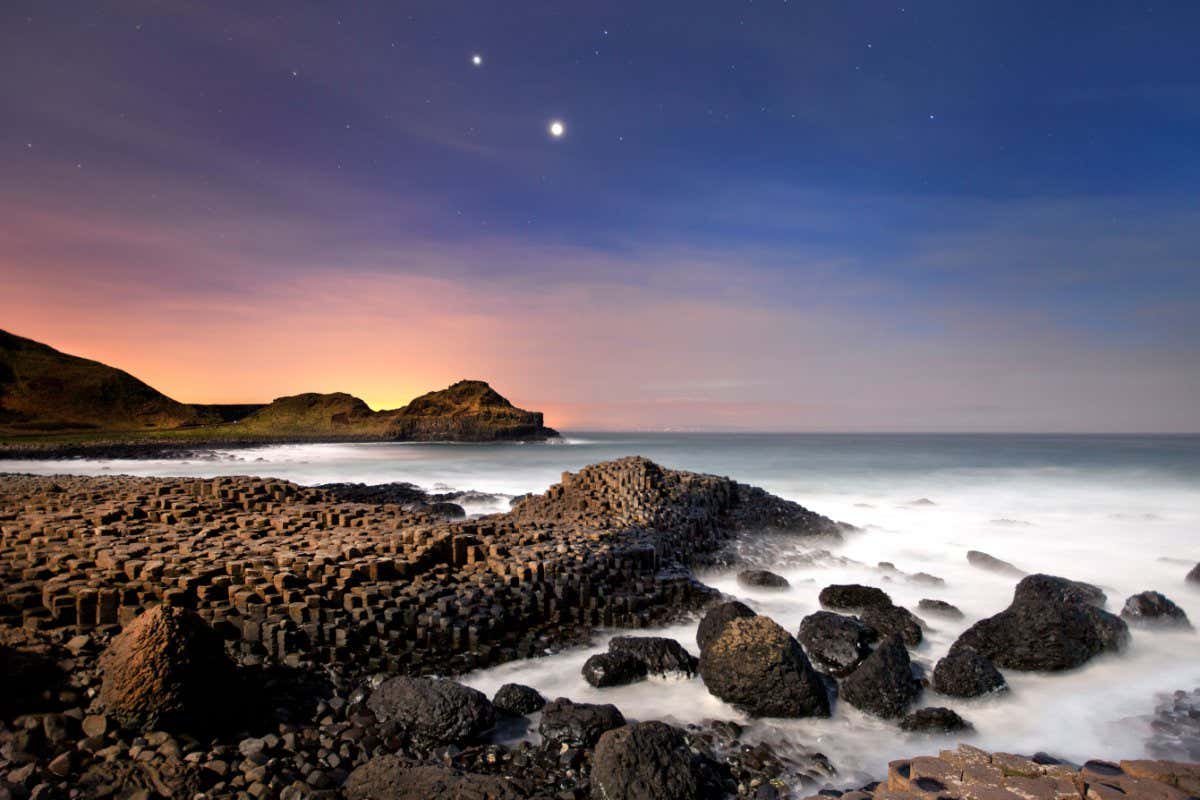

Conjunction of Jupiter and Venus as seen from the Giants Causeway in Northern Ireland

What is the Venus-Jupiter conjunction and how can you view it?

1 March 2023

The solar system’s largest planet, Jupiter, and its brightest planet, Venus, will appear to touch in the sky tonight – here’s why
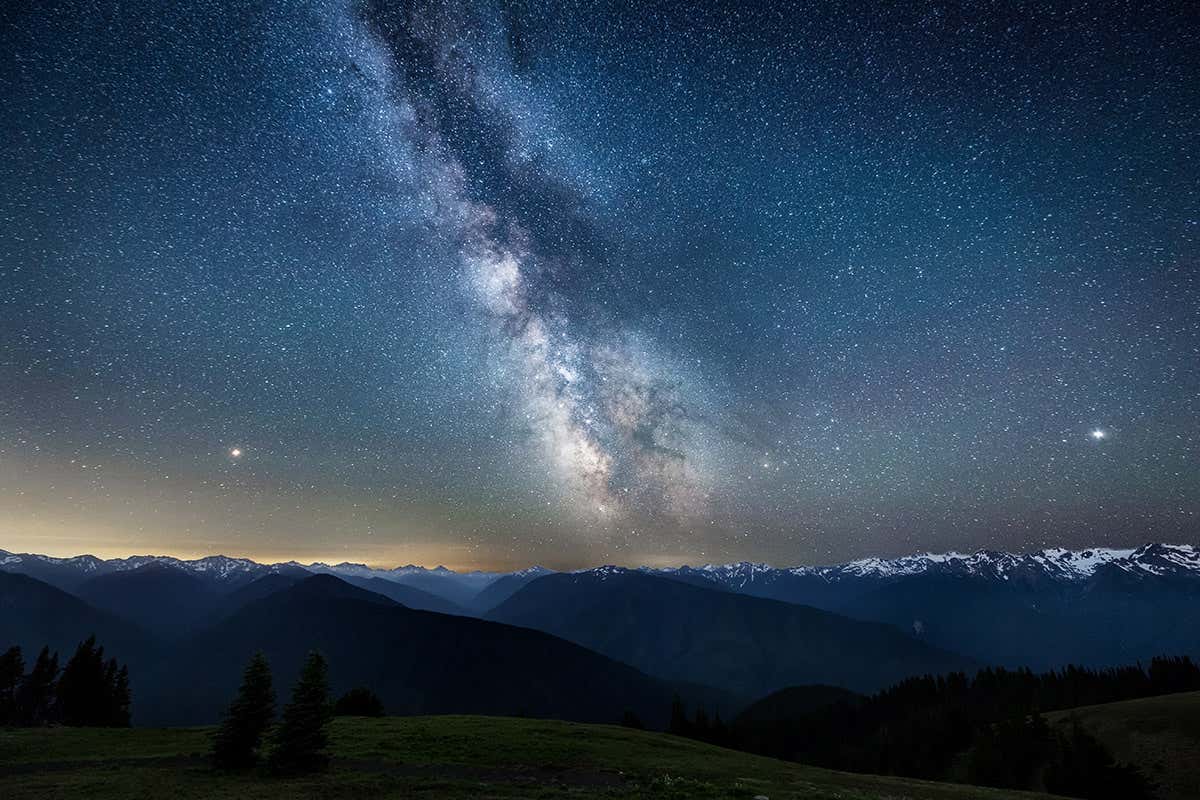

Mars is unusually close this month – here's how to spot it in the sky

Mars is unusually close this month – here's how to spot it in the sky

14 October 2020

Earth and Mars are closer this month than they have been since 2003. To spot the Red Planet, look for a bright red object towards the east after sunset or west before sunrise, says Abigail Beall
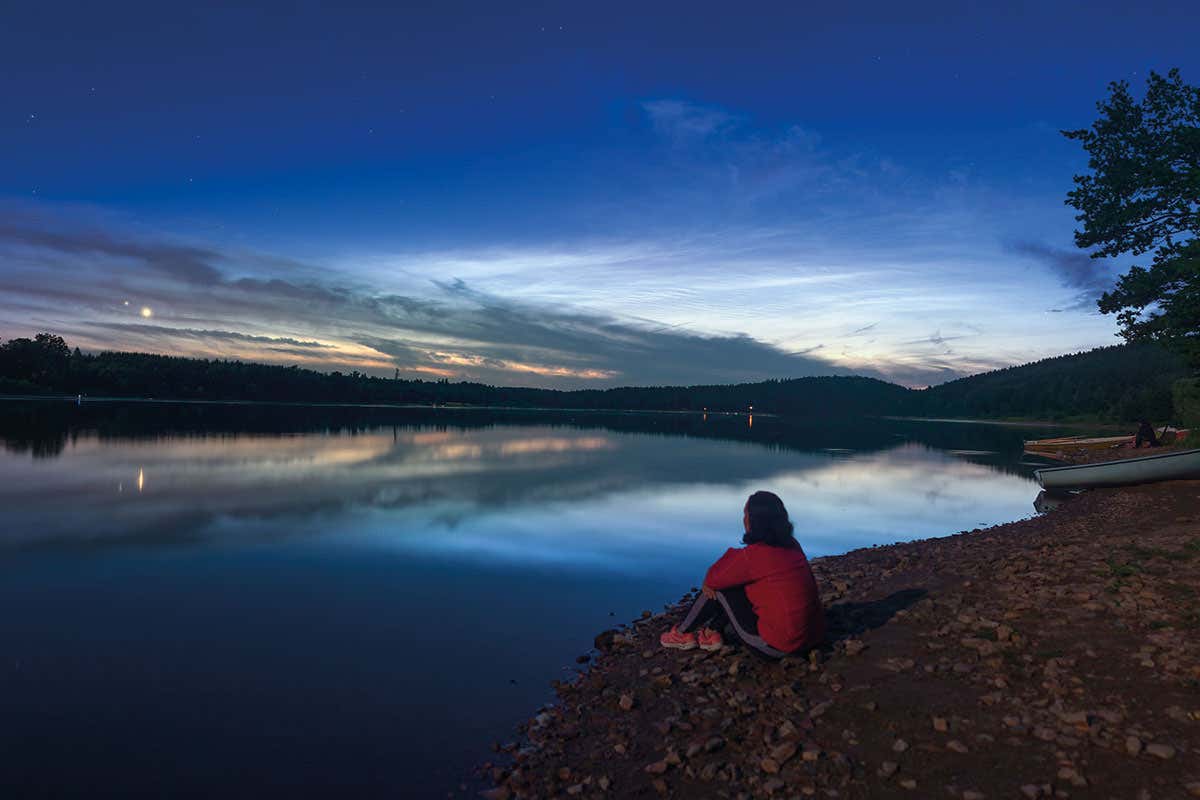

night sky

See Venus and Jupiter next to each other in the sky this week

20 November 2019

Two of the brightest planets, Venus and Jupiter, are in conjunction this week, meaning they appear to line up with Earth in the sky. Here's how to spot them
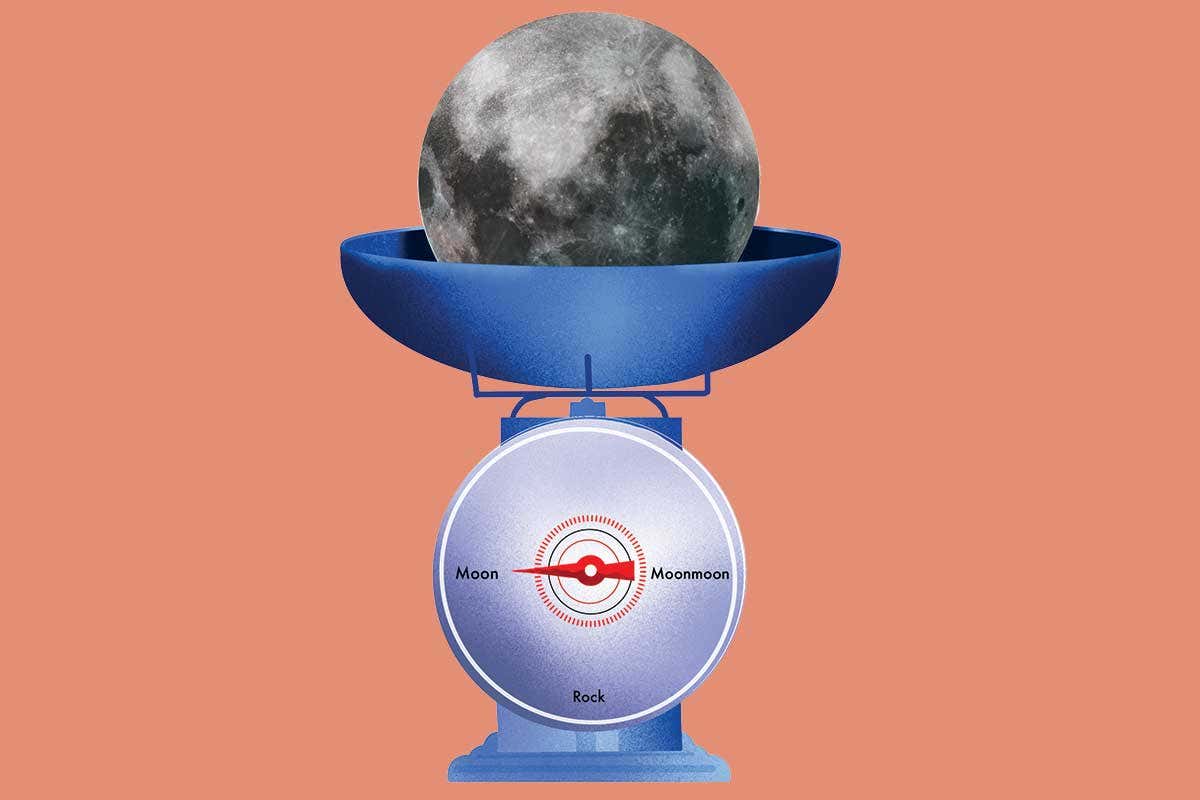

The solar system has too many moons – it's time for a cull

The solar system has too many moons – it's time for a cull

23 October 2019

Designating rocks just a few kilometres across as moons is misleading and ridiculous. We need to do a Pluto and cut moons down to size, argues Leah Crane


New Scientist Default Image

What happened when the Shoemaker-Levy 9 comet smashed into Jupiter

24 July 2019

From the archives: In 1994 comet Shoemaker-Levy 9 hit Jupiter, creating fireballs 2000 kilometres across – and raising US Congress alarm about what would happen if one hit Earth


New Scientist Default Image

We may know why Jupiter's Great Red Spot is red instead of white

16 November 2017

The gases in Jupiter's atmosphere should form white clouds, so why do they look red? Two teams have found different recipes for the red in the Great Red Spot
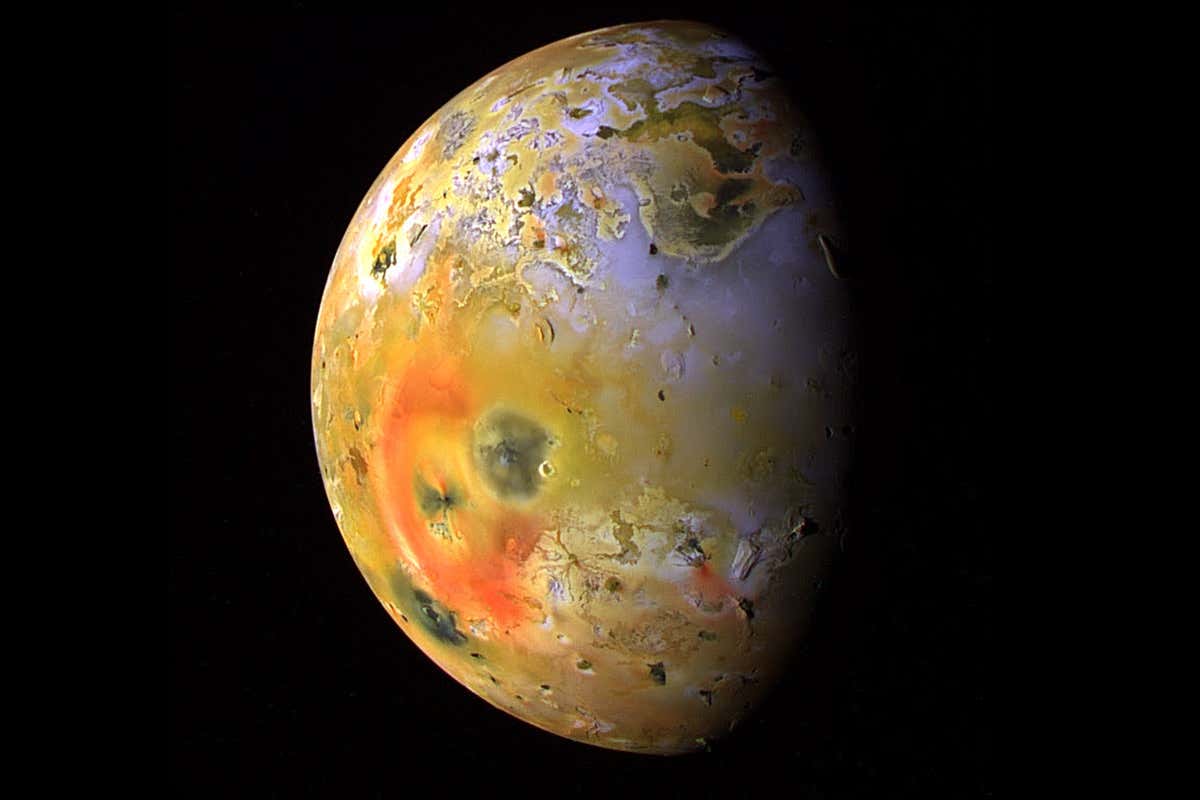

Waves surge in opposite directions around Io's largest lava lake

Waves surge in opposite directions around Io's largest lava lake

10 May 2017

Best ever images of a lava lake on Jupiter’s innermost large moon reveal its surface regenerating itself, sometimes clockwise and sometimes anticlockwise
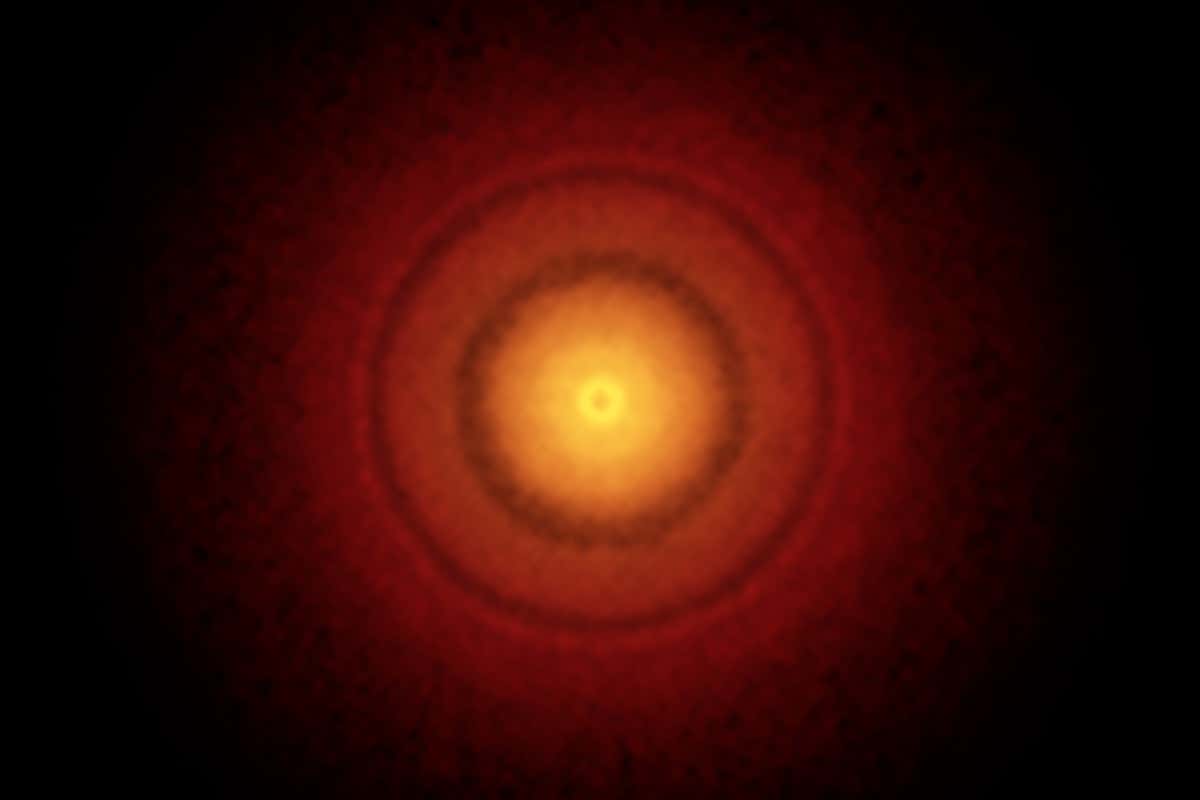

Protoplanetary disc around young star TW Hydrae.

Earth may have been born in a huge flare-up of the young sun

8 May 2017

A sudden brightening of the infant sun – called an FU Orionis outburst – could have melted dust grains and made them stick together, building our world


Sign up to our weekly newsletter

Receive a weekly dose of discovery in your inbox. We'll also keep you up to date with New Scientist events and special offers.

Sign up
Piano Exit Overlay Banner Mobile Piano Exit Overlay Banner Desktop