Subscribe now
Newton’s first law says that objects move at constant speeds until a force affects them

Newton’s first law appears to break down in the quantum realm

21 July 2023

Newton’s first law of motion says that particles move in straight lines unless influenced by a force but a new experiment shows that the quantum version of that assumption fails for quantum particles of light

Extremely cold drop of helium can be levitated forever

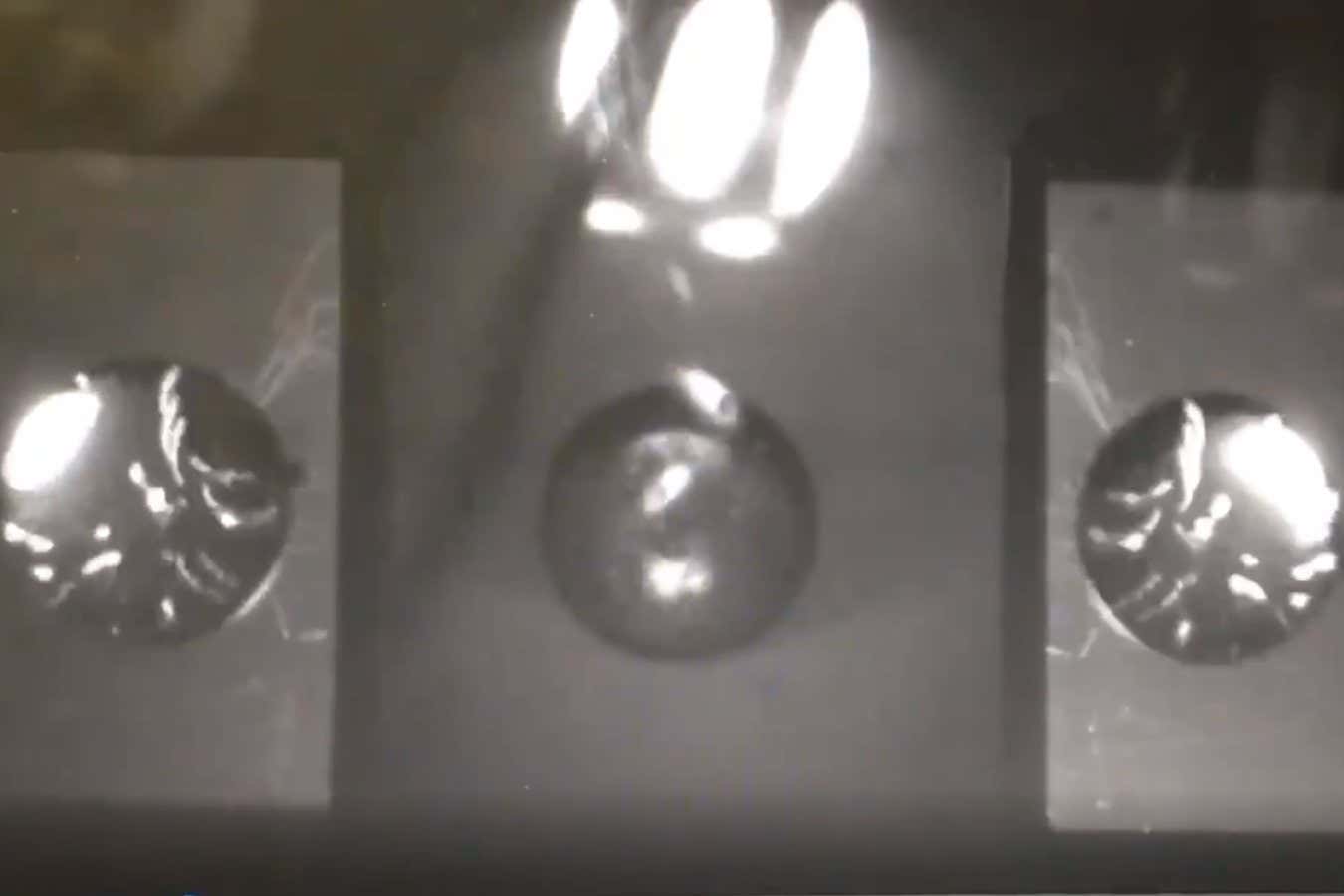
Extremely cold drop of helium can be levitated forever

9 June 2023

A drop of very cold liquid helium can be made to float for an indefinitely long time using strong magnets and quantum effects


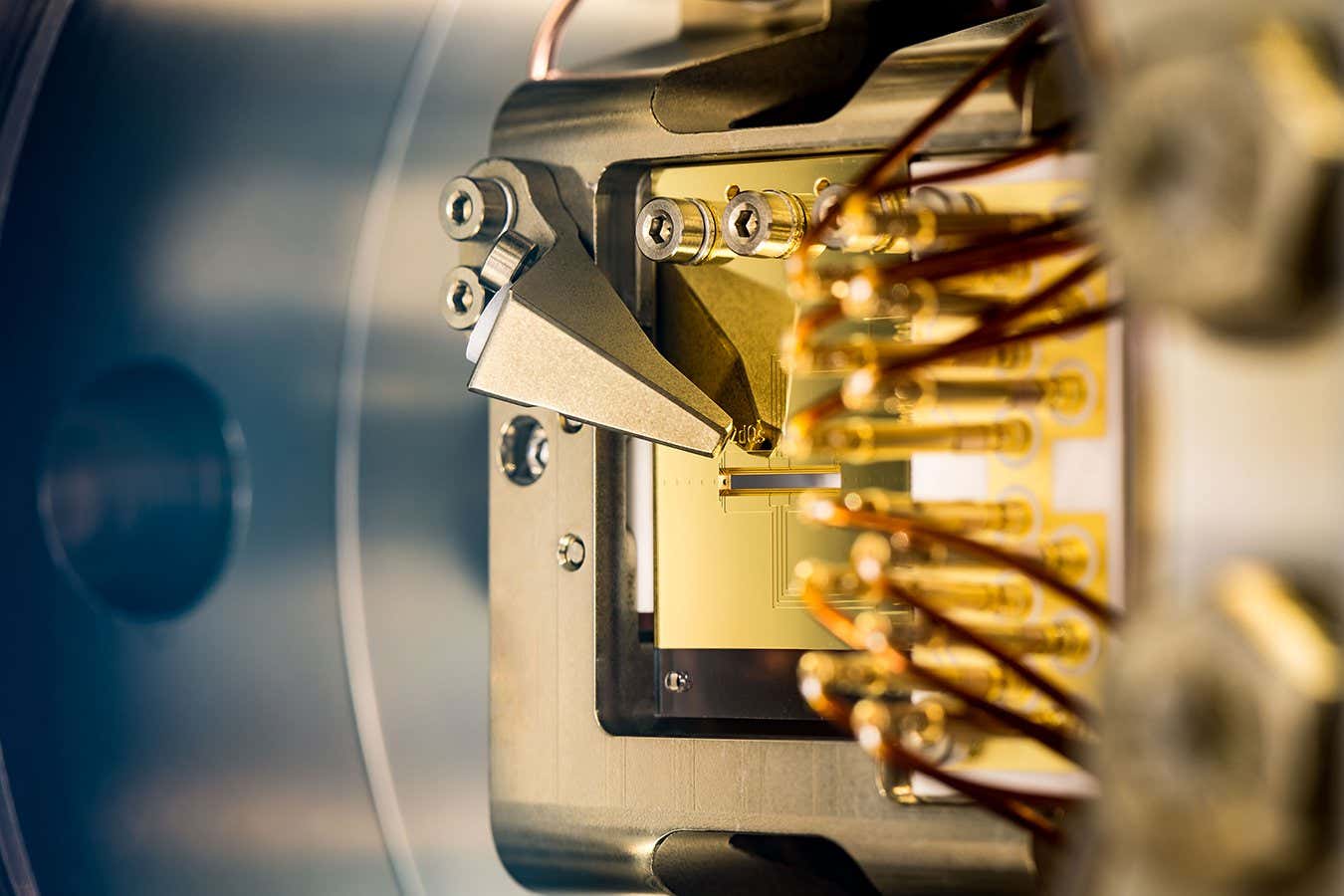
Calcium ions are released through the triangular funnel and caught by electric potentials on top of the metallic chip

2D crystal of ultracold charged atoms is biggest ever created

24 April 2023

More than 100 charged calcium atoms chilled to extremely low temperatures have been arranged into a two-dimensional crystal, which could be used for studying quantum materials or building quantum computations


Cosmic Tumbles, Quantum Leaps review: Embodying Schrodinger's cat

Cosmic Tumbles, Quantum Leaps review: Embodying Schrodinger's cat

14 March 2023

This physics-inspired circus performance enthralled attendees of the American Physical Society’s March Meeting, but a casual observer may have missed some of the scientific concepts that performers enacted


2B77TB8 3D rendering of abstract digital waves and bright square particles in space. Futuristic background made of dots, particles and mesh

A miniature universe shows particles may emerge out of empty space

9 November 2022

A first-of-its-kind experiment simulating the cosmos with ultracold potassium atoms suggests that in a curved, expanding universe pairs of particles pop up out of empty space


Jim Al-Khalili portrait

Jim Al-Khalili: How to live a more rational, scientific life

29 March 2022

New Scientist met physicist and broadcaster Jim Al-Khalili to discuss how to live a more curious "life scientific".


Q1: Photograph of the silicon quantum circuit being connected to a circuit board in preparation for measurement. (credit: Serwan Asaad)

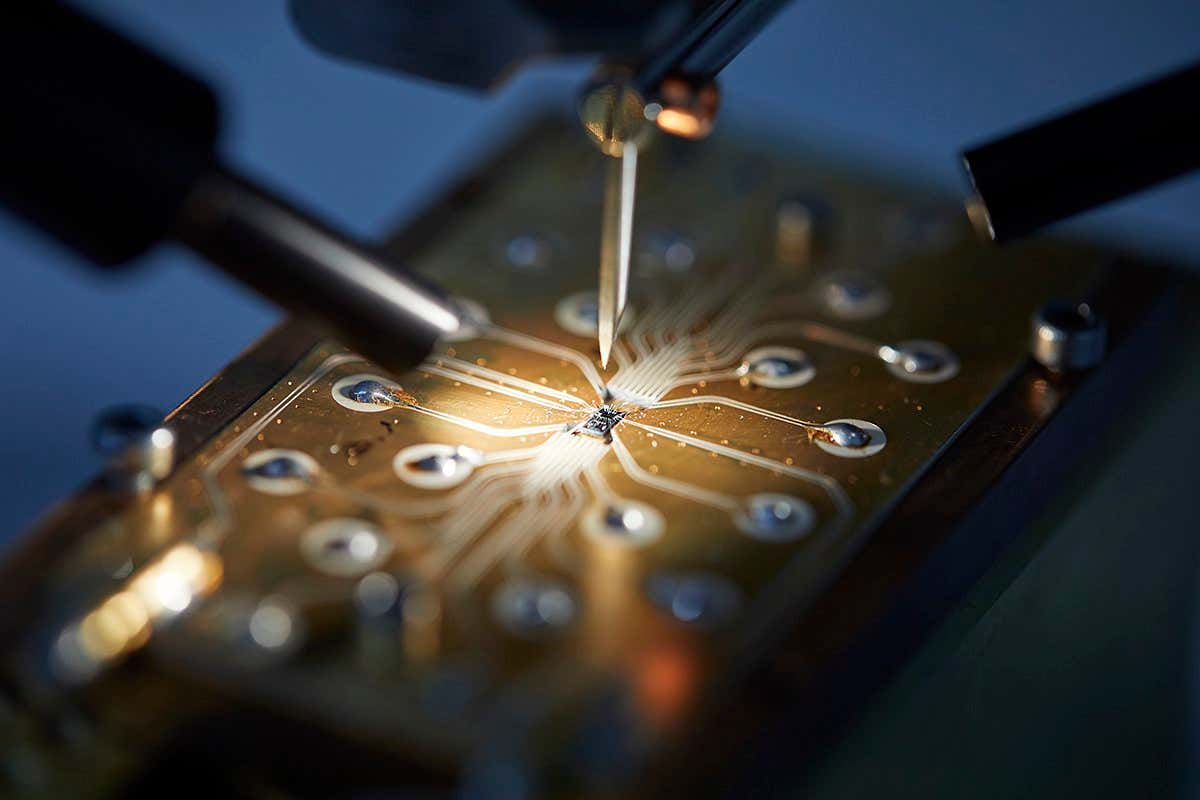
Using microwave beams could let quantum computers be small but mighty

13 August 2021

A decades-old theory to simplify silicon quantum processors has been shown to work, potentially paving the way for vastly more powerful quantum devices


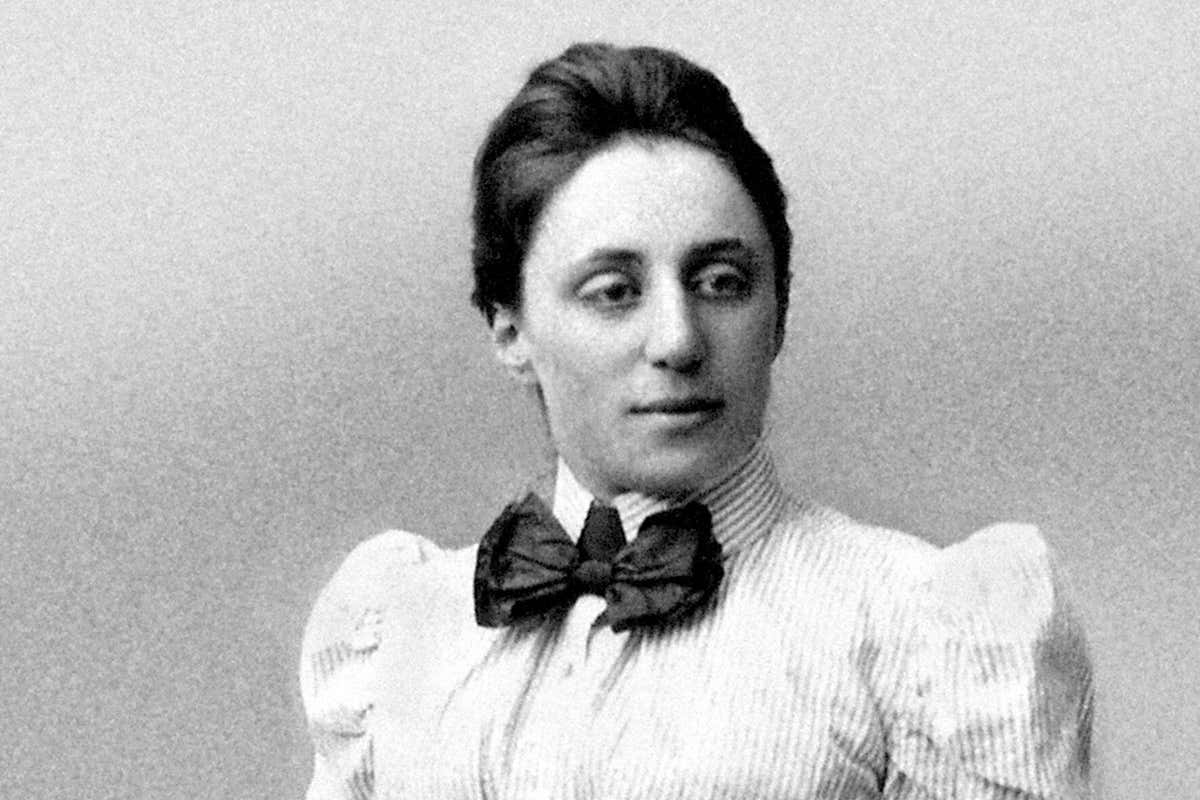
Portrait of the German mathematician Amalie Emmy Noether (1882-1935), c.1910

Emmy Noether

21 June 2021

Emmy Noether is famous for Noether’s theorem, which says that symmetries in the universe give rise to mathematical conservation laws


Is everything predetermined? Why physicists are reviving a taboo idea

Is everything predetermined? Why physicists are reviving a taboo idea

12 May 2021

Superdeterminism makes sense of the quantum world by suggesting it is not as random as it seems, but critics say it undermines the whole premise of science. Does the idea deserve its terrible reputation?


Quantum computers are revealing an unexpected new theory of reality

Quantum computers are revealing an unexpected new theory of reality

14 April 2021

A powerful new idea about how the laws of physics work could bring breakthroughs on everything from quantum gravity to consciousness, says researcher Chiara Marletto


Sign up to our weekly newsletter

Receive a weekly dose of discovery in your inbox. We'll also keep you up to date with New Scientist events and special offers.

Sign up
Piano Exit Overlay Banner Mobile Piano Exit Overlay Banner Desktop